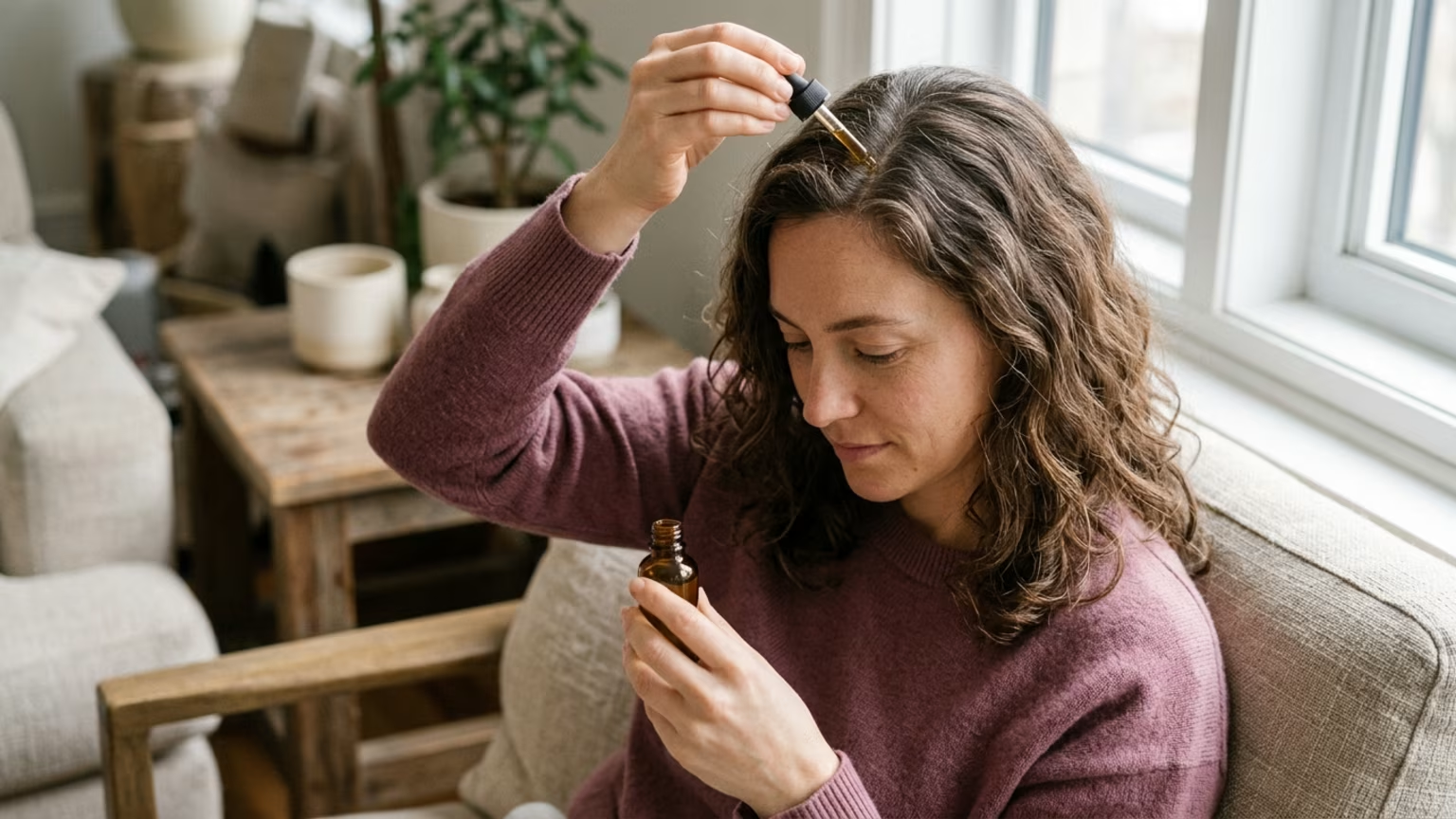

A breakdown of recent marine biotechnology research on yeast-fermented kelp extract, examining early lab findings for scalp health and follicle activation.





On September 14, 2026, Suncheon, South Korea, announced an intriguing development in marine biotechnology. The Suncheon Bio Healthcare Research Center and local startup Badapoomae have developed a new scalp-care biomaterial. This ingredient was created using fermented kelp culture fluid. The team utilized a yeast fermentation process intended to enhance the active compounds found naturally in kelp.
This initiative represents a growing movement to turn regional marine resources into specialized cosmetic ingredients. The goal is to build a green bio-industrial ecosystem that links local research with commercial product launches. By leveraging natural marine biology, local governments and startups are attempting to create higher-value industries. These types of partnerships frequently result in new functional cosmetics entering the market.
According to the Suncheon report, early research findings indicated positive effects on the scalp environment. The data also suggested an activation of hair-follicle cells after the kelp compounds underwent yeast fermentation. Yeast acts as a bioconversion tool to break down dense marine material into smaller components. A study detailing these initial findings was recently published in the international journal Cosmetics.
The published study was titled “Enhancing Kelp’s Hair-Loss-Relieving Activity Through Yeast Fermentation.” Fermented extracts are increasingly viewed as an interesting area of study for biological wellness. A recent scientific review highlighted plausible links between scalp microbial balance, inflammation, and overall follicle function. While researchers are actively investigating these pathways, the review notes that fermented extracts remain an emerging area of research.
Cosmetic databases already recognize fermented kelp filtrates for basic conditioning functions. These ingredient listings describe kelp ferment filtrates primarily in terms of improving hair feel and manageability. Such conditioning properties are helpful for maintaining the physical appearance of the hair shaft. However, conditioning the hair shaft is biologically distinct from stimulating the follicle root.
The regional project quickly progressed from laboratory research into commercial product development. Badapoomae reportedly secured patented technology based on its early data. The company then launched a scalp-care shampoo using the technology and results from human application tests. A Korean media report identified the resulting product as Love Your Scalp Shampoo.
This report noted the shampoo contains 100,000 parts per million of kelp juice. The company claims this concentration is substantially higher than standard kelp shampoos on the market. Additionally, the Korean report confirmed that the product passed a human skin-irritation test. These details provide some insight into the formulation, but they represent product-level descriptions rather than independent clinical audits.
Translating a patented ingredient into a consumer product requires careful messaging. The marketing surrounding new bioactives often moves faster than the scientific consensus. While the concentration levels sound impressive, concentration alone does not guarantee a biological result. Consumers must look closely at what the human application tests actually measured.
It is critical to carefully separate preliminary laboratory findings from verified clinical outcomes. The activation of hair-follicle cells in a lab is a fascinating biological signal. However, it is not equivalent to demonstrating increased hair density or meaningful treatment of thinning hair in human patients. The available public reporting does not provide a human-test sample size, control group, or defined endpoints for hair growth.
When we first started reviewing clinical trials on collagen supplementation, I was struck by how often the media misinterpreted the data. A study showing a minor increase in skin elasticity was suddenly headlined as a permanent solution. It made me realize how desperately consumers need a translator for beauty science, someone who can say exactly what a study proves and what it does not prove. This kelp research requires that exact same measured translation.
In the context of this kelp shampoo, a successful skin-irritation test supports a basic safety profile. It should not be presented as proof of long-term efficacy for hair growth. Furthermore, securing a patent simply means an invention was formally claimed under patent procedures. A patent does not independently establish that an ingredient can noticeably improve the follicle environment long-term.
Finally, words like "hair-loss-relieving" in a study title should not be confused with a medical treatment claim. The sources do not establish that this shampoo treats diagnosed causes of hair loss like androgenetic alopecia. Products bearing these ingredient technologies remain cosmetic support tools rather than proven medical interventions. Evaluating them accurately requires looking for controlled clinical evidence showing distinct changes in hair shedding.
Health-conscious women can view fermented kelp as a supportive addition to a broader scalp wellness routine. It is a promising conditioning agent that may help improve the immediate scalp environment. However, it should not replace an established medical evaluation if you are experiencing sudden shedding or visible thinning. For everyday use, the most defensible consumer message is that the product may support general scalp care.
When evaluating new botanical shampoos, always distinguish between laboratory cellular findings and controlled human trials. You can certainly test emerging fermented products for improved hair feel, texture, and scalp comfort. Just manage your expectations regarding actual new hair growth. Relying on topical washes alone is rarely sufficient for significant biological changes.
If you want to maintain resilient hair over time, you must also prioritize foundational health. Emerging topical ingredients work best when combined with adequate protein intake and systemic nutritional support. Building a complete hair care routine requires consistent attention to both topical care and internal wellness. Shampoos can cleanse and condition, but your body builds the actual hair fiber from the nutrients you consume.
You can also support your scalp health through gentle physical practices. Incorporating a basic scalp massage for hair growth may help stimulate local blood flow. While a massage will not regrow hair on its own, it pairs well with conditioning treatments to soothe the scalp environment.
A Suncheon city official noted that combining biotechnology with local biological resources can expand into functional foods and customized cosmetics. As marine biotechnology continues to evolve, we will likely see more regional ingredients transformed through complex microbial processes. The translation of local kelp into patented cosmetic formulations shows just how rapidly this sector is moving. Will future clinical research finally bridge the gap between in-vitro follicle activation and verified real-world hair density?
Stay connected for research and practical guidance on skin, hair, collagen, nutrition and beauty longevity. Clear ideas for people who want to understand how appearance changes with age and make better-informed choices over time.




Understand your skin, hair and body better without chasing every new trend, treatment or promise.
explore the Blog