Novo Nordisk is reportedly evaluating the hair-loss market. Learn why this strategic signal is not a proven drug and what steps women can take right now.





In September 2026, a report from Advisor Perspectives revealed an interesting shift in pharmaceutical strategy. Novo Nordisk is reportedly considering entering the hair-loss market. The company is evaluating ways to expand its direct-to-consumer prescription-drug business beyond its established obesity portfolio. This reporting signals increasing corporate interest in hair preservation therapies.
The strategic backdrop involves Novo seeking new growth areas as competition in obesity medicines intensifies. Ozempic and Wegovy face patent expiry in the United States and Europe toward the beginning of the next decade. The report notes that Novo had lost its lead in the obesity market to Eli Lilly. Consequently, the company is seeking additional uses for its GLP-1 medicines alongside entirely new growth areas.
Chief Scientific Officer Martin Lange stated that the company could potentially use its scientific expertise to enter the hair market. Lange specifically connected this opportunity to endocrinology, the hormone-focused field where Novo has longstanding expertise. Hormones play a fundamental role in follicle health over a lifespan. Applying endocrinological science to hair preservation makes biological sense for a company with this specific background.
Lange emphasized that hair loss would not necessarily be the company’s first new area of pursuit. Novo is also considering other consumer-health areas, including addiction and menopause. These are fields where its scientific capabilities or direct-to-consumer commercial experience may be highly relevant. To accelerate this process, Novo may pursue external deals alongside its internal research.
According to Lange, the company might consider licensing or acquiring compounds that are already closer to market. This indicates a willingness to buy innovation if internal development timelines prove too lengthy. Expanding through acquisitions could allow the company to enter new categories much faster. This approach reflects a common strategy among large pharmaceutical companies facing patent expirations.
The massive scale of pattern hair loss explains this sudden pharmaceutical interest. VeraDermics, a company developing hair-loss treatments, estimates that pattern hair loss affects about 80 million people in the United States. That company-supplied estimate includes approximately 50 million men and 30 million women. This represents a massive potential audience for any future medical intervention.
Advisor Perspectives reported that women in this affected population currently lack approved oral treatment options. This specific regulatory gap highlights why major pharmaceutical players see a lucrative opportunity. Novo CEO Mike Doustdar said the company wants to pursue fields where its consumer experience could provide a competitive advantage. The company has extensive experience selling prescription medicines directly to consumers.
Doustdar also noted that Novo needs to "start somewhere" and "search everywhere" for future avenues of growth. This language clearly frames the discussion as part of a broad search rather than a committed product program. A large potential market does not automatically guarantee a successful drug launch. The industry is currently evaluating many different paths forward.
We must carefully separate a strategic business evaluation from a proven clinical reality. The reporting does not identify a Novo hair-loss compound, clinical trial, or regulatory filing. Furthermore, the news does not contain any human efficacy results. Hair loss is not among the eight indications that Lange expects Novo to move into mid-stage trials by late 2026 or early 2027.
Lange mentioned that some consumer-facing projects under consideration could have shorter development timelines. He suggested these unspecified projects might reach the market around the turn of the decade. However, this was a general comment about possible consumer projects, not a forecast for a hair-loss product. Early pipeline news often causes confusion among health-conscious readers seeking immediate solutions.
"I remember speaking with a dermatologist who told me her patients were coming in with severe anxiety about normal skin aging. That anxiety was driven entirely by social media filters and aggressive marketing. That conversation became a cornerstone of our philosophy. We decided right then that our publication would never frame natural changes like wrinkles or thinning hair as personal failures."
This core philosophy guides how we evaluate pharmaceutical headlines today. We prioritize clear clinical evidence over premature corporate excitement. Readers deserve to understand the actual science without feeling rushed by early pipeline announcements. Separating business strategy from biological proof remains our primary goal at Younell.
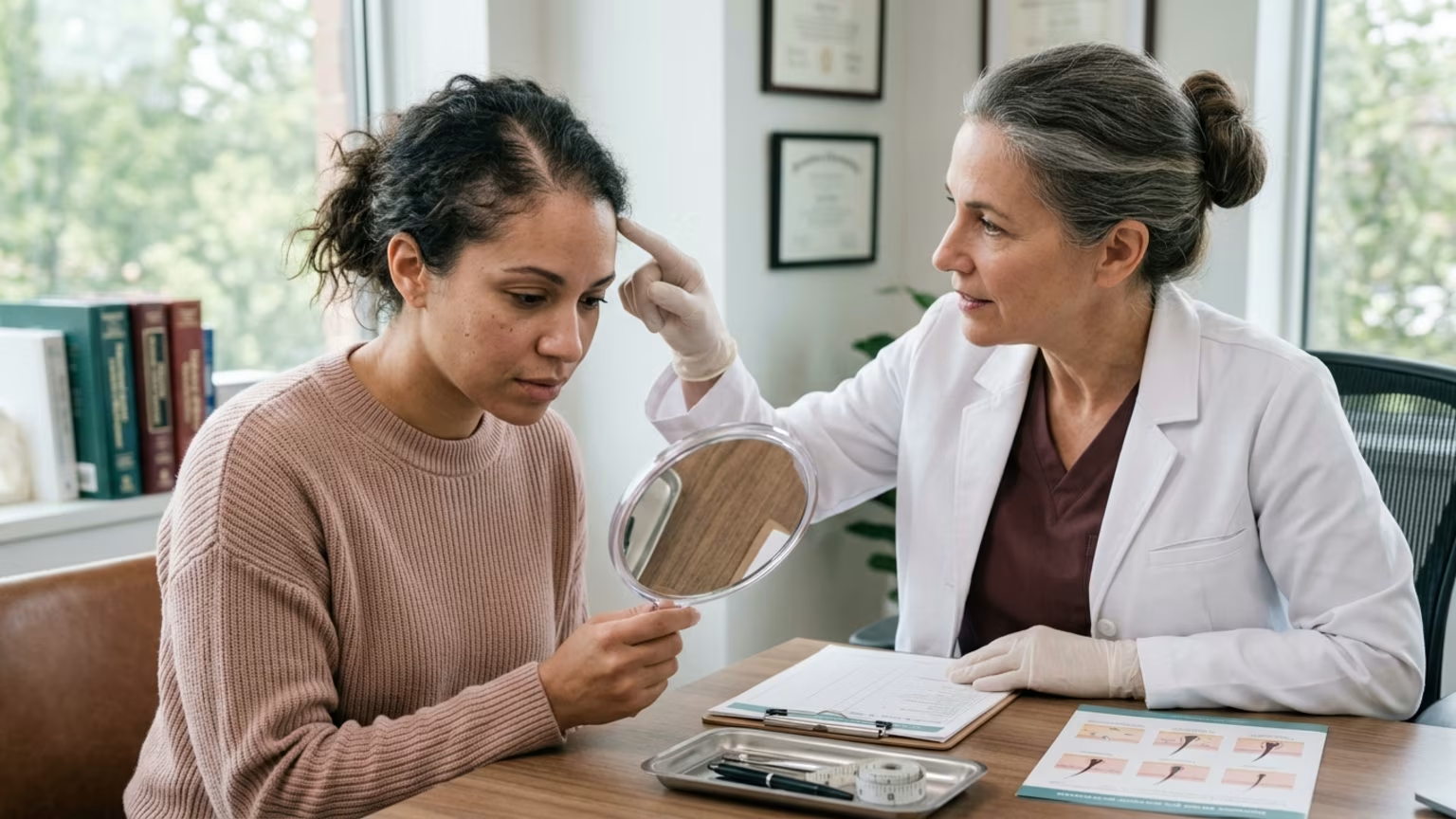
Readers experiencing changes in their hair density should not wait for a future medication that may never arrive. Identifying the root cause with a qualified clinician is the most effective action you can take right now. The first step involves understanding female pattern hair loss and scheduling a comprehensive medical evaluation. Focusing on available, clinically tested methods is far better than anticipating an unproven molecule.
If you suspect your current health regimen is a contributing factor, proactive investigation is key. You might need to evaluate medications and hair loss alongside your primary care physician. For those actively seeking solutions, understanding current prescription treatments for female hair loss can clarify your medical options today. Creating a long-term monitoring system will also help you measure real results accurately over time.
Pharmaceutical giants are increasingly looking beyond weight management into adjacent consumer-health areas. Eli Lilly is separately evaluating areas that could complement obesity treatment, including women’s health. This illustrates that large companies are actively seeking new ways to support long-term wellness. As companies with massive resources turn their attention toward menopause and hair density, the quality of research will likely improve.
Will these large-scale pharmaceutical investments finally bring rigorous clinical standards to a market traditionally dominated by cosmetic promises?
Stay connected for research and practical guidance on skin, hair, collagen, nutrition and beauty longevity. Clear ideas for people who want to understand how appearance changes with age and make better-informed choices over time.




Understand your skin, hair and body better without chasing every new trend, treatment or promise.
explore the Blog