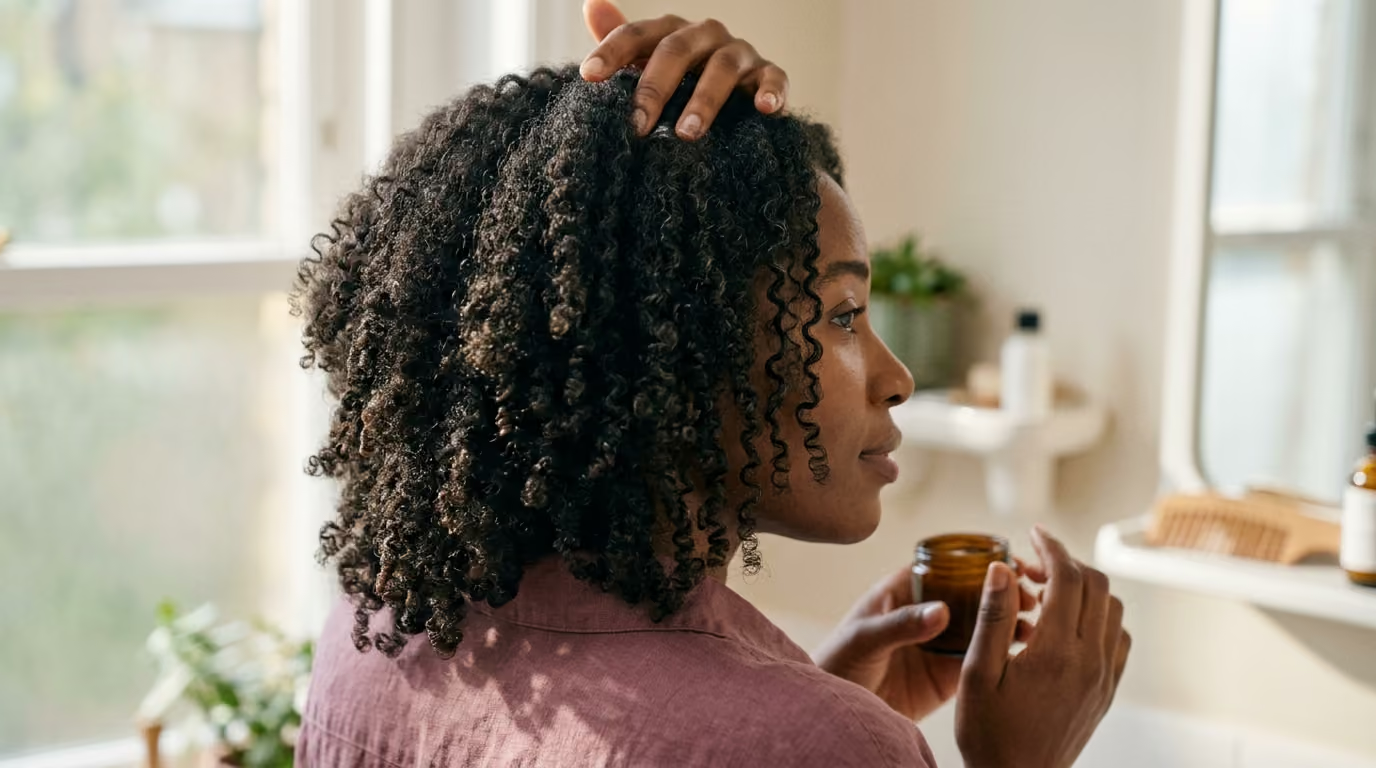

Stronger, longer curls and coils become achievable when daily grooming focuses on reducing mechanical stress and preserving the natural structural integrity of delicate hair fibers.





Most conventional advice treats hair growth as a speed challenge that can be solved with stimulating oils, scalp drops, or specialized supplements. In reality, hair follicles produce fiber at a biologically determined rate that varies little between individuals of similar health status. The visible challenge for textured hair is rarely a lack of cellular activity inside the scalp. Instead, the challenge is length retention, which depends entirely on preventing mechanical breakage along the delicate fiber that has already emerged.
Curly and coily hair structures possess unique physical properties that straight hair does not share. The natural coils, twists, and asymmetrical cross-sections create built-in mechanical vulnerability. Without a clear understanding of fiber mechanics, daily grooming can quietly degrade the hair shaft faster than the follicle can produce new length. Building a sustainable care routine requires looking past commercial marketing and focusing on the underlying biology of textured fibers.
Textured hair requires a management approach grounded in material science rather than cosmetic trends. Scientific literature reveals that mechanical stress, structural asymmetry, and grooming friction dictate whether curved fibers survive daily wear and tear.
Understanding these findings allows you to evaluate your routine based on mechanical preservation. Preserving the hair fiber requires minimizing friction, managing tension, and protecting the living root from chronic strain.
To care for curly and coily textures effectively, one must look at how the follicle builds the hair shaft. Straight hair emerges from a symmetrical, circular follicle that points straight up toward the surface of the scalp. In contrast, curly and coily hair grows from an asymmetrical, curved follicle that sits at an angle beneath the skin. This curved follicle produces a shaft with an irregular, elliptical cross-section.
As the strand grows, it twists periodically along its longitudinal axis. These twists create localized regions where the diameter of the hair narrows significantly. In materials science, any sudden change in geometry acts as a stress concentrator. When you pull, comb, or brush a curly strand, mechanical tension does not distribute evenly along the entire length. Instead, force concentrates intensely at the narrowest curvature points, making them prime sites for fractures.
The internal structure of the hair shaft consists of three main components: the cuticle, the cortex, and sometimes a central medulla. The cortex makes up the bulk of the hair mass, consisting of long keratin intermediate filaments embedded in a protein-rich matrix. The cuticle serves as a protective exterior barrier, made of multiple overlapping, scale-like cells coated in a thin lipid layer known as 18-methyleicosanoic acid.
In straight hair, these cuticle scales lie flat and overlap uniformly like shingles on a roof. In curly and coily hair, the sharp bends and twists along the fiber force the cuticle scales to lift and separate slightly at the curves. This natural structural lifting increases inter-fiber friction when neighboring strands brush against one another. It also creates pathways for moisture to escape and makes the cuticle vulnerable to chipping during dry manipulation.
The mechanical behavior of curly hair also differs during physical stretching. When straight hair is pulled, it exhibits a direct linear elastic response before reaching its yield point. Curly hair, however, exhibits what biophysicists call a "toe" region in its stress-strain curve. This toe region represents the initial mechanical uncoiling or springiness of the physical curls.
While this natural elasticity allows the curl to bounce back from minor deformation, repeated stretching fatigues the internal keratin matrix. Over time, cycling the hair between extreme stretching and resting states breaks disulfide bonds within the cortex. This structural fatigue gradually weakens the fiber, leading to loss of elasticity and increased brittleness.
Lipid distribution represents another key biological difference. The scalp produces sebum, a natural lipid blend designed to coat, lubricate, and protect the emerging hair shaft. On a straight hair strand, sebum travels easily down the smooth, linear pathway from root to tip. On a coiled or zigzagged fiber, the irregular shape and elevated cuticle scales impede the downward flow of natural oils.
As a result, the mid-lengths and ends of coily hair receive very little natural lubrication from the scalp. This leaves the outer cuticle dry, rough, and prone to friction-induced damage. Studies on ethnic hair lipids also show that coily hair fibers demonstrate different lipid compositions internally, leading to lower natural moisture retention and less radial swelling when submerged in water.
Understanding these biological parameters reinforces why you cannot treat curly and coily hair like straight hair. The goal of a textured hair regimen is not to force the hair to conform to linear mechanics. Instead, you must support its geometry through external lubrication, low-friction handling, and gentle structural support.
Laboratory investigations provide clear data on how mechanical stress, grooming tools, and chemical treatments affect textured hair longevity. A comprehensive review of ethnic hair properties published in the International Journal of Cosmetic Science demonstrated that African hair possesses significantly lower tensile strength than Asian and Caucasian hair fibers. The researchers recorded lower breaking stress and lower breaking elongation across tested samples. This confirmed that the fiber breaks under lower mechanical loads and tolerates less stretching before snapping.
Mechanical engineers and dermatologists have mapped the precise fracture pathway of curly hair under stress. In a landmark study published in the Journal of the American Academy of Dermatology, researchers used high-resolution electron microscopy to observe how textured fibers fail under repeated loading. The failure follows four distinct stages:
The critical insight from this study is that microscopic cracks develop deep inside the hair fiber long before the strand visibly snaps. Every aggressive detangling session, hot tool pass, or rough towel dry creates internal fractures. The hair strand may look intact immediately after styling, but the accumulated internal damage causes it to break weeks later during gentle washing.
Grooming tools exert vastly different forces on curly hair. Research comparing the physical impact of brushing versus combing found that hair tools produce long-segment breaks across curved fibers. Brushing produced the largest volume of long-segment fiber fractures among all tested variables. The dense, rigid bristles of a brush trap curved strands against one another, forcing them past their yield point and shearing off cuticle fragments.
The state of the hair during detangling also dramatically influences mechanical stress. Research presented in patent filings and cosmetic science literature shows that dry combing of highly coiled African hair generates extreme friction and extensive fiber breakage. When hair is dry, inter-fiber friction is at its peak, and curly strands lock together in complex tangles.
Applying water alters the mechanical properties of hair by temporarily breaking hydrogen bonds, which softens the cortex and increases elasticity. However, water alone can increase friction if the cuticle remains rough. Applying a formulated conditioner lowers inter-fiber friction and reduces the work required to comb through coiled hair. The data confirms that lubricating the hair with conditioning agents creates a slippery barrier, allowing fibers to glide past one another without snagging.
Product formulations containing targeted structural ingredients have shown measurable benefits in controlled laboratory trials. A study published in Cosmetics demonstrated that hydrolyzed keratins of varying molecular weights significantly increased Young's modulus, a measure of fiber stiffness and elasticity, in weakened hair. These hydrolyzed proteins penetrated the outer layers and temporarily reduced breakage under fluctuating humidity conditions.
Similarly, clinical research published in the Journal of Cosmetic Science evaluated shampoos and conditioners enriched with synthetic ceramides on African-American hair. The ceramide-treated fibers showed a marked reduction in mechanical breakage during simulated combing tests. Ceramides act as lipid cement, reinforcing the intercellular spaces between cuticle cells and preventing premature lifting.
Chemical straightening and thermal processing represent the most severe mechanical and structural hazards for coily hair. An investigation published in the International Journal of Trichology analyzed the mechanical impact of chemical straighteners on curly hair fibers. Treatments containing formaldehyde caused a severe reduction in break stress and break extension, indicating profound degradation of the internal protein matrix. Glyoxylic acid treatments produced less structural damage than formaldehyde, but still reduced overall tensile strength compared to untreated fibers.
Thermal styling tools such as flat irons, curling wands, and blow dryers operating above 180 degrees Celsius degrade the keratin structure rapidly. High heat strips natural moisture, oxidizes structural lipids, and melts the protective cuticle layer. When high heat is applied to hair that already possesses structural weak points, the rate of crack propagation accelerates exponentially.
While cosmetic science provides valuable insights into hair mechanics, consumers must interpret laboratory data with appropriate caution. Most studies evaluating hair strength, elasticity, and breakage rely on in vitro testing using detached hair tresses mounted on automated mechanical testing machines.
These automated machines pull, comb, and stretch hair fibers under strictly controlled angles, speeds, and forces. While this methodology produces precise, repeatable physical measurements, it does not perfectly replicate how a person grooms their hair at home. Living human scalp movement, variable hand pressure, changing arm angles, and personal detangling habits introduce variables that laboratory machines cannot simulate.
Furthermore, cosmetic research frequently relies on small sample sizes of hair donors. Hair properties vary widely based on individual genetics, age, health status, and prior chemical exposure. A study testing hair fibers from ten donors of African descent provides useful baseline data, but it cannot account for the vast spectrum of textures within coily and curly hair populations.
Popular curl classification charts, which divide hair into types from 2A to 4C, are marketing frameworks rather than standardized scientific classifications. Peer-reviewed dermatologic literature rarely uses these commercial typing systems because they do not correlate perfectly with tensile strength, cuticle thickness, or lipid composition. Assuming that all "Type 4" hair behaves identically in response to products or tension overlooks critical differences in individual strand diameter and porosity.
Another major limitation in hair research is the confusion between fiber longevity and follicular growth rate. Many commercial cosmetic products cite laboratory studies showing reduced breakage on hair swatches and market the product as a "hair growth booster."
Reducing fiber breakage allows a person to retain the length their follicles produce, creating the visual appearance of faster growth. However, this is purely a mechanical preservation effect. Cosmetic conditioners, oils, and protein treatments operate on dead, keratinized fiber. They do not penetrate the scalp deeply enough or alter the cellular machinery of the dermal papilla to accelerate the rate of follicular cell division.
Finally, long-term clinical trials tracking hair retention over several years are exceptionally rare due to high costs and compliance challenges. Most hair studies measure short-term outcomes lasting from a few days to several weeks. Evaluating the lifetime health of a follicle requires observing habits over decades, particularly when assessing the gradual development of traction alopecia or scarring conditions. Recognizing these limitations prevents you from seeking miracle solutions and encourages a steady focus on proven mechanical care principles.
Translating biophysical research into daily practice requires building a routine that systematically reduces friction, preserves natural lipids, and protects structural integrity. A comprehensive care strategy can be organized across the primary phases of hair maintenance. To learn more about the broader science of scalp health and strand resilience, consult our guide to the biological mechanics of hair growth.
Because coily hair struggles to distribute sebum along its twists, frequent washing with harsh, sulfate-heavy clarifying shampoos can strip away the limited lipids protecting the cuticle. When the cuticle is depleted of lipids, inter-fiber friction skyrockets, leaving the hair vulnerable to tangling and breakage.
Detangling represents the single most dangerous mechanical event for curly and coily hair. To prevent the cuticle sliding and crack formation documented in physical testing, you must maximize lubrication before introducing any styling tool. For additional insights on maintaining structural integrity, review our hair care resource library.
Conditioning is not merely a cosmetic step to improve softness; it is a vital mechanical intervention that lowers combing forces and reinforces fragile fiber geometry. Incorporating evidence-based treatments into your routine helps maintain optimal moisture balance and structural strength. Explore our articles on evidence-based beauty science for more on how ingredients interact with biological tissues.
The friction that hair experiences while drying and resting accumulates over time, causing subclinical fractures that weaken the shaft. Simple adjustments to your drying and sleeping environment significantly reduce daily mechanical wear.
Shrinkage is one of the most misunderstood characteristics of curly and coily hair. When coily hair transitions from wet to dry, it can shrink anywhere from 30% to over 75% of its true physical length. Many people view shrinkage as a cosmetic flaw or an indicator of stalled hair growth, leading them to use extreme heat, tight tension, or heavy chemical treatments to force the hair into an elongated state.
From a biophysical perspective, shrinkage is a direct expression of healthy hair elasticity and strong internal structural integrity. The helical architecture of the cortex allows the fiber to contract like a spring when exposed to moisture. When hair loses its ability to shrink and hangs limp or stretched out, it often indicates severe structural damage, such as broken disulfide bonds from chemical relaxers or denatured proteins from excessive heat styling.
Attempting to eliminate shrinkage through constant mechanical stretching introduces severe fiber fatigue. Laboratory fatigue testing shows that repeatedly stretching curly fibers causes progressive straightening as internal protein bonds deform. As the number of mechanical cycles increases, the stress-strain curve of curly hair begins to resemble that of damaged straight fibers, eventually leading to premature structural failure.
Managing shrinkage effectively requires reframing your expectations and adopting low-stress styling methods:
Protective styling is widely promoted as the gold standard for growing long coily hair. The core theory behind protective styles, such as box braids, cornrows, twists, weaves, and wigs, is sound: by tucking the ends of the hair away and securing the strands into structured patterns, you eliminate daily combing, brushing, and environmental exposure. This reduction in daily manipulation allows the hair fiber to avoid mechanical abrasion.
However, the scientific literature reveals a critical paradox: "protective" styling is not automatically safe for hair follicles. When applied incorrectly, these styles pose one of the greatest threats to long-term hair density. The primary mechanism of damage is chronic physical traction.
Traction alopecia is a form of hair loss caused by continuous, prolonged pulling forces exerted on the hair follicle. It disproportionately affects women of African descent, with clinical reviews reporting that it affects approximately one-third of women who regularly wear high-tension hairstyles for extended periods. The constant mechanical tension pulls on the root, causing localized ischemia, micro-tears in the follicular sheath, and chronic perifollicular inflammation.
If the tension continues unchecked, the inflammatory cascade leads to follicular destruction and replacement of normal tissue with fibrous scar tissue. Once a hair follicle undergoes fibrosis, it loses the ability to produce new hair permanently. At this stage, no topical treatment, diet change, or cosmetic product can restore the lost hair.
A related and severe condition is central centrifugal cicatricial alopecia, a form of scarring hair loss that begins at the crown of the scalp and spreads outward. Dermatologic studies analyzing African-American women have identified significant associations between scarring alopecia and traumatic hair practices, including tightly sewn weaves, heavy artificial braids, and persistent scalp tenderness.
To ensure that protective styles truly protect both the fiber and the follicle, you must follow strict, symptom-led guidelines:
For a deeper look into the interconnected factors supporting lifelong tissue resilience, browse our educational guides on healthy aging.
The textured hair industry is filled with persistent misconceptions that lead consumers to make choices that damage their strands. Comparing common commercial marketing claims against empirical evidence helps you make informed decisions.
Many popular routines recommend applying raw plant oils, such as castor oil, coconut oil, or shea butter, directly to dry hair to provide moisture. From a physical chemistry perspective, oils and butters are non-polar lipids containing hydrophobic fatty acid chains. They do not contain water, nor can they produce moisture on their own.
Applying heavy raw oils to dry, dehydrated hair coats the outer cuticle with an occlusive barrier that repels environmental humidity. This makes it significantly harder for true water-based hydration to penetrate the cortex during subsequent washing. True moisture comes only from water and water-based humectants. Lipids serve exclusively as sealants to slow down the evaporation of existing water, not as hydrators.
Commercial styling products frequently claim that keeping hair braided under extensions accelerates the biological growth rate of hair. In reality, hair follicles inside the scalp operate independently of whatever styling pattern exists on the external shaft. Cell division within the follicular matrix is governed by genetics, systemic nutrition, hormones, and local blood supply.
Protective styles simply keep the ends of the hair tucked away, reducing daily combing breakage. When the hair is taken down months later, the accumulated biological growth is suddenly visible, creating the illusion of rapid growth. If the style is installed with excessive tension, it actually slows net growth by triggering follicle damage and shedding.
Many people assume that hair which shrinks significantly after washing is unhealthy, stunted, or tightly knotted. They attempt to eliminate this shrinkage through aggressive blow-drying, flat ironing, or chemical texturizing.
As established by material science, shrinkage is concrete proof of a healthy, intact keratin cortex and strong elastic recovery. Damaged hair loses its helical springiness and hangs limp and elongated. Celebrating and working with your natural shrinkage preserves the internal protein structure of the fiber.
A common belief among stylists and clients is that tight, high-tension installations are necessary to keep a hairstyle neat and long-lasting. This misconception leads people to tolerate severe pain during braiding appointments.
Tension has nothing to do with the longevity or neatness of a protective style. Clean parting, precise hand placement, and proper sectioning keep a style secure without pulling on the dermis. Tightness merely stretches the scalp skin, shears the follicular sheath, and accelerates the onset of traction alopecia.
Most dermatologists and hair scientists recommend cleansing coily hair every 7 to 14 days. Washing too frequently with clarifying shampoos can deplete the delicate lipid barrier of the cuticle, leading to increased inter-fiber friction. Conversely, waiting longer than two weeks allows sebum, sweat, dead skin cells, and product residue to accumulate on the scalp. This buildup can trigger inflammatory conditions like seborrheic dermatitis, which compromises the follicle environment. Finding a balanced weekly or bi-weekly cadence with a mild, moisturizing cleanser maintains scalp cleanliness without dehydrating the fiber.
For tightly coiled and Afro-textured hair, detangling while damp and fully saturated with a high-slip conditioner is significantly safer than detangling dry. Dry detangling generates extreme inter-fiber friction, causing cuticle chipping and high-segment fiber snapping. Applying a formulated conditioner coats the hair with lubricating agents that lower combing forces, allowing knots to unravel smoothly. However, hair should never be aggressively raked while dripping wet without conditioner, as pure water temporarily weakens hydrogen bonds, making unsupported fibers susceptible to overstretching.
No cosmetic product can permanently repair or reconnect a split hair strand. Once the protective cuticle is lost and the cortex fractures longitudinally, the damage is irreversible. While protein treatments, deep conditioners, and specialized serums can temporarily bind the split fragments together using cosmetic polymers, this effect washes away with the next shampoo. The only definitive solution for split ends is to trim them cleanly with sharp hair shears before the split travels further up the hair shaft.
Normal shedding involves hairs that have reached the end of their biological telogen phase and fall out naturally from the root. A shed hair is full-length and features a tiny, white, bulbous root at one end. In contrast, broken hairs are shorter, irregular fragments that lack a white root bulb. If you notice short, snapped pieces of hair on your clothes, floor, or sink after styling, your hair is experiencing mechanical breakage. If you notice thinning along the hairline or small patches of hair missing after wearing braids, you are likely experiencing traction-induced damage.
Hair trims do not influence the cellular division occurring inside the scalp follicle where growth originates. Trimming hair does not make the root produce fiber faster. However, periodic trims are essential for length retention. As hair ages, the older ends suffer cumulative mechanical abrasion, leading to frayed edges and split ends. If these damaged ends are not trimmed away, the cracks propagate upward into healthy sections of the shaft, causing catastrophic breakage. Trimming the ends every three to six months based on actual fiber condition preserves the integrity of the remaining length.
By shifting your daily focus from aggressive styling to gentle structural preservation, you protect your hair follicles and support the natural longevity of your curls.
Stay connected for research and practical guidance on skin, hair, collagen, nutrition and beauty longevity. Clear ideas for people who want to understand how appearance changes with age and make better-informed choices over time.


Understand your skin, hair and body better without chasing every new trend, treatment or promise.
explore the Blog