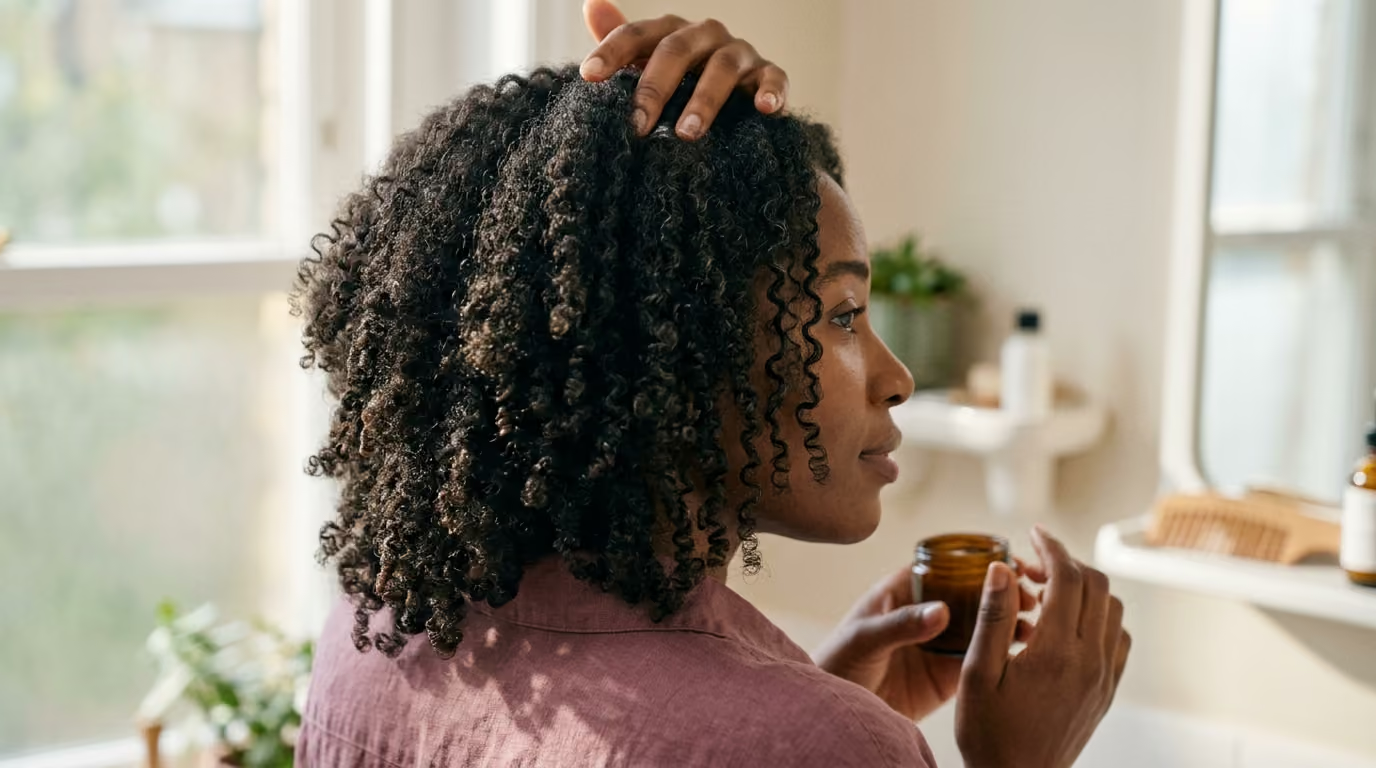
Multiple cosmetic camouflage techniques, including electrostatic fibers and scalp concealers, effectively reduce scalp show-through and maximize visual hair.





If you have ever stood under harsh bathroom lighting and searched online for how to make thinning hair look thicker immediately, you know the frustration of conflicting advice. Marketing campaigns frequently promise overnight transformations, while online forums present overwhelming lists of products.
This guide provides a definitive, research-based framework for making thinning hair appear visually fuller. We will examine how haircuts, color placement, topical fibers, scalp concealers, and hairpieces alter the visual perception of density. We will also clearly separate immediate cosmetic adjustments from treatments that influence underlying follicle biology.
This relationship forms the foundation of every technique covered in this resource. By adjusting these visual variables, you can create a noticeable change in how your hair looks without causing physical stress to your scalp or follicles.
Cosmetic hair thickening relies on physical principles, optics, and surface chemistry rather than biological alterations to the hair follicle. Understanding these principles helps in choosing the right tool for specific areas of hair thinning.
To understand why cosmetic techniques work, it is essential to understand what happens when hair appears thin. Hair thinning is a descriptive observation rather than a single medical condition. It can stem from several distinct biological mechanisms that alter how light interacts with your hair and scalp.
In our work at Younell, we prioritize clear distinctions between visual changes and biological shifts. I remember speaking with a dermatologist who told me her patients were coming in with severe anxiety about normal skin aging. That anxiety was driven entirely by social media filters and aggressive marketing. That conversation became a cornerstone of our philosophy. We decided right then that our publication would never frame natural changes like wrinkles or thinning hair as personal failures.
In pattern hair loss, known medically as androgenetic alopecia, hair follicles undergo a gradual process called miniaturization. Under the influence of dihydrotestosterone, susceptible follicles produce progressively shorter and finer hair shafts.
These miniaturized hairs are called vellus hairs. They lack the diameter and deep pigmentation of fully developed terminal hairs. As more hairs transition from thick terminal fibers to fine vellus fibers, the total physical volume of hair in that region decreases. The scalp becomes visible because the individual shafts are too narrow to block ambient light.
True density reduction occurs when the total number of active follicles per square centimeter decreases. This can occur in advanced pattern loss or scarring alopecias where the follicle is permanently replaced by fibrous tissue.
In contrast, diffuse shedding conditions like telogen effluvium involve a sudden shift in the hair cycle. An unusually high percentage of growing hairs prematurely enter the resting telogen phase and fall out two to three months later. While the follicles remain intact and capable of growing new hair, the temporary drop in strand count exposes the scalp.
Understanding this difference is critical when assessing hair growth and hair longevity. Cosmetic camouflage provides visual coverage during temporary shedding while the underlying biological cycle resets.
Apparent thinning is not always caused by follicular changes at the scalp level. Physical and chemical damage can fracture the hair shaft along its length. When hair breaks mid-shaft, the perimeter loses its density, and the ends appear sparse or ragged.
Overuse of chemical relaxers, high-heat flat irons, and bleaching agents strips the protective lipid layer from the cuticle. This leaves the internal protein cortex exposed to mechanical friction. Breakage reduces the cumulative mass of hair, creating the illusion of diffuse loss even when follicle output at the scalp is completely normal.
The human eye identifies thinning hair primarily through contrast. When dark hair sits against a light scalp, the unpigmented skin reflects light directly back to the observer.
This high-contrast boundary accentuates any gap between hair groupings. Conversely, when the difference in value between the scalp and the hair is minimized, the eye perceives a continuous field of density. Many cosmetic products succeed entirely by manipulating this optical contrast rather than adding physical mass.
While cosmetic tools do not treat hair disease, their psychological and aesthetic utility has been evaluated in dermatological literature. Understanding the data on these tools helps set realistic expectations for their daily performance.
Topical hair fibers are composed of microscopic filaments derived from natural keratin, wool, rayon, or rice proteins. These fibers carry a natural positive electrostatic charge. Human hair shafts carry a slight negative electrostatic charge.
When shaken or sprayed onto thinning areas, the fibers are drawn toward the hair shaft through electrostatic attraction. The fibers align along the length of each strand, creating a branched structure that multiplies the apparent width of the hair. Research shows that this binding mechanism requires existing natural hair to function. If an area is completely smooth, the fibers simply settle onto the scalp surface and may slide away with movement.
Dermatological evaluations have confirmed the utility of topical camouflage in improving quality of life. In a 40-person study evaluating topical hair fibers, investigators recorded high patient satisfaction and reliable aesthetic results across various types of thinning.
The study demonstrated that topical fibers are well tolerated by the vast majority of users. Out of 40 participants, 39 showed no clinical signs of erythema, scaling, or follicular inflammation. Only one participant experienced mild scalp irritation, representing 2.5% of the test cohort. This confirms that modern keratin and plant-based fibers are chemically inert and safe for regular use on intact skin.
Clinical observations and consumer testing highlight clear parameters for how long cosmetic camouflage lasts. Fibers and concealing powders remain in place through mild perspiration, light wind, and daily movement.
However, they are not permanently bound to the hair cortex. The electrostatic attraction is broken by water immersion, shampooing, or vigorous mechanical rubbing. For users exposed to rain or heavy exercise, specialized acrylic-based locking sprays can help preserve the bond, but the application remains temporary.
Evaluating cosmetic products requires a clear view of what current research can and cannot prove. Marketing often blurs the line between aesthetic concealment and therapeutic regrowth.
No published clinical study demonstrates that topical fibers, root sprays, or concealing powders alter the biological state of a hair follicle. They do not increase microcirculation, inhibit 5-alpha reductase, or prolong the anagen growth phase.
Any claim suggesting that a styling powder or cosmetic spray promotes permanent biological fullness contradicts basic dermatological science. Cosmetic tools must be understood as surface-level concealers that wash away with water.
The scientific literature covering hair camouflage consists primarily of small observational cohorts, patient surveys, and clinical reviews. Large-scale, double-blind, randomized controlled trials are rarely conducted on purely cosmetic formulations because they are not regulated as pharmaceuticals.
Data regarding fiber transfer onto clothing, resilience in high humidity, and long-term scalp barrier interactions remain largely based on self-reported consumer feedback. While the safety profile of these products is strong, users should recognize that clinical trials are limited in size and scope.
A major limitation of cosmetic camouflage is its potential to delay proper medical diagnosis. Because concealers provide immediate visual improvement, individuals may rely on them while an underlying inflammatory or hormonal condition worsens beneath the surface.
Conditions such as frontal fibrosing alopecia, lichen planopilaris, and central centrifugal cicatricial alopecia cause progressive destruction of hair follicles. If visual symptoms are covered with powders without medical evaluation, the window for preserving living follicles may be lost. Camouflage should always serve as an aesthetic aid, never as a replacement for a clinical examination.
Before applying any styling technique, powder, or hairpiece, you must determine whether your thinning requires medical attention. A systematic assessment ensures that cosmetic adjustments do not compromise scalp health.
Examine your scalp in bright, natural light. Take clear baseline photographs of your hairline, central part, crown, and temples.
Consult a board-certified dermatologist immediately if you observe any of the following symptoms. These signs indicate that immediate medical treatment is necessary before using cosmetic products:
Frontal fibrosing alopecia typically presents with a receding frontal hairline, often accompanied by the partial or total loss of eyebrow hair. The skin in the affected zone may look pale, shiny, or mildly inflamed. Applying adhesive hair systems or heavy cosmetic powders over active inflammatory zones can worsen skin irritation and accelerate follicle loss.
If you are undergoing medical treatment, cosmetic camouflage can serve as an effective bridge. Medical treatments such as topical minoxidil, oral anti-androgens, or nutritional therapies typically require six to twelve months to produce visible results.
Using gentle cosmetic strategies during this waiting period reduces self-consciousness while giving medical therapies time to work. However, always ensure your scalp is washed thoroughly between applications to prevent product buildup from interfering with topical medications.
The physical shape of your haircut is the most reliable foundation for creating perceived fullness. Haircuts do not change follicle biology or alter growth rates, but they fundamentally change how light and gravity act on the hair.
When hair is cut with heavy layers or thinned with texturizing shears, the tips of the hairs end at varying lengths. For fine or thinning hair, this creates a translucent perimeter that allows light to pass straight through the bottom inches of the style.
A blunt cut trims all perimeter hairs to a single horizontal plane. This creates a solid line of visual weight at the baseline.
The blunt edge blocks light transmission, giving the bottom of the hair a dense, substantial appearance. For individuals with low density or fine strands, keeping the perimeter blunt immediately reinforces the illusion of thickness.
Layering fine hair involves a structural trade-off that requires careful planning with your stylist.
Long, heavy hair pulls downward on the roots, causing the hair to lie flat against the curve of the skull. This flatness emphasizes any widening along the part line.
Conversely, cutting too many short layers removes the interior density needed to support a solid perimeter. The ideal balance is targeted internal layering. Subtle, long layers placed around the crown remove downward drag while leaving the bulk of the hair mass intact to support the baseline.
Certain classic haircut shapes are particularly effective at maximizing the appearance of thin hair:
Styling techniques can physically elevate the hair shaft away from the scalp, creating space between the strands. This space increases the total volume occupied by the hair.
Hair emerges from the scalp at a natural exit angle, usually between 30 and 45 degrees. When fine hair is allowed to air-dry naturally, gravity pulls it downward, causing it to dry flat against the skin.
To alter this resting angle, apply gentle heat while holding the root perpendicular to the scalp. As damp hair dries, the temporary hydrogen bonds within the keratin cortex break and reform in the shape dictated by the brush.
Directing airflow upward and drying the hair in the opposite direction of the final part resets these bonds. Once the hair cools in this position, the hydrogen bonds lock in place, creating a structural arch that holds the hair away from the scalp.
Wearing your hair in the exact same part line for years trains the follicles to lie flat in that direction. In addition, the exposed line of scalp receives repeated ultraviolet light exposure, which can degrade the surrounding skin over time.
Shifting your part line by just half an inch redistributes visual density immediately. Because the hair follicles in the new position are not trained to lie flat, they resist the change and create natural lift at the base.
An irregular, slightly staggered part line is far more effective at hiding thinning than a straight part. A straight line draws the observer's eye directly to the scalp, whereas a zigzag pattern breaks up the line of sight and blends surrounding strands together.
Using the wrong styling products can quickly ruin the appearance of fine hair. Understanding cosmetic formulations prevents accidental clumping and scalp exposure.
Heavy oils, lipid-rich leave-in creams, and high-shine pomades coat the hair shaft in an occlusive layer. While beneficial for coarse or chemically damaged hair, these heavy ingredients cause fine strands to bind and clump together into distinct ribbons.
When hair clumps, the empty space between the groupings expands, exposing large areas of bare scalp. Fine hair requires lightweight styling polymers, such as PVP or VP/VA copolymers, which coat the strand in a rigid, microscopic lattice. This keeps individual hairs separated from one another, maximizing optical coverage.
While thermal styling creates volume, excess heat degrades the structural integrity of the hair shaft. The American Academy of Dermatology recommends limiting the use of curling irons, flat irons, and high-heat dryers, particularly on thinning hair.
Excessive heat denatures the alpha-keratin proteins of the cortex, turning them into disorganized beta-keratin. This structural change makes the hair brittle and prone to snapping. Always use a dedicated heat protectant spray containing dimethicone or hydrolyzed wheat proteins before applying thermal tools. Keep blow-dryers at least six inches away from the scalp, and use the medium heat setting whenever possible.
Topical camouflage products bridge the gap between hair styling and scalp optics. Choosing the right tool depends on whether you need to coat existing hair or reduce scalp contrast.
Topical hair fibers are most effective for diffuse thinning and widening part lines where natural hair is still present to support the product. Because fibers rely on electrostatic attraction, they require existing hair to latch onto.
Never apply loose fibers directly onto the front edge of your hairline. Doing so creates an unnatural, powdery barrier that looks artificial up close.
Instead, begin applying fibers roughly one centimeter behind the natural hairline, working backward toward the crown. If you need coverage at the temples, use a handheld hairline comb or your hand to shield your forehead while dispensing the product.
When hair loss has progressed to the point where there are few natural hairs left to hold fibers, scalp concealers are the preferred tool. These products tint the scalp skin itself, eliminating the high-contrast reflection of light.
When selecting a color, choose a shade that matches the mid-lengths or roots of your hair rather than the lighter ends. If you are between two shades, select the slightly lighter one. A shade that is too dark creates an artificial, painted look on the skin, whereas a slightly lighter shade blends naturally as a soft shadow.
Scalp micropigmentation (SMP) is a specialized cosmetic tattooing technique that deposits tiny dots of pigment into the upper dermis of the scalp. Unlike body tattooing, which uses deep needle penetration and dynamic ink formulations, SMP uses carbon-based pigments deposited at a superficial depth to replicate the appearance of individual hair follicles.
In our continuous review of beauty science and emerging cosmetic interventions, we emphasize that SMP is strictly an optical simulation. It does not stimulate follicular activity or produce natural fiber growth.
For individuals with diffuse thinning, SMP creates an underlying shadow across the scalp, permanently reducing scalp contrast. For individuals with complete hair loss, SMP creates the look of a closely shaved head.
The procedure requires touch-ups every two to four years as the pigment slowly fades under UV exposure and natural skin cell turnover. Always seek out a licensed practitioner who specializes exclusively in scalp work to avoid pigment bleeding and unnatural color shifts.
When thinning progresses beyond what topical powders and fibers can disguise, hair additions provide full visual coverage. However, these systems must be selected and secured properly to avoid causing mechanical damage to your remaining hair.
A hair topper is a partial hairpiece engineered to add density to specific zones of the head, primarily the part line, crown, or front hairline. Unlike a full wig, a topper integrates directly with your existing natural hair.
Toppers attach to the surrounding natural hair using small, pressure-sensitive metal clips, silicone comb grips, or specialized medical-grade tapes. They are ideal for individuals who retain healthy density along the perimeter and back of the head, but experience significant loss along the top.
The most critical consideration when wearing any hair addition is preventing traction alopecia. Traction alopecia is a form of hair loss caused by continuous, prolonged pulling force applied to the hair follicle.
The American Academy of Dermatology highlights tight extensions, weaves, and heavy hairpieces as primary causes of preventable traction loss. When clips or braided anchors pull constantly on the same small group of hairs, the mechanical stress induces local inflammation around the follicle. Over time, this constant tension leads to permanent follicular scarring and irreversible loss.
Pain is an absolute stop signal. A properly fitted cosmetic hairpiece should never feel painful, pull tightly on the scalp, or cause headaches. If an attachment method hurts, it is causing active damage to your follicles and must be removed or adjusted immediately.
Choosing between synthetic materials and natural human hair depends on your styling preferences, daily routine, and budget:
Strategic hair coloring is one of the most effective ways to manage how light interacts with your hair and scalp. By altering depth, tone, and dimension, professional color placement can make thinning zones look significantly denser.
Dyeing thinning hair a single, flat, dark color is a common aesthetic mistake. Monochromatic dark hair creates a stark boundary against the lighter scalp underneath, drawing immediate visual attention to every exposed gap in the part line.
Dimensional coloring uses a mix of subtle highlights and lowlights to break up the uniform field of color. This variation reflects light in multiple directions, confusing the observer's eye and masking the exact location of the scalp beneath.
A root shadow involves applying a demi-permanent color that is one to two shades deeper than the mid-lengths directly onto the first half-inch of the hair shaft. This technique creates a natural illusion of depth.
Because the eye naturally interprets darker tones as receding into the background, the deeper color at the root creates the visual impression of a dense, thick layer of hair beneath the lighter surface strands. This technique is particularly effective for blondes, light brunettes, and redheads who want to maintain lighter ends while concealing a widening part line.
While strategic color adds visual density, aggressive chemical processing damages the internal architecture of the hair shaft. Permanent oxidative dyes and bleaching agents lift the protective outer cuticle scales to alter melanin in the inner cortex.
Repeated bleaching weakens the structural disulfide bonds that give hair its tensile strength. For individuals managing hair thinning, brittle hair that breaks off mid-shaft rapidly worsens the appearance of volume loss.
When coloring fine hair, work with a professional colorist who uses low-volume developers, ammonia-free formulas, and bond-building additives. Avoid overlapping bleach applications on previously lightened hair to preserve the integrity of the hair shaft.
Every pattern of hair thinning presents a unique optical challenge. The following strategies outline specific steps for managing the most common types of visible loss.
A widening part is the hallmark of early to moderate female pattern hair loss. The goal is to obscure the central scalp line while lifting the surrounding hair upward.
Thinning at the vertex or crown often goes unnoticed initially, but can expand into a wide circular area where the hair naturally separates.
Recession at the temples exposes the forehead angles, making the entire frontal hairline appear sparse.
Diffuse thinning involves a uniform reduction in density and strand diameter across the entire head, often seen in chronic telogen effluvium or early diffuse alopecia.
Clear information is the best defense against predatory beauty marketing. Here, we compare common assumptions about hair density with scientific reality.
To learn more about how hair changes over time and how to care for your hair holistically, explore our comprehensive guides on evidence-based hair care and our full library of hair longevity resources. You can also learn more about Younell and our scientific methodology.
No, high-quality hair fibers made from natural keratin, cellulose, or wool do not damage hair follicles when used properly. These fibers are chemically inert and sit on the outside of the hair shaft and scalp surface. However, you should shampoo your hair regularly to prevent product buildup from mixing with natural sebum and clogging the follicular openings. If you experience itching or redness, discontinue use and check for sensitivities to added fragrance or preservatives.
To keep fibers securely in place, always apply them to completely dry hair and pat them gently so they settle into the strand network. Finish the application with a light mist of fiber-locking spray or an alcohol-free hairspray. While this prevents shedding during normal daily activities, fibers will transfer under heavy mechanical friction. For best results, use a dark pillowcase or remove the fibers with shampoo before going to sleep.
Yes, you can use topical minoxidil alongside cosmetic camouflage products. However, you must apply your minoxidil first directly onto a clean, dry scalp and allow the liquid or foam to absorb completely for 30 to 45 minutes. Once the medication is dry, you can proceed with styling and apply your fibers or scalp concealers. Applying fibers to a wet scalp dampens the particles and interferes with medication absorption.
A haircut has no effect on the hair follicle located beneath the surface of the skin. Cutting the ends blunt does not increase the number of follicles, accelerate growth rate, or alter the natural diameter of the hair fiber. However, a blunt cut significantly improves perceived fullness by removing wispy, broken ends and creating a solid line of visual weight along the bottom perimeter.
Warning signs of traction damage include tenderness, localized redness, small bumps around the clips, headaches, and broken hairs where the piece attaches. A properly fitted hair topper should sit securely without pulling uncomfortably on your natural hair. To prevent damage, rotate the clip locations regularly, choose wide clips with silicone cushioning pads, and avoid clipping the piece to areas of fine, thinning hair.
Making thinning hair look fuller is an ongoing process of refining your habits, balancing scalp care with cosmetic adjustments. Here is a practical, step-by-step checklist you can implement this week:
Stay connected for research and practical guidance on skin, hair, collagen, nutrition and beauty longevity. Clear ideas for people who want to understand how appearance changes with age and make better-informed choices over time.


Understand your skin, hair and body better without chasing every new trend, treatment or promise.
explore the Blog