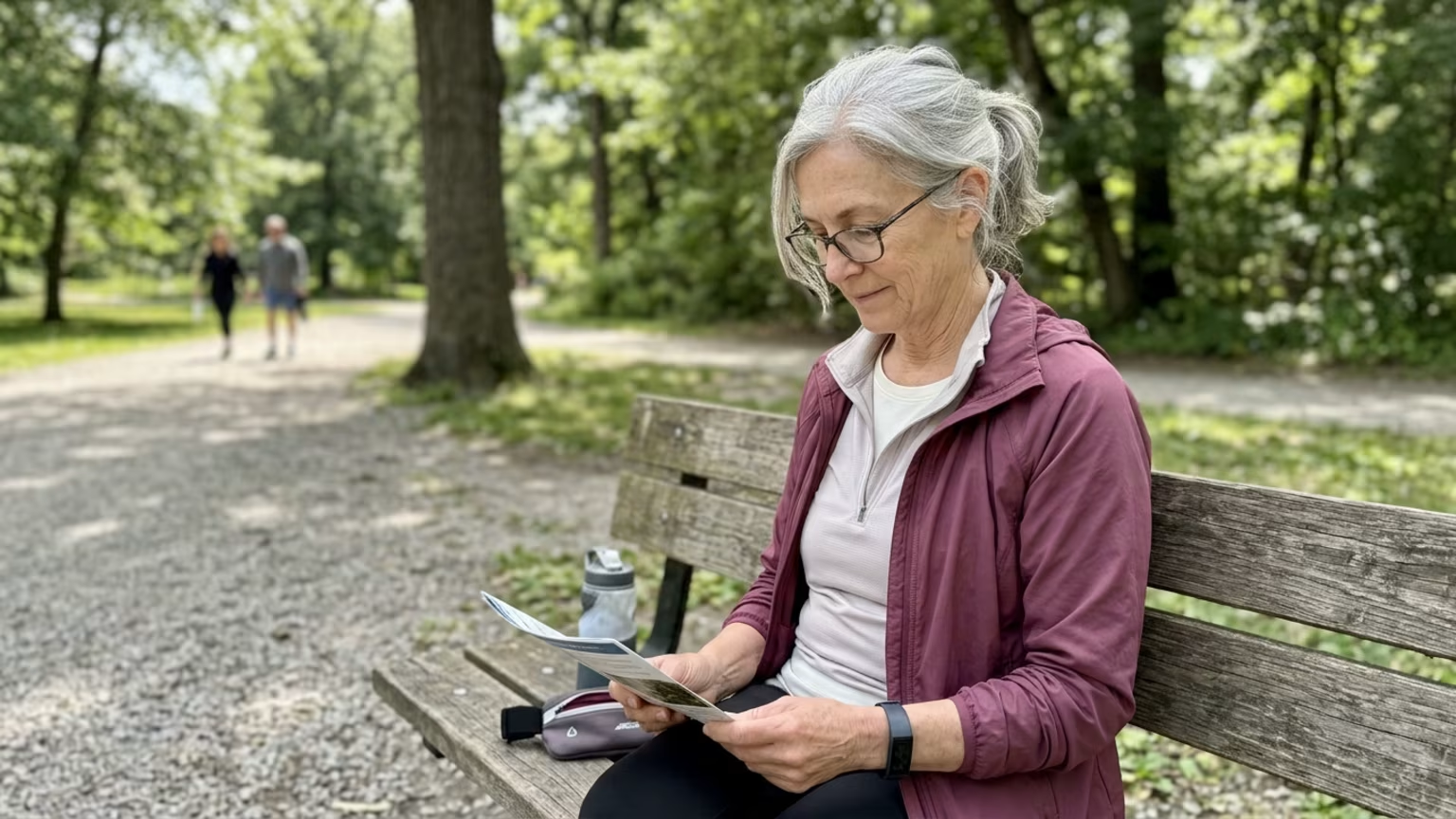

An exercise research summary reports modest changes in aging measures. Read the findings in context without treating them as a personal prescription.





In September 2026, a news summary described a BMC Medicine analysis linking physical activity with modest changes in telomere-related measures, lean mass and frailty. The journal’s online-first listing places the paper in its healthy-aging and longevity collection.
The report brings a useful question into focus: how should a finding about aging biology influence everyday choices? For health-conscious women, the answer starts with keeping the actual measurements separate rather than treating longevity as a single outcome.
The news summary says researchers assessed telomere length, telomerase activity and global DNA methylation. They also assessed appendicular lean mass and frailty. These are distinct outcomes, not interchangeable ways of describing one change.
The cellular part of the reported finding concerns telomere-related measurements. The physical part concerns lean mass and frailty. In everyday language, activity was associated with favorable shifts in several measures used to examine aging.
That distinction matters because a favorable result does not mean the same thing across every outcome. A cellular measurement answers a different question from a measure of physical frailty. Reading the results separately is more useful than compressing them into a headline about becoming biologically younger.
For beauty longevity, this is an important way to read research. Start with the measurement itself. Then ask what question it answers before connecting it to the broader goal of looking and feeling well over time.
The news summary reports that the meta-analysis included 49 randomized trials and 5,189 participants. It gives the following effect sizes:
The telomere-length figure is a standardized mean difference, not a percentage improvement. The summary describes the overall changes as small. It does not report a numerical effect size for global DNA methylation.
The same coverage reports an approximate dose-response peak near 11.5 marginal MET-hours per week. It describes curves that flatten at higher activity volumes and reports different estimated ranges for different outcomes.
That flattening is the basis for the report’s description of diminishing returns. In other words, the reported relationship was not simply a straight line in which more activity kept producing proportionally larger changes in the aging measures examined.
These pooled trial findings describe the studies summarized. They should not be read as a prediction of what an individual woman will experience in an everyday routine.
The journal listing supports the paper’s identity and publication context. The detailed figures available here come from the news summary rather than independently checked full text. That coverage does not provide enough detail to assess trial differences, risk of bias or limitations of the genetic analyses it mentions.
This distinction matters for interpretation. A journal listing and a secondary account serve different purposes. The reported results deserve attention, but a detailed evaluation of their reliability requires the primary paper’s methods and limitations.
The outcomes also set a firm boundary around beauty claims. The reported findings do not establish younger-looking skin, stronger hair or a particular improvement in lifespan. The available coverage does not explain a skin- or hair-specific mechanism connecting the reported cellular changes to visible results.
Finally, the 11.5 marginal MET-hours estimate is a population-level finding rather than a universal activity prescription. The news summary describes it as approximate and reports differing estimates across outcomes. It does not establish one ideal exercise target for everyone.
For health-conscious women, the clearest application is to keep movement in the healthy-aging part of a beauty routine. Use the findings to ask more precise questions about evidence rather than to build a telomere-focused exercise schedule.
For a general activity framework, NIH’s Healthy Aging guidance recommends at least 150 minutes of moderate-intensity aerobic activity each week. It also recommends muscle-strengthening activities at least two days per week. These recommendations come from NIH’s general guidance, not from the reported meta-analysis.
NIH advises checking with a doctor before starting a new routine when managing a chronic health condition or recovering from illness or injury. Questions about how activity fits an individual health situation belong with qualified care.
Beyond that general guidance, the practical value of this report is an outcome-first way of thinking. A useful claim names the result being discussed and points to evidence that measured it. A broad longevity label should not replace those details.
When considering how movement fits into skin longevity, keep the question specific. Is the claim about a cellular measurement, physical function or appearance? Naming the outcome makes it easier to decide which evidence is relevant.
The same approach helps when reading about biomarkers and visible skin outcomes. A measurement can be scientifically interesting without answering every question a beauty reader brings to it. Keeping the question and the evidence aligned is more useful than treating every biological finding as a reason to change a routine.
For readers thinking about strength training within a wider healthy-aging framework, the distinction between general guidance and emerging research remains valuable. One provides a broad framework for activity. The other raises more specific questions for scientists to test.
Younell’s emphasis is on clear understanding and realistic long-term choices. Here, that means giving the reported findings their proper place without making a laboratory number the organizing principle of a beauty routine.
The most useful next step is not a stronger slogan about exercise and longevity. It is clearer evidence showing how the biological and physical measures under discussion relate to one another.
A helpful research agenda would examine which measures change together and which move independently. For beauty longevity, research that directly assesses skin or hair would address the outcomes readers care about more closely.
As exercise science develops, will future studies connect cellular changes with measurable skin and hair outcomes while keeping healthier aging distinct from appearance?
Stay connected for research and practical guidance on skin, hair, collagen, nutrition and beauty longevity. Clear ideas for people who want to understand how appearance changes with age and make better-informed choices over time.


Understand your skin, hair and body better without chasing every new trend, treatment or promise.
explore the Blog


