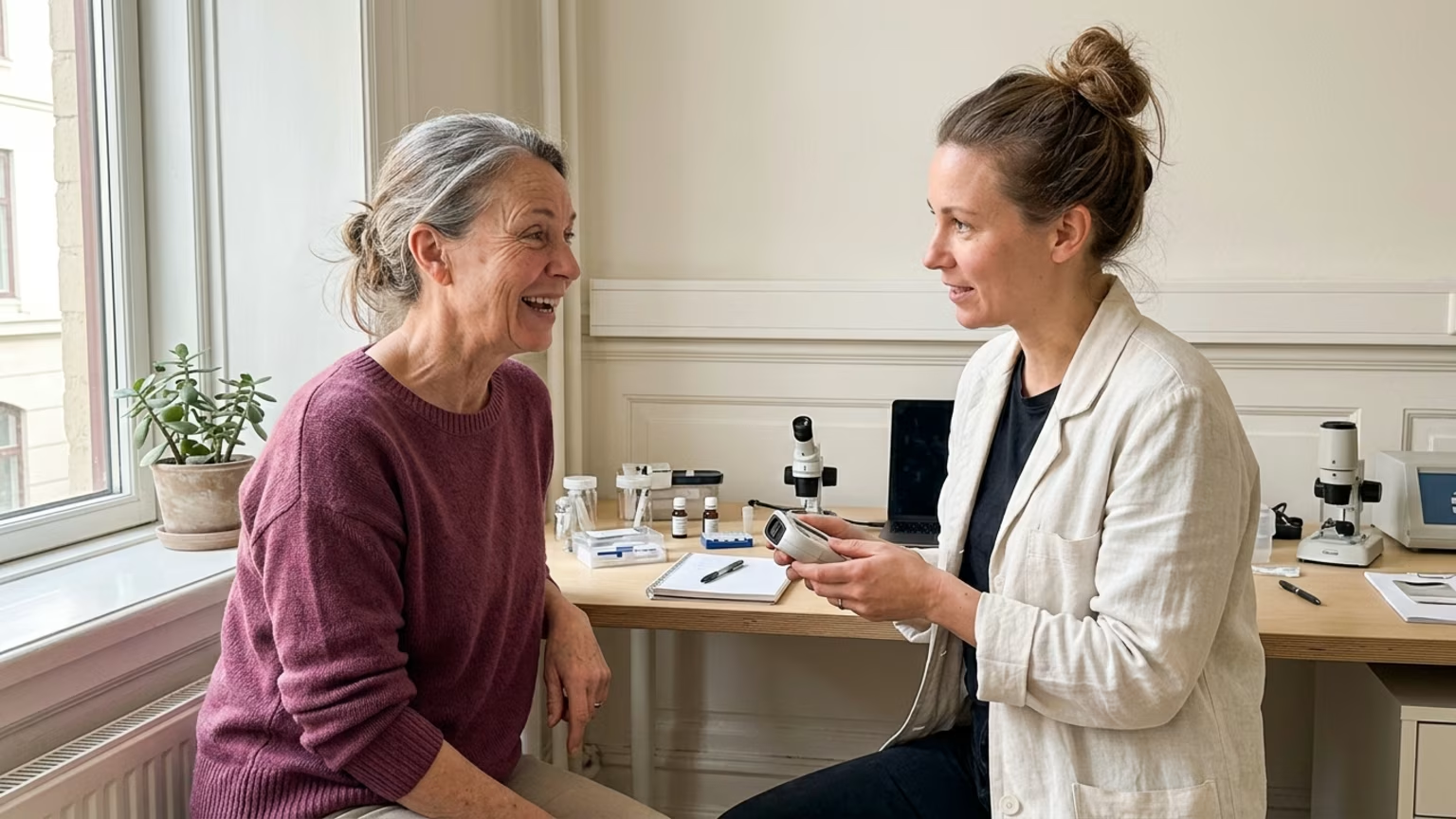

QIMA introduced SQINGEVITY for skin-longevity testing. We examine its research pathway, protein-damage score and evidence limits.





In a report dated October 14, 2026, Longevity Technology said QIMA Life Sciences introduced SQINGEVITY at Cosmetic 360 in Paris. The testing platform is intended to assess skin- and hair-aging claims through a pathway linking laboratory research with studies involving volunteers.
That makes this a development in how cosmetic claims are investigated rather than a new product for the bathroom shelf. For readers weighing skin-longevity language, the relevant story is the evidence behind the claim. The announcement puts the testing process in the foreground: what is tested, how it is measured and how the result becomes a consumer-facing statement.
According to Longevity Technology, SQINGEVITY is described as following an ingredient through cell culture, human skin explants and volunteer assessments. These are distinct research settings within a proposed process that runs from a biological question to measurements in people.
For readers unfamiliar with the terminology, cell culture involves cells studied in a laboratory. Human skin explants are samples of skin tissue studied outside the body. Volunteer assessments bring the investigation into studies involving people.
The report lists in-vitro and ex-vivo testing alongside non-invasive sampling, bioanalysis and clinical imaging. Bioanalysis refers to the analysis of biological samples. The offering brings several ways of investigating an ingredient under the same testing platform.
The practical logic is to ask related questions at different levels rather than treating every test as the same type of evidence. Describing a pathway makes it easier to see where laboratory investigation ends and volunteer assessment begins.
QIMA’s Alain Moga described the intended scope as moving “from mechanistic hypothesis to clinical proof.” The wording captures the platform’s aim of connecting a biological hypothesis with clinical assessment.
The article says the platform is supported by 12 expert centers. It also describes a laboratory network spanning Europe, Brazil, India and Mauritius. This is presented as infrastructure for multicenter studies.
One offering within the platform is Longevity SCORE. According to the report, it measures protein carbonylation in ex-vivo human skin explants and expresses the result on a 0-to-100 scale benchmarked against market references.
Protein carbonylation is presented as a biological measure of protein damage. The underlying measurement and the final score are related but distinct: one is the biological readout and the other expresses it against selected references.
That distinction matters when reading a numerical claim. The first question is what the number represents, followed by what the comparison was designed to show.
Longevity Technology reports that skin longevity has no agreed definition or measurement consensus. It also cautions that a change in protein carbonylation alone does not prove that a cosmetic extends skin longevity. A benchmarked score supports comparison with its reference set rather than demonstrating durable skin-health benefits in people.
The article describes a testing offering rather than presenting original results from a completed product trial. It does not provide a trial sample size, clinical effect size or documented duration of benefit. A promising result in a skin explant may also fail to translate into the experience of using a finished product at home.
Appearance and biological function are separate outcomes in the report’s analysis. An improvement in how skin looks does not establish a change in deeper biological processes. The report says stronger longevity claims would need suitable controls, functional clinical endpoints and follow-up long enough to assess whether effects persist.
Recruitment is another issue. The report cautions that findings in a narrow volunteer group may not apply across skin phototypes and populations. A laboratory network covering several regions does not establish that any particular study enrolled a representative group.
Commercial relationships also deserve transparency. The report notes that QIMA supplies testing to companies developing product claims. That relationship warrants scrutiny of study methods and claim wording; it is not evidence that the testing is biased. Likewise, the executive description of “clinical proof” is an attributed statement rather than independent validation of the platform’s performance.
Newsweek’s separate coverage of the broader longevity industry quoted experts warning that commercial claims about slowing aging or extending lifespan can have limited evidence. That reporting was not an assessment of QIMA. Its relevant point is that support for healthy-aging practices does not automatically validate every product carrying a longevity claim.
The practical value of this launch is a clearer way to read future product claims. The report’s evidence questions translate into a focused set of checks without turning a laboratory score into a personal skincare recommendation.
Younell’s discussion of how skincare claims are tested offers a related perspective on study descriptions. Our closer look at collagen evidence applies the same research-led approach to another area where claim wording deserves careful attention.
SQINGEVITY’s introduction is an industry development in how skin- and hair-aging claims may be investigated. Its significance lies in the attempt to connect several research settings within a single service. The next useful milestone would be published product-specific results showing what those assessments establish.
The open question is whether this pathway will produce evidence connecting clearly defined biological measurements with meaningful and lasting outcomes in people. For readers, the most useful standard remains a close match between the result reported and the benefit claimed.
Stay connected for research and practical guidance on skin, hair, collagen, nutrition and beauty longevity. Clear ideas for people who want to understand how appearance changes with age and make better-informed choices over time.


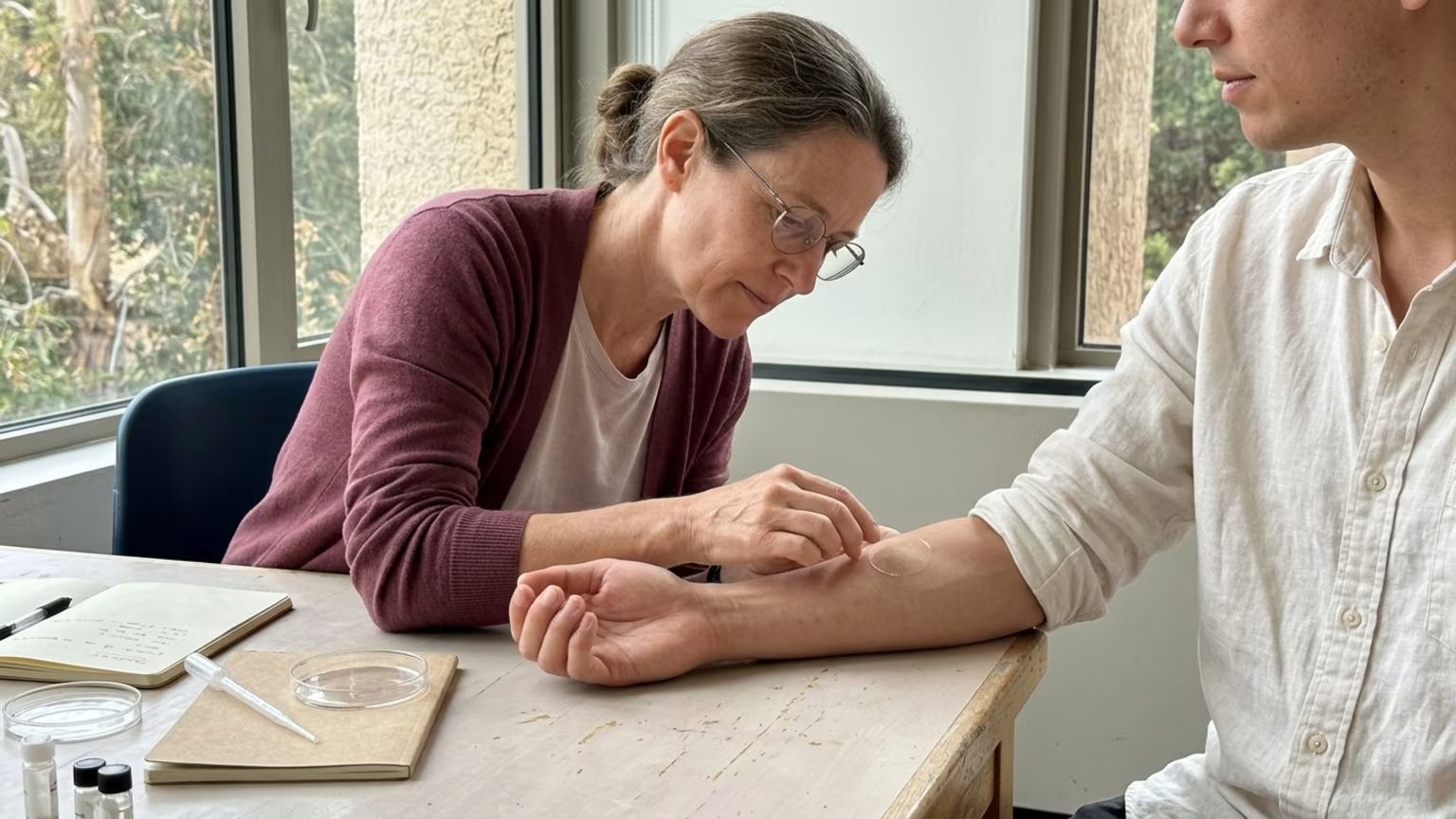


Understand your skin, hair and body better without chasing every new trend, treatment or promise.
explore the Blog