
BASF reports research with Stanford on bio-based skin films. See the hydration mechanism, evidence gaps and implications for moisturizer choices.





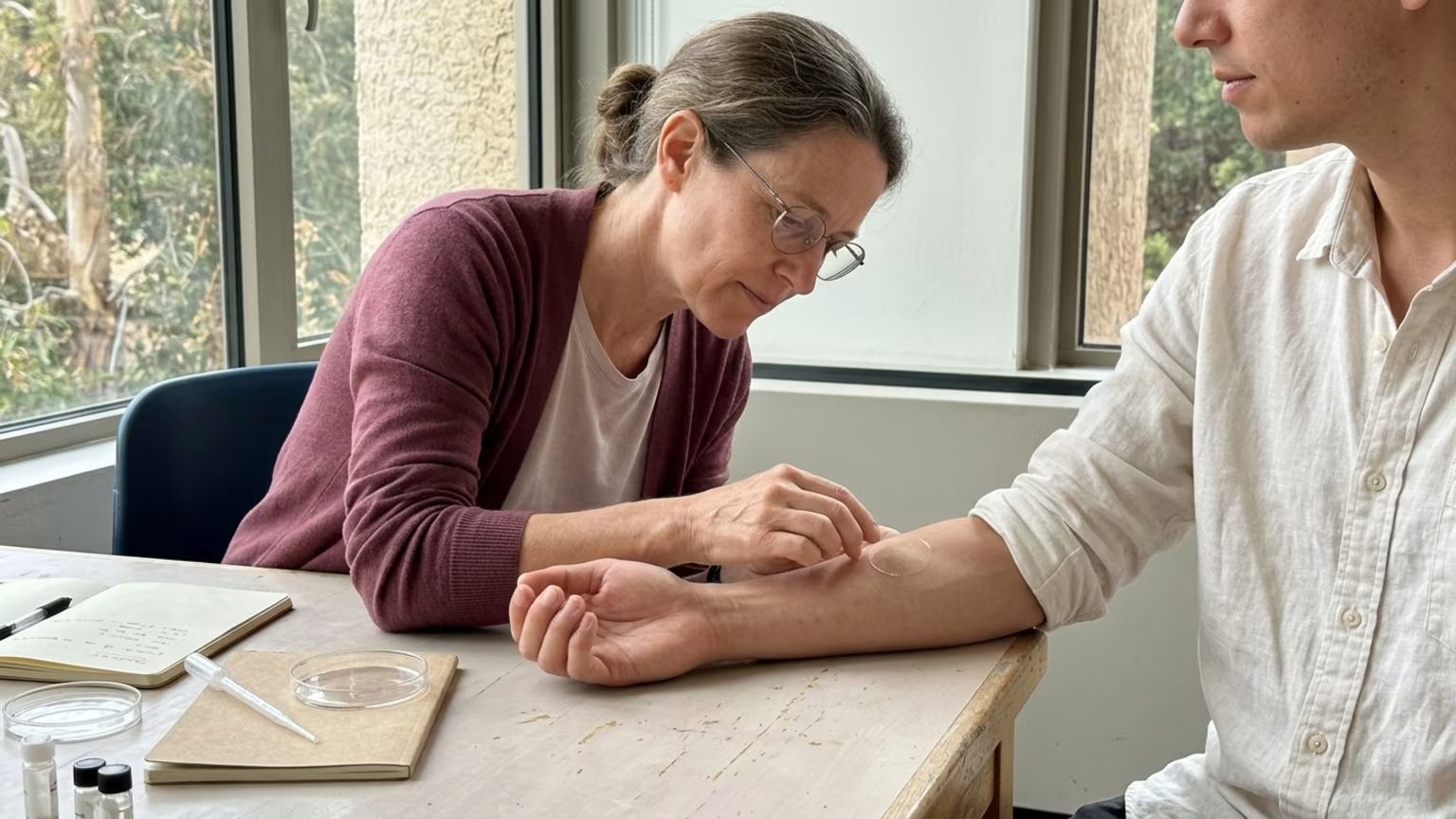
On September 28, 2026, BASF reported that scientists from Stanford University and BASF had investigated how bio-based polysaccharides form films on skin and influence hydration and barrier-related properties. The research focused on moisturizer design, particularly how the structure of these films affects water movement through the skin’s outer layer.
BASF listed the work as Poster 528 for the 36th IFSCC Congress in Perth, Australia, held from September 28 to October 1, 2026. Stanford’s Reinhold Dauskardt was named in the presentation listing. The announcement puts the spotlight on a formulation question: how an ingredient behaves on skin, rather than simply how it appears on a label.
According to BASF, the researchers examined molecular entanglement and crystallization in biopolymers. In everyday language, that means looking at how molecular strands become tangled and how parts of the material form more ordered structures. The team investigated how those processes contribute to film formation and influence water transport within the stratum corneum.
The stratum corneum is the skin’s outer layer. Here, the film is the layer formed by the additives on the skin surface. The scientific interest lies in the relationship between that film’s structure and the movement of water through the outer skin layer.
BASF reports that the additives improved hydration retention and facilitated the penetration of emollient ingredients. It also reports reduced drying-induced stress and maintained skin-barrier function.
Water retention, movement of emollient ingredients and drying-related stress are distinct aspects of formulation performance. Considering them together puts the focus on how a formula behaves, rather than a single ingredient’s name.
The interesting shift is from asking only what is in a moisturizer to asking what its ingredients do together at the skin surface. In this report, film formation is part of the formulation question itself. A material’s arrangement becomes something to investigate alongside its intended hydration role.
The BASF announcement does not disclose numerical results or a detailed experimental protocol for the polysaccharide-film project. It does not say whether human participants were involved. The public information therefore leaves the size, durability and everyday relevance of the reported effects unresolved.
The work is listed as a scientific congress poster, not described as a consumer clinical trial. A separate collagen-peptide project on the same BASF page is described as including a clinical study. That clinical reference belongs to the other project and should not be transferred to the film research.
Ingredient identities and finished formulas are not disclosed. The available material does not establish comparisons with existing moisturizers or differences between skin types. It therefore does not demonstrate that a bio-based ingredient or a product containing it will perform better than an alternative.
The poster title includes the term “non-occlusive.” The announcement does not define the performance basis for that description or provide a comparative test. The wording alone is not enough to judge how the film behaves relative to another moisturizing system.
Personal Care Insights reported BASF’s view that renewable-origin materials offering hydration and barrier support could address expectations for efficacy and environmental responsibility. That is the company’s viewpoint, not independent evidence of consumer demand. The announcement also supplies no sourcing details or lifecycle assessment to establish the environmental advantage of these materials.
These boundaries do not make the research uninteresting. They identify the gap between a promising formulation concept and evidence that can support a finished-product claim.
For health-conscious women building a long-term skin-care routine, the immediate value is a better way to read moisturizer claims. Use this research as context for evaluating a formula, not as a reason to replace a familiar product solely because another one advertises bio-based film technology. No particular product recommendation follows from the announcement.
A useful evaluation separates three questions:
These questions translate the report into a practical reading habit without turning an early research finding into personal treatment advice. The goal is not to reject unfamiliar ingredients. It is to match confidence in a claim to the evidence supporting it.
Younell’s guide to assessing hydration and barrier-care claims provides a broader starting point for thinking about routine choices. This announcement adds a narrower question to that framework: what does the ingredient form on skin, and how was its effect on water movement evaluated?
When a product description cites congress research, follow the citation to the specific project. Ask whether the claim concerns film structure or a measured benefit from the finished formula. Younell’s coverage of different approaches to skincare testing offers another way to think about the evidence behind product language.
It is reasonable to care about both skin performance and environmental responsibility. Treat those as separate questions when reading product descriptions. Evidence about water transport answers a performance question; evidence about sourcing or lifecycle impact answers an environmental question. One type of evidence should not be used as a stand-in for the other.
If the decision involves an individual skin concern or treatment, a qualified clinician is the appropriate source of personal guidance. Bring questions about a product’s evidence to that discussion rather than treating a scientific poster as a recommendation.
The Stanford and BASF work places film structure at the center of an interesting moisturizer-design question. Its value lies in studying a formulation mechanism, not in supplying a shopping shortcut.
The next useful evidence would connect a clearly identified material with a finished formulation and outcomes relevant to people using it. That would help readers assess whether the reported behavior translates into a meaningful reason to choose one moisturizer over another.
As this research develops, will bio-based film design become a measurable basis for choosing moisturizers, rather than another ingredient story on the label?
Stay connected for research and practical guidance on skin, hair, collagen, nutrition and beauty longevity. Clear ideas for people who want to understand how appearance changes with age and make better-informed choices over time.





Understand your skin, hair and body better without chasing every new trend, treatment or promise.
explore the Blog