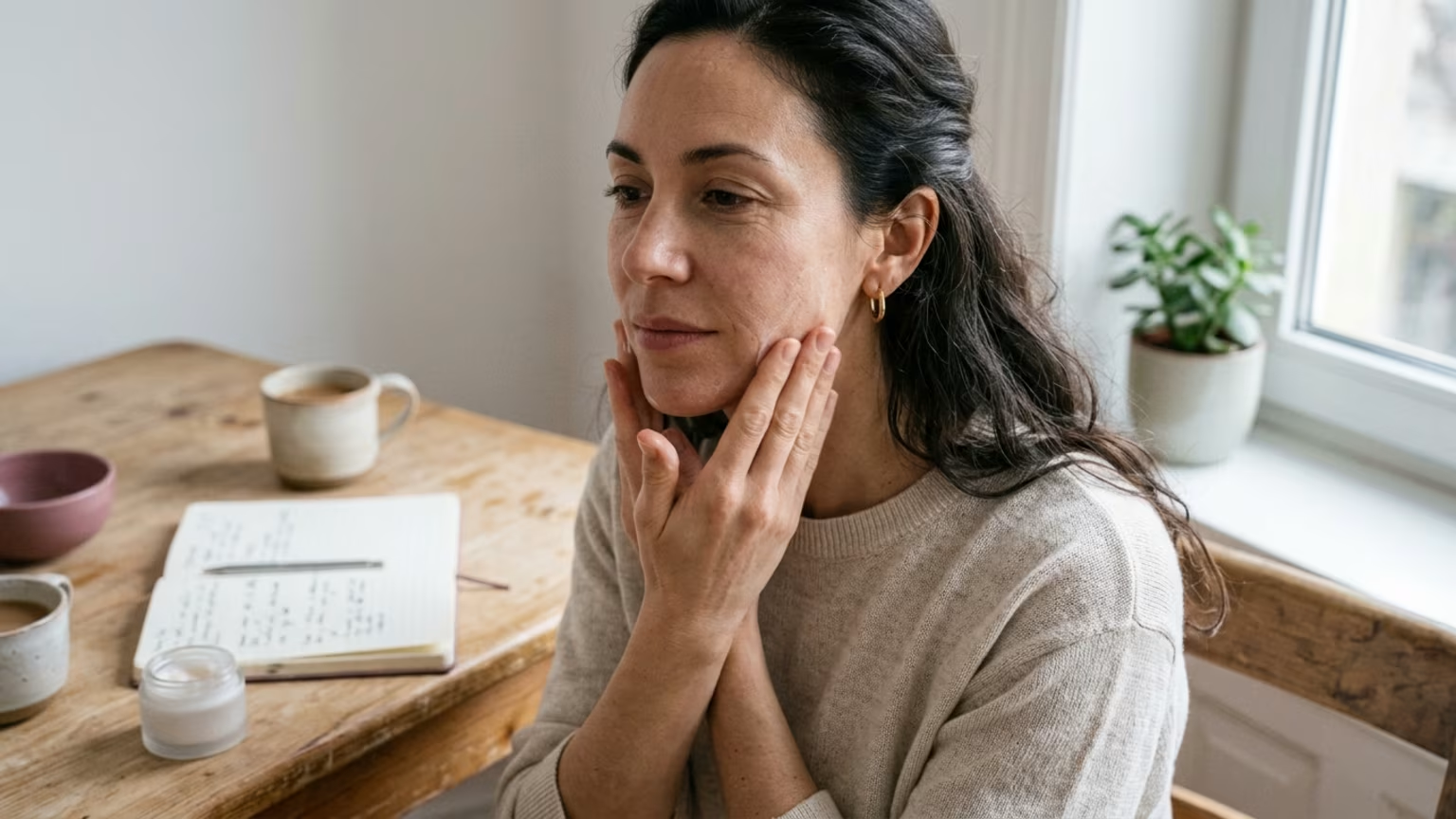

A practical, evidence-based guide to facial skin hydration. Learn why drinking water isn't enough for dry skin and how to build a gentle barrier care routine.





In September 2026, a new French-language explainer published by DH Net analyzed common claims about facial skincare. The piece evaluated popular assumptions about pores, oily skin, and the necessity of drinking massive amounts of water. Specifically, the article rejected the idea that drinking two or three litres of water daily will transform dry skin into a visibly plump complexion. The explainer clarified that while adequate hydration is important for general health, surface dryness requires direct topical intervention.
To understand why water consumption alone falls short, we have to look at how the skin barrier actually works. The central recommendation from DH Net is the daily use of a cream that limits transepidermal water loss. The American Academy of Dermatology explains that moisturizers work by adding moisture to the skin and preventing water from evaporating. When the skin barrier is healthy, it traps moisture effectively without needing aggressive or expensive interventions.
The DH Net explainer notes that topical collagen creams cannot recreate the skin's own natural collagen, as the molecules are simply too large to penetrate deeply. When our team first started reviewing clinical trials on collagen supplementation, I was struck by how often the media misinterpreted the data. A study showing a minor increase in skin elasticity was suddenly headlined as an astonishing transformation. It made me realize how desperately consumers need a translator for beauty science, someone who can say exactly what a study proves and what it does not prove.
The analysis also challenged the assumption that natural ingredients are automatically safer or gentler for the barrier. DH Net points out that synthetic ingredients are not automatically harmful to skin health. Furthermore, the publication argues that the price of a cream does not necessarily predict its actual effectiveness. High prices often reflect packaging, marketing, and brand positioning rather than superior biological results.
While surface dryness requires topical care, foundational habits remain crucial for overall skin resilience. During our extensive research into environmental aging, we tested how various lifestyle factors impact skin barrier recovery. It was fascinating to see the data clearly show that simple habits like sleep and basic hydration often outperform the most expensive topical treatments. This reinforced our commitment to emphasizing foundational health over product hype.
The evidence supporting excessive fluid intake for skin hydration remains noticeably thin in clinical literature. The Canadian Medical Society for Dermatology summarized a systematic review that found only six eligible studies on dietary fluid intake and skin hydration. The review determined that the overall quality of this evidence was relatively weak. Any slight benefit was mostly observed in people whose previous water intake was unusually low.
Rejecting excessive water consumption claims should not be interpreted as a suggestion to ignore daily hydration entirely. The DH Net article explicitly affirms that adequate fluid intake is still important for the body. Furthermore, these practical guidelines emphasize that a single product type cannot magically fix every skin issue. While non-comedogenic labeling is a helpful guide for oily skin, it is not an absolute guarantee that a formula will suit everyone.
The American Academy of Dermatology advises seeking medical care when dryness becomes painful, cracked, bleeding, or highly irritating. This practical approach to long-term skin health aligns deeply with our own editorial mission at Younell. I remember speaking with a dermatologist who told me her patients were coming in with severe anxiety about normal skin aging. That anxiety was driven entirely by social media filters and aggressive cosmetic marketing.
That eye-opening conversation became a major cornerstone of our organizational philosophy. We decided right then that our publication would never frame natural changes like wrinkles or thinning hair as personal failures. The DH Net explainer shares this measured perspective by focusing on steady maintenance over unrealistic promises. Moisturizers can certainly improve surface softness, but no cream can completely halt the natural progression of time.
Health-conscious adults can apply these findings by focusing on consistent barrier preservation instead of chasing trendy treatments. The American Academy of Dermatology recommends applying moisturizer immediately after bathing while the skin is still damp. This simple timing adjustment helps trap water before it has a chance to evaporate into the air. By adopting this technique, you can maximize the performance of the skincare products you already own.
When adapting routines from your 30s to your 60s, you should carefully select product textures based on your individual needs. The American Academy of Dermatology explains that perimenopausal people and those aged fifty or older should use cream-based moisturizers. Meanwhile, ointments offer the thickest consistency and serve as the most effective option for very dry skin. Oily areas can still be dehydrated, and DH Net notes that aggressive cleansing might actually worsen sebum production.
Those focusing on supporting barrier health through dietary choices should remember that topical care remains an essential baseline. For excessively dry skin, the American Academy of Dermatology recommends using a moisturizer at least twice daily. You should also select a fragrance-free cleanser and choose products clearly labeled as non-comedogenic. The organization identifies ceramides and hyaluronic acid as helpful ingredients while warning that common additions like fragrance and alpha-hydroxy acids can aggravate sensitive skin.
Beyond daily hydration, the DH Net explainer identifies sunlight as the main contributor to premature skin ageing. For long-term structural resilience, daily use of a broad-spectrum sunscreen with SPF 30 or higher is non-negotiable. Routine simplicity often outperforms aggressive daily intervention for long-term barrier health. When evaluating realistic timelines behind core skincare ingredients, avoid the temptation to constantly scrub or peel your face.
DH Net cautions that excessive exfoliation can weaken the skin barrier and increase overall irritation. Remember that persistent tingling is often a sign of irritation rather than proof of a product working. Taking a measured approach to exfoliation helps maintain the integrity of your moisture barrier over time. Consistency, rather than intensity, remains the most proven path to visible skin longevity.
The shift away from exaggerated cosmetic claims marks a maturing phase in the longevity publishing space. Consumers are increasingly demanding transparency about what topical ingredients can and cannot safely achieve. As researchers continue to refine our understanding of barrier function and transepidermal water loss, the focus is firmly on gentle maintenance. How will the beauty industry adapt its messaging as the demand for biological reality replaces the desire for instant transformations?
Stay connected for research and practical guidance on skin, hair, collagen, nutrition and beauty longevity. Clear ideas for people who want to understand how appearance changes with age and make better-informed choices over time.




Understand your skin, hair and body better without chasing every new trend, treatment or promise.
explore the Blog