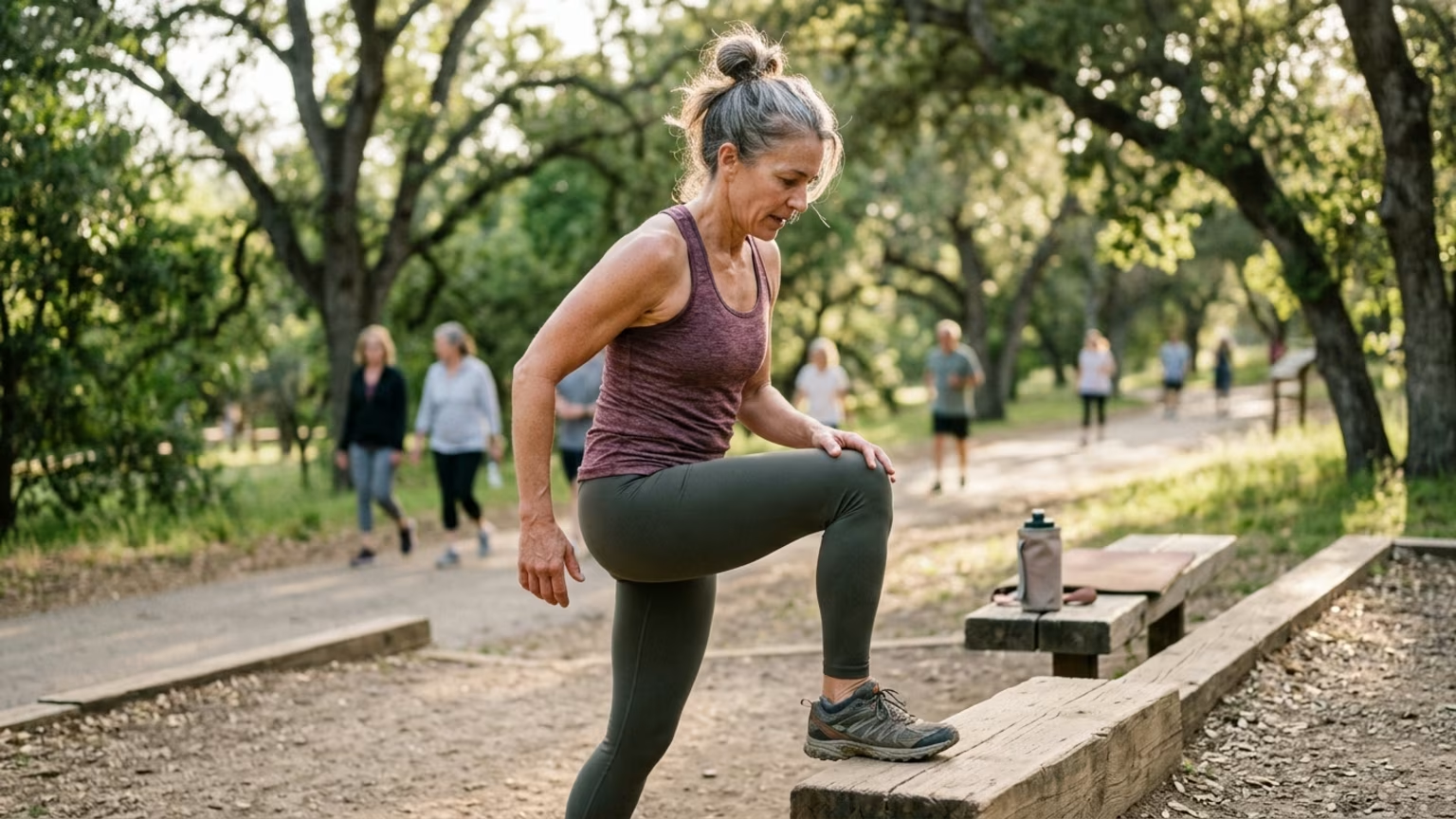

A 2026 report outlines the science of midlife movement. Learn why experts recommend consistent strength and aerobic habits for structural longevity after 40.





In September 2026, the publication Infobae featured sports physician Jorge Franchella discussing the gradual impact of sedentary behavior. Franchella noted that physical changes become increasingly consequential starting around age 40. He explained that adults experience gradual shifts in muscle mass, bone density, cardiovascular capacity, and recovery times. These age-associated changes develop gradually over time rather than appearing as a single abrupt event.
To counter this structural decline, Franchella advised patients not to let more than three days pass between training sessions. His specific recommendation stems from the idea that the body can otherwise forget some of the positive effects of training. Physical activity remains advisable at any age, but maintaining a consistent training frequency becomes much more important around midlife. This timely clinical perspective serves as a practical reminder about consistency for health-conscious women navigating the aging process.
The core finding centers on how the body maintains its structural integrity over decades. Franchella emphasizes combining aerobic conditioning with strength-endurance training rather than focusing solely on maximum lifting capacity. He describes strength-endurance as repeated moderate effort, which he presents as especially relevant to long-term health. This approach helps the body maintain functional muscle tissue without requiring extreme physical strain.
Muscle tissue functions as an active endocrine organ that responds directly to repeated moderate-force exercise. This physical stimulation may encourage the production of myokines, which are vital signaling molecules produced by muscle cells. Infobae reports that these myokines are associated with metabolic regulation, inflammation management, and bone health. Furthermore, Franchella describes aerobic exercise as the foundation of prolonged training because it links conditioning with improved work capacity and recovery.
The global scale of physical inactivity presents a significant challenge to healthy aging. A 2026 research article summarized World Health Organization estimates showing that about 31 percent of adults globally were insufficiently active in 2022. This concerning statistic translates to roughly 1.8 billion people worldwide who fail to meet recommended physical activity minimums. The broader public health context indicates that this number is rising, as estimates showed roughly 26 percent of adults were inactive in 2010.
Sedentary behavior and insufficient physical activity are related but distinct concepts in recent medical literature. A person can successfully meet weekly exercise targets while still spending prolonged periods sitting, which researchers identify as a separate cardiometabolic concern. In Argentina, Infobae reports that adults sit for an average of nine hours per day. Franchella stated that leaving a sedentary lifestyle reduces morbidity and mortality risk by more than 30 percent.
Research strongly supports structured, multicomponent interventions for those experiencing age-related muscle decline. A 2026 meta-analysis of 27 controlled trials studied 1,845 older women diagnosed with sarcopenia. That analysis found that combined resistance, aerobic, balance, and nutritional interventions produced the largest beneficial effects on muscle mass.
Additionally, a separate 2026 review analyzed the direct effects of resistance exercise on physical function. This review found a statistically significant improvement in muscle-specific strength among the measured participants. The analysis reported a standardized mean difference of 0.61 with a 95 percent confidence interval of 0.27 to 0.94. However, the researchers also reported substantial heterogeneity between the studies, indicating that individual results varied widely based on program design.
While these statistical findings are compelling, we must view them through a lens of scientific caution. A recent 2026 review explicitly states that age 40 is not a diagnostic cutoff for sarcopenia. The phrase silent muscle loss is useful editorial language, but available evidence does not establish that all women experience clinically meaningful decline at exactly 40. Furthermore, the three-day training rule is a practitioner's expert opinion rather than a rigid universal clinical requirement.
Official international guidance takes a slightly different approach to weekly adult exercise metrics. The World Health Organization generally recommends 150 to 300 minutes of moderate aerobic activity weekly along with two days of muscle strengthening. The cited sources do not mandate that every single adult must train at least once every three days. Exercise dose estimates should be treated as evidence-supported ranges rather than fixed biological thresholds or universally optimal prescriptions.
It is also critical to remember that clinical exercise studies in older women with sarcopenia cannot automatically be generalized to healthy women in their thirties. Improvements in muscle strength, physical mass, postural alignment, and metabolic rate are not strictly interchangeable outcomes. The available evidence suggests that resistance training consistently improves strength, while changes in measured muscle mass remain highly variable. Women with significant joint pain, cardiovascular disease, or other medical conditions should obtain individualized clinical guidance before increasing their exercise intensity.
Health-conscious adults can easily translate these clinical findings into sustainable weekly routines. The primary goal is to build a consistent schedule that combines aerobic endurance with progressive resistance training. You can avoid long gaps in physical activity by using the three-day rule as a helpful consistency prompt. During our extensive research into environmental aging, our team tested how various lifestyle factors impact baseline skin barrier health and environmental recovery.
The data clearly showed that simple habits like sleep and basic hydration often outperform the most expensive topical treatments. This taught us that foundational health practices always supersede marketing hype. We apply this exact logic when advising readers to prioritize consistent nutrition and exercise protocols for functional longevity. Break up prolonged sitting periods with light movement, because sedentary exposure is a distinct health concern entirely.
Women in midlife should consider individualized physical assessments to safely adapt frequency and workload to their unique health status. Focus on measuring practical outcomes like walking tolerance, rapid recovery, and steady balance rather than just focusing on body weight. Understanding how daily movement impacts overall structure makes protecting your foundational muscle during physical changes a highly measurable priority. Start your exercise routine safely below maximum effort, and always progress your resistance workload gradually over time.
The conversation around midlife movement is clearly shifting from inevitable decline to functional preservation. We are learning that maintaining long-term health requires individualized assessment rather than a single universal exercise prescription. Researchers continue to investigate how myokines and muscle tissue interact with systemic inflammation and bone health over time. As clinical understanding deepens, how will future guidelines personalize exercise recommendations to support healthy aging across different biological profiles?
Stay connected for research and practical guidance on skin, hair, collagen, nutrition and beauty longevity. Clear ideas for people who want to understand how appearance changes with age and make better-informed choices over time.




Understand your skin, hair and body better without chasing every new trend, treatment or promise.
explore the Blog