
A clinical breakdown of the ENLIGHTENme study examining how daytime light exposure influences sleep quality, daily activity rhythms, and healthy aging routines.





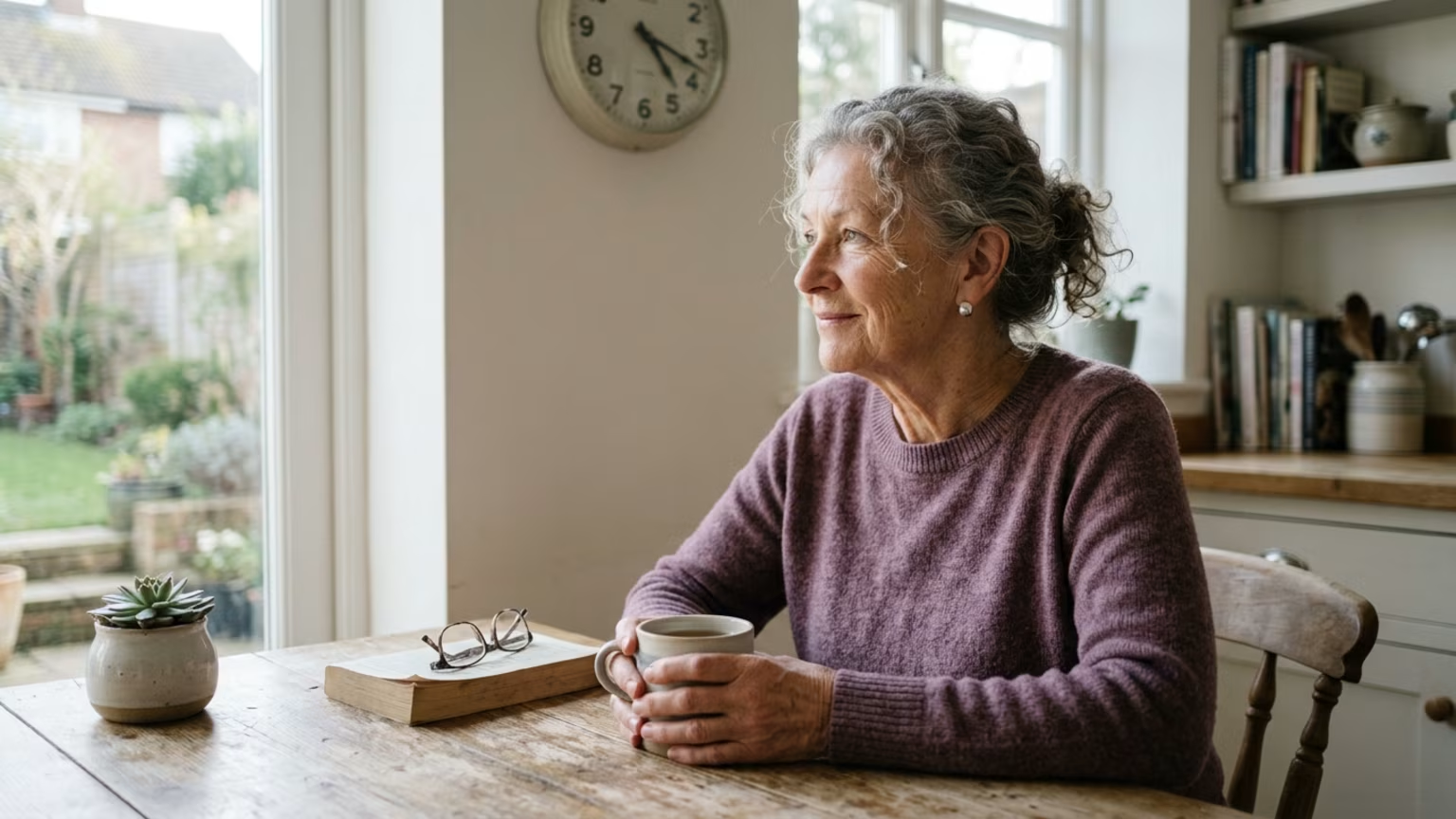
In September 2026, a new analysis published in the Journal of Pineal Research examined how daytime light exposure relates to rest and daily activity. The ENLIGHTENme study tracked 202 independently living adults aged 63 to 92 in Amsterdam, Bologna, and Tartu. Researchers monitored participants for two weeks using a wrist device that tracked sleep and movement, alongside a neck worn sensor that measured the actual light reaching them throughout the day. The findings showed that higher naturalistic daytime light exposure was associated with better subjective sleep quality and more consolidated wakefulness.
The body relies on environmental cues to regulate its internal clock and manage periods of rest. Natural daylight helps reinforce this crucial circadian timing signal, which tells the brain when to be alert and when to begin preparing for sleep. Age related changes in the eyes can reduce the amount of light reaching the systems that manage this clock. Shorter wavelength light is particularly important for this process, making daytime light exposure highly relevant for older adults.
By receiving adequate daylight, the body can maintain more consistent periods of wakefulness during the day. This steady activity pattern helps prevent sleep disruption later at night. While these mechanisms are complex, the basic principle involves aligning our lifestyle habits with natural environmental cycles. For adults focused on healthy aging, understanding this connection offers a practical way to support overall recovery. You can read more about how circadian health and light exposure intersect in our related clinical guide.
The researchers categorized participants into low, moderate, and high light exposure groups based on their daily habits. Participants in the high light group were three times as likely as those in the low light group to fall within the healthy range on a standard sleep quality questionnaire. The paper reported fewer consolidated wakefulness periods in the low light group than in the high light group, with a reported p-value of 0.04. The moderate light group did not show the same statistically significant difference compared with the low light group.
A separate component of the research provided 98 participants with a home light therapy lamp while 93 participants continued without one for 12 weeks. Participants were instructed to use the lamp within an hour of waking, avoid using it before sunrise, and switch it off at least four hours before their usual bedtime. Earlier supplemental light use was associated with less disrupted rest and activity patterns. A separate UK Biobank analysis of more than 400,000 adults, including 54% women aged 37 to 73, linked more time in outdoor light with easier waking and less tiredness.
In that large observational study, the odds ratio for greater ease of getting up was approximately 1.46 to 1.49. The UK Biobank researchers also noted that the odds ratios for tiredness and insomnia symptoms were approximately 0.80 to 0.82 and 0.94 to 0.97, respectively. Another observational report associated each additional 30 minutes of sunlight before 10 a.m. with an approximately 23 minute earlier sleep midpoint. Furthermore, sunlight exposure after 3 p.m. was associated with an approximately 19 minute earlier sleep midpoint in that same analysis.
The central ENLIGHTENme finding is observational, meaning it does not prove that more daylight directly caused better sleep. Healthier or more mobile adults might simply spend more time outdoors in brighter environments naturally. Participants with conditions including high blood pressure, diabetes, obesity, or cardiovascular disease generally had lower overall light exposure. However, this pattern does not establish that low light caused those conditions or that increasing light would reverse them.
The available reporting does not provide the exact lux thresholds defining the low, moderate, and high light groups, nor does it detail the specific sample size of each group. The UK Biobank researchers also treated their results as associations rather than proof of a causal effect. The additional study measuring morning sunlight found no statistically significant association between midday sunlight exposure from 10 a.m. to 3 p.m. and sleep midpoint. It also found no significant association between sunlight exposure and total sleep time, sleep onset speed, or sleep efficiency.
Furthermore, the ENLIGHTENme study measured sleep and movement rather than direct outcomes like collagen synthesis, skin repair, or hair growth. It is important to separate established circadian benefits from unrelated beauty claims, as a light therapy lamp is not equivalent to ordinary outdoor light.
At Younell, we prioritize foundational health choices to support long term wellness. During our comprehensive review of environmental aging, we tested how various lifestyle factors impact skin barrier recovery. It was fascinating to see the data clearly show that simple habits like sleep and basic hydration often outperform the most expensive topical treatments. This reinforced our commitment to emphasizing foundational health over product hype. We encourage readers to view daytime light as a low cost behavioral habit rather than a guaranteed medical treatment.
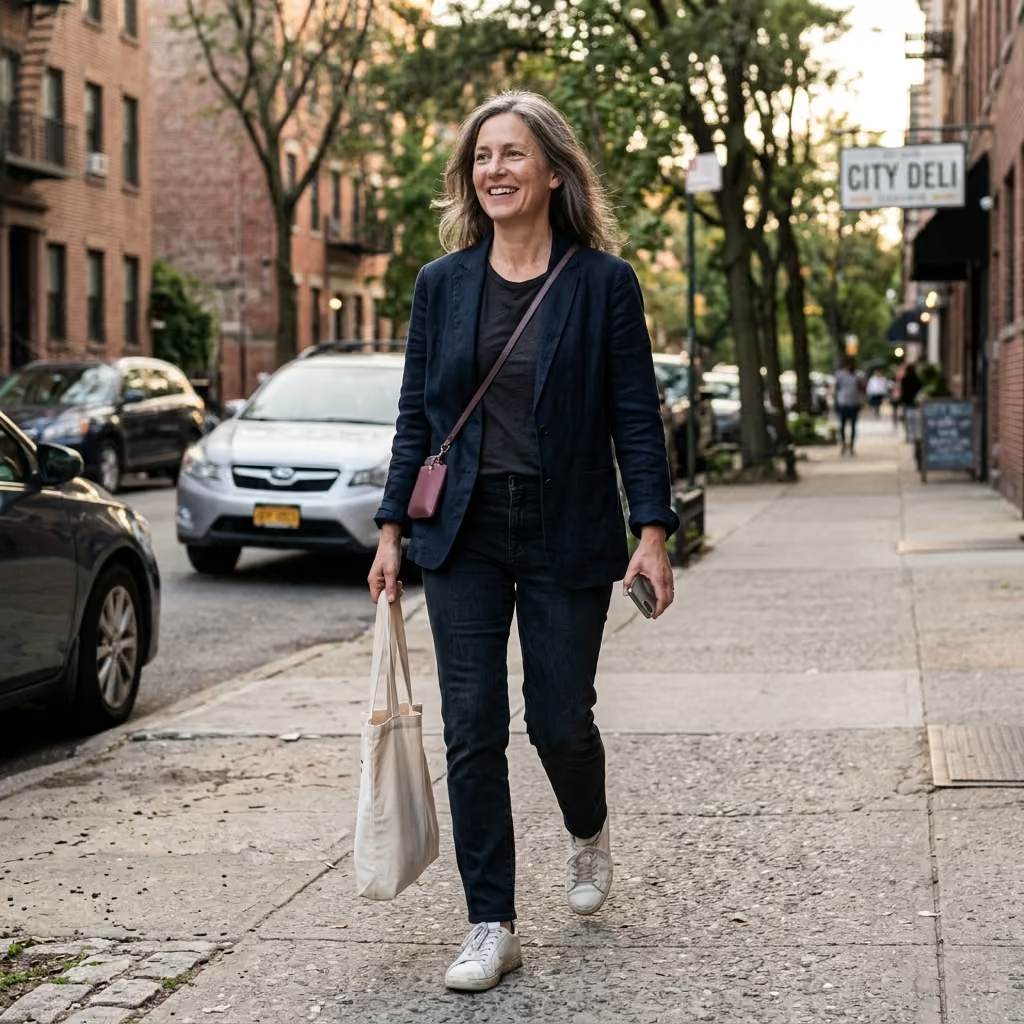
You might build more daylight into the first part of your day through an outdoor walk or a workspace near a bright window. Paying attention to the timing of your light exposure is just as critical as the brightness itself. The study reporting advises ending supplemental light at least four hours before your usual bedtime. The wider literature also distinguishes potentially helpful daytime exposure from bright evening or nighttime light. Understanding these nuances helps clarify how nutrition for better sleep and healthier aging works alongside environmental cues to reinforce your natural clock.
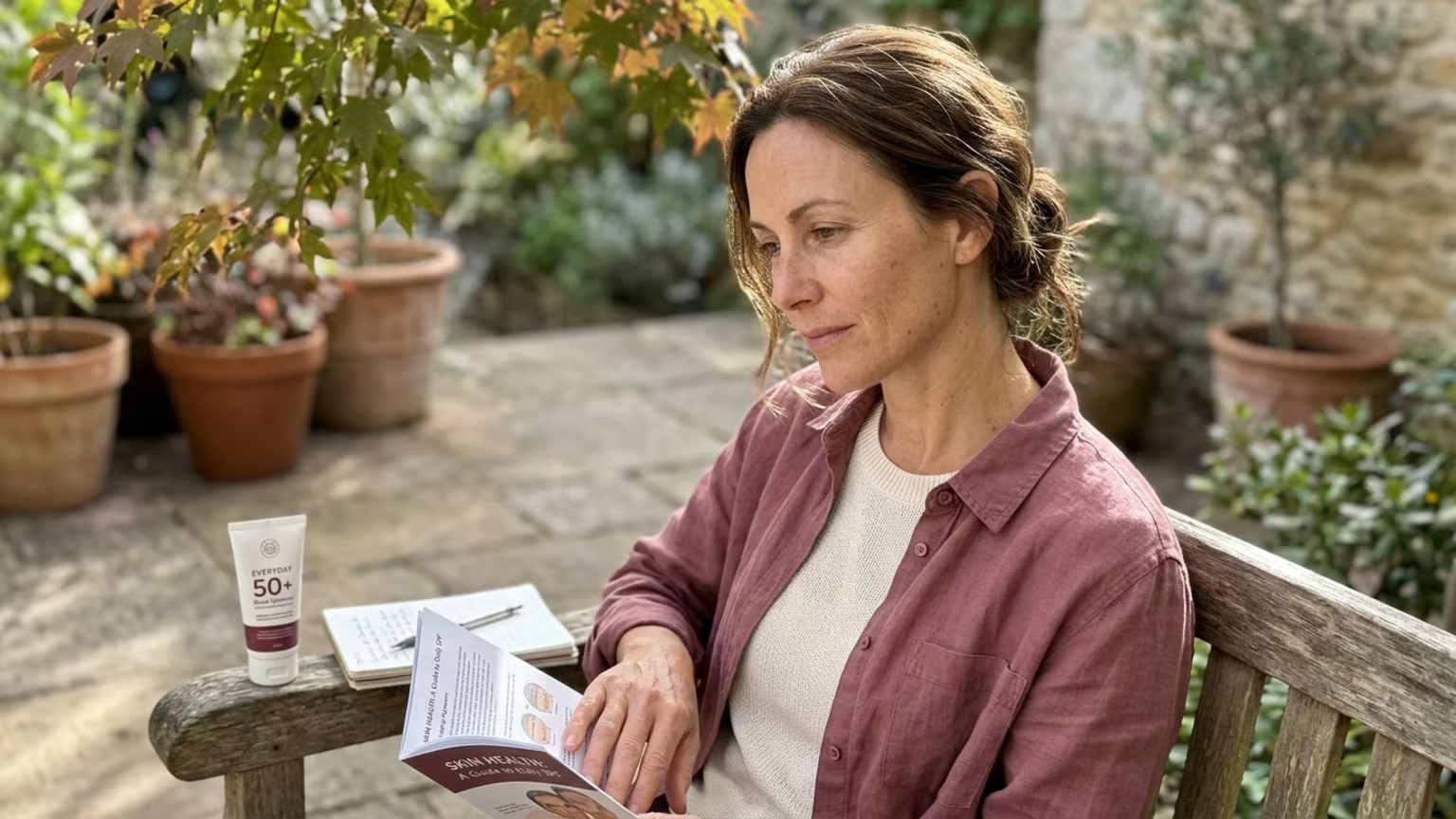
Protecting your skin while seeking outdoor light remains a fundamental priority for anyone focused on healthy aging. The evidence supports daytime light as a circadian benefit, not as a reason to abandon daily sun protection practices. Better sleep and more stable daily rhythms may support energy and recovery, but intentional unprotected ultraviolet exposure is entirely unnecessary. For those evaluating home devices, it is helpful to understand the science behind lasers and light treatments for aging skin to avoid common risks. Always prioritize safe, evidence based practices over aggressive marketing claims.
The connection between natural environments and our daily recovery cycles continues to be a compelling area of clinical research. As researchers map out the precise timing and intensity of daylight needed for optimal health, the focus is shifting from isolated interventions to comprehensive lifestyle design. How will future clinical trials isolate the specific wavelengths of natural light that best support our internal clocks without accelerating environmental skin damage?
Stay connected for research and practical guidance on skin, hair, collagen, nutrition and beauty longevity. Clear ideas for people who want to understand how appearance changes with age and make better-informed choices over time.



Understand your skin, hair and body better without chasing every new trend, treatment or promise.
explore the Blog