
A Finnish study links remote workdays to 14 more minutes in bed but 44 extra minutes of sedentary behavior. Learn how to balance sleep and daily movement.





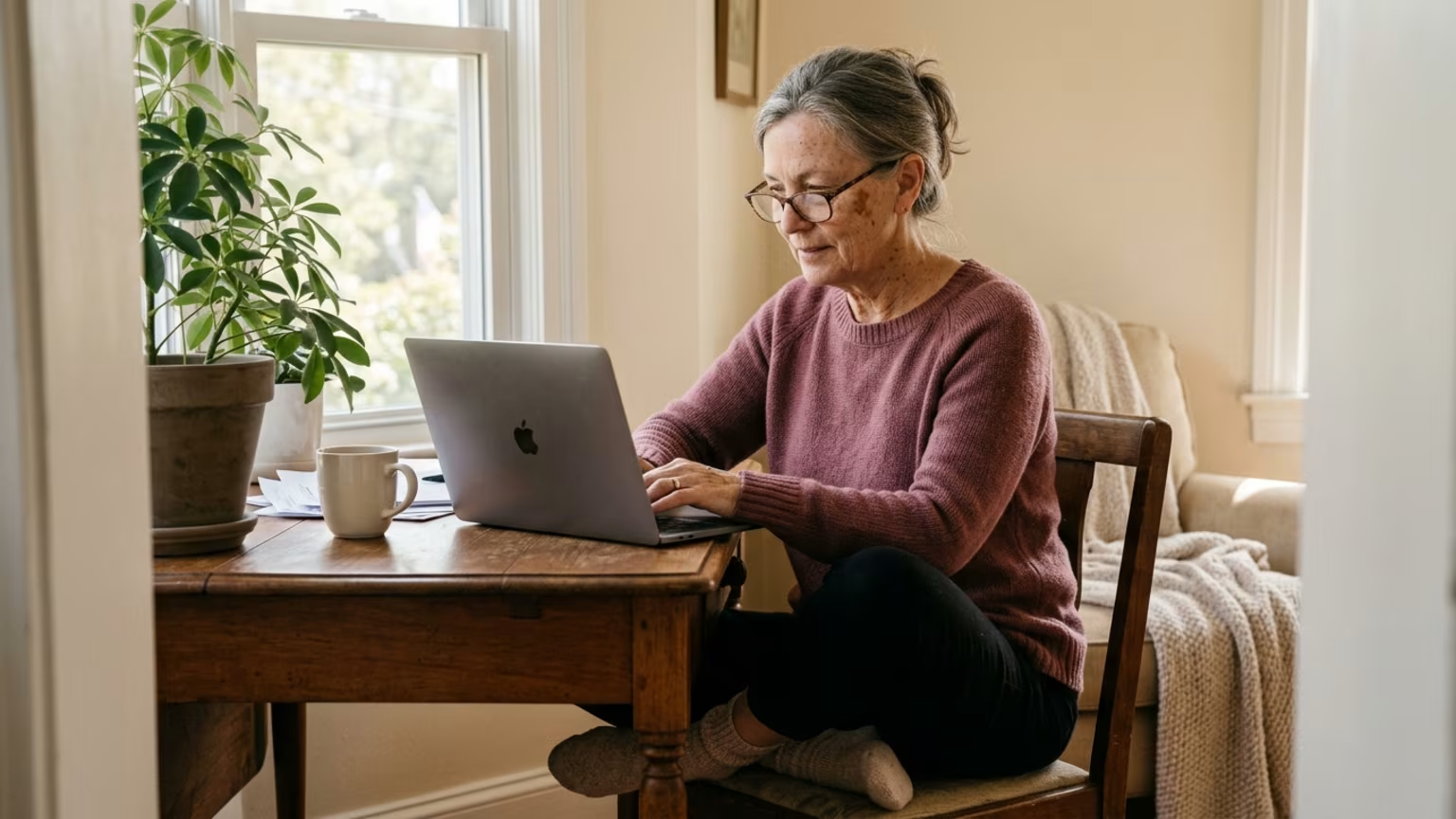
In September 2026, a new study published in the International Journal of Behavioral Nutrition and Physical Activity revealed how working from home reshapes our daily movement patterns. Researchers found that remote workdays are associated with approximately 14 more minutes in bed but also result in 44 more minutes of sedentary behavior. The data shows that the shift away from the office reduces both light and moderate-to-vigorous physical activity. For women prioritizing long-term health, the findings suggest that the benefits of extra rest may come at the cost of essential daily movement. This research provides a valuable look at how environmental changes directly influence our most basic daily habits.
The biology of healthy aging relies heavily on regular physical activity to maintain metabolic and musculoskeletal function. When we shift from office work to remote work, we often lose the incidental movement that naturally occurs during a commute or a walk between meeting rooms. Our bodies evolved to require frequent movement to maintain optimal biological function. When we reduce this activity, we signal our metabolic systems to slow down.
Kristin Suorsa of the University of Turku noted that limited standing-work options at home and the loss of commuting help explain this pattern. This decline in standing and walking directly impacts how our bodies regulate energy and maintain structural support over time. While extra time in bed supports recovery, cardiovascular and cellular health require consistent circulation. Prolonged sedentary behavior is associated with musculoskeletal and cardiovascular health concerns.
Blood flow delivers necessary nutrients to all tissues, including the skin and scalp. When we sit for extended periods, we miss out on the subtle biological benefits of continuous movement that a traditional office environment often forces upon us. Understanding this balance is critical for anyone reading about exercise for skin, hair, and healthy aging.
During our extensive research into environmental aging, we tested how various lifestyle factors impact skin barrier recovery. It was fascinating to see the data clearly show that simple habits like sleep and basic hydration often outperform the most expensive topical treatments. This reinforced our commitment to emphasizing foundational health over product hype. We learned that the daily consistency of these basic habits drives the most meaningful long-term outcomes.
The Finnish study analyzed 97 hybrid university employees over seven consecutive days. The group was 84 percent women, with a mean age of 42. Participants wore a thigh-mounted sensor that tracked their movement across both office and remote workdays. This allowed researchers to compare behaviors within the same individuals rather than comparing separate groups of people.
The time-flow analysis provided a clear picture of how habits change at home. Remote workdays included 14 more minutes in bed and 44 more minutes of sedentary behavior compared to office days. Participants also logged 37 fewer minutes of light physical activity and 21 fewer minutes of moderate-to-vigorous activity. The researchers found that standing and cycling were mainly replaced by sedentary behavior and time in bed on remote days.
News outlets like Medical Xpress summarized these findings in slightly broader terms. Their report rounds these findings to approximately 15 extra minutes of sleep, 45 extra minutes sitting or lying down, and reductions in standing and physical activity. The study was published in the International Journal of Behavioral Nutrition and Physical Activity under the title “How composition of device-measured 24-h movement behaviors differs between office and remote workdays among hybrid workers?”. The precision of the sensor data leaves little doubt about the sedentary nature of remote work.
The researchers noted that the comparison was not simply between separate groups of remote and office workers. It examined the exact same hybrid workers across different types of workdays. This method provides a highly accurate reflection of how a person's immediate environment alters their behavior. The transition from an office desk to a home desk rarely happens without a cascade of other physical changes.
Scientific uncertainty is an essential part of evaluating any new clinical research. This study was relatively small and focused on university employees, so its findings may not apply to every occupation or demographic. The researchers measured time in bed, but they did not prove that this additional time represented higher-quality rest or improved recovery. The study simply observed behavior patterns without testing the long-term health consequences of permanently working from home.
It is also important to recognize what this data does not show regarding visible aging. The study did not measure skin quality, hair health, collagen synthesis, or metabolic biomarkers. It does not establish that office work is inherently healthier, as commuting introduces its own distinct stressors. The findings merely highlight a shift in daily habits rather than proving that remote work directly causes cardiovascular disease or rapid physical decline.
I remember speaking with a dermatologist who told me her patients were coming in with severe anxiety about normal skin aging. In the context of remote work, she noticed patients often blamed their skincare routines for looking tired. In reality, the culprit was often a sudden drop in daily movement and the resulting loss of healthy circulation. We decided right then that our publication would never frame natural changes as personal failures, choosing instead to focus on complete lifestyle factors.
Health-conscious women can use these findings to make realistic adjustments to their weekly schedules. The first step is to protect the sleep benefit without treating it as a complete wellness strategy. The 14 additional minutes in bed are valuable, but they must be balanced with deliberate physical activity throughout the day. You can restore some of the lost commuting movement by scheduling a morning walk or cycle ride before logging on to your computer.
Current guidance encourages adults to limit sedentary time and meet weekly aerobic activity targets. Health experts suggest aiming for 150 to 300 minutes of moderate-intensity aerobic activity or 75 to 150 minutes of vigorous activity per week. General guidance recommends these targets alongside regular muscle-strengthening activity. Replacing lost commuting time with a dedicated workout session can easily bridge this daily gap.
To achieve this balance, use movement breaks rather than relying entirely on a standing desk. The researchers recommend varying positions and building longer, more active breaks into remote workdays. They advise discussing break practices with colleagues to normalize these healthier habits across remote teams. Improving these habits is highly beneficial for ergonomics, screen time, and recovery.
Treating your home workspace as a behavior design problem can yield significant long-term benefits. You might set calendar prompts for position changes or take walking meetings when video is not required. These small, deliberate choices help offset the 44 extra minutes of sitting. By focusing on whole-body habits, you can support your metabolic health without overcomplicating your daily routine. Finding a practical balance is a core principle of knowing how to build a skin longevity routine.
As we continue to navigate hybrid work environments, the connection between our daily surroundings and our long-term vitality becomes increasingly clear. Will future clinical studies focus more on how micro-movements throughout the day influence cellular health and visible aging? We anticipate that the next wave of research will look beyond simple step counts, moving toward a deeper understanding of how constant, varied posture changes sustain our physical resilience over decades.
Stay connected for research and practical guidance on skin, hair, collagen, nutrition and beauty longevity. Clear ideas for people who want to understand how appearance changes with age and make better-informed choices over time.



Understand your skin, hair and body better without chasing every new trend, treatment or promise.
explore the Blog