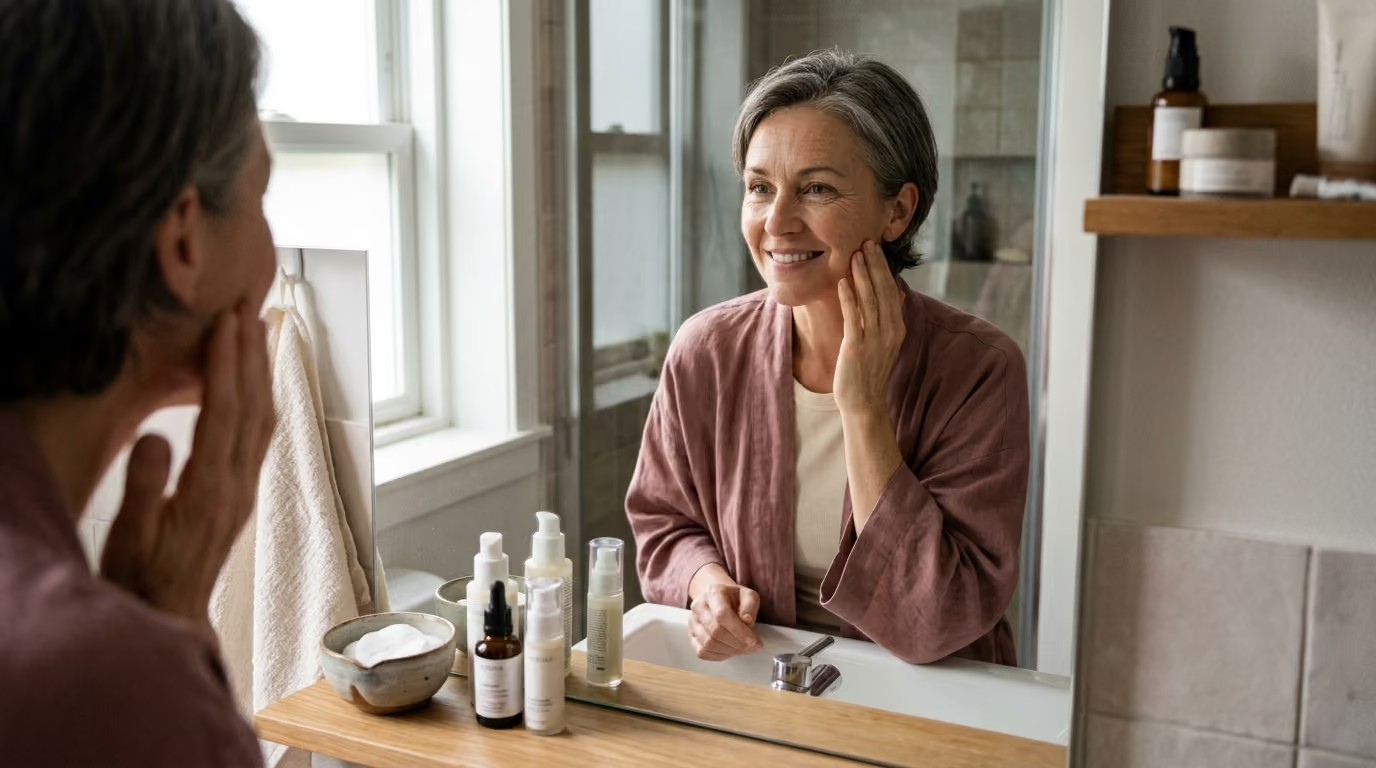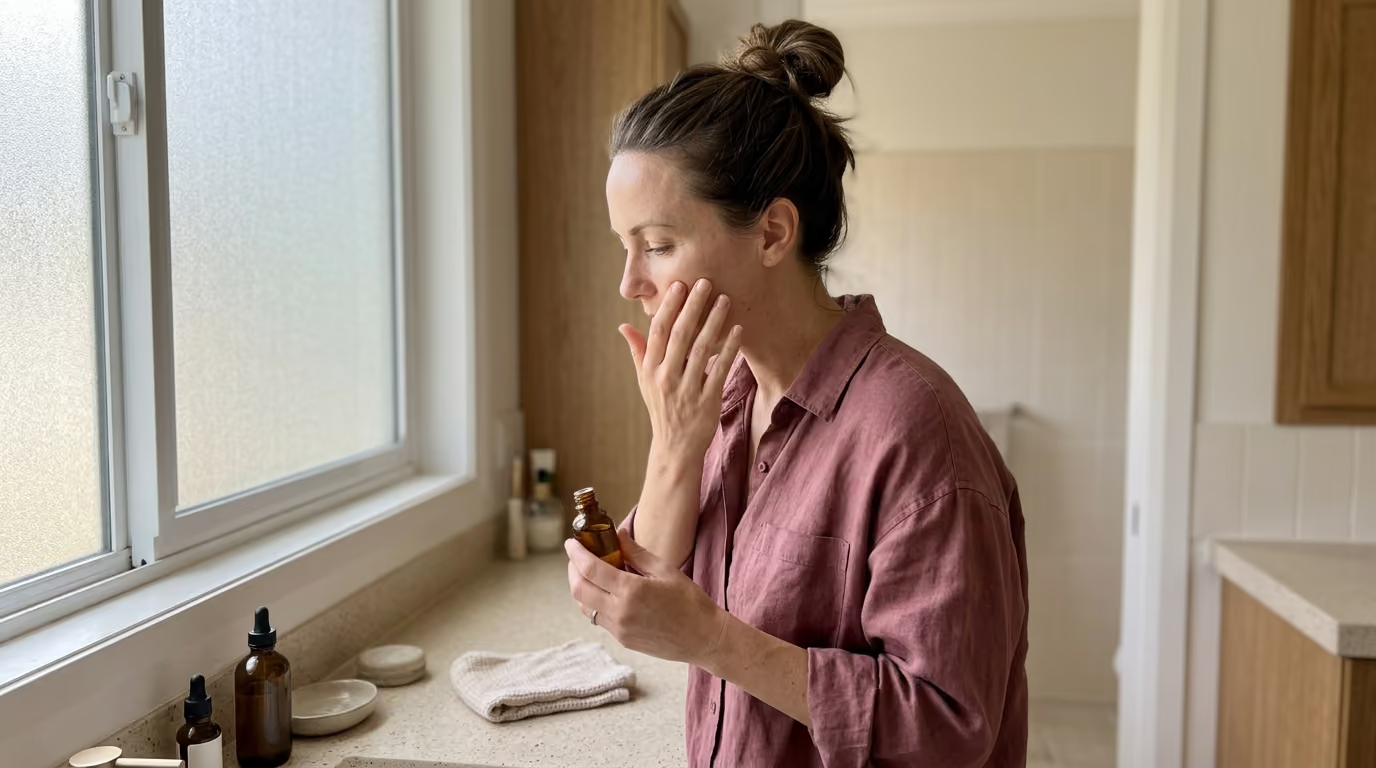

A four-step evidence-based skincare framework optimizes skin longevity by combining daily photoprotection, targeted retinoid signaling.





The prevailing belief in modern skincare is that more products yield better skin. Many people believe an effective routine requires ten distinct steps, numerous concentrated serums, and expensive proprietary formulations. When skin looks tired or shows signs of photodamage, the immediate impulse is usually to buy another treatment.
Clinical dermatology suggests the opposite reality. Adding layer upon layer of active ingredients often triggers chronic micro-inflammation, barrier breakdown, and contact dermatitis. True skin longevity does not come from cosmetic abundance. It relies on a rigorous, minimal framework built around proven biological mechanisms, consistent photoprotection, and patient barrier preservation.
The scientific literature on visible skin aging is surprisingly clear about what works and what lacks support. While thousands of products compete for consumer attention, only a small group of interventions have robust clinical trial backing. Building an effective routine requires looking at what high-quality human trials have demonstrated over long periods.
When you evaluate skincare through an evidence-based lens, the goal changes completely. You stop searching for novelty and begin building a stable, repeatable environment for skin repair. Readers interested in the broader context of skin health can review our dedicated guide to skin longevity and healthy aging to understand how tissue changes across decades.
To design a routine that functions properly, you must understand how facial skin interacts with its environment and repairs itself. Skin longevity is governed by two simultaneous processes. The first is intrinsic aging, which reflects natural cellular decline and genetic timing. The second is extrinsic aging, driven primarily by ultraviolet radiation, oxidative stress, and environmental friction.
The outermost layer of your skin, the stratum corneum, operates like a brick wall. The corneocytes are the protein-rich bricks, surrounded by an extracellular lipid matrix composed of ceramides, cholesterol, and free fatty acids. This structure serves as the primary barrier between your internal physiology and the outside world.
When this lipid barrier is intact, it prevents excessive transepidermal water loss and blocks environmental irritants from penetrating deeper tissue. When you apply harsh cleansers or layer multiple acidic products, you strip these essential lipids away. The corneocytes become disorganized, microscopic cracks form, and water evaporates rapidly. This dehydration causes dullness, tightness, and exaggerated surface lines.
Extrinsic aging is largely photoaging caused by ultraviolet A and ultraviolet B radiation. UVA rays penetrate deep into the dermis, generating reactive oxygen species that damage cellular structures. These free radicals activate enzymes known as matrix metalloproteinases.
Matrix metalloproteinases break down collagen and elastin fibers, which form the structural scaffolding of young skin. Over time, the rate of collagen breakdown exceeds the fibroblasts' ability to synthesize new collagen. UVB rays primarily damage the epidermal layer, directly injuring cellular DNA and causing visible pigmentation irregularities. Protecting this structural framework requires consistent daily defensive measures rather than occasional corrective treatments.
As skin matures, the natural cellular turnover rate slows down noticeably. In young skin, keratinocytes migrate from the basal layer to the surface and desquamate in roughly twenty-eight days. In older adults, this cycle can extend to forty-five days or longer, leading to a rougher texture and slower wound healing.
Retinoids work by binding to specific nuclear receptors known as retinoic acid receptors within skin cells. This binding modulates gene transcription, encouraging normalized cellular turnover in the epidermis and stimulating dermal fibroblasts to produce new collagen. Retinoids also help compact the stratum corneum, creating a smoother and more light-reflective surface. However, accelerating this turnover too quickly before the barrier adapts leads to peeling, burning, and marked inflammation.
Marketing claims frequently exaggerate preliminary laboratory findings. To separate commercial enthusiasm from verifiable dermatological reality, we must examine randomized controlled trials and systematic reviews published in the peer-reviewed beauty science literature.
The strongest long-term evidence for topical photoprotection comes from a randomized controlled trial published in the Annals of Internal Medicine. Researchers followed healthy adults under fifty-five years of age over a four-and-a-half-year period to measure the effects of regular sunscreen application.
The participants instructed to apply broad-spectrum sunscreen daily demonstrated 24% less skin aging compared to the control group that applied sunscreen only at their own discretion. The daily sunscreen group showed no detectable increase in skin aging over the entire four-and-a-half years. This trial remains one of the clearest demonstrations that consistent protection prevents progressive photoaging in human skin.
Prescription tretinoin remains the gold standard topical treatment for photoaging due to decades of clinical validation. A systematic review published in 2022 evaluated seven randomized controlled trials and confirmed that topical tretinoin significantly improves clinical signs of photodamage, particularly fine and coarse facial wrinkles.
A subsequent systematic review analyzed eight randomized trials encompassing 1,361 patients. The researchers concluded that tretinoin produced measurable, statistically significant improvements in facial wrinkling, roughness, and mottled hyperpigmentation. However, the data also highlighted a persistent challenge: adverse events occurred frequently. The most common complaints included application-site erythema, severe dryness, peeling, and stinging, especially during the first two to eight weeks of treatment.
Clinical research indicates that supporting the epidermal barrier directly improves treatment compliance and efficacy. In a study examining adjunctive barrier care, participants using a ceramide-containing cleanser and moisturizer experienced reduced erythema, less scaling, and accelerated barrier recovery.
Another clinical trial specifically tested whether improving the skin barrier prior to initiating tretinoin therapy could mitigate adverse effects. The researchers found that utilizing a barrier-enhancing moisturizer before and during treatment significantly facilitated the initial adjustment phase. Patients experienced fewer dropouts and achieved better overall outcomes because their stratum corneum remained hydrated and structurally stable throughout treatment.
Excessive product application has become a primary driver of dermatological consultations. A 2026 survey of practicing dermatologists revealed that 91.6% expressed significant concern regarding the trend of multi-step, highly concentrated skincare regimens.
Furthermore, 88.1% of surveyed dermatologists reported regularly treating adverse conditions caused directly by aggressive consumer skincare habits. The most frequently diagnosed issues included irritant contact dermatitis, perioral dermatitis, allergic sensitization, and acneiform eruptions. The clinical consensus shows that layering multiple bioactive compounds introduces cumulative risks that often outweigh theoretical benefits.
Responsible science requires transparent acknowledgment of what current research does and does not prove. While the evidence supporting sunscreen, tretinoin, and basic barrier moisturizers is robust, significant gaps remain in the wider skincare landscape.
A critical distinction exists between prescription tretinoin and cosmetic over-the-counter retinoids, such as retinol, retinaldehyde, and retinyl palmitate. While cosmetic retinoids convert into active retinoic acid within the skin, comparative long-term clinical trials are surprisingly scarce.
A comprehensive review of topical retinoids noted that properly designed, vehicle-controlled clinical trials are lacking for many popular cosmeceutical formulations. Cosmetic products vary widely in stability, encapsulation technology, and active concentration. Consequently, a consumer cannot assume an over-the-counter serum will produce the exact clinical outcomes demonstrated by prescription tretinoin studies.
While dermatologists frequently observe irritation from complex routines, proving a universal mathematical threshold for product safety is difficult. A cross-sectional study evaluating 136 young adult women found no statistically significant correlation between the total number of cosmetic products used daily and self-reported sensitive skin.
This finding must be interpreted with caution. The study was observational, relied on self-reported questionnaires, and did not control for specific ingredient concentrations or application techniques. It does not prove that unlimited product layering is harmless. Instead, it underscores that the optimal number of products varies based on individual skin thickness, genetic barrier function, climate, and formulation chemistry.
Most clinical trials evaluate a single active ingredient in a standardized vehicle against a placebo. Very few studies evaluate complex real-world routines where consumers apply vitamin C, niacinamide, exfoliating acids, and retinoids together.
Because high-quality data on complex multi-product interactions is lacking, claims about "synergistic product stacks" are largely theoretical. Just because two ingredients perform well in separate laboratory tests does not mean applying them simultaneously produces superior biological results. In many cases, combining multiple penetrating actives simply increases the probability of barrier failure.
Designing an effective routine does not require purchasing an entirely new cabinet of products. It requires establishing a stable foundation, adding targeted treatments with extreme patience, and following proper sequencing rules based on foundational skin care principles.
Before introducing any strong active ingredients, you must spend two to four weeks stabilizing your epidermal barrier. If your skin is currently irritated, red, or reactive, you cannot accurately assess whether a new treatment is working.
Once your skin is calm, supple, and consistently hydrated, select a single active treatment designed for your primary concern. If your main objective is addressing photoaging, discuss prescription tretinoin or a well-formulated retinoid with a qualified healthcare provider.
Follow a strict titration protocol to prevent retinoid dermatitis:
Cellular remodeling in the dermis takes time. Superficial epidermal smoothing may appear within four to six weeks, but meaningful changes in collagen architecture and photodamage require three to six months of steady use.
Avoid the temptation to switch products after three weeks because you have not seen dramatic structural changes. If your baseline remains healthy and the single treatment is well-tolerated after six months, you may consider introducing a second targeted active if a specific secondary goal remains unaddressed.
When applying skincare, physical formulation dictates absorption and functionality. The general rule validated by clinical dermatology is to apply products from the thinnest consistency to the thickest consistency, ending with protective shields.
A skincare routine is only as good as your ability to maintain it over years. An expensive or exhausting routine that causes chronic irritation or financial stress will inevitably be abandoned. You should customize the core framework based on practical daily variables.
A large budget is not necessary for skin longevity. In clinical reality, the two most effective topical interventions, daily sunscreen and barrier moisturizers, are readily available at accessible price points.
Your daily habits should dictate how you protect your skin. A desk worker spending eight hours away from windows has different practical photoprotection requirements than an outdoor athlete or field worker.
For individuals who spend significant time outdoors, standard morning sunscreen application is insufficient. You must incorporate physical sun management, including wide-brimmed hats, UV-protective sunglasses, seeking shade, and reapplying sunscreen every two hours during prolonged sun exposure.
When our team examined environmental aging and recovery, we tested how various lifestyle factors impact skin barrier recovery. It was fascinating to see the data clearly show that simple habits like sleep and basic hydration often outperform the most expensive topical treatments. This reinforced our commitment to emphasizing foundational health over product hype.
Individuals with compromised barrier function or a history of atopic eczema must approach skincare with exceptional restraint. For reactive skin, the goal is minimal chemical exposure rather than active biological stimulation.
Select leave-on moisturizers that are completely free of synthetic fragrance and essential oils. A peer-reviewed exposure assessment revealed that fragrance compounds in leave-on creams carry a measurable risk of inducing skin sensitization. Rinse-off cleansers pose significantly less risk because contact time is short, but leave-on creams remain on the face for hours, creating sustained exposure that can trigger inflammatory cascades.
The beauty industry frequently relies on compelling narratives that sound scientific but lack biological plausibility. Evaluating these ideas against clinical dermatology helps prevent wasted spending and unnecessary barrier damage.
Marketing often promotes the idea that healthy skin requires seven to twelve distinct steps, each performing a specialized task. This concept encourages consumers to layer toners, essences, multiple serums, sheet masks, and heavy creams in a single session.
Reality: The skin barrier does not benefit from constant exposure to complex chemical mixtures. Layering dozens of preservatives, emulsifiers, and penetration enhancers increases the risk of irritant contact dermatitis. A four-step routine containing a gentle cleanser, a targeted evidence-based active, a barrier moisturizer, and daily sunscreen provides complete, clinically sound coverage for skin longevity.
Many consumers believe that an active treatment must cause a stinging, burning, or tingling sensation to prove its biological efficacy. Some marketing campaigns even frame this irritation as cellular activation.
Reality: Stinging and burning are classic neurological indicators of barrier disruption and sensory irritation. While mild transient dryness can occur during initial retinization, persistent burning signifies acute inflammation. Chronic, low-grade cutaneous inflammation accelerates tissue breakdown, working directly against long-term skin health goals.
The skin around the eyes is exceptionally thin and prone to early fine lines, leading consumers to believe it requires dedicated, expensive eye creams.
Reality: In the vast majority of cases, eye creams are simply standard facial moisturizers packaged in smaller containers at significantly higher prices per ounce. A gentle, fragrance-free facial moisturizer and careful, low-frequency application of a tolerated retinoid provide the exact same biological benefits without requiring a separate purchase.
Clear answers to recurring questions help remove confusion and make daily implementation straightforward.
Yes, but applying them at different times of the day is the safest and most effective strategy. Vitamin C, specifically L-ascorbic acid, works best in the morning where its antioxidant properties help neutralize free radicals generated by daytime UV exposure and pollution. Retinoids should be reserved for the evening because many formulations are photo-unstable and degrade in sunlight, and separating them minimizes cumulative skin irritation.
Hydration improvements and barrier recovery can be observed within two to four weeks of establishing a gentle routine. However, structural changes involving collagen synthesis, deep wrinkle reduction, and pigmentation clearance require three to six months of consistent adherence. Skin longevity is a multi-year investment in tissue health rather than an overnight transformation.
If you sit directly next to a large window that receives direct sunlight for multiple hours, UVA rays can penetrate standard glass and reach your skin. However, if you work in an interior room or away from direct window light, the amount of ambient UV exposure is negligible. Assess your actual physical environment realistically rather than applying heavy sunscreen when staying in low-light indoor spaces.
If your face becomes red, tight, flaky, or stings when applying basic water or moisturizer, stop all active treatments immediately. Cease using retinoids, exfoliating acids, and vitamin C serums. Revert to washing with lukewarm water or a very mild cream cleanser, and apply a thick, fragrance-free barrier cream containing ceramides, petrolatum, or squalane. Maintain this simple recovery protocol for two to three weeks until the barrier is fully restored before slowly reintroducing any active treatment.
Daily physical scrubbing or strong chemical exfoliation is entirely unnecessary and frequently counterproductive. Healthy skin naturally sheds dead corneocytes through an enzymatic process that functions best in a well-hydrated environment. If you choose to use an alpha-hydroxy or beta-hydroxy acid, applying it once or twice per week is more than sufficient to support texture without stripping structural lipids.
At Younell, our editorial philosophy focuses on translating dense physiological research into clear, practical insights. We make scientific uncertainty visible and advocate for foundational health practices rather than commercial trends. You can learn more about our rigorous research process on our about page.
A successful skin longevity routine is defined by restraint, scientific consistency, and long-term protection rather than product complexity.
Stay connected for research and practical guidance on skin, hair, collagen, nutrition and beauty longevity. Clear ideas for people who want to understand how appearance changes with age and make better-informed choices over time.


Understand your skin, hair and body better without chasing every new trend, treatment or promise.
explore the Blog