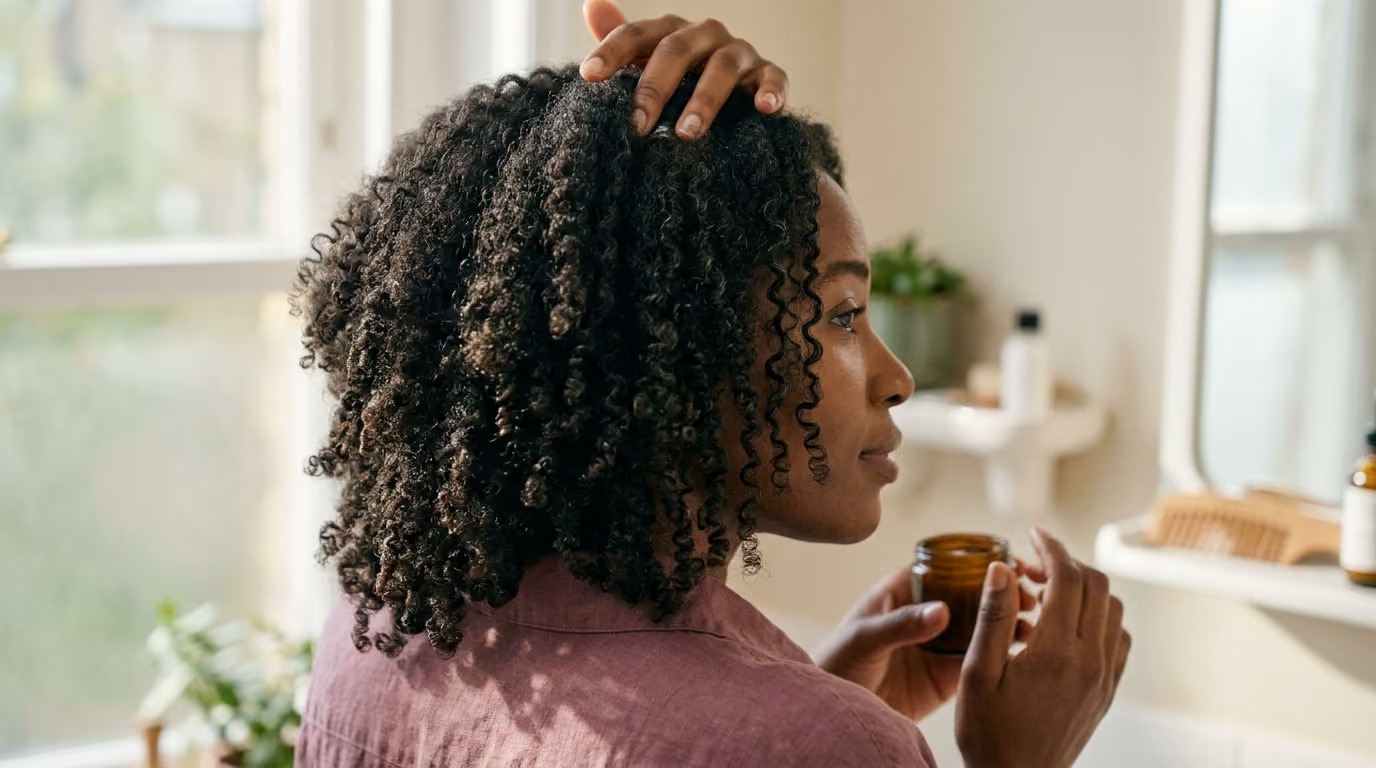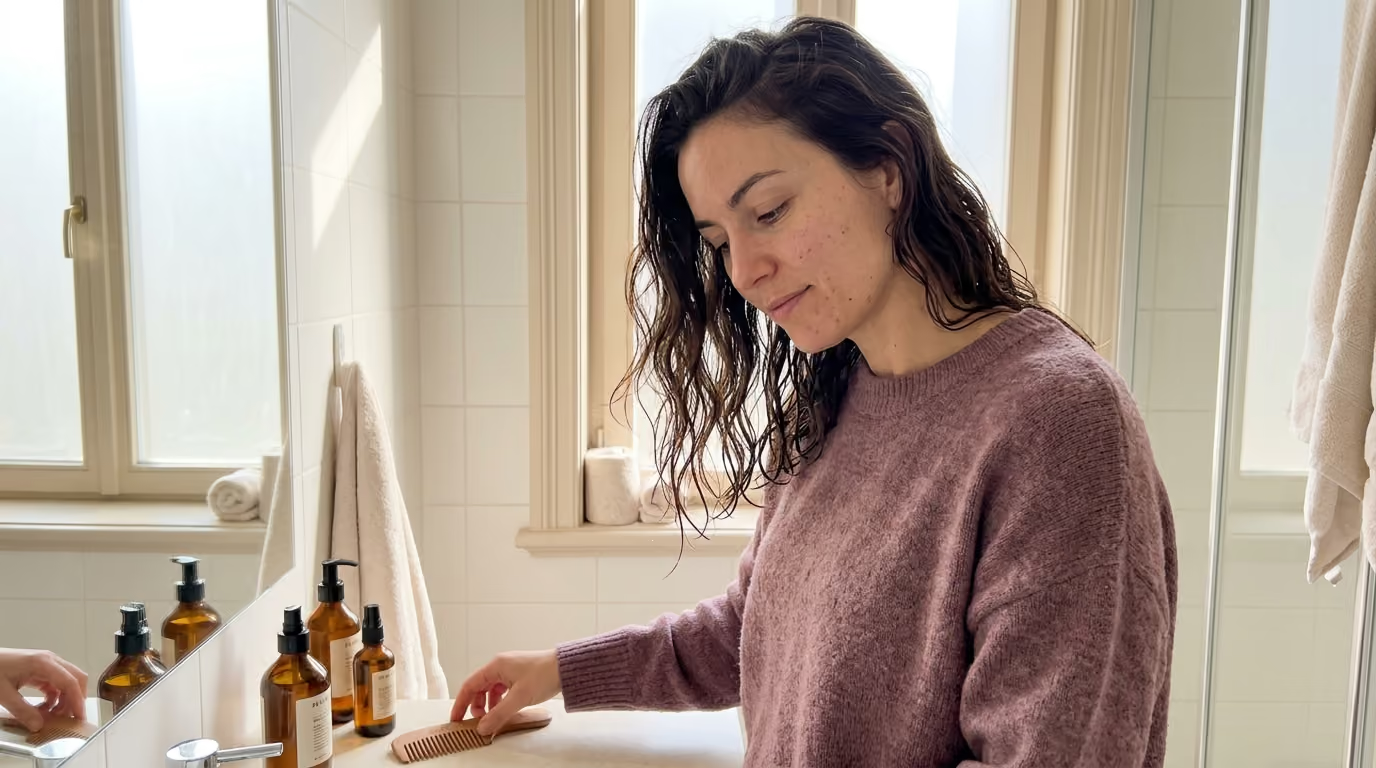

Healthier and more resilient hair begins with a balanced regimen that supports your scalp environment and preserves the protective outer cuticle layer.





Many people search online to understand why their hair feels brittle, tangles constantly, or snaps during routine styling. The endless stream of marketing categories makes building an effective regimen feel overwhelming. Shampoos, conditioners, leave-ins, masks, oils, and bond builders promise dramatic transformation, but they rarely explain how their ingredients interact with the biological reality of your hair fiber.
This guide provides a definitive, science-backed framework for building a hair-care routine based on functional cosmetic chemistry and scalp physiology. By understanding how products work at a molecular and physical level, you can select formulas that protect your strands from cumulative damage without wasting time or money on unnecessary steps.
Cosmetic hair care operates under specific physical and chemical constraints. The visible hair shaft is a non-living fiber that cannot biologically regenerate itself once damaged. An effective routine focuses on structural preservation, surface lubrication, and scalp hygiene.
To build an intelligent hair routine, you must first separate the biological requirements of the scalp from the physical needs of the hair fiber. The hair shaft emerges from a living follicle seated in the dermis. While the follicle requires cellular energy and adequate circulation, the shaft itself is metabolically inactive. Products applied to the hair lengths do not feed the follicle, and products applied to the scalp cannot undo physical fractures on the ends.
The hair shaft contains three distinct structural regions: the cuticle, the cortex, and the medulla. The cuticle is the outermost protective barrier, made of overlapping flat cells arranged like shingles on a roof. A healthy cuticle is coated with a natural lipid layer known as 18-methyleicosanoic acid (18-MEA). This hydrophobic surface repels excess water and allows individual hairs to glide past each other with minimal friction.
Beneath the cuticle lies the cortex, which accounts for the vast majority of the fiber mass. The cortex consists of elongated keratin protein chains bundled together and stabilized by disulfide bonds. These covalent sulfur bonds give hair its mechanical strength, elasticity, and shape. When chemical processes like bleaching or permanent coloring oxidize these disulfide linkages, the cortex loses its structural resilience, leaving the fiber prone to snapping under minimal tension.
Understanding the difference between shedding and breakage is critical for evaluating your routine. Shedding occurs when a hair reaches the end of its natural growth cycle and releases cleanly from the bulb. You will typically see a small white keratin bulb at one end of a shed hair. Breakage occurs when physical strain exceeds the tensile strength of a compromised shaft, causing the fiber to snap mid-length. Breakage produces uneven lengths, split ends, and thinning perimeters, but it is entirely distinct from follicle-driven hair loss.
Water behavior, often discussed as hair porosity, describes how readily a strand absorbs and releases moisture. Virgin hair with an intact 18-MEA lipid layer absorbs water slowly and maintains its structure when wet. Chemically lightened or heat-damaged hair loses this protective lipid film, developing microscopic fissures in the cuticle. This compromised state allows water to rush into the cortex rapidly, causing the fiber to swell, weaken, and lose elasticity. By understanding cosmetic beauty science principles, you can choose conditioning agents that mimic this lost lipid layer and protect the fragile internal cortex.
Modern hair-care science relies on standardized laboratory testing to measure the mechanical properties, surface friction, and structural integrity of hair swatches. Clinical trials evaluate both topical scalp treatments and hair-fiber conditioning agents under controlled conditions.
Research into chemical processing demonstrates that bleaching causes substantial, measurable degradation across multiple fiber layers. Severe bleaching oxidizes cystine disulfide bonds into cysteic acid, leading to a progressive loss of structural protein from the cortex. Laboratory analyses confirm that as lightening severity increases, cumulative protein loss rises proportionally, leaving intercellular regions vulnerable to complete structural rupture during routine brushing.
Conditioning chemistry demonstrates consistent efficacy in mitigating this physical wear. Positively charged cationic surfactants, such as behentrimonium chloride and cetrimonium chloride, bind electrostatically to the negatively charged surface of damaged hair fibers. Studies utilizing atomic force microscopy reveal that fatty alcohols and cationic agents smooth the cuticle margins, reducing the dry friction coefficient by up to 50 percent. Silicones like dimethicone form a thin, hydrophobic film over the cuticle, substantially lowering the force required to comb wet and dry hair.
Topical lipid treatments also demonstrate quantifiable benefits in laboratory models. A notable study examining coconut-based hair oils found that pre-wash oil application significantly limited increases in measured fiber porosity after repeated wash cycles. Researchers attributed this protective mechanism to the oil's ability to penetrate the outer shaft, which limited excessive water diffusion and reduced the leaching of soluble cortex proteins during surfactant exposure.
On the scalp level, clinical trials highlight the importance of targeted medical agents for inflammatory conditions. In a large clinical study of 575 patients with moderate to severe seborrheic dermatitis and dandruff, a 2% ketoconazole shampoo used twice weekly for two to four weeks produced an excellent clinical response in 88% of participants. Prophylactic application once weekly maintained these results and prevented symptomatic relapse.
For follicular thinning, data confirms that true hair-count improvements require evidence-based medical interventions rather than cosmetic rinses. In a 48-week randomized clinical trial involving 381 women with female pattern hair loss, 5% topical minoxidil produced statistically significant superiority over placebo across all primary efficacy endpoints, including total nonvellus hair count and visual scalp coverage. Systematic meta-analyses confirm that minoxidil provides an average increase of 16 to 20 nonvellus hairs per square centimeter in evaluated cohorts. Combining these clinical insights with hair growth and hair longevity research ensures your regimen targets the root cause of thinning rather than relying on superficial cosmetic promises.
While laboratory data offers valuable insights into cosmetic formulation, consumers must interpret study findings within their proper context. Much of hair fiber research takes place ex vivo on standardized human hair swatches in controlled laboratory environments. These swatches undergo automated washing, mechanical combing, and standardized chemical treatments that do not fully capture real-world human behaviors.
Real-world hair experiences irregular UV exposure, fluctuating environmental humidity, varying water mineral hardness, and inconsistent styling techniques. Furthermore, cosmetic swatches do not account for the continuous production of natural sebum from a living scalp. A product that performs exceptionally well on an isolated, chemically treated hair swatch in a laboratory may cause excessive oiliness or cosmetic buildup when used on a living human subject over several weeks.
Sample sizes in published cosmetic trials are often modest, ranging from a dozen swatches to a few dozen human participants. Many studies are funded or conducted directly by raw ingredient manufacturers, which can introduce selective reporting of positive structural or optical endpoints. While instrumentally measured parameters like combing force and surface reflectance provide objective data, they do not always translate into dramatic visible differences for every consumer.
It is also vital to distinguish between functional cosmetic improvement and biological tissue repair. When a study reports that a protein complex or synthetic polymer increases fiber strength, this refers to temporary physical reinforcement or superficial cuticle bonding. No cosmetic treatment can restore a dead keratin fiber to its original, biologically pristine state once disulfide bonds are completely broken. Understanding these boundaries protects consumers from unrealistic expectations and unnecessary expenditures.
Building an effective hair routine requires categorizing products by their chemical function rather than their marketing labels. Every product in your regimen should serve a specific purpose, such as scalp cleansing, surface lubrication, structural reinforcement, or thermal defense.
Shampoo is designed primarily for the scalp, not the hair lengths. Its functional role is to emulsify and remove oxidized sebum, sweat, environmental pollutants, dead skin cells, and cosmetic residue. Anionic surfactants, such as sodium laureth sulfate or sodium cocoyl isethionate, form micelles that trap oil-soluble debris so water can rinse it away.
Shampoo should be concentrated directly on the scalp tissue. As the product rinses down the lengths of the hair, it carries enough cleansing power to remove everyday dust without unnecessarily stripping protective surface lipids from the fragile ends.
The primary function of a rinse-out conditioner is friction reduction. When you wash your hair, wet fibers experience high mechanical friction, making them prone to stretching and snapping during handling. Conditioners neutralize negative electrostatic charges and coat the cuticle with lubricating agents.
Apply rinse-out conditioner primarily from the mid-lengths down to the ends. While individuals with extremely coarse or coiled hair may benefit from applying conditioner closer to the scalp, those with fine or oily hair should keep it off the scalp to avoid premature greasiness.
Leave-in conditioners are specialized friction-management formulations that remain on the hair fiber after washing. They possess a lighter viscosity than traditional rinse-out masks, utilizing water-soluble polymers, light emollients, and dilute cationic agents.
Leave-in formulas reduce the physical force required to comb through damp hair, preventing mechanical breakage during the delicate detangling phase. They are particularly beneficial for wavy, curly, and coily textures that naturally experience high inter-fiber friction. Apply leave-in conditioners evenly to towel-damp hair, focusing on tangle-prone areas and fragile ends before using a wide-tooth comb.
Hair masks are concentrated versions of standard conditioners, engineered with higher percentages of fatty alcohols, lipid-rich plant butters, hydrolyzed proteins, and high-molecular-weight silicones. Their purpose is to provide deeper cosmetic smoothing and manageability for severely weathered or porous strands.
Masks do not permanently alter the internal biological structure of hair, but their rich formulation provides robust surface deposition. They are most beneficial for hair that has undergone chemical lightening, permanent relaxing, or frequent hot-tool styling. Using an intensive mask once weekly or every few wash cycles can significantly improve fiber combability and reduce brittleness.
Plant-derived and synthetic oils serve several distinct physical functions depending on their molecular size and fatty acid profile. Small-chain, saturated triglycerides, such as those found in pure coconut oil, can partially diffuse past the cuticle into the outer cortex, offering pre-wash protection against water-induced swelling.
Heavier, monounsaturated or polyunsaturated oils, such as argan, jojoba, and mineral oils, remain primarily on the fiber exterior. These surface-sealing lipids form a hydrophobic shield that slows down environmental moisture absorption, controls humidity-induced frizz, and adds surface shine. Oils should be applied sparingly to dry or damp ends to prevent weighing down the hair or attracting airborne particulate matter.
Bond-building treatments and protein conditioners are specialized interventions designed for chemically compromised hair fibers. When bleaching or permanent processing breaks internal disulfide bonds, the hair loses tensile elasticity and structural stability.
These treatments are supportive cosmetic tools rather than structural cures. They are most effective when incorporated into a regimen that actively minimizes further chemical and thermal stress. Exploring hair fiber preservation guides can help you determine the exact frequency your specific damage level requires.
Heat-styling tools operating above 300 degrees Fahrenheit can cause severe structural damage, including cuticle blistering, natural lipid degradation, and cortex protein denaturation. Heat protectants utilize heat-stable polymers, such as polyquaternium-55, PVP/DMAPA acrylates, and dimethiconol, to buffer this thermal shock.
These ingredients distribute heat more evenly along the shaft, slow the rate of thermal conduction into the cortex, and maintain surface lubricity so styling tools glide without snagging. Applying a dedicated thermal protectant to damp or dry hair prior to blow-drying or flat-ironing is essential for preserving the physical integrity of the hair shaft.
An optimal hair-care routine is never one-size-fits-all. It must be customized according to scalp sebum production, fiber diameter, structural curl pattern, and cumulative chemical damage.
Fine hair has a small cross-sectional diameter and fewer cuticle layers, making it highly susceptible to mechanical flattening and rapid sebum coating. Individuals with straight hair and active sebaceous glands often experience limp, greasy roots within 24 hours of washing.
Textured, curly, and coily hair patterns feature natural structural bends and twists along the fiber shaft. These geometric transition points create areas of elevated physical stress and make it difficult for scalp sebum to travel down the strand, leaving the lengths dry and prone to tangling.
Bleached hair has experienced extensive cuticle degradation, lipid loss, and disulfide bond oxidation. It behaves like a highly porous sponge, swelling rapidly when wet and breaking easily under everyday mechanical tension.
When an overgrowth of Malassezia yeast triggers an inflammatory response on the scalp, it accelerates epidermal turnover, resulting in visible flaking, redness, and persistent itching. A regular cosmetic routine must be adjusted to treat the underlying skin condition.
Individuals experiencing progressive crown thinning, widening parts, or receding hairlines require an approach that minimizes physical pulling while addressing follicular health medically.
The beauty industry frequently relies on compelling narratives that blur the line between cosmetic enhancement and biological reality. Dissecting these common claims helps you invest in ingredients that genuinely support hair longevity.
Many styling serums and conditioners claim to permanently mend split ends. In reality, once a hair fiber fractures longitudinally, the structural integrity of that section is permanently lost. While synthetic polymers, silicones, and hydrolyzed proteins can temporarily glue the split strands together until the next wash, they do not biologically fuse the keratin chains. The only definitive solution for split ends is a mechanical trim to prevent the split from propagating up the shaft.
Applying botanical oils like rosemary, castor, or argan oil directly to the scalp is widely popularized as a natural way to accelerate hair growth. While oils provide excellent lubrication for the non-living hair shaft, there is insufficient evidence that topical oil application can alter follicular genetics or treat pattern hair loss. Furthermore, leaving heavy, unrefined oils on the scalp can trap dead skin, occlude follicles, and worsen inflammatory conditions like seborrheic dermatitis.
Sulfates have been widely vilified, leading many consumers to assume that any sulfate-free shampoo is inherently gentle. However, formulation chemistry is far more nuanced than a single ingredient name. A poorly balanced sulfate-free shampoo utilizing harsh olefin sulfonates can strip more natural lipids than a well-formulated, gentle sulfate cleanser buffered with conditioning polymers. Cleanser mildness depends on the overall surfactant concentration, pH, and the presence of protective co-surfactants.
Online communities often promote a strict division between moisture routines and protein routines, warning that using too much protein will make hair snap instantly. In cosmetic science, moisture refers to water content and plasticization, while protein refers to low-molecular-weight amino acid complexes that provide superficial reinforcement. Most healthy hair fibers benefit from a balanced formulation containing both humectants, fatty emollients, and light conditioning peptides. There is no biological need to treat these categories as mutually exclusive.
Applying an excessive sequence of pre-shampoos, cleansers, masks, leave-ins, serums, oils, and styling creams does not produce stronger hair. Over-layering cosmetic formulas causes heavy polymer and lipid accumulation on the cuticle. This buildup makes the hair feel stiff, look dull, and resist water absorption, which often leads to aggressive mechanical washing that causes more friction damage. A minimalist routine utilizing three or four high-performance products tailored to your specific fiber diameter is far more effective.
Wash frequency depends entirely on your scalp sebum production, activity level, and fiber texture. Individuals with fine, straight hair and an oily scalp often benefit from daily or every-other-day washing to prevent inflammatory sebum buildup. Those with dry, coarse, or highly textured hair can space washing out to every one to two weeks, provided the scalp remains comfortable, clean, and free of itching or flaking.
A hair mask can replace your regular conditioner if your hair is severely bleached, chemically relaxed, or exceptionally dry. However, for fine or undamaged virgin hair, using a rich mask after every wash can lead to cosmetic buildup, leaving strands limp, greasy, and difficult to style. Most people achieve optimal balance by using a standard conditioner after every wash and reserving an intensive mask for once a week.
If you regularly use styling products containing non-water-soluble silicones, polyquaterniums, heavy waxes, or dry shampoos, a clarifying shampoo used once every two to four weeks is highly beneficial. It strips accumulated polymer residue and hard water minerals that regular gentle cleansers leave behind, restoring natural bounce and allowing conditioners to deposit evenly.
Bond-building treatments provide supportive chemical cross-linking, but they cannot make a severely damaged fiber completely impervious to physical stress. If you continue to use high-temperature flat irons, bleach over previously lightened sections, or aggressively brush wet hair, mechanical and thermal damage will easily outpace the temporary cosmetic benefits of any bond-building product.
While topical products protect the external fiber shaft, the living follicle relies on internal biological nutrition to synthesize robust keratin structures. Deficiencies in dietary protein, iron, zinc, and essential fatty acids can impair follicular cellular activity and lead to diffuse shedding. Reviewing nutritional support for structural health can help ensure your internal physiology provides the necessary building blocks for healthy hair production.
You should consult a board-certified dermatologist if you experience sudden diffuse shedding, noticeable widening of your hair part, patchy circular bald spots, or persistent scalp symptoms like pain, burning, severe redness, or crusting. These signs indicate potential follicular, autoimmune, or inflammatory skin conditions that require professional medical diagnosis and targeted pharmaceutical management rather than cosmetic routine adjustments.
Applying scientific principles to your hair routine does not require an overhaul of your entire product collection overnight. You can implement these practical adjustments this week to immediately reduce cumulative friction and protect your hair fiber:
Stay connected for research and practical guidance on skin, hair, collagen, nutrition and beauty longevity. Clear ideas for people who want to understand how appearance changes with age and make better-informed choices over time.


Understand your skin, hair and body better without chasing every new trend, treatment or promise.
explore the Blog