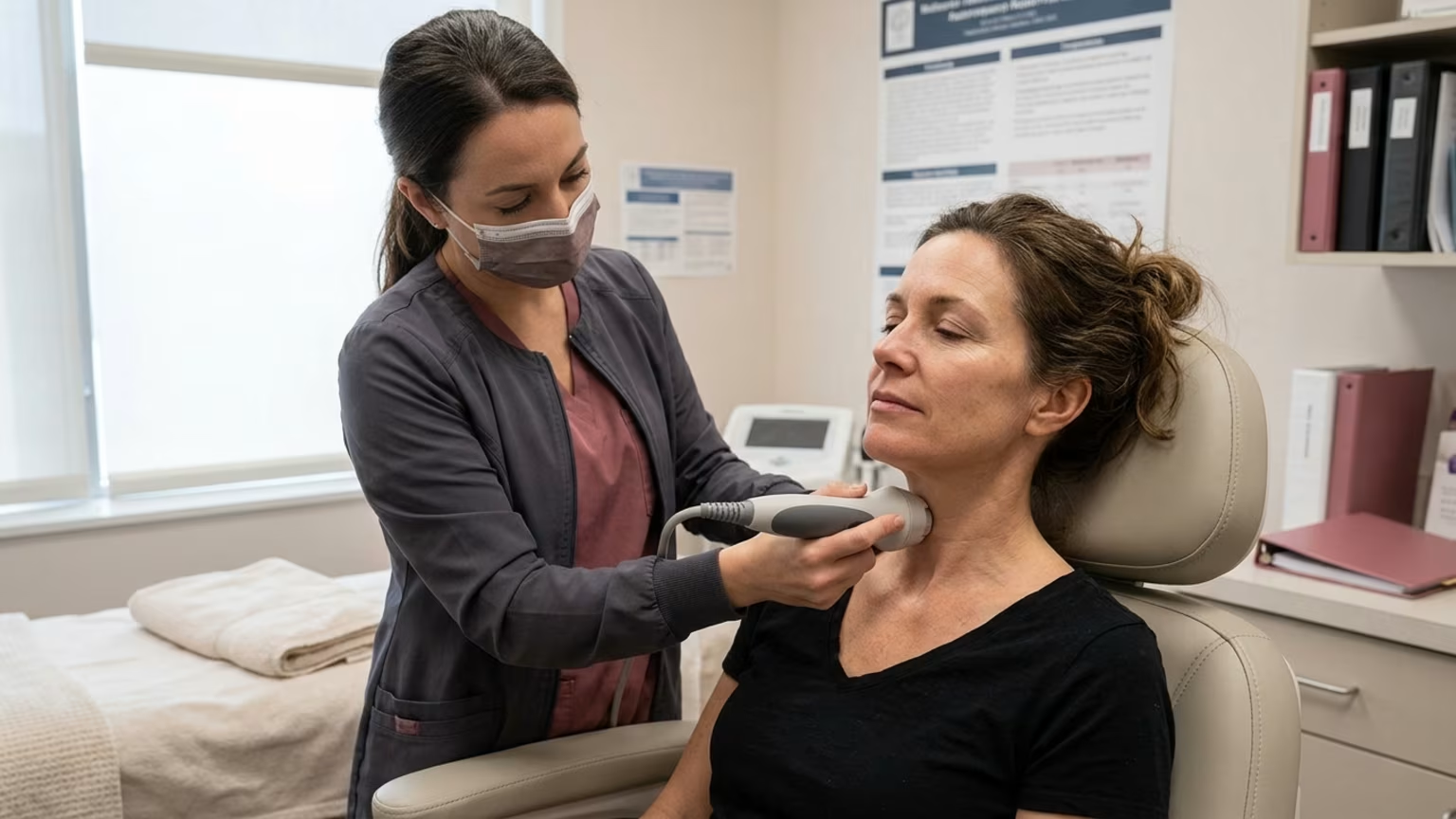

A 2026 clinic summary highlights stable six-month improvements from a monopolar radiofrequency skin tightening device via gradual dermal collagen remodeling.





In September 2026, a clinical practice published an informational summary describing a new six-month multicenter clinical trial. The referenced study evaluated a novel monopolar radiofrequency device specifically intended for facial skin tightening. This randomized and assessor-blinded trial compared the newly developed device against an established radiofrequency control mechanism. The initial clinic findings suggest stable improvements in visible skin laxity and facial wrinkles over a six-month period.
The aesthetic science sector consistently seeks to evaluate non-surgical approaches using more rigorous, longer-term trial designs. The primary source for this particular update is a detailed summary from Orange County Plastic Surgery. Their report identifies a primary peer-reviewed article detailing a non-inferiority trial for the novel radiofrequency device. The clinic notes that patients achieved gradual structural improvements without the lengthy recovery periods associated with traditional surgical procedures.
The proposed biological explanation in the trial summary centers entirely on progressive dermal remodeling. Radiofrequency energy deliberately heats target tissue located deep within the foundational layers of the skin, which may produce some immediate structural contraction of existing collagen fibers. The clinic describes this deep localized heating as stimulating fibroblast activity and generating new collagen production over subsequent months. Understanding how the dermal matrix changes over time helps contextualize these gradual cellular responses.
This gradual progression aligns perfectly with standard physiological healing and structural tissue renewal timelines. An immediate visible tightening effect often stems from simple temporary tissue contraction rather than instant cellular regeneration. The true long-term architectural changes require sustained fibroblast engagement to effectively rebuild the dermal foundation. Consumers learning how skin collagen works should remember that genuine tissue remodeling is measured in seasons, not days.
Research on energy-based interventions frequently emphasizes the underlying importance of cellular response. Fibroblasts require sustained biological signals to continually lay down new structural proteins within the dermal matrix. While radiofrequency devices provide the initial thermal trigger, the actual tissue building occurs during the subsequent months of natural recovery. Clinicians often remind patients that visible aesthetic improvements heavily depend on the body's independent capacity for efficient cellular repair.
The multicenter trial initially enrolled 230 subjects, and it included 212 participants in the final published data analysis. These participants received a single radiofrequency treatment session and were followed photographically at several distinct intervals. The designated follow-up assessments occurred exactly at baseline, one month, three months, and six months after the procedure. The study control group received an established radiofrequency treatment rather than an untreated sham or placebo procedure.
The primary facial wrinkle assessment relied on the evaluator-based Global Aesthetic Improvement Scale evaluated at 90 days. The published summary reports that 100 percent of subjects treated with the novel device achieved at least a three-grade improvement. This substantial result compared favorably with 98.10 percent of subjects receiving the established radiofrequency control treatment. Furthermore, researchers noted that no serious adverse events were reported in either treatment group throughout the entire study window.
The timeline of these observed improvements provides valuable context for the natural progression of aesthetic treatments. Because the treatment relies on biological repair pathways, results do not appear overnight. The stable efficacy recorded between the one-month and six-month photographic follow-ups underscores this gradual physiological response. It suggests that once the initial thermal contraction subsides, the newly stimulated dermal matrix maintains the observed tissue support.
The cited article explicitly states that there were no statistically significant differences between the novel device and the established control. The clinic summary also notes that observed treatment effects remained stable between the one-month and six-month photographic assessments. It states that the novel device showed no significant decline in aesthetic efficacy during that measured six-month period. Industry summaries additionally note that an earlier split-face study found improvement with both monopolar radiofrequency and microfocused ultrasound through six months.
While these clinical numbers sound highly encouraging, we must read them with a careful, critical scientific eye. The primary available source is a clinic-authored summary rather than the complete, independent peer-reviewed trial publication. The document lacks critical statistical details like required p-values, confidence intervals, measurable effect sizes, and the full comparative analysis. Without these specific mathematical metrics, the true scientific strength and precision of the comparison cannot be independently verified.
The reported high aesthetic success rate relies almost entirely on subjective evaluator-based assessments rather than objective digital skin measurements. The current clinic summary does not report patient-reported satisfaction outcomes, standardized wrinkle severity scores, or the exact distribution of individual improvement. Additionally, the reassuring phrase stating no serious adverse events occurred does not accurately quantify the frequency of minor side effects. The summary merely lists temporary redness, mild swelling, warmth, and bruising as possible general effects without providing specific trial rates.
The summary confidently attributes the clinical effect to collagen remodeling without providing direct histologic measurements of new tissue. This simply means the gradual improvement is interpreted as consistent with structural remodeling rather than definitively proven through tissue biopsies. Furthermore, the clinic summary notably lacks crucial supporting details regarding full publication records, trial funding information, and potential investigator conflicts of interest. Patients should always ask their providers to review the complete trial publication data before making significant personal aesthetic decisions.
The source explicitly positions this radiofrequency treatment for adults in their thirties through sixties who experience mild to moderate laxity. Prospective candidates must have reasonably good inherent elasticity and realistic baseline expectations for gradual, non-surgical aesthetic results. A single energy-based session simply will not replicate the extensive physical tissue repositioning of traditional surgical outcomes. I remember speaking with a dermatologist who told me her patients were coming in with severe anxiety about normal skin aging.
That anxiety was driven entirely by social media filters and aggressive marketing. That conversation became a cornerstone of our philosophy. We decided right then that our publication would never frame natural changes like wrinkles or thinning hair as personal failures. Appropriate candidates should view radiofrequency as a supportive option for understanding midlife changes, not as a mandatory physical correction.
A thorough, individualized medical consultation should cover the specific degree of laxity, personal treatment goals, expected magnitude of improvement, and procedural pain management. The clinic summary mentions that many patients may enjoy treatment results for a full year or potentially longer. However, that specific timeline statement is not supported by a standardized maintenance study or a strict trial-based interval recommendation. Eventual visible results will likely vary based on individual age, baseline skin quality, historical sun exposure, and daily lifestyle factors.
The broader energy-based aesthetic field continues to systematically evaluate non-surgical approaches using rigorous, independently controlled trial designs. For example, a registered Thermage FLX clinical study aims to rigorously track facial and neck wrinkles over 180 days. Registry information for that specific ongoing trial reports an estimated primary completion date in February 2027. These active studies highlight the entire sector's necessary shift toward standardized effectiveness metrics and extended photographic clinical follow-up.
Recent academic research also illustrates the critical scientific distinction between preliminary observational findings and robust controlled efficacy data. A separate 2026 retrospective study of the XERF single-shot dual-frequency system reported structural laxity improvements over three months. Those particular authors characterized their findings as strictly preliminary and firmly called for larger prospective controlled studies. As the industry gathers more standardized, long-term clinical data, will the next generation of aesthetic research finally give patients precise timelines for sustained tissue renewal?
Stay connected for research and practical guidance on skin, hair, collagen, nutrition and beauty longevity. Clear ideas for people who want to understand how appearance changes with age and make better-informed choices over time.





Understand your skin, hair and body better without chasing every new trend, treatment or promise.
explore the Blog