
New computer vision research reveals that human organs age at different structural rates, highlighting the importance of comprehensive whole-body lifestyle care.





A woman looks in the mirror and notices new lines forming around her eyes. She feels exactly as energetic as she did a decade ago. She wonders if her body is changing all at once or in separate pieces. This everyday tension highlights a fundamental question about how human tissues behave over time.
You have likely heard that human aging is a uniform process that happens steadily across the entire body. The biological reality is quite different: new research indicates that individual tissues follow their own specific timelines. A recent study demonstrated that different organs experience periods of accelerated structural change at completely different ages. Understanding this distinction empowers us to view longevity as an interconnected system rather than a single biological clock.
For decades, the wellness and cosmetic industries have marketed longevity as a single metric. This misconception was driven by simplified product marketing that reduced biological changes to visible skin concerns. Consumers were taught to focus on isolated problems, like pigmentation or elasticity loss, rather than observing their systemic health. Consequently, many people expect their internal organs to age at the exact same rate as their external appearance.
The idea of a synchronized aging process is appealing because it suggests a simple solution. If the entire body deteriorates at one predictable speed, a single intervention could theoretically slow it down. This reductionist view has fueled the sale of countless supplements and topical treatments promising systemic benefits. However, treating the body as a monolith ignores the complex reality of cellular biology.
When science communication relies heavily on marketing language, nuances about structural changes are easily lost. We end up with a cultural narrative that equates feeling youthful with a lack of wrinkles. This creates immense pressure to find one primary solution for overall health. The truth is that comprehensive well-being requires understanding how individual systems function independently.
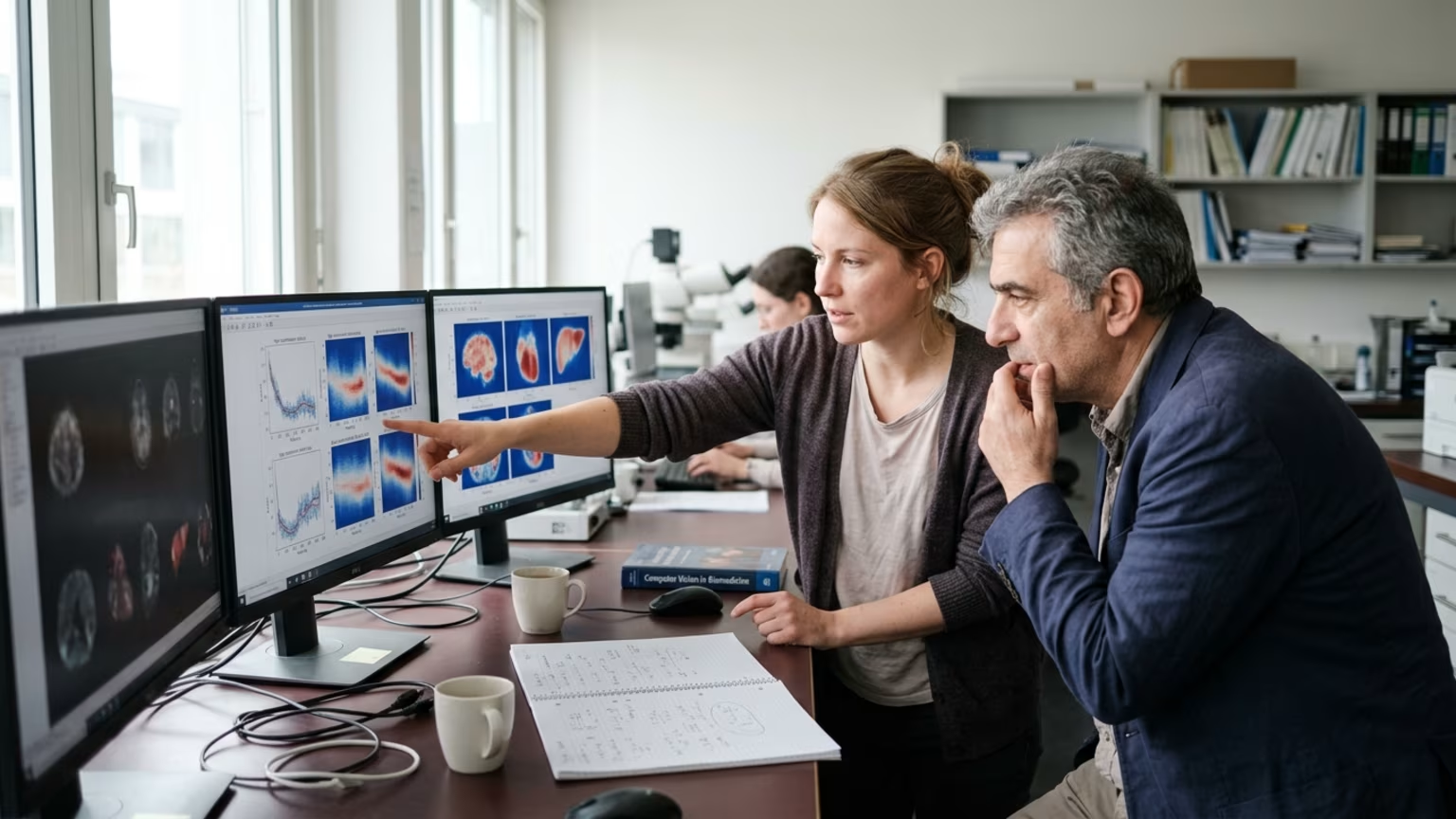
On August 31, 2026, researchers published a fascinating Nature Aging study examining structural aging across 40 types of human tissue. Working at Sanford Burnham Prebys Medical Discovery Institute with National Institutes of Health collaborators, the team utilized advanced computer vision. Led by Anamika Yadav, they used a deep-learning model called Pathology-based Structural Aging Rate, or PathStAR. This tool analyzed more than 25,000 scanned biopsy images from nearly 1,000 deceased donors.
The images were drawn from the Genotype-Tissue Expression Project, a large archive containing extensive histopathology imaging. PathStAR divided these slides into more than 30 million smaller image patches to extract features related to tissue architecture. Although the archive contained 40 tissue types, the researchers narrowed the broader cross-tissue analysis to 15 tissue types with at least 200 samples. The model then charted how structural aging changed across the human lifespan.
Sanju Sinha, an assistant professor at Sanford Burnham Prebys, said the researchers’ goal was to understand aging "at a structural level." Sinha noted that structural changes were sufficiently visible for the model to identify them without being trained specifically to define those changes in chronological-age terms. The researchers identified three broad structural-aging patterns: early aging, late aging, and biphasic aging. Nine tissue types displayed two distinct periods of accelerated aging, making the biphasic pattern the most common reported in the study.
The timeline variations between organs were distinct and revealing. The vascular system showed accelerated structural aging between ages 30 and 39, followed by a decline in the rate of aging. In contrast, the uterus and vagina remained relatively stable during early adulthood and showed their fastest aging between ages 50 and 55. The researchers also reported that periods of accelerated structural aging were accompanied by increased expression of inflammation-related genes. Additionally, these periods showed reduced expression of genes involved in energy production, cell growth, and cellular quality control.
The study included a proof-of-concept ovarian analysis based on 250 scanned histopathology slides from people aged 21 to 70. Ovarian tissue showed two periods of accelerated structural aging: approximately ages 35 to 40, coinciding with fertility decline, and ages 55 to 60.
While the findings are compelling, the science of biological age remains highly complex and requires careful interpretation. The study’s authors described the ovaries as a possible "pacemaker for whole-body aging" because more than half of the tissues examined followed the structural aging pattern observed in ovarian tissue. However, this pacemaker language is a researcher hypothesis, not proof that ovarian changes directly control the aging of other organs.
The research also relied on deceased donors rather than tracking living individuals over time. This means the model does not currently provide a personal diagnostic test for patients seeking to measure their own organ health. Furthermore, identifying an inflammation-related gene signature during periods of structural change does not establish that inflammation causes those specific transformations. It is crucial to view this work as a structural map rather than a definitive guide to personal longevity.
A separate 2026 Nature Medicine study highlights how rapidly this field is expanding in different directions. Those researchers evaluated disease-relevant organ aging across independent cohorts involving eight diseases, including Alzheimer's disease, stroke, and Crohn's disease. They reported a strategy for estimating tissue-specific age gaps from blood samples by combining histology with transcriptomic data. Together, these distinct studies show that future longevity research will increasingly distinguish between the aging of individual organs.
The revelation that organs age on different schedules reinforces the importance of whole-body lifestyle care. For women in their 30s and 40s, the ovarian findings provide a reason to view reproductive, vascular, and metabolic health as deeply interconnected systems. Protecting sleep quality and remaining physically active are practical ways to maintain this systemic balance over time. While the study did not test specific lifestyle interventions, foundational habits remain the most reliable support for long-term well-being. Understanding how skincare priorities change from your 30s to your 60s helps set realistic expectations for localized care.
Topical treatments have their place, but they cannot replace cardiovascular or mental health care. Caring for your complexion is useful for managing environmental exposure and intrinsic changes. However, routines should sit alongside routine medical screening and nutritional support. A sensible message for the beauty sector is to care for the skin without reducing healthy aging to mere appearance. Finding balance relates closely to how allostatic load and lifestyle recovery influence overall bodily resilience.
Marketers often suggest that single ingredients can reverse cellular deterioration across the whole body. The reality is that tissue-specific aging requires a broader, more consistent approach to wellness. Discussing preventive care and symptoms with qualified clinicians is essential during major transitional periods like menopause. Consistent daily habits will always outperform isolated attempts to treat a single visible concern. Knowing how to combine beauty, nutrition, and medical care safely is a crucial part of your overall lifestyle. Skincare is an important tool for skin health, but no topical cream can alter the trajectory of your vascular system. By acknowledging these biological boundaries, you can build a more effective, science-backed approach to aging well.
The latest computer vision research confirms that the human body does not follow a single, unified timeline. Different organs experience unique periods of structural change that require comprehensive, long-term support. Understanding this distinction empowers you to make better choices that support your entire system. The bottom line is that systemic health is too complex to be managed by superficial treatments alone. Instead of chasing a single remedy for visible changes, respect the complexity of your biology. Consistent, whole-body care is the most reliable strategy for long-term wellness.
Focus on one foundational habit today, such as scheduling an overdue medical screening, to support your body's unique structural needs.
Stay connected for research and practical guidance on skin, hair, collagen, nutrition and beauty longevity. Clear ideas for people who want to understand how appearance changes with age and make better-informed choices over time.



Understand your skin, hair and body better without chasing every new trend, treatment or promise.
explore the Blog