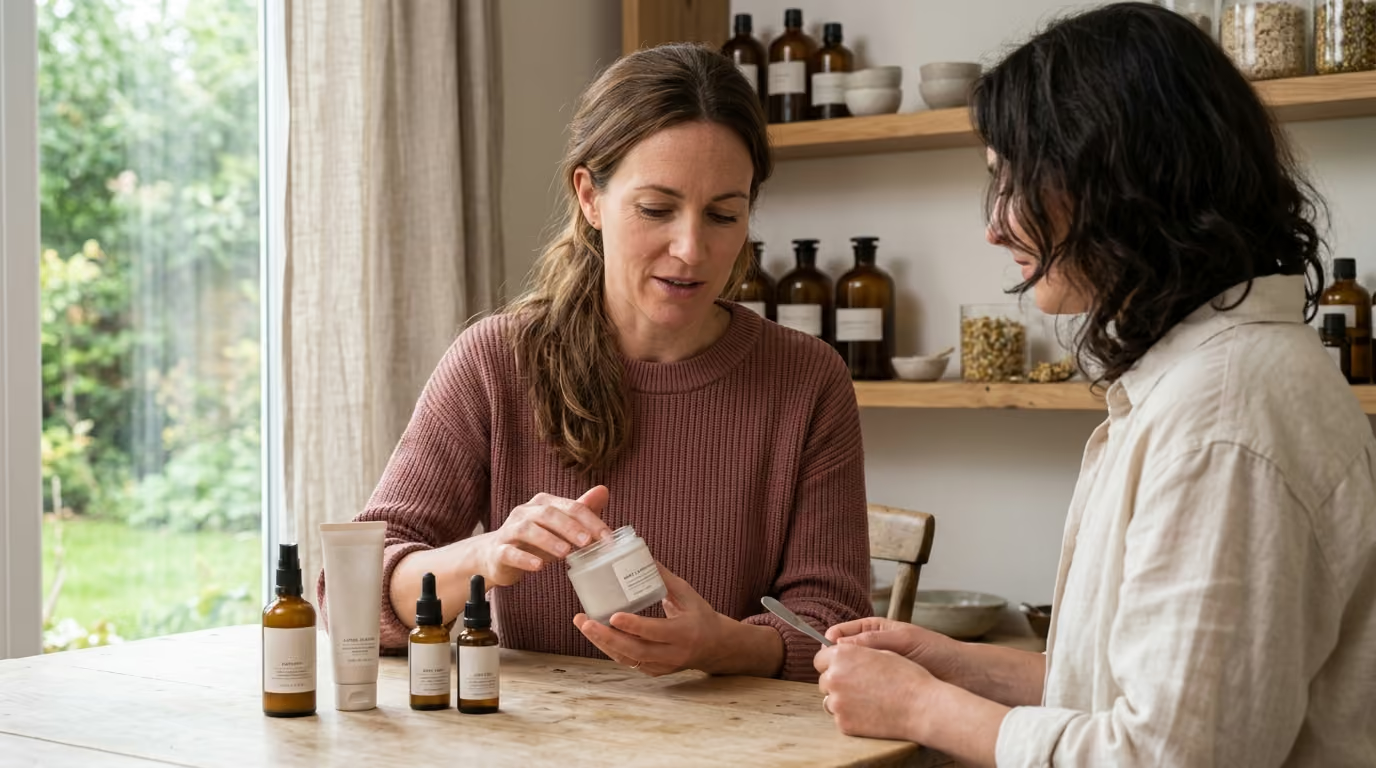

Coordinating skincare actives, dietary supplements, and prescription medications safely requires understanding metabolic pathways, skin barrier mechanics.





"Can you take hair supplements with prescription medication?" "Why is my skin burning after using three serums together?" These questions are among the most common searches for people trying to manage their personal care routines. When you combine dermatological prescriptions, over-the-counter creams, oral supplements, and dietary changes, the risk of unwanted side effects multiplies. This comprehensive guide provides a definitive roadmap to coordinate your cosmetic practices, nutritional intake, and medical care into one safe, unified system.
Integrating beauty routines with medical care requires understanding how external products and internal nutrients influence human biology. Dermatological and pharmacological research demonstrates several fundamental principles:
The human body does not compartmentalize a topical serum from a morning multivitamin or an afternoon prescription drug. Every compound you apply or ingest enters a biological system governed by shared physiological pathways.
The outermost layer of the skin, the stratum corneum, functions as a selective physical and biochemical shield. It consists of mature corneocytes surrounded by an extracellular lipid matrix composed of ceramides, cholesterol, and free fatty acids. This lipid arrangement prevents excessive trans-epidermal water loss and restricts the penetration of external irritants.
When you apply an exfoliating acid or a retinoid, you alter the rate of desquamation and cellular turnover. If you layer several acidic formulas, physical scrubs, and retinoids together, the lipid matrix breaks down. This barrier breakdown permits rapid chemical penetration into the deeper viable epidermis. The underlying living cells release pro-inflammatory cytokines, including interleukin-1 alpha and tumor necrosis factor-alpha. This internal signaling cascade causes visible erythema, stinging, swelling, and localized flaking.
When you swallow a beauty supplement, capsule, or tincture, its constituents pass through the gastrointestinal tract and travel directly to the liver via the portal vein. The liver processes these compounds using specialized enzyme networks, primarily the cytochrome P450 superfamily.
These identical hepatic enzymes metabolize prescription drugs, including oral contraceptives, blood pressure medications, thyroid hormones, and antidepressants. When a concentrated botanical extract or high-dose vitamin competes for the same enzyme binding site, it can either inhibit or induce enzyme activity. Inhibition slows drug breakdown, leading to elevated drug concentrations in the bloodstream that increase toxicity risks. Induction accelerates drug breakdown, which lowers circulating drug levels and causes treatment failure.
Hair follicles are among the most metabolically active structures in the human body. The follicular life cycle alternates between active growth (anagen), regression (catagen), and rest (telogen). Follicular matrix cells require a constant supply of oxygen, amino acids, micronutrients, and hormonal signals to sustain keratin synthesis.
Because hair follicles are non-essential for immediate physical survival, the body readily diverts resources away from them during times of physiological stress. Thyroid hormone imbalances, iron deficiency, severe caloric restriction, or chronic systemic inflammation disrupt follicular signaling. These disruptions prematurely push active anagen hairs into the resting telogen phase. The resulting condition, telogen effluvium, causes diffuse shedding that topical cosmetic products cannot resolve.
Combining health and cosmetic practices without professional oversight carries measurable clinical risks. Medical literature highlights specific vulnerabilities regarding adverse reactions, emergency care visits, and diagnostic inaccuracies.
Many consumers view oral beauty products as gentle dietary additions. However, epidemiological surveillance shows that concentrated supplements carry tangible risks. A nationally representative study published in the New England Journal of Medicine by Geller and colleagues evaluated data from 63 hospital emergency departments over a ten-year period.
The researchers estimated that dietary supplement adverse events account for approximately 23,005 emergency department visits each year in the United States. These visits lead to an estimated 2,154 hospitalizations annually. While weight-loss and energy supplements accounted for a large portion of cardiovascular events in young adults, nutritional supplements used for wellness and aesthetic goals also contributed to allergic reactions, acute organ stress, and swallowing problems.
Research documented by the National Center for Complementary and Integrative Health highlights specific botanical supplements that interfere with pharmacological therapies. These interactions are particularly dangerous when taking medications with a narrow therapeutic index or when preparing for invasive procedures.
Biotin, also known as vitamin B7, is one of the most widely used supplements for hair and nail health. Despite its popularity, clinical trials show little evidence supporting biotin supplementation for hair quality in individuals who do not have a diagnosed deficiency. Furthermore, high supplemental doses present a major diagnostic hazard.
The U.S. Food and Drug Administration has issued formal safety warnings regarding biotin interference with laboratory tests. Many modern clinical immunoassays rely on a biotin-streptavidin binding system to measure hormone and protein levels. When a patient consumes supplemental biotin at doses ranging from 5 to 10 milligrams or higher, the excess free biotin in the blood sample binds to the assay reagents.
This interference produces falsely low results in sandwich immunoassays, such as cardiac troponin tests used to diagnose acute myocardial infarctions. Conversely, it creates falsely high results in competitive immunoassays, such as free thyroxine tests. A patient taking a standard high-dose beauty supplement may receive an erroneous diagnosis of hyperthyroidism or have an active heart attack missed during emergency evaluation.
Understanding the limits of modern beauty science prevents unrealistic expectations and reduces financial waste. Much of the available literature surrounding cosmetic interventions and nutritional supplements contains important methodological caveats.
Under the Dietary Supplement Health and Education Act of 1994, dietary supplements are regulated under a framework distinct from prescription and over-the-counter pharmaceuticals. Manufacturers do not need to prove that a supplement is safe or effective before bringing it to market.
Premarket approval is not required, and companies are prohibited from making explicit disease-treatment claims. Consequently, marketing language relies heavily on structure-function statements like "supports radiant skin" or "promotes hair vitality." These claims do not require the rigorous double-blind, randomized, placebo-controlled trials mandatory for therapeutic medical drugs.
Many published studies on beauty-from-within supplements, including collagen peptides and complex botanical blends, are funded directly by ingredient manufacturers. While commercial funding does not automatically invalidate research, it introduces potential bias in study design and reporting.
Common methodological limitations in beauty research include:
Clinical pharmacology research typically evaluates interactions between two isolated compounds, such as one specific prescription drug and one botanical extract. In real-world settings, individuals frequently take several medications, multiple multi-ingredient supplements, and apply five or more topical products daily.
Medical science lacks comprehensive data on the cumulative biological impact of stacking dozens of active ingredients simultaneously. When an adverse event occurs, identifying the single causative agent becomes nearly impossible due to these overlapping, unstudied variables.
To eliminate confusion and protect your health, you must manage your personal care using an organized clinical methodology. The four-stage cycle below ensures that every product you use serves a distinct purpose without conflicting with your medical care.
Vague goals like "reversing aging" or "getting glowing skin" encourage impulsive product purchases and overcomplicated routines. Instead, articulate precise, measurable targets based on your exact observations.
You must categorize your goals into appearance targets or symptom targets:
Before adding, removing, or changing multiple products, record your starting baseline. Document every item you currently ingest or apply, including exact brand names, active ingredient percentages, and application frequencies.
Take clear, unedited baseline photographs of your skin, scalp, or nails under consistent, indirect natural lighting. Record any current systemic symptoms, such as fatigue, joint stiffness, changes in your menstrual cycle, bowel irregularity, or recent intentional or unintentional weight fluctuations. This baseline prevents you from misattributing chronic physical symptoms to a newly purchased cosmetic item.
Cosmetic changes frequently serve as early warning signs of systemic internal disease. The American Academy of Dermatology emphasizes that changes in hair density, texture, and scalp health can indicate broader medical issues.
According to clinical guidance from the American Academy of Dermatology, diffuse hair thinning, coarse or brittle hair strands, loss of outer eyebrow hair, and persistent dry scalp can all be direct symptoms of thyroid disease. Rapid hair loss occurring in distinct patches or clumps within days may signal alopecia areata, an autoimmune disorder.
When you notice rapid or unusual physical changes, follow this systematic clinical triage sequence:
When personal care routines cause irritation or produce disappointing results, the natural impulse is often to purchase another corrective cream or supplement. The safer approach is systematic simplification.
Strip your topical routine down to four fundamental functional steps:
Maintain this streamlined routine for at least four to six weeks before considering additional interventions. This waiting period allows your epidermal barrier to stabilize and establishes an unambiguous baseline for product tolerance.
Tracking overlapping chemical exposures across multiple products is critical for consumer safety. Many individuals consume identical vitamins and minerals from multiple distinct health and cosmetic items without realizing it.
To prevent accidental toxicity, excessive intake, and pharmaceutical interactions, organize your intake into five functional categories:
Review your exposure map by individual active chemical names rather than commercial brand names. If your multivitamin, protein powder, and hair-health capsule each contain zinc, your total daily intake may exceed the established Tolerable Upper Intake Level, leading to gastrointestinal distress and copper deficiency.
Because biotin interference in laboratory tests can conceal life-threatening conditions, follow strict clinical protocols if you use this nutrient.
Always inform your ordering physician, phlebotomist, and laboratory technicians if you consume any beauty supplement containing biotin. Never discontinue a medically prescribed supplement without consulting your healthcare provider, but clearly discuss an appropriate withholding period before routine blood work.
According to guidance from the American Association for Clinical Chemistry, standard supplemental doses between 5 and 10 milligrams may require at least an eight-hour washout period before blood draws, while therapeutic megadoses may require several days of discontinuation. If emergency care is ever required, family members or emergency medical staff must be alerted to your recent supplement history immediately.
Before undergoing injectable treatments, laser therapies, chemical peels, or surgical procedures, you must provide your clinician with a complete medical and supplement history.
Many botanical extracts and over-the-counter pain medications disrupt normal coagulation and vascular tone:
Always follow your clinician's exact instructions regarding when to pause specific supplements or topical actives prior to an in-office treatment. Never alter your schedule for medically necessary prescription drugs without explicit medical guidance from your prescribing physician.
Designing an effective topical regimen requires strategic ingredient compatibility. Stacking active ingredients without understanding their underlying chemistry often leads to product inactivation, severe skin barrier disruption, and persistent contact dermatitis.
To protect the skin barrier while achieving visible improvements, organize your skincare products into a clear functional hierarchy:
Always establish complete stability and tolerance at the lower tiers before advancing to higher-tier interventions. If irritation, burning, or flaking occurs, immediately drop back down to Tier 1 and Tier 2 until the stratum corneum completely recovers.
Combining popular skincare actives without checking chemical compatibility can degrade active compounds and trigger severe irritation:
The rise of complex, multi-step adult skincare regimens on social platforms has led many adolescents and teenagers to adopt aggressive topical routines. The American Academy of Dermatology cautions that younger, developing skin has a thinner barrier structure that is highly susceptible to chemical irritation.
Using high-potency retinol, concentrated L-ascorbic acid, and strong chemical exfoliants on young skin offers no clinical benefit and commonly triggers severe burning, peeling, and persistent contact dermatitis. Unless a board-certified dermatologist prescribes a targeted therapeutic regimen for clinical acne, adolescent self-care should focus entirely on gentle cleansing, basic moisturization, and sun protection.
Nutrition provides the cellular building blocks for tissue synthesis, but high dietary doses cannot overcome improper medical management or genetic hair and skin conditions. Approaching dietary intake with clinical objectivity ensures your nutritional choices support your health safely.
Before taking any nutritional product for aesthetic purposes, answer these three foundational questions:
Misleading marketing claims often cause consumers to make counterproductive choices. Examining these myths through a scientific lens helps prevent common self-care pitfalls.
Reality: While severe biotin deficiency can cause hair thinning, true biotin deficiency is clinically rare in individuals consuming a balanced diet. Sudden, diffuse, or patchy hair shedding is far more likely to stem from telogen effluvium, thyroid disease, iron deficiency anemia, androgenetic alopecia, or an autoimmune condition. Taking high doses of biotin without medical guidance does not resolve these underlying issues and may distort the diagnostic blood tests needed to identify them.
Reality: Topical agents alter the physiological state of the skin barrier, induce systemic absorption in specific formulations, and modify light sensitivity. Strong topical acne treatments and exfoliants cause photosensitivity, irritation, and peeling. These barrier changes directly impact the safety and timing of clinical chemical peels, laser surgeries, and diagnostic dermatological evaluations.
Reality: Persistent burning, intense redness, swelling, and cracking skin are classic clinical signs of irritant contact dermatitis, not proof of productive cellular renewal. While mild, transient dryness can accompany the initial use of prescription retinoids, severe discomfort indicates a compromised epidermal barrier. Continuing to apply aggressive actives to inflamed skin worsens long-term inflammation and compromises skin health.
Reality: Botanical ingredients contain biologically active, complex chemical compounds that exert real physiological effects. Botanical extracts can alter blood clotting dynamics, modify blood pressure, induce central nervous system sedation, and disrupt liver enzyme pathways. Ingesting concentrated botanical supplements alongside prescription drugs creates significant risks of adverse pharmaceutical interactions.
Reality: A standard blood panel only reflects the specific biomarkers tested at that single point in time. Furthermore, if you are consuming interfering supplements like biotin, your laboratory values may appear falsely normal despite underlying hormonal or metabolic abnormalities. Laboratory diagnostics must always be interpreted alongside a thorough physical examination, tissue evaluation, and detailed medical history.
The appropriate washout period depends on the specific supplement, the dosage, and the specific laboratory assays being run. For low-dose multivitamins, pausing intake for 24 to 48 hours is often sufficient. However, for high-dose biotin supplements delivering 5 to 10 milligrams or more, clinical guidelines suggest withholding the product for at least several days before blood testing. Always consult your ordering physician and the testing laboratory for explicit instructions based on your specific medication and supplement profile.
Using tretinoin and L-ascorbic acid simultaneously in the same routine often causes significant barrier irritation due to their combined potency and differing pH requirements. A safer clinical approach is temporal separation: apply your vitamin C antioxidant serum in the morning followed by a broad-spectrum sunscreen, and apply your prescription tretinoin exclusively at night to clean, completely dry skin. If your skin develops persistent redness, flaking, or stinging, pause the vitamin C serum entirely and focus on supporting your epidermal barrier.
The earliest signs of a compromised stratum corneum include a persistent tight sensation after cleansing, increased sensitivity to previously tolerated products, localized burning or stinging upon moisturizer application, patchy flaking, and rough surface texture. If left unaddressed, this subclinical barrier breakdown can progress to visible erythema, swelling, severe contact dermatitis, and increased vulnerability to cutaneous bacterial and fungal infections.
When the underlying cause of hair loss cannot be confirmed through visual scalp examination and blood work, a dermatologist may perform a small punch biopsy of the scalp. This procedure removes a tiny core of tissue containing intact hair follicles for microscopic examination by a dermatopathologist. Histological evaluation can distinguish between non-scarring alopecias, such as androgenetic alopecia or telogen effluvium, and scarring alopecias, such as lichen planopilaris. Making an accurate histological diagnosis is essential because scarring alopecias cause permanent follicular destruction if anti-inflammatory medical treatment is delayed.
Collagen peptides themselves are generally safe protein fragments, but taking protein supplements or multi-ingredient beauty powders alongside levothyroxine can impair drug absorption in the gastrointestinal tract. Thyroid medications must be taken on an empty stomach with plain water, typically 30 to 60 minutes before breakfast or several hours after your last meal. Furthermore, many commercial collagen blends contain added high-dose biotin, which can distort thyroid blood test results even when your actual thyroid hormone levels are stable.
You can implement this systematic approach to your personal care this week using these practical steps:
To expand your understanding of evidence-based self-care, explore our advanced research on beauty science and optimization strategies or review our comprehensive evidence-based skin longevity resources. For additional clinical insights into nutritional physiology and hair biology, visit our dedicated sections on evidence-based nutrition research and scientific hair longevity guides.
Stay connected for research and practical guidance on skin, hair, collagen, nutrition and beauty longevity. Clear ideas for people who want to understand how appearance changes with age and make better-informed choices over time.


Understand your skin, hair and body better without chasing every new trend, treatment or promise.
explore the Blog