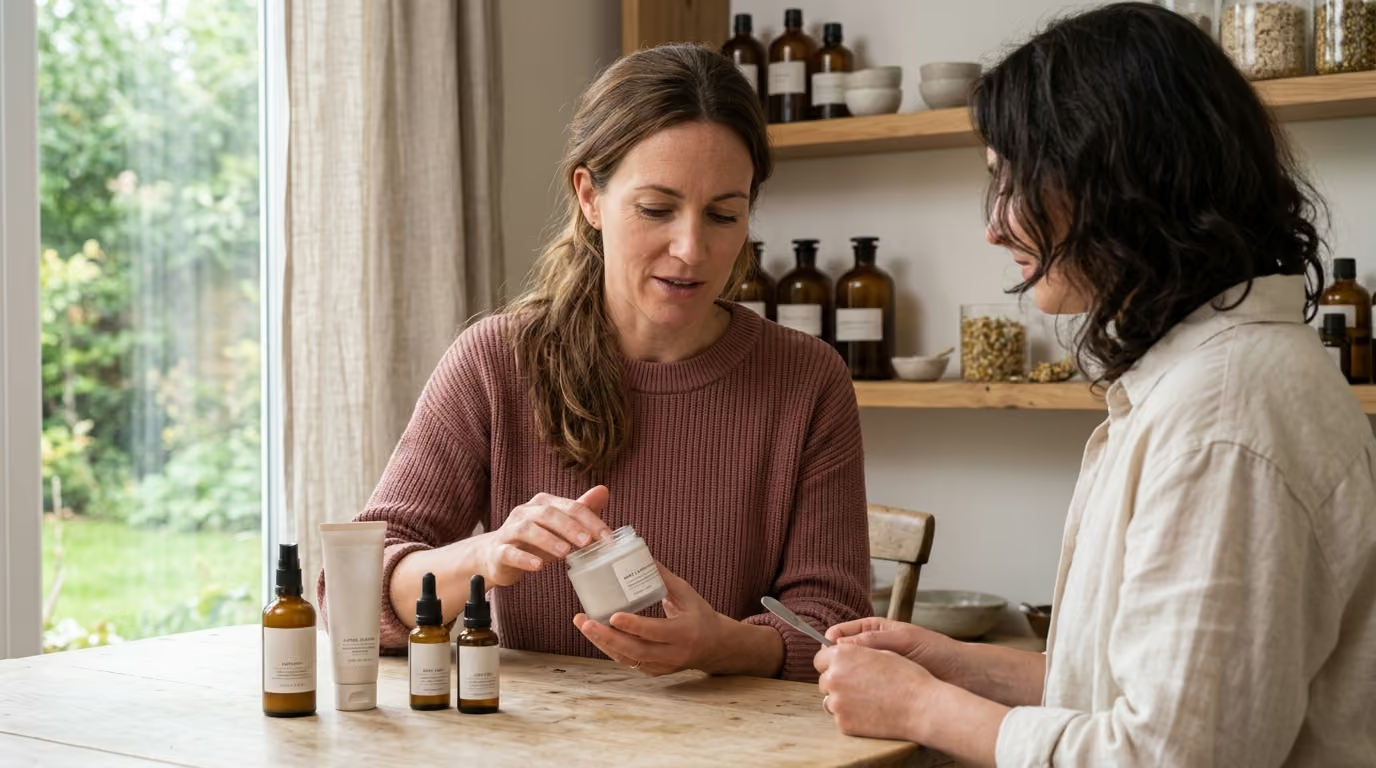

Chemical and physical exfoliation methods vary widely in their ability to smooth rough skin texture without compromising the moisture barrier.





Most skincare advice treats visible flaking and aggressive peeling as evidence of effective resurfacing. In biological terms, dramatic peeling is often a sign of acute barrier disruption and unnecessary cutaneous stress. True resurfacing is not a contest of maximal tissue removal. It is a precise exercise in dose management, cellular turnover regulation, and stratum corneum preservation.
Understanding the intersection between chemical mechanisms, physical friction, and individual epidermal tolerance allows you to refine skin texture while keeping the protective mantle intact. A deeper evaluation of clinical data reveals that lower-intensity exfoliation consistently matches or exceeds the cosmetic outcomes of aggressive regimens over time, without the associated barrier debt.
The outermost layer of the epidermis, known as the stratum corneum, functions as a protective shield against environmental pathogens and excessive water loss. Dermatologists frequently describe this structure using a brick-and-mortar model. The bricks represent corneocytes, which are anucleated, protein-rich cellular envelopes filled with keratin filaments and natural moisturizing factors. The mortar consists of organized intercellular lipid lamellae composed of ceramides, cholesterol, and free fatty acids.
Under healthy physiological conditions, the skin sheds approximately one layer of corneocytes each day through an orderly process called desquamation. Specialized endogenous enzymes, such as serine proteases and kallikreins, cleave the protein structures known as corneodesmosomes that anchor neighboring corneocytes together. These enzymes require adequate water activity within the tissue to function efficiently. When the stratum corneum becomes dehydrated, or when cellular renewal slows due to chronological aging or photodamage, corneocytes fail to detach cleanly. This retention leads to an accumulation of cellular debris, creating visible dullness, rough surface texture, and clogged follicular openings.
Exfoliating agents do not replace this biological machinery. Instead, they supplement or accelerate the detachment process. Chemical exfoliants interact directly with the intercellular cement. Alpha-hydroxy acids disrupt the ionic bonds holding corneocytes together, facilitating a more uniform shedding of the superficial layers. Beta-hydroxy acids penetrate lipid-rich environments to dissolve sebum and loosen compacted keratin plugs.
Maintaining this biological balance requires careful monitoring of transepidermal water loss, commonly abbreviated as TEWL. When exfoliation removes excess cohesive cellular layers without disturbing the lipid lamellae, the barrier remains healthy and hydrated. However, when an exfoliating intervention strips away essential intercellular lipids or causes premature detachment of deeper, immature cells, TEWL rises sharply. This increase in permeability allows external irritants to penetrate the viable epidermis, triggering inflammatory signaling cascades that compromise long-term skin health. You can learn more about these physiological mechanisms in our beauty science research archives.
Treating exfoliation as a dose-management problem prevents accidental barrier degradation. The true chemical potency of an acid formulation is not dictated by the percentage on the label alone. The physiological impact is determined by the concentration of the acid, the vehicle pH, the duration of skin contact, the frequency of use, and the vehicle formula. The relationship between acid concentration and formulation pH determines the bioavailability of the free acid form, which is the un-ionized molecule capable of penetrating the stratum corneum.
When an acid is formulated at a pH significantly higher than its logarithmic dissociation constant, known as its pKa, a large portion of the compound is neutralized into its salt form. While buffered formulations offer improved comfort, they provide a lower active exfoliation intensity. Conversely, an acid formulated at a low pH contains a high proportion of free acid. This increases molecular penetration and biological activity, but it also raises the potential for acute sensory stinging and irritant contact dermatitis.
To evaluate how these chemical properties translate into real-world physiological changes, researchers have conducted rigorous clinical and histological studies. In a controlled investigation evaluating glycolic acid at varying pH levels (3.25, 3.80, and 4.40) and concentrations (3.25%, 6.50%, 9.75%, and 13.0%) on xerotic and ichthyotic human skin, all formulations produced measurable clinical improvements. The histological evaluations revealed significant thinning of the thickened, compacted stratum corneum alongside a marked thickening of the viable epidermis. The researchers observed substantial increases in dermal glycosaminoglycans and collagen deposition, confirming that alpha-hydroxy acids stimulate positive structural remodeling when dosed properly.
In a human safety study evaluating low-concentration glycolic acid formulations under controlled conditions, researchers found that the tested products produced no adverse alterations in stratum corneum lipid architecture and caused no significant changes in TEWL. This demonstrates that appropriate chemical exfoliation can refine skin texture without compromising barrier integrity.
Polyhydroxy acids present an alternative approach for individuals who experience irritation from standard alpha-hydroxy acids. Molecules such as gluconolactone and lactobionic acid contain multiple hydroxyl groups. This larger molecular size slows their rate of epidermal penetration. In a 12-week comparative clinical trial evaluating gluconolactone regimens against glycolic acid regimens, both cohorts demonstrated significant improvements in clinical grading for photoaging parameters.
The clinical data from this 12-week investigation revealed that the glycolic acid formulation achieved slightly higher improvements in skin sallowness (17.1% improvement compared to 12.4% for gluconolactone) and pinch-recoil elasticity (13.5% improvement compared to 10.2% for gluconolactone). However, the gluconolactone regimen demonstrated superior overall tolerability. Participants in the polyhydroxy acid group reported significantly less stinging, burning, and visible redness throughout the trial. This data proves that gentler, slower-penetrating acids can achieve comparable structural and aesthetic benefits while preserving patient comfort. For further exploration of targeted ingredient design, refer to our beauty science and advanced optimization guides.
Selecting the correct exfoliating modality requires matching the biochemical characteristics of each method to the specific physiological needs of the skin. Exfoliants fall into distinct chemical, biochemical, and physical categories, each presenting unique depths of action, barrier impacts, and controllable parameters.
Alpha-hydroxy acids are water-soluble organic carboxylic acids. Glycolic acid, which possesses the smallest molecular structure among the group, penetrates rapidly and works effectively on surface photodamage, fine lines, and dullness. Lactic acid is slightly larger and functions as an intrinsic humectant, drawing atmospheric moisture into the stratum corneum while loosening cellular bonds.
Salicylic acid is a lipophilic compound classified as a beta-hydroxy acid in topical skincare. Its lipid solubility allows it to mix with cutaneous sebum, enter the pilosebaceous unit, and dissolve the intercellular lipids holding together compacted keratinocytes in the pore lining. Clinical reviews indicate that concentrations between 0.5% and 2.0% are optimal for home use in managing acne and congestion, while concentrations of 3.0% to 6.0% are utilized for hyperkeratotic conditions.
Polyhydroxy acids, along with bionic acids, represent an evolved class of hydroxy acids characterized by multiple hydroxyl groups. These compounds offer powerful antioxidant capacity, support the cutaneous moisture barrier, and maintain a slower, more uniform penetration profile across the epidermis.
Enzyme exfoliants utilize plant-derived proteases, such as papain from papaya or bromelain from pineapple, to break down specific protein bonds in dead corneocytes. They operate strictly on the surface of the skin without disrupting living tissue or deeply altering dermal structures.
Physical exfoliation relies on manual abrasion to detach dead corneocytes from the surface of the skin. This modality encompasses granular scrubs, cleansing brushes, microfiber cloths, dermaplaning blades, and professional microdermabrasion devices.
While the published scientific literature supports the use of chemical and mechanical exfoliants, you must interpret this data with realistic boundaries. Many clinical trials evaluating hydroxy acids are conducted over short observation windows ranging from 4 to 12 weeks. These studies often employ small sample sizes with strictly controlled participant behaviors, making it difficult to extrapolate the findings directly to unsupervised, multi-year at-home routines.
A significant limitation in current exfoliation research is the reliance on subjective self-assessments and visual grading scales rather than continuous objective biophysical measurements. While parameters such as TEWL, stratum corneum hydration via corneometry, and high-resolution silicone profilometry provide hard quantitative data, many commercial studies rely primarily on participant satisfaction surveys. These surveys frequently confuse immediate, transient swelling induced by mild irritation with true long-term dermal remodeling and collagen synthesis.
Furthermore, the evidence base for enzyme exfoliation remains substantially less standardized than the extensive clinical dossiers available for glycolic and salicylic acids. Published enzyme studies frequently utilize proprietary complex mixtures with variable enzymatic units, unverified pH parameters, and undisclosed stabilization methods. As a result, clinical findings from one specific enzyme mask cannot be generalized to the broader category of botanical exfoliants.
It is also vital to distinguish between cosmetic surface refinement and deep therapeutic correction. Topical cosmetic exfoliants can noticeably enhance light reflectance, soften rough dry patches, and reduce the appearance of minor pore clogging. However, standard cosmetic acid percentages cannot eliminate deep structural wrinkles, repair severe elastosis from photoaging, or resolve fibrous acne scars. Maintaining realistic expectations ensures that you select the appropriate interventions without over-exfoliating in pursuit of unachievable cosmetic outcomes. Explore our scientific skin health education section to understand what topical products can and cannot accomplish.
The biological response to exfoliation varies significantly across different skin phototypes. In deeply pigmented skin, categorized as Fitzpatrick skin types IV through VI, the epidermal melanocytes are more active and reactive to cutaneous stress. Any treatment that induces inflammatory cascades or disrupts the basement membrane can trigger post-inflammatory hyperpigmentation, known as PIH. For these skin types, successful exfoliation requires a conservative approach centered on controlling inflammation.
In a comprehensive retrospective study evaluating 473 superficial chemical peel treatments in patients with darker skin types, the overall complication rate was relatively low at 3.8%. The most frequent adverse events observed were:
However, when the data was stratified by specific skin phototype, researchers found that patients with Fitzpatrick type VI skin experienced a significantly higher incidence of adverse events. The statistical analysis revealed an odds ratio of 5.14 (with a 95% confidence interval of 1.21 to 21.8) for complications in type VI skin compared to lighter phototypes. This clinical finding highlights the absolute necessity of risk-stratifying patients based on melanocyte reactivity rather than assuming all superficial treatments carry identical safety profiles.
To minimize pigmentary risks in skin of color, clinicians prioritize superficial, self-neutralizing, or lipophilic agents over deep-penetrating, unbuffered alpha-hydroxy acids. Salicylic acid peels at concentrations of 20% to 30% have demonstrated an exceptional safety profile for treating acne and post-acne dyschromia in darker skin types. Because salicylic acid provides anti-inflammatory properties and its penetration is limited by crystallization on the skin, it rarely causes the uncontrolled focal burning that can trigger reactive melanogenesis.
When utilizing alpha-hydroxy acids in richly pigmented skin, practitioners favor lactic acid or mandelic acid. Mandelic acid possesses a significantly larger molecular weight than glycolic acid, leading to slower, more uniform epidermal dispersion that minimizes localized inflammatory hotspots. Regardless of the chosen agent, aggressive physical scrubbing and poorly buffered chemical peels must be strictly avoided in pigment-prone individuals. The priority must always remain the suppression of inflammatory signaling pathways.
To translate these biological principles into daily practice, you should view exfoliation through an organized intensity hierarchy. Moving methodically through distinct levels allows the skin to build tolerance while preventing the accumulation of unseen irritation debt.
This stage is strictly non-exfoliative. It applies whenever your skin exhibits burning, persistent redness, peeling from prescription treatments, environmental windburn, or sunburn. The objective is to restore the lipid mantle and normalize natural desquamation enzymes through gentle cleansing, ceramide-rich barrier creams, and broad-spectrum mineral sunscreens. Keratolytic products dry the skin, making intensive barrier repair essential before any active exfoliation is considered.
This level is tailored for individuals with sensitive skin, reactive complexions, or those introducing chemical resurfacing for the first time.
Appropriate for skin with established barrier resilience that requires regular maintenance for roughness, mild hyperpigmentation, or localized congestion.
Intended for individuals targeting persistent photodamage, stubborn keratosis pilaris, or resilient follicular plugging.
In-office treatments administered by a licensed dermatologist or clinical aesthetician.
Procedural interventions involving trichloroacetic acid (TCA 35% to 50%) or phenol formulations that reach the papillary and reticular dermis. These treatments require specialized medical evaluation, local anesthesia or sedation, and extensive recovery protocols to manage the significant risks of scarring and pigment alterations.
To structure a comprehensive routine supporting long-term skin health, review our skin longevity and healthy aging strategies.
Skincare marketing has popularized several inaccurate concepts regarding how the skin sheds its surface cells. Evaluating these claims against published dermatological evidence reveals the real biological outcomes.
Marketing narratives often suggest that extensive visible skin peeling indicates a deeper, more transformative cellular renewal. In clinical reality, aggressive sheet peeling is an inflammatory reaction to acute barrier trauma, not a prerequisite for collagen remodeling. Controlled clinical trials confirm that low-dose, non-peeling acid formulations induce significant epidermal thickening and textural refinement without requiring visible skin detachment.
Plant-derived products are frequently promoted as inherently harmless alternatives to laboratory-synthesized acids. However, active proteolytic enzymes like papain hydrolyze protein structures indiscriminately if left on the skin too long. Susceptible individuals, particularly those with active eczema or barrier impairments, can experience allergic contact dermatitis and severe sensory irritation from poorly buffered fruit extracts.
Product labeling often encourages consumers to believe that a 20% acid serum is inherently twice as effective as a 10% formulation. The true biological activity is governed by the product's pH and the resulting free-acid availability. A 5% glycolic acid serum formulated at pH 3.2 delivers more active free acid to the skin than a 10% serum buffered to a pH of 4.8. Higher concentrations formulated at low pH levels frequently induce inflammation, which accelerates cellular senescence rather than improving texture.
Many individuals gravitate toward physical scrubs under the belief that manual control provides a safer, more predictable result than chemical formulas. In clinical practice, manual scrubbing is highly inconsistent. Variations in user pressure, sharp particle edges (such as crushed nutshells), and repetitive friction often cause irregular epidermal micro-fissuring. In conditions like keratosis pilaris, aggressive physical scrubbing aggravates follicular inflammation and worsens the appearance of rough bumps.
Sensory tingling is often rationalized by consumers as immediate proof of an active ingredient doing its job. In cutaneous biology, persistent stinging is an unmediated neural signal indicating that an irritant has breached the stratum corneum and stimulated C-fiber nerve endings in the viable epidermis. Experiencing frequent stinging confirms that your barrier is partially permeable and accumulating an irritation debt that will eventually present as chronic redness or dehydration.
Purging occurs exclusively when an active ingredient that accelerates cellular turnover, such as a hydroxy acid or retinoid, causes pre-existing sub-clinical microcomedones to mature into surface blemishes more quickly. Purging is characterized by small, standard breakouts appearing in areas where you typically experience congestion, and these lesions resolve faster than usual.
An impaired skin barrier presents completely differently. It involves generalized diffuse redness, burning sensations during the application of gentle moisturizers, tightness, rough micro-scaling, and small, itchy inflammatory bumps in areas where you rarely experience acne. If your skin stings when applying a plain hydrating cream, you are dealing with barrier impairment, not purging.
You should avoid applying direct chemical exfoliants and topical retinoids at the exact same time in your evening routine. Both ingredient classes place metabolic and structural demands on the epidermal barrier. Layering an AHA or BHA directly underneath a retinoid dramatically increases penetration, which frequently leads to acute contact dermatitis.
Instead, adopt a cyclic schedule. Apply your prescription retinoid on dedicated evenings, reserve chemical exfoliation for one or two alternate nights per week, and maintain at least one to two evenings entirely focused on barrier recovery with zero active treatments.
Environmental humidity directly influences the water content and plasticizing properties of the stratum corneum. In dry, cold winter climates, TEWL increases naturally, while the endogenous desquamation enzymes in the skin operate with reduced efficiency due to lower tissue hydration.
Applying strong chemical exfoliants or using physical scrubs during these periods can rapidly overwhelm the skin's reduced lipid synthesis capacity. In contrast, higher ambient humidity in summer supports natural barrier recovery, often allowing the skin to tolerate slightly higher acid frequencies. Adjust your exfoliation schedule seasonally to match shifts in environmental humidity.
Certain high-concentration exfoliating agents, particularly high-percentage salicylic acid peels and oral retinoids, are restricted during pregnancy due to potential systemic absorption risks. However, superficial cosmetic alpha-hydroxy acids, such as low-strength lactic acid and glycolic acid, along with gentle polyhydroxy acids, are generally regarded as safe for managing pregnancy-related textural changes and melasma when used in moderate at-home concentrations. Always consult your obstetrician or board-certified dermatologist before introducing or continuing active acid treatments during pregnancy.
If your skin becomes raw, shiny, tight, and hypersensitive to touch, initiate an immediate pause on all active ingredients:
Achieving healthy, radiant skin texture relies on consistent, low-intensity cellular support rather than destructive tissue removal.
Stay connected for research and practical guidance on skin, hair, collagen, nutrition and beauty longevity. Clear ideas for people who want to understand how appearance changes with age and make better-informed choices over time.


Understand your skin, hair and body better without chasing every new trend, treatment or promise.
explore the Blog