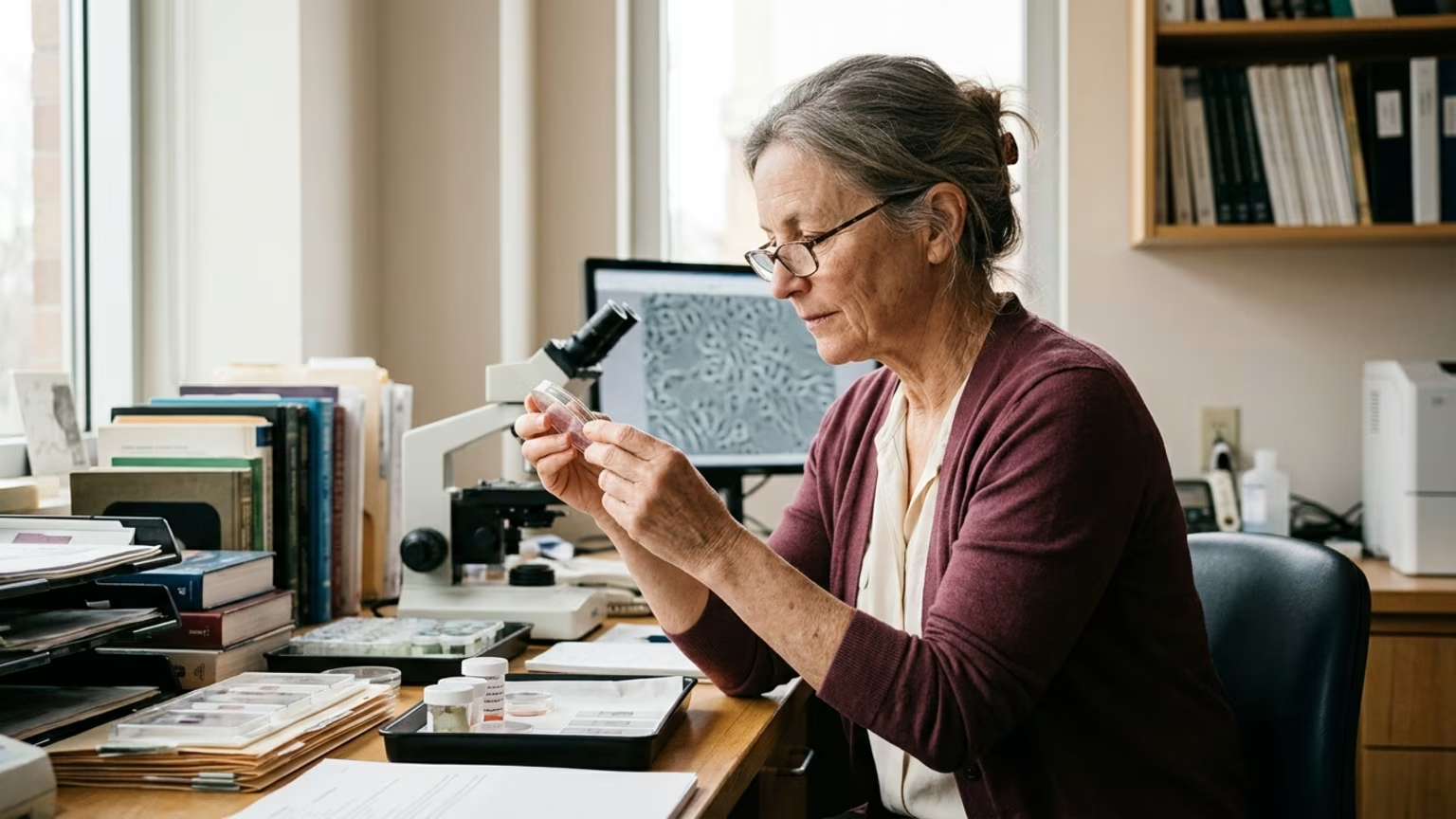

Five months of mouse imaging revealed sex-related differences in skin-cell coordination. Here is what the findings mean for human skin research.





A research update dated 2026-10-14 described “Sexual dimorphism in epidermal stem cell dynamics,” a study published in Nature in 2026. Researchers led by Université libre de Bruxelles (ULB) worked with the University of Cambridge and other teams to examine how female and male mice renew their epidermis.
The team followed the same epidermal stem cells and their descendants in living mice for five months. The central finding was a difference in coordination: in female mice, cells produced by the same division more often went on to make matching decisions about dividing again or becoming specialized.
The result puts the timing and relationships between cell decisions at the center of the story. It is a finding about how renewal is organized within the experimental models studied.
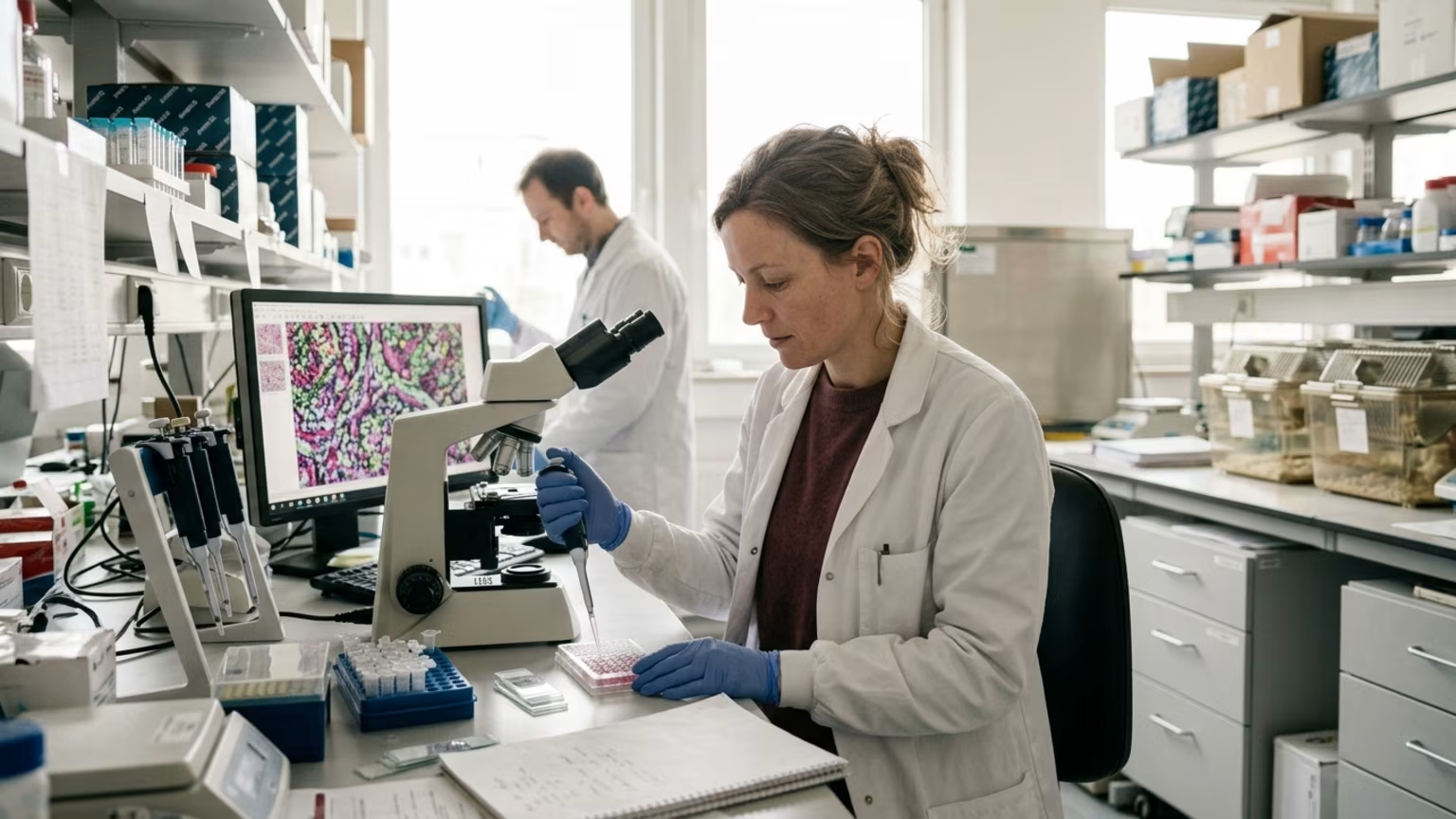
According to the study reporting, researchers used microscopy to track cells repeatedly rather than describing renewal from a single observation. Following the same cells and their descendants over five months gave the team a way to examine patterns across successive cell decisions.
In female mice, daughter cells from the same division more often followed matching paths. They tended to divide again together or move toward specialization together. In male mice, those decisions were less synchronized.
The distinction is more specific than saying one sex had “better” skin renewal. Coordination describes the relationship between cell behaviors. It does not by itself rank the overall condition or health of the skin.
The reports also describe an intermediate stage between epidermal stem cells and fully specialized skin cells. Cells in this stage underwent a limited number of divisions before completing specialization. That finding adds another part to the sequence the researchers were tracking.
Read together, these observations describe both a pathway through renewal and differences in how closely related cells move through it. The scientific interest lies in that organization, not just in whether a cell divides.
Medical Xpress's coverage describes testosterone as regulating cell maturation and exit from the stem-cell compartment. It describes oestrogens as promoting stem-cell proliferation and coordination.
In everyday terms, the reported hormone effects involved different aspects of cell behavior. One concerned movement toward a more specialized state. Another concerned the production of stem cells and how their activity was coordinated.
The team also tested reconstructed human skin in the laboratory. According to the detailed study coverage, testosterone accelerated stem-cell differentiation in that model. Differentiation is the process of becoming more specialized.
The wound-healing observations were another part of the research. Female mice’s back-skin wounds reportedly closed faster, especially during the first few days after injury. The difference narrowed as the wounds closed.
These findings belong to distinct experimental observations: cell tracking in mice, wound closure in mice and hormone effects in reconstructed human skin. Keeping those observations separate makes the report easier to interpret without treating them as interchangeable results.
The long-term imaging and wound comparisons were conducted in mice. The human-related experiment used reconstructed skin in a laboratory rather than living people. Together, these findings do not establish that women and men renew skin or heal wounds differently for the same reasons.
The available reporting does not give animal sample sizes, numerical wound-closure rates, hormone concentrations or other effect sizes. Those details are unavailable in the coverage; that does not establish that they were absent from the original study. Without them, readers cannot assess the size of the reported differences from this coverage alone.
The work also did not directly test aging, age-related skin changes or cosmetic products. It therefore supplies no direct evidence about visible aging or consumer skincare outcomes. A finding about cell renewal and a finding about how skin changes with age are different research questions.
Finally, the reported hormone findings do not show that changing hormone levels is safe or effective for altering skin renewal in people. Mentions of future treatments tailored to sex are prospective ideas, not evidence that such treatments have been developed or tested clinically.
For a reader choosing skincare, the supported response is straightforward: this study is not a reason to change a routine or select products by sex. It is more useful as a way to understand a new research question than as a product-selection tool.
A helpful way to read this kind of headline is to identify the model first. Here, the models were living mice and reconstructed human skin. Then separate the outcome measured from the outcome that matters to a personal decision.
For this report, that means keeping cell coordination and mouse wound closure distinct from questions about a person's skin appearance. Personal decisions about hormones or treatment belong with qualified care rather than an inference from this experiment.
Younell's guide to connecting skin measurements with clinical outcomes offers related context for reading research claims. Our broader skin science coverage follows the same research-led focus: understanding what was measured before assigning it practical meaning.
In the study coverage, ULB professor Cédric Blanpain connected the findings with open questions about wound healing, cancer development and autoimmune diseases. He also said the team intended to investigate sex-related differences in skin-cancer formation and progression.
That is a research direction rather than a promised application. The important next step is to establish where the reported differences in cell coordination have consequences, and whether comparable patterns are relevant in living human skin.
For skin longevity, the value of this study is the more precise question it makes possible. How is renewal coordinated across related cells, and when does that coordination matter? Answering that question is a firmer foundation for future work than turning an early biological finding into a new skincare rule.
Stay connected for research and practical guidance on skin, hair, collagen, nutrition and beauty longevity. Clear ideas for people who want to understand how appearance changes with age and make better-informed choices over time.


Understand your skin, hair and body better without chasing every new trend, treatment or promise.
explore the Blog