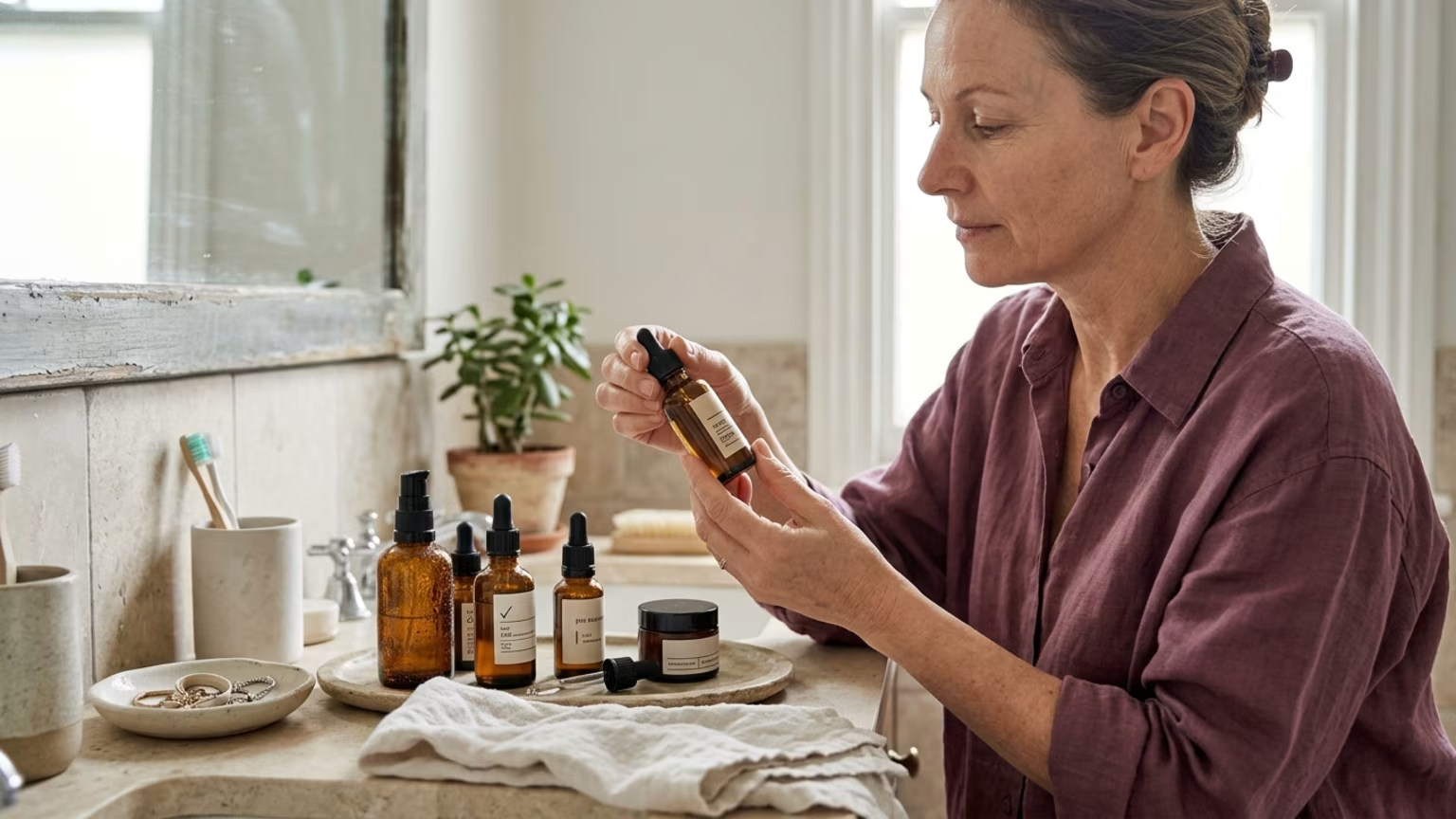

A dermatologist's broader view of facial aging, with context on hydration, pigmentation, sun protection and individualized care.





In an October 13, 2026 article from ¡HOLA!, Dr. Daniel Nieto of IMR described facial aging as more than the appearance of wrinkles. The dermatologist highlighted progressive losses in hydration, luminosity and elasticity. The report also considered pigmentation changes and shifts in facial volume and contour.
The central message was not to add more products for every passing birthday. Nieto argued for care that responds to the signs and needs of the person. For readers concerned about visible aging, that offers a more useful starting point than counting lines alone.
Nieto's account brings several dimensions of facial aging into the same conversation. Hydration concerns sit alongside changes in radiance and elasticity. Pigmentation and facial structure also deserve attention rather than being treated as secondary to wrinkles.
In everyday language, the concerns discussed in the article fall into several groups:
These categories offer a vocabulary for describing concerns. They do not mean that every person will experience the same combination or that each change needs treatment. The useful shift is from a single feature to a fuller description of what someone notices.
Nieto also separates intrinsic aging from photoaging. He describes intrinsic aging as unavoidable while saying that photoaging can be reduced to a considerable extent. That distinction gives sun protection a clear role without suggesting that it prevents every age-related change.
The report extends this broader view into approximate priorities across adulthood:
For context on the structural side, Younell's guide to how skin changes fit into facial anatomy offers a related reading path. It complements the article's emphasis on looking beyond the surface.
The ¡HOLA! article is a reported interview and expert-guidance piece, not a clinical study. It supplies no trial sample or quantified treatment effects for hydration, pigmentation or elasticity. Its discussion of retinol and professional procedures therefore does not establish how much benefit a particular approach produces or which option works best.
The age bands are planning prompts rather than evidence-based deadlines. Nieto explicitly rejects a single regimen for everyone and says care should reflect each person's predominant signs and needs. A birthday is not a finding that establishes the need for an ingredient or procedure.
The publication is best read as a way to organize a clinical conversation. Its contribution is the breadth of that conversation rather than a newly demonstrated treatment outcome. The practical question becomes which concerns deserve attention and what evidence supports addressing them.
The report supports discussing more than lines with a dermatologist. Dryness or dehydration may be relevant, as may uneven tone or reduced radiance. Changes in firmness and contour belong in that discussion too.
A useful way to prepare for a consultation is to describe what is noticeable and what matters personally. Someone concerned mainly about skin comfort may have different priorities from someone asking about pigmentation or facial volume. The purpose is to make the concern clear rather than to select a treatment in advance.
Questions consistent with Nieto's approach include:
For pigmentation concerns, persistent irritation or visible sun damage, an individualized assessment is more useful than treating the article's categories as a personal diagnosis.
Independent guidance from the American Academy of Dermatology (AAD) supports the article's emphasis on sun protection. The AAD recommends broad-spectrum, water-resistant sunscreen with SPF 30 or higher. Its guidance also includes shade and protective clothing.
The AAD says sun protection can reduce premature skin aging as well as skin-cancer risk. This places photoprotection within a broader health context rather than presenting it only as a cosmetic habit.
For related context, Younell's article on daily photoprotection and visible skin change looks more closely at that guidance. The emphasis is on a consistent protective approach rather than adding products in response to every new concern.
Nieto describes prevention as choosing suitable products and maintaining a coherent routine. His advice is not to accumulate products simply because they are marketed for prevention. Barrier support is among the priorities he identifies from the 30s.
For readers, the practical implication is a question of purpose: what concern is each product intended to address? That keeps the conversation connected to individual needs. It also leaves room for comfort and hydration rather than making wrinkle reduction the only measure of worthwhile care.
This is a restrained approach, not a requirement to build a more elaborate routine. A broader understanding of aging can lead to a more focused discussion rather than a longer shopping list.
Retinol appears in the ¡HOLA! report as one possible part of care. The AAD provides important safety context: retinoids can increase sun sensitivity and should not be used during pregnancy. It also notes that people with skin allergies or dryness may not be good candidates.
The AAD recommends discussing retinol use with a dermatologist and advises daytime sun protection when using retinoids. These considerations make suitability a personal clinical question rather than an automatic response to reaching a particular age. The report is not a basis for choosing a strength or treatment schedule.
The value of Nieto's perspective is a broader language for facial aging. Hydration and radiance matter alongside pigmentation and elasticity. Volume and contour add another dimension to the picture.
For future research, a useful question is how care directed at these different concerns translates into measured improvements that matter to patients. That requires defined outcomes rather than a general promise of younger-looking skin.
For now, the evidence supports a grounded takeaway: recognize the concern, keep sun protection central and discuss personal treatment decisions with qualified care. Understanding more dimensions of aging does not create an obligation to treat them all.
Stay connected for research and practical guidance on skin, hair, collagen, nutrition and beauty longevity. Clear ideas for people who want to understand how appearance changes with age and make better-informed choices over time.


Understand your skin, hair and body better without chasing every new trend, treatment or promise.
explore the Blog


