
Optimal skin longevity requires selecting evidence-based vitamin C derivatives, understanding stability chemistry, and integrating proven formulations.





You have likely typed variations of the same frustrating question into a search engine: why is my vitamin C serum turning yellow, stinging my face, and failing to fade stubborn sun spots? With hundreds of serums boasting extreme concentrations, proprietary derivatives, and conflicting instructions, finding a clear path is exhausting. This comprehensive guide provides an objective, research-backed reference to help you understand what topical vitamin C actually does, which formulation suits your biology, and how to use it safely for long-term skin health.
Navigating cosmetic formulations requires looking beyond marketing claims. A high active percentage on a bottle does not guarantee that the ingredient will remain stable, cross the skin barrier, or produce visible improvements. By understanding the underlying biochemistry, clinical evidence, and formulation variables, you can make informed decisions based on physiology rather than commercial trends.
Topical vitamin C represents a complex family of active compounds rather than a single standardized ingredient. Understanding how these compounds interact with dermal tissue begins with several core scientific findings:
To appreciate why vitamin C occupies such a central place in research in skin longevity and healthy aging, one must examine how the molecule interacts with cutaneous biology. Skin aging is driven by a combination of programmed cellular changes and environmental insults. Solar ultraviolet radiation, particulate pollution, and metabolic stress generate reactive oxygen species that damage cellular lipids, structural proteins, and nuclear DNA.
Vitamin C, or L-ascorbic acid, is an abundant water-soluble antioxidant in healthy human tissue. In the epidermis and dermis, it acts as a primary physiological defense against oxidative cascades. When ultraviolet photons strike unprotected skin, they generate superoxide radicals, hydroxyl radicals, and singlet oxygen. Ascorbic acid readily donates electrons to neutralize these free radicals, converting itself into the relatively stable, unreactive intermediate monodehydroascorbate.
Through this continuous electron transfer, vitamin C prevents the lipid peroxidation of cell membranes and shields structural proteins from oxidative fragmentation. Furthermore, ascorbic acid works in synergy with lipid-soluble alpha-tocopherol, also known as vitamin E. When vitamin E neutralizes free radicals within cellular membranes, it becomes oxidized itself. Vitamin C regenerates the active form of vitamin E, creating an integrated antioxidant defense across both aqueous and lipid compartments of the skin.
Beyond direct antioxidant protection, vitamin C is an obligatory biochemical cofactor in collagen synthesis. Collagen provides structural integrity, tensile strength, and elasticity to the dermal matrix. During collagen production inside fibroblasts, procollagen peptide chains must undergo post-translational modification before assembling into a triple helix. The enzymes prolyl-4-hydroxylase and lysyl hydroxylase catalyze the addition of hydroxyl groups to proline and lysine residues.
These hydroxylation reactions require iron in its ferrous state. Ascorbic acid serves as the specific reducing agent that maintains iron in this active state, allowing continuous enzyme function. Without adequate local vitamin C, procollagen chains cannot form stable triple helices and degrade rapidly inside the cell. At the same time, vitamin C stimulates transcription factors that upregulate collagen gene expression while increasing tissue inhibitor of metalloproteinase-1. This dual action encourages new structural protein production while slowing the breakdown of existing tissue.
Vitamin C also regulates pigment biology by modulating melanogenesis within epidermal melanocytes. When skin is exposed to ultraviolet light or inflammatory triggers, the enzyme tyrosinase initiates the oxidation of tyrosine into dopaquinone, the primary precursor to melanin pigment. Tyrosinase activity depends strictly on copper ions located within its active catalytic center. Ascorbic acid interacts with these copper ions, reducing dopaquinone back to dopa and inhibiting further enzymatic steps.
This biochemical inhibition reduces the accumulation of uneven surface pigmentation. Because vitamin C interrupts abnormal melanogenesis without destroying melanocytes, it provides gentle brightening rather than aggressive depigmentation.
The cosmetic marketplace offers dozens of distinct compounds under the broad heading of vitamin C. Knowing how these variations differ in stability, skin permeability, and biological conversion helps consumers make practical choices.
L-ascorbic acid is the pure, biologically active molecule that cells use directly. It requires no enzymatic conversion once inside viable cutaneous tissue. Because of this direct biological availability, it possesses the deepest clinical literature in peer-reviewed dermatology.
However, pure ascorbic acid presents serious formulation challenges. The molecule is hydrophilic, charged, and inherently unstable in aqueous solutions. To penetrate the lipid-rich stratum corneum, it must be formulated at a low pH, typically below 3.5. At this acidic pH, the ionic charge is minimized, allowing uncharged ascorbic acid molecules to diffuse through the surface barrier. The primary disadvantage of this form is sensory irritation, as low-pH solutions can trigger burning, stinging, and erythema in sensitive or barrier-compromised skin.
Magnesium ascorbyl phosphate, commonly abbreviated as MAP, is an esterified, water-soluble derivative. In this molecule, a phosphate group protects the reactive carbon-2 position from rapid oxidation. MAP remains remarkably stable in aqueous solutions at neutral pH levels between 6.0 and 7.0.
Once absorbed into the skin, cellular phosphatase enzymes must cleave the phosphate group to liberate active ascorbic acid. Laboratory investigations demonstrate that MAP promotes hydration, supports collagen biology, and calms pigment pathways. Because it functions comfortably at a skin-neutral pH, it is widely used by individuals who cannot tolerate acidic serums. However, the efficiency of transdermal absorption and enzymatic cleavage remains lower than that of optimized pure ascorbic acid.
Sodium ascorbyl phosphate, or SAP, is another salt-stabilized derivative closely related to MAP. It exhibits excellent chemical stability in cosmetic emulsions and resists oxidative discoloration when exposed to light and atmospheric air. SAP is typically formulated at a neutral to mildly alkaline pH between 6.5 and 7.5.
Like MAP, SAP requires cutaneous enzymatic cleavage to release active ascorbic acid. Interestingly, clinical research indicates that SAP demonstrates mild antimicrobial activity against cutibacterium acnes. This characteristic makes it a common choice for individuals managing simultaneous breakouts and post-inflammatory pigmentation. Its main limitation is that its conversion rate in deeper dermal layers is variable.
Ascorbyl glucoside is formed by bonding pure ascorbic acid with a glucose molecule. This synthetic linkage stabilizes the active site against environmental degradation. The compound dissolves cleanly in water and maintains stability across a versatile pH spectrum from 5.0 to 7.0.
Upon cutaneous absorption, the enzyme alpha-glucosidase slowly breaks the bond between glucose and ascorbic acid, creating a sustained release of the active molecule over time. Ascorbyl glucoside is widely praised for its pleasant cosmetic texture and gentle profile. However, while it improves surface radiance and provides free radical defense, its capacity to stimulate deep structural remodeling is less documented than pure ascorbic acid.
Tetrahexyldecyl ascorbate, often designated as THD ascorbate or ascorbyl tetraisopalmitate, is a modern lipid-soluble derivative. Unlike traditional water-soluble forms, THD ascorbate features branched fatty acid chains that allow it to mix easily with skin lipids. It remains chemically stable in emulsions and anhydrous solutions with a pH above 5.0.
Because of its lipophilic character, THD ascorbate easily crosses the intercellular lipid matrices of the stratum corneum. Once inside viable cells, cellular esterases hydrolyze the lipid chains to yield free ascorbic acid. Clinical studies show that THD ascorbate supports collagen architecture and reduces surface discoloration. It is an appealing option for dry, mature, or reactive skin types that benefit from lipid-rich formulations.
Ascorbyl palmitate is an ester combining ascorbic acid with palmitic acid, creating an amphiphilic compound. It was among the earliest stabilized forms developed to provide lipid solubility and stability in cosmetic oils. It functions comfortably at neutral pH levels.
Although ascorbyl palmitate protects oils against oxidation in the bottle, its biological efficacy inside living tissue is limited. In some laboratory models, exposure of ascorbyl palmitate to intense ultraviolet radiation resulted in lipid peroxidation byproducts. For this reason, modern cosmetic chemistry usually prefers derivatives like THD ascorbate over ascorbyl palmitate for daylight antioxidant defense.
The physical performance of any vitamin C product depends heavily on its solvent system, complementary stabilizers, and protective packaging. Understanding these chemical requirements prevents consumers from wasting money on degraded formulations.
Pure L-ascorbic acid in water is vulnerable to autoxidation. When exposed to dissolved oxygen, high temperatures, or ambient light, two electrons are abstracted from the ascorbic acid molecule. This initial oxidation yields dehydroascorbic acid, which is pale yellow. If exposure continues, dehydroascorbic acid undergoes irreversible hydrolysis into 2,3-diketogulonic acid, which further breaks down into complex polymeric brown compounds.
This degradation pathway has clear practical implications. When an aqueous ascorbic acid serum turns from clear to pale yellow, mild oxidation has begun. When it progresses to bright orange or dark amber-brown, the majority of the active molecule has permanently degraded. Applying heavily oxidized serum is counterproductive, as broken-down byproducts can cause contact irritation, block pores, and stain the surface keratin.
To control this breakdown, cosmetic chemists rely on synergy within topical skin formulations. Research shows that combining 15% L-ascorbic acid with 1% alpha-tocopherol (vitamin E) and 0.5% ferulic acid increases chemical stability while multiplying the product's photoprotective capacity. Ferulic acid acts as a potent botanical antioxidant that stabilizes both vitamin C and vitamin E, lowering the formulation's susceptibility to oxidation.
pH also dictates the physical behavior of pure ascorbic acid. The acid dissociation constant (pKa) of L-ascorbic acid is 4.2. When the solution pH matches the pKa, half of the molecules exist in an uncharged state while the other half carry a negative ionic charge. Lowering the pH to 3.0 or 2.5 ensures that the vast majority of ascorbic acid remains uncharged, allowing it to penetrate through the skin's lipid barrier.
Finally, packaging engineering serves as the first line of defense against chemical degradation. Traditional clear glass dropper bottles introduce fresh oxygen and ambient light every time they are opened. Optimal preservation requires dark amber or opaque glass containers, airless pump dispensers with internal vacuum pistons, or single-use aluminum ampoules. Keeping the product in a cool, dark drawer away from bathroom humidity extends its shelf life.
Evaluating topical vitamin C requires examining controlled human clinical trials rather than isolated in vitro findings. Human studies show consistent, measurable benefits for photoaging, structural renewal, and pigment balance.
A landmark 12-week double-blind, randomized, half-face trial conducted by Traikovich evaluated a 10% topical ascorbic acid formulation in patients with moderate cutaneous photoaging. Clinical scoring demonstrated significant improvements in perioral wrinkles, cheek laxity, and overall skin texture on the treated side compared to the vehicle-treated control. Objective histological analysis of post-treatment punch biopsies revealed increased Grenz-zone collagen deposition and elevated mRNA transcription for Type I collagen.
Similarly, Humbert and colleagues conducted a 6-month randomized, double-blind, vehicle-controlled trial evaluating a 5% ascorbic acid cream applied daily to photodamaged skin. Quantitative optical profilometry demonstrated a significant reduction in deep cutaneous furrows and an increase in microrelief density. Transmission electron microscopy confirmed structural improvements in dermal elastic fibers and active fibroblast morphology. These findings confirm that modest concentrations can yield meaningful improvements when formulated effectively.
In photoprotection research, Pinnell and coworkers investigated the cutaneous defense provided by combining 15% L-ascorbic acid, 1% alpha-tocopherol, and 0.5% ferulic acid. Skin treated with this antioxidant combination showed an eightfold reduction in ultraviolet-induced oxidative injury compared to untreated tissue. Under experimental UVB irradiation, the topical formula reduced erythema by 52% and reduced apoptotic sunburn cell formation by 40% to 60%.
Research on cutaneous pigmentation shows similar benefits. Clinical evaluations of a 25% ascorbic acid formulation using chemical penetration accelerants showed significant lightening of melasma and recalcitrant sun spots over 16 weeks of daily application. In another randomized comparative study, a formula pairing lipid-soluble THD ascorbate with azelaic acid reduced facial pigment intensity by 4.10% at week 8, outperforming the THD ascorbate monotherapy group, which achieved a 0.69% reduction.
When we first started reviewing clinical trials on collagen supplementation, I was struck by how often the media misinterpreted the data. A study showing a minor increase in skin elasticity was suddenly headlined as a miracle breakthrough. It made me realize how desperately consumers need a translator for beauty science, someone who can say exactly what a study proves and what it does not prove. Topical vitamin C delivers reliable, measurable improvements, but it works gradually over months through consistent daily application.
While the evidence supporting topical vitamin C is substantial, consumers should remain aware of several methodological limitations in the published literature.
First, many clinical trials evaluate proprietary, multi-ingredient blends that combine vitamin C with alpha-tocopherol, ferulic acid, hyaluronic acid, or functional peptides. While these multi-ingredient formulas reflect how products are actually used, they make it difficult to attribute clinical improvements to vitamin C alone. Improvements in skin hydration and barrier function may stem partly from the vehicle base, emollients, or humectants.
Second, the published literature on vitamin C derivatives is considerably less uniform than the evidence for pure L-ascorbic acid. Many derivative studies are conducted in vitro using isolated cell cultures or non-human tissue models. These laboratory conditions do not replicate the complex lipid barriers and enzyme environments of living human skin. Demonstrating that a derivative stimulates collagen production in a petri dish does not prove that it will successfully penetrate human skin, convert to active ascorbic acid, and remodel tissue in real-world conditions.
Third, clinical trial populations in dermatological literature are often modest, frequently enrolling between 15 and 50 participants over trial durations of 8 to 24 weeks. While these sample sizes are sufficient to establish statistical significance for short-term outcomes, they provide limited data on decades of continuous use across diverse ethnic backgrounds and skin phototypes.
Finally, publication bias remains an inherent factor across cosmetic science. Commercial manufacturers fund a substantial portion of topical formulation research, which can create a bias toward publishing favorable outcomes. Independent, university-affiliated clinical trials confirm the core biological actions of vitamin C, but consumers should maintain realistic expectations and view topical antioxidants as supportive long-term interventions rather than instant solutions.
Successfully incorporating topical vitamin C into a daily routine requires balancing antioxidant benefits with skin barrier tolerance. Because biological needs vary, application strategies should be customized to specific skin profiles.
Applying topical vitamin C in the morning provides an active antioxidant shield against daylight ultraviolet exposure and atmospheric pollutants. After cleansing with a gentle, non-stripping cleanser, allow the skin surface to dry thoroughly. Applying acidic ascorbic acid solutions to damp skin can increase transdermal penetration speed, which often causes stinging and redness in sensitive skin.
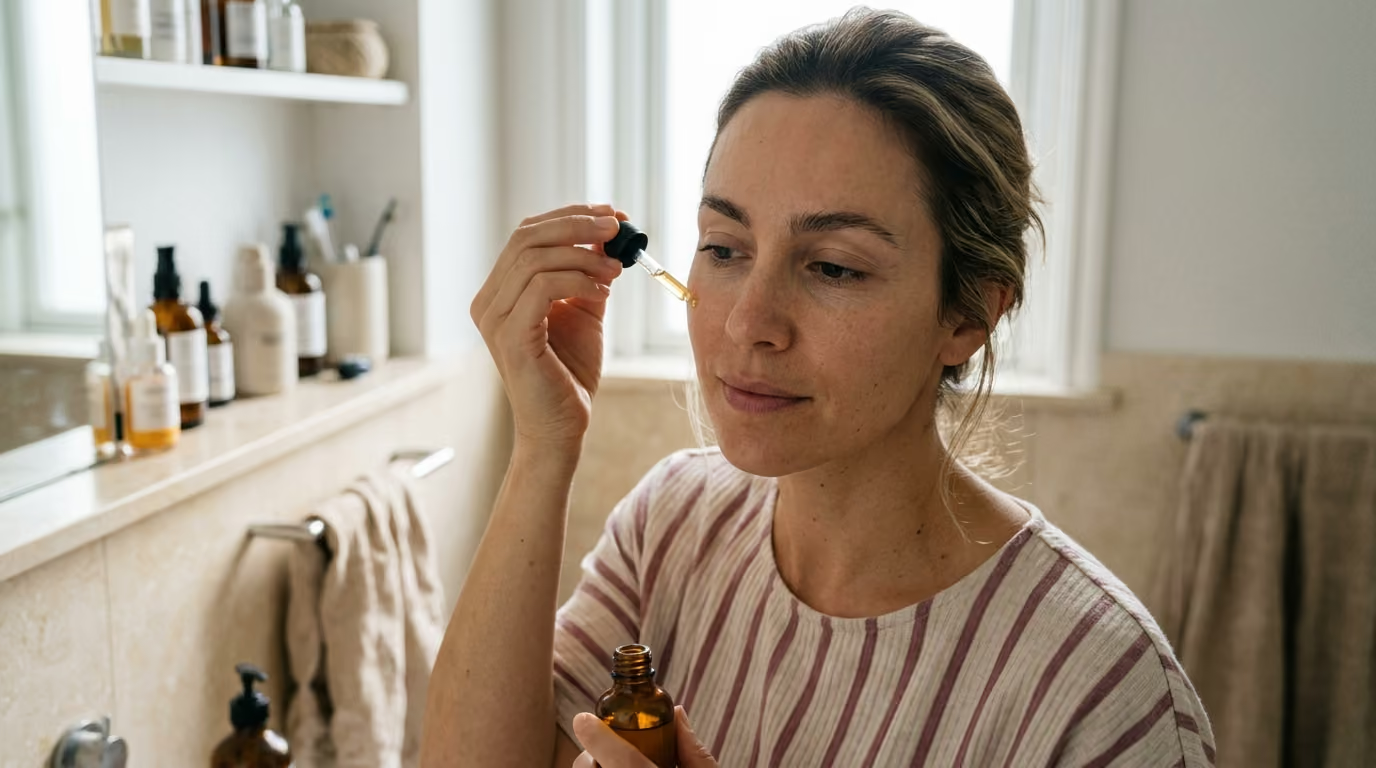
Dispense 4 to 5 drops of serum onto your fingertips and press it gently across the face, neck, and upper chest. Allow the formulation to absorb for 60 to 90 seconds. Follow with a hydrating moisturizer to support the stratum corneum barrier, and complete the routine with a broad-spectrum sunscreen rated SPF 30 or higher. For comprehensive tissue health, topical routines can be paired with balanced dietary skin nutrition.
Modern skincare routines often combine multiple functional ingredients. Managing these combinations thoughtfully prevents barrier irritation and product pilling:
Misleading marketing claims frequently confuse consumers about what topical vitamin C can accomplish. Looking at common claims through the lens of foundational beauty science clarifies what the evidence actually supports.
A common misconception is that higher concentrations always yield better results. Dermatological penetration studies demonstrate that cutaneous tissue reaches maximum absorption saturation around a 20% concentration of pure ascorbic acid. Formulations with 25% or 30% unbuffered acid do not increase tissue accumulation. Instead, they increase the risk of irritant contact dermatitis, red flaking, and barrier breakdown.
Another misconception is that vitamin C provides enough photoprotection to replace sunscreen. While topical antioxidants reduce ultraviolet-induced erythema and free radical cascades, they have no optical SPF properties and do not absorb or reflect UV photons. Using vitamin C without daily broad-spectrum sunscreen leaves skin unprotected against direct ultraviolet damage and accelerated structural collagen degradation.
Consumers are also often told that tingling or stinging proves a product is working. Stinging simply means the acidic solution has lowered the surface pH enough to stimulate cutaneous sensory nerve fibers, or that the skin's moisture barrier is compromised. Effective dermal stimulation occurs biochemically over time and does not require sensory irritation.
Yes, but choosing the right formulation is essential. Pure ascorbic acid serums with low pH levels or heavy oil bases can occasionally irritate active blemishes or clog pores. Individuals with acne-prone skin often do better with water-based serums containing Sodium Ascorbyl Phosphate (SAP) or Ascorbyl Glucoside. SAP is well tolerated and possesses mild antimicrobial properties against cutibacterium acnes, helping to manage breakouts while fading post-acne marks.
An aqueous pure L-ascorbic acid serum typically remains active for 2 to 3 months after opening, provided it is stored properly in a cool, dark place with the cap tightened. If the liquid turns from clear to deep orange or brown, it has oxidized and should be replaced. Anhydrous serums, dry powder mixes, and lipid derivatives like THD ascorbate are significantly more stable and often last 6 to 12 months after opening.
Vitamin C can be used around the periorbital area, but the skin there is thinner and more sensitive than the rest of the face. Applying an acidic 15% or 20% L-ascorbic acid serum close to the eyelid margin can cause redness and peeling. Instead, look for eye-specific formulations that use gentle derivatives like THD ascorbate or ascorbyl glucoside at lower concentrations between 3% and 5%.
This staining happens when pure L-ascorbic acid oxidizes on the surface of the skin. If an aqueous serum is not fully absorbed, exposure to air causes the remaining ascorbic acid to degrade into erythrulose, the same active compound found in sunless tanning lotions. This temporary discoloration washes off with a gentle cleanser. You can prevent it by using smaller amounts, applying to dry skin, and allowing the serum to absorb fully before applying moisturizer.
Individuals with active rosacea or eczema should be careful with traditional low-pH L-ascorbic acid serums, as acidic formulas can cause burning and trigger vascular flushing. However, non-acidic derivatives like Magnesium Ascorbyl Phosphate or gentle emulsions containing Ascorbyl Glucoside can often be used safely. Always patch-test a small area along the jawline for three consecutive days before applying any new active product to your face.
Adopting an evidence-based approach to topical vitamin C helps you achieve steady, long-term benefits while avoiding unnecessary irritation:
Stay connected for research and practical guidance on skin, hair, collagen, nutrition and beauty longevity. Clear ideas for people who want to understand how appearance changes with age and make better-informed choices over time.


Understand your skin, hair and body better without chasing every new trend, treatment or promise.
explore the Blog