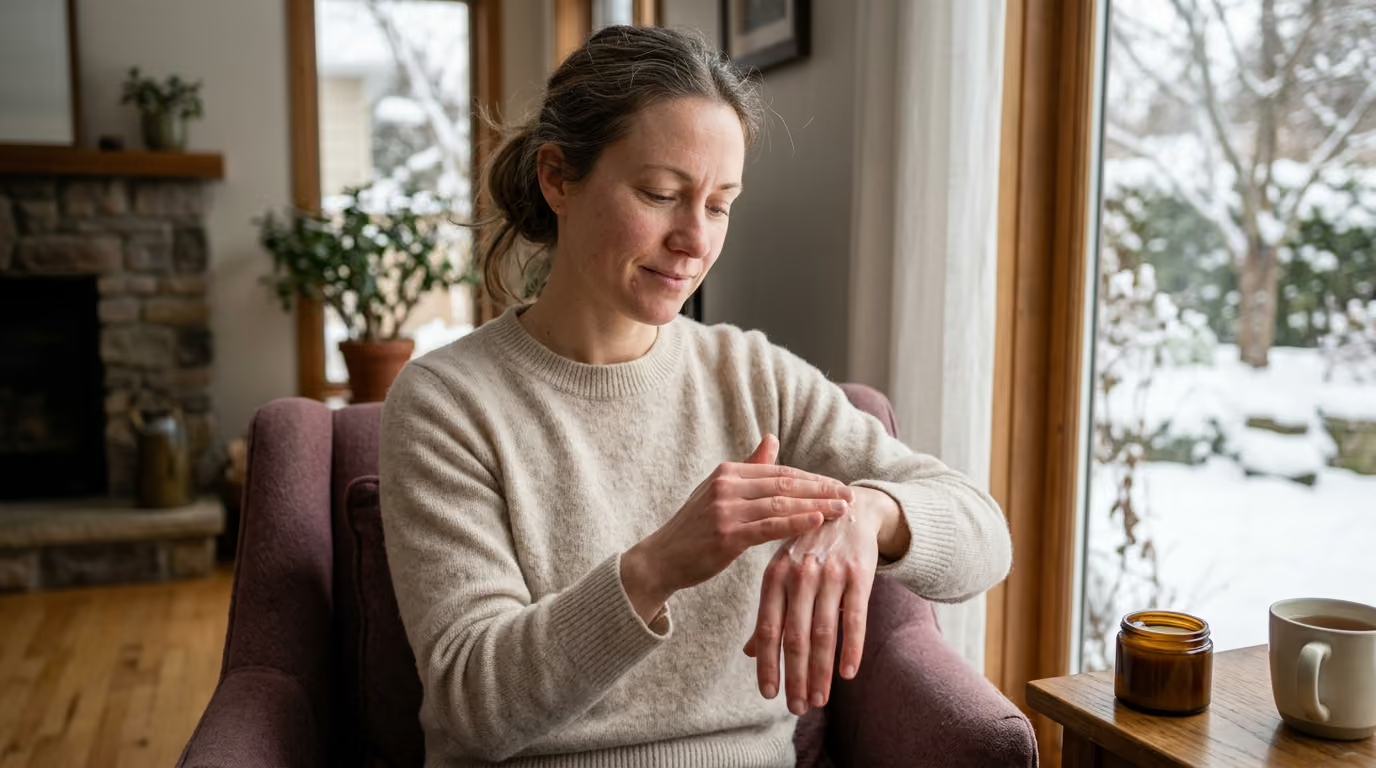

While many attribute tissue aging solely to genetics, cumulative environmental exposures across daily microenvironments drive significant biological damage.





Many people search for practical ways to protect their skin and bodies from daily environmental damage. They search for how city air, office lighting, sunlight through car windows, and disrupted sleep affect visible aging. The sheer volume of conflicting advice often leads to confusion or expensive, ineffective routines. This guide provides a structured framework to assess your daily exposures and focus on the actions that matter most.
Environmental aging is not a single medical diagnosis. It is an organizing concept for external factors that alter normal physiology. To understand how external factors change our tissues, we must separate natural biological aging from external stress. Intrinsic aging represents the genetically guided, chronological progression of human biology. Extrinsic aging happens when outside agents damage structural proteins, cell membranes, and nuclear material.
Skin acts as the primary interface between internal physiology and the surrounding environment. When exposed to external stressors, the stratum corneum is the first line of defense. The lipid matrix between cells helps prevent water loss and blocks external irritants. When environmental hazards breach this surface, they trigger a biological cascade of reactive oxygen species.
Excess reactive oxygen species overwhelm natural antioxidant defenses in the skin and internal organs. This oxidative state activates transcription factors such as nuclear factor kappa B. These signals accelerate the production of inflammatory cytokines across surrounding tissue. In turn, inflammatory signaling upregulates matrix metalloproteinases, which are enzymes that break down dermal collagen and elastin fibers.
Over time, this continuous degradation disrupts the extracellular matrix. The skin gradually loses tensile strength, structural recoil, and moisture retention. Repeated exposure also induces cellular senescence, where damaged cells stop dividing but remain metabolically active. These senescent cells release a destructive mix of signaling molecules that degrade nearby healthy tissue. Understanding these biological pathways is central to modern beauty science analysis.
Large-scale public health data reveals the true magnitude of daily environmental exposures. The World Health Organization identifies ultraviolet radiation as the primary cause of skin cancers worldwide. In 2020, more than 1.5 million skin cancer cases and over 120,000 associated deaths occurred globally. Excessive sun exposure was estimated to cause approximately 1.2 million new non-melanoma skin cancers that year.
Occupational settings carry an exceptionally high burden of lifetime ultraviolet exposure. Joint estimates from the World Health Organization and the International Labour Organization show that nearly one in three deaths from non-melanoma skin cancer is attributable to outdoor work. A European case-control study reported higher risks of squamous cell carcinoma among agricultural and construction workers compared to indoor workers, with an odds ratio of 2.77. The odds ratio for basal cell carcinoma in these outdoor workers was 1.83.
Indoor air quality presents another major challenge for whole-body health. The World Health Organization reports that roughly 2.1 billion people rely on open fires or inefficient stoves for cooking. Household air pollution was associated with an estimated 2.9 million deaths globally in 2021. In unvented or poorly ventilated kitchens, fine particulate matter concentrations can surge to 100 times safe limits.
Epidemiological cohorts also link ambient traffic-related air pollution to premature skin aging. Nitrogen dioxide, soot, and fine particulate matter correlate with facial lentigines and deeper nasolabial folds. A meta-analysis reported an increase in disease incidence per 10 micrograms per cubic meter increase of roughly 1.01 percent for PM10 and 1.60 percent for PM2.5. Sleep data from the Centers for Disease Control and Prevention indicates that over 33 percent of adults routinely sleep less than seven hours, which disrupts systemic tissue repair.
Translating environmental health data into personal habits requires critical thinking. Many published studies show strong correlations between air pollutants and tissue changes, but correlation does not equal causation. People living in areas with high traffic pollution often face other confounding challenges. These can include higher chronic noise, limited green space, varied dietary habits, and differences in socioeconomic status.
Cell culture and animal experiments frequently use extreme pollutant concentrations to force a measurable biological reaction. These laboratory exposures often exceed what a person encounters during a normal city commute. As a result, showing that a particulate extract damages cultured fibroblasts in a petri dish does not prove that walking past traffic will visibly age your face next week.
Clinical trials on topical skincare face similar constraints. Many beauty brands test products against manufactured dust in closed chambers, which does not match real-world conditions. A topical cream that binds a specific synthetic compound may not protect against real urban pollution mixtures. Furthermore, most commercial studies lack long-term follow-up periods over decades.
We must also separate population-wide risks from individual daily outcomes. A modest statistical increase in hyperpigmentation across a large city population cannot predict how your specific skin will respond. Genetics, baseline barrier integrity, and natural melanin levels all influence your individual vulnerability. Responsible science communication requires acknowledging these gaps rather than promoting exaggerated fears.
An environmental audit must prioritize high-impact exposures over minor distractions. Trying to control every single environmental factor creates unnecessary anxiety and rarely improves health. In our experience, people often waste energy worrying about minor cosmetic ingredients while ignoring major daily sun exposure and poor sleep.
I remember speaking with a dermatologist who told me her patients were coming in with severe anxiety about normal skin aging. That anxiety was driven entirely by social media filters and aggressive marketing. That conversation became a cornerstone of our philosophy. We decided right then that our publication would never frame natural changes like wrinkles or thinning hair as personal failures. You can learn more about our research philosophy at Younell and how we evaluate evidence.
To keep priorities clear, we use a simple decision-making model to evaluate daily exposures. You can estimate the relative significance of any factor by considering its intensity, frequency, duration, evidence strength, personal vulnerability, and ease of reduction.
High-confidence hazards form the foundation of this hierarchy. Solar ultraviolet radiation and tobacco smoke sit at the very top because decades of evidence confirm their ability to damage tissue. Indoor combustion from open flames or unvented heaters also carries proven cardiovascular and respiratory risks. Severe heatwaves and chronic sleep restriction likewise cause widespread systemic strain.
Context-dependent exposures occupy the middle tier. These include traffic-related particulate matter, tropospheric ozone, elevated nighttime light, and persistent environmental noise. The lowest tier contains minor concerns with limited supporting evidence, such as ordinary contact with household surfaces or low-level blue light from phones. Focusing on the top tiers provides the greatest health benefit with the least wasted effort.
A successful audit evaluates the specific environments where you spend your time. Mapping these places clarifies your true daily exposures.
Your bedroom and kitchen are the two most important spaces in your home. In the bedroom, look for stray artificial light from street lamps or electronics, as well as excess heat and ambient noise. Even modest light at night can impair your sleep depth and interfere with normal overnight tissue repair. Keeping the room dark, quiet, and cool supports your body's natural restorative processes.
In the kitchen, cooking without an exhaust fan can generate significant indoor fine particulate matter. Gas burners also release nitrogen dioxide and carbon monoxide directly into living areas. Always run a range hood that vents to the outside while cooking, or open nearby windows to improve air exchange. If your home has dampness or mold, address the water source immediately rather than relying on air fresheners.
Workplace exposures vary dramatically between indoor offices and outdoor jobs. For indoor desks, check whether you sit directly beside an untreated window. Standard glass blocks most UVB rays, but UVA radiation penetrates easily and degrades deeper connective tissue over years. If you sit by a sunny window, reposition your desk or install a clear UV-blocking film.
Outdoor workers face much higher cumulative UV exposures, which significantly increases long-term skin cancer risks. Relying only on a morning sunscreen application is rarely enough for outdoor workers. Reliable protection requires employer-supported shade, wide-brimmed hats, ultraviolet-protective workwear, and consistent sunscreen reapplication.
Your daily commute can expose you to high concentrations of vehicle exhaust and side-window sunlight. Sitting in bumper-to-bumper traffic with open windows pulls fine soot and nitrogen dioxide straight into your lungs and onto your skin. Setting your car's ventilation system to recirculate air through a clean cabin filter reduces particulate exposure.
Side windows in cars, buses, and trains generally allow UVA radiation to pass through. If you commute for long periods in direct sunlight, wear sun-protective clothing or apply a broad-spectrum sunscreen to your hands, neck, and face. Choosing walking or cycling routes along quieter residential streets also cuts your exposure to traffic fumes.
Travel often exposes your body to several moderate stressors at once. Long flights combine dry cabin air with disrupted circadian rhythms, irregular meals, and altered sleep timing. Hotel rooms may also introduce unfamiliar street noise, bright indicator lights, and poor temperature control. Packing a comfortable eye mask, earplugs, and a gentle moisturizer helps protect your sleep and skin barrier while traveling.
Outdoor recreation near water, snow, or sand involves high levels of reflected ultraviolet radiation. Water reflects up to 10 percent of UV rays, while fresh snow can reflect more than 80 percent back onto your skin. When spending time outdoors, check the local UV Index and wear sun-protective clothing alongside a broad-spectrum sunscreen of SPF 30 or higher. For more on this, read our guide on lifestyle and environmental recovery strategies.
Different bodies respond to environmental exposures in different ways. An audit must account for your personal biology, medical history, and daily routine.
Melanin offers natural protection against ultraviolet radiation, but it does not eliminate the risk of sun damage or skin cancer. People with deeper skin tones may be less prone to sunburn, but they are more susceptible to persistent hyperpigmentation from pollution and UV exposure. Photoprotection remains important for all skin tones, with special attention to commonly missed areas like the ears, lips, and scalp.
People with compromised skin barriers, such as those with eczema or rosacea, absorb environmental irritants more readily. Fine particulate matter and dry indoor heating can quickly trigger inflammatory flare-ups. In these cases, gentle cleansing and barrier support are far more effective than aggressive exfoliating products.
Certain medications can also make skin much more sensitive to sunlight. Common drugs like doxycycline, hydrochlorothiazide, and topical retinoids can increase your risk of severe sunburns. If you take photosensitizing medications, rely on physical shade, dense clothing, and high-SPF sunscreens.
Shift workers face a unique set of challenges. Working overnight disrupts natural hormone cycles and impairs regular cellular repair. For shift workers, the top priority is creating a dark, quiet daytime sleeping space to protect total rest time.
Consider an office worker who spends long days indoors but sits right next to an unshaded, south-facing window. She walks 40 minutes along a busy, high-traffic road each day and sleeps less than six hours in a warm bedroom. Her audit should prioritize moving her desk away from the window, finding a quieter walking route, and cooling down her bedroom. These changes will do far more for her health than buying expensive anti-pollution cosmetic serums.
By contrast, an outdoor agricultural worker faces high cumulative sun exposure and intense summer heat. His audit must focus on wide-brimmed hats, breathable long-sleeve UPF clothing, regular sunscreen reapplication, and reliable access to clean drinking water and shade. Addressing structural risks is vital for preventing structural collagen degradation.
Separating real science from marketing claims helps you avoid wasting time and money on unproven trends.
Many people believe that if their skin does not turn red or burn, the sun is not causing any damage. This is biologically incorrect. Sunburn is primarily caused by UVB radiation damaging the superficial epidermis. UVA radiation penetrates much deeper into the dermis without causing an immediate burn.
UVA radiation makes up about 95 percent of the ultraviolet light that reaches the Earth's surface. It passes through cloud cover and untreated window glass throughout the year. UVA breaks down structural collagen and elastin fibers, leading to deep wrinkles and lost elasticity over time. Daily, broad-spectrum sun protection is essential even when you never experience a sunburn.
Skincare marketing often suggests that applying a specialized serum will fully shield your skin from air pollution. While topical antioxidants can neutralize some free radicals on the skin's surface, they cannot prevent you from inhaling fine particulate matter. Inhaled pollutants enter your bloodstream and trigger systemic inflammation that affects every organ, including your skin.
A topical product also cannot make up for poor indoor air quality or second-hand smoke. Real protection requires source control, such as running kitchen exhaust fans, avoiding indoor smoking, and using genuine HEPA air filtration. Skincare supports barrier function, but it cannot replace clean air.
Some people assume that running an air purifier allows someone to smoke indoors without harming others. Public health agencies, including the Centers for Disease Control and Prevention, state clearly that there is no safe level of secondhand smoke exposure. Filtration and ventilation systems cannot remove all the fine particles and toxic gases in tobacco smoke. Establishing a completely smoke-free indoor space is the only effective way to protect household health.
Environmental noise is often viewed merely as an annoyance, but chronic noise activates the sympathetic nervous system and triggers cortisol release. Research from the World Health Organization links long-term noise exposure to elevated risks of hypertension, sleep disruption, and cardiovascular disease. Addressing nighttime noise with earplugs, soundproofing, or white noise machines provides genuine benefits for whole-body health.
Protecting your body from environmental stress does not require complicated or expensive routines. Applying simple, evidence-based habits across your daily microenvironments yields significant long-term benefits for long-term skin longevity research.
Make broad-spectrum sunscreen with an SPF of 30 or higher a non-negotiable part of your morning routine. Apply roughly one-quarter teaspoon to your face and neck, and remember often-missed spots like your ears and the backs of your hands. When spending extended time outdoors, reapply every two hours, and wear wide-brimmed hats and sunglasses to protect your eyes and scalp.
Control combustion sources inside your home. Always turn on your range hood when cooking with gas or frying at high heat. If your range hood recirculates air instead of venting outside, open a nearby window to improve airflow. Using a standalone HEPA air purifier in your bedroom helps remove airborne particulate matter while you sleep.
After spending time in heavy traffic or industrial areas, cleanse your skin gently to remove surface soot and dust. Use a mild, non-foaming cleanser and lukewarm water rather than scalding water and rough scrubs. Aggressive scrubbing strips away natural epidermal lipids and makes the skin barrier more vulnerable to irritants. Follow cleansing with a simple moisturizer containing ceramides, glycerin, or squalane to help maintain barrier function.
Current evidence suggests that ordinary screen use is unlikely to cause visible skin damage. While high-intensity blue light can generate reactive oxygen species in laboratory settings, the amount emitted by personal electronics is very low. The main health risk from evening screen use is circadian disruption from suppressed melatonin, which impairs sleep quality.
Standard commercial and residential window glass blocks almost all UVB rays, but it allows the majority of UVA radiation to pass through. If you sit directly beside a sunny window for several hours each day, that cumulative UVA exposure can degrade dermal collagen over time. Applying broad-spectrum sunscreen, using clear UV-blocking window film, or shifting your desk position easily solves this problem.
Extreme heat strains the cardiovascular and renal systems as the body works to regulate internal temperature. On the skin, heavy sweating combined with friction can cause irritation, miliaria, and barrier breakdown. Protecting yourself involves drinking adequate water, wearing breathable fabrics, taking cooling breaks, and scheduling intense outdoor workouts during cooler hours.
Indoor houseplants do not clean air quickly enough to remove real-world indoor pollutants. While early laboratory studies in sealed chambers showed some toxin absorption, normal home ventilation moves air much faster than plants can filter it. Using true mechanical HEPA filtration and outdoor-venting exhaust fans is far more effective for managing indoor air quality.
Completing an environmental audit works best when you take steady, manageable steps. Use this checklist to review your daily routines and focus on the highest-value changes over the coming week.
Stay connected for research and practical guidance on skin, hair, collagen, nutrition and beauty longevity. Clear ideas for people who want to understand how appearance changes with age and make better-informed choices over time.


Understand your skin, hair and body better without chasing every new trend, treatment or promise.
explore the Blog