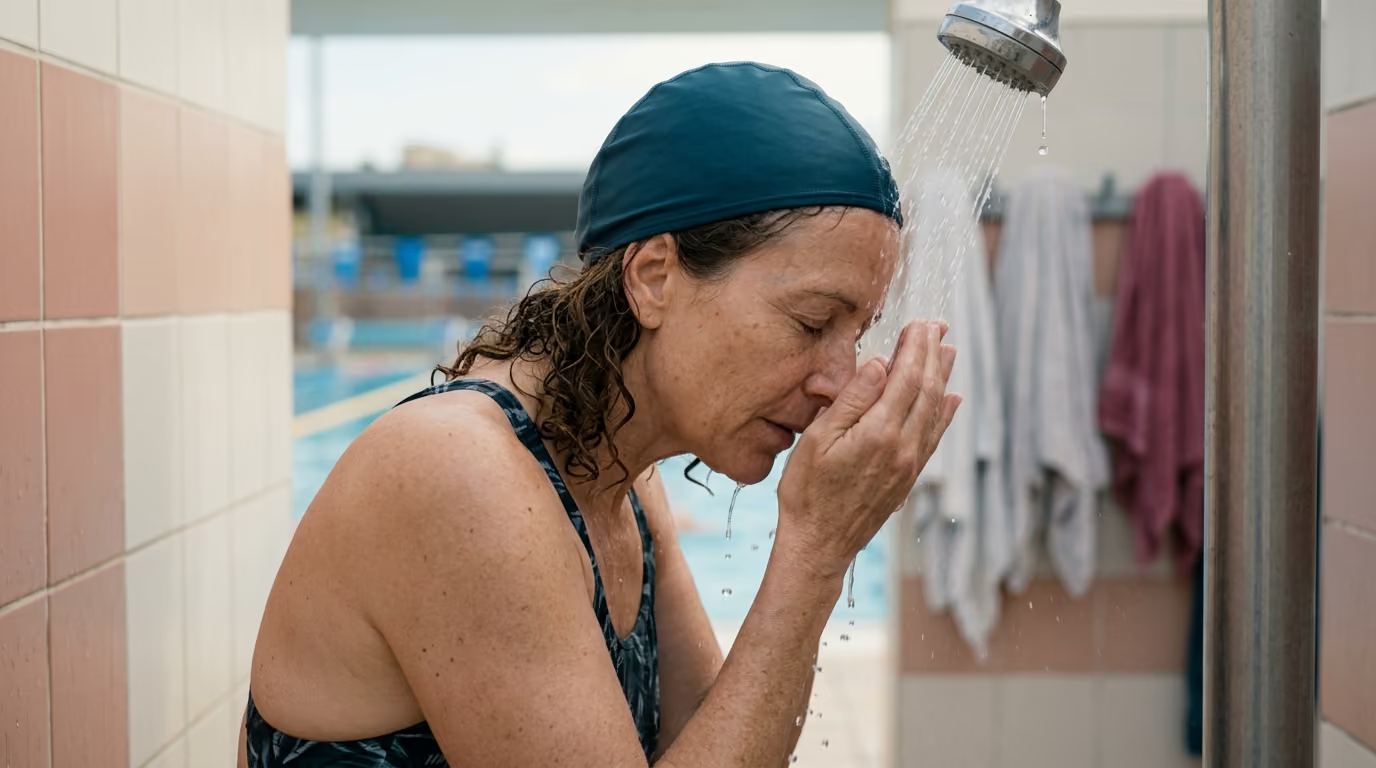

Effective protection against pool dryness and chemical damage keeps your skin smooth and hair healthy during regular swimming routines.





Swimming is widely regarded as one of the most complete forms of physical exercise, yet it frequently receives blame for severe, permanent aesthetic damage. Many swimmers worry that pool chemicals cause irreversible thinning of the hair or rapid, premature aging of the skin. Others assume that ocean water possesses universal healing powers that repair any skin condition.
The biological reality is far more nuanced. Water exposure alters the surface environment of both keratin and the epidermis, but it rarely produces the catastrophic outcomes claimed by alarmist marketing. Understanding how chlorine, salt, ultraviolet radiation, and moisture interact with human tissue allows you to protect your body without abandoning the pool or the sea. This guide examines the precise biological mechanics of aquatic exposure and provides clear, evidence-based recovery strategies.
The biological impact of swimming depends on the balance between environmental exposure and physiological resilience. Rather than causing direct systemic harm, swimming challenges the external barriers of the body through oxidation, lipid extraction, and mechanical friction.
Key findings from peer-reviewed literature and public health agencies establish several clear parameters:
To protect your skin and hair, you must first understand the chemical environment of swimming facilities and natural bodies of water. Pool sanitization relies on predictable chemical reactions designed to eliminate pathogenic microorganisms like bacteria, viruses, and protozoa.
When chlorine gas or hypochlorite salts are added to water, they form hypochlorous acid and hypochlorite ions. Hypochlorous acid is a potent oxidizing agent that destroys bacterial cell walls and inactivates viral enzymes. Public health guidelines from the Centers for Disease Control and Prevention recommend maintaining free chlorine concentrations between 1 and 3 milligrams per liter, alongside a pH range of 7.2 to 7.8. This specific pH window ensures that hypochlorous acid remains active while minimizing direct ocular and cutaneous stinging.
Chlorine does not remain inert in the water. As swimmers enter the pool, they introduce organic matter, including sweat, sebum, shed corneocytes, cosmetic residues, and urine. Free chlorine reacts rapidly with these nitrogen-containing compounds to produce combined chlorine, known as chloramines.
Monochloramine, dichloramine, and trichloramine represent the primary by-products of these reactions. Trichloramine is highly volatile and off-gases into the air above the water. The pungent, sharp chemical odor frequently associated with indoor pools is not the scent of clean, free chlorine. It is the signature of accumulated chloramines in the water and the surrounding air. In facilities with poor air exchange, airborne trichloramines can irritate the mucous membranes of the eyes, the upper respiratory tract, and exposed skin surfaces.
The human skin barrier resides in the stratum corneum, the outermost layer of the epidermis. This structure functions much like a brick wall. The corneocyte cells act as bricks, surrounded by a complex mortar of intercellular lipids composed of ceramides, cholesterol, and free fatty acids. This lipid matrix maintains hydration by preventing internal water from evaporating into the environment.
When you spend extended periods in chlorinated water, hypochlorous acid oxidizes these surface lipids. Concurrently, prolonged water immersion causes the corneocytes to hydrate and swell, temporarily widening the spaces between cells.
This swelling allows chlorine and dissolved minerals to penetrate deeper into the upper stratum corneum. As the intercellular lipids are extracted or oxidized, the skin loses its ability to retain moisture. The clinical result is elevated transepidermal water loss, characterized by tightness, surface scaling, micro-fissuring, and increased vulnerability to environmental irritants.
Hair is an integrated biological structure made almost entirely of fibrous keratin proteins, covered by an external layer of overlapping scales called the cuticle. The outermost boundary of the cuticle is coated with a specialized fatty acid layer, primarily 18-methyleicosanoic acid. This lipid layer provides natural hydrophobicity, allowing water to slide off the fiber while preserving internal moisture and structural smoothness.
Chlorine damages hair by stripping this protective lipid coating through repeated oxidation. Once this lipid layer is compromised, the cuticle scales lift, exposing the internal cortex to water and dissolved chemicals. Water easily enters the porous fiber, causing the cortex to swell repeatedly during immersion and contract during drying.
This cycle of swelling and desiccation, termed hygral fatigue, weakens the structural keratin bonds. The consequence is not follicular death or root detachment, but surface weathering: increased porosity, loss of tensile strength, dullness, friction-induced tangling, and mechanical breakage along the shaft. For deeper insights into managing fiber resilience, readers can review our dedicated guide to hair shaft integrity and care.
Clinical investigations demonstrate that the acute physical impacts of swimming are measurable, but strictly localized to surface tissues. Grounded scientific research clarifies the magnitude of these changes, helping swimmers separate predictable surface irritation from unwarranted health anxieties.
Dermatological research measuring the immediate effects of pool immersion demonstrates a clear, acute disruption of the skin barrier. In an observational study evaluating young athletes participating in a continuous two-hour swimming session, investigators recorded a statistically significant rise in transepidermal water loss immediately post-exercise. The physical exertion combined with continuous chemical contact reduced the electrical capacitance of the skin, indicating reduced surface hydration.
Crucially, the data demonstrated that this barrier disruption was transient. When the skin was rinsed with fresh water and protected with basic emollients, barrier metrics returned to baseline levels within several hours. The research confirms that pool water acts as an acute chemical stressor rather than a permanent disruptor of epidermal biology. The severity of the barrier impairment correlated directly with baseline skin health, water temperature, and total immersion time.
A cornerstone comparative study published in dermatological literature examined 67 professional competitive swimmers and contrasted their hair health against 54 age-matched controls with low aquatic exposure. Researchers evaluated structural diameter, surface texture, color changes, and active hair shedding rates across both cohorts.
The data revealed clear differences in fiber quality:
The statistical evidence confirms that while chlorine and friction aggressively degrade the exposed hair shaft, they do not disrupt the follicular growth cycle underneath the scalp. Swimmers experience cosmetic breakage rather than biological alopecia.
The green discoloration observed in frequent swimmers has been thoroughly analyzed in laboratory conditions. Spectroscopic examinations of discolored hair fibers show that elemental chlorine is not a green pigment and cannot directly dye keratin. Instead, the discoloration occurs when trace heavy metals dissolved in the water, specifically oxidized copper ions, bind to sulfur-containing amino acids within damaged, porous hair.
Copper enters pool water through copper-based algaecides, mineral-rich source water, or the corrosion of copper heating coils and plumbing components. When chlorine oxidizes the hair shaft, it exposes free carboxyl and sulfhydryl groups within the cortex. These sites act as binding points for divalent copper ions.
The resulting copper-keratin complex reflects a greenish wavelength. The discoloration is therefore a two-part phenomenon: chemical weathering by chlorine creates the necessary porosity, while dissolved metal contaminants provide the actual pigment.
While the acute effects of swimming on skin and hair are well documented, scientific research in this domain contains distinct limitations that warrant measured interpretation. Consumers must recognize what the data does and does not prove before investing in specialized regimens.
Most available dermatology studies assess the immediate, short-term consequences of single swimming sessions or brief training blocks. High-quality, multi-decade longitudinal studies tracking the cumulative skin aging markers of indoor swimmers compared to sedentary controls are exceptionally scarce.
Current literature does not support the hypothesis that non-competitive, recreational pool swimming accelerates intrinsic skin aging or degrades dermal collagen networks over time. Attributing deep wrinkles or structural volume loss to chlorine exposure conflates acute surface dryness with long-term dermal degradation. To understand structural biological changes, readers can examine our broader research on evidence based skin longevity.
Studies conducted in real-world pool environments frequently struggle to isolate chlorine as a single independent variable. Real aquatic facilities present multiple simultaneous variables:
Because these factors are rarely controlled in field studies, isolating the precise contribution of hypochlorous acid relative to hot water rinsing or towel friction remains difficult.
Much of the specialized swimming literature relies on small cohorts of competitive athletes whose training volume exceeds twenty hours per week. Findings from elite swimmers cannot be directly extrapolated to recreational swimmers who spend two hours per week in a pool.
Furthermore, baseline skin barrier variations, such as filaggrin gene mutations associated with eczema, significantly alter individual susceptibility. Research demonstrating severe barrier breakdown often involves individuals with pre-existing atopic tendencies, making general population generalizations scientifically imprecise.
I remember speaking with a dermatologist who told me her patients were coming in with severe anxiety about normal skin aging. That anxiety was driven entirely by social media filters and aggressive marketing. That conversation became a cornerstone of our philosophy. We decided right then that our publication would never frame natural changes like wrinkles or thinning hair as personal failures. Instead, we focus on what the evidence actually demonstrates.
Protecting your skin and hair does not require complex commercial products. It requires a systematic routine based on physical saturation, prompt residue removal, and physiological lipid restoration.
Preparation begins before stepping into the water. By taking advantage of basic physical principles, you can substantially reduce chemical absorption:
The minutes immediately following your swimming session represent the critical window for barrier preservation and hair recovery:
Misconceptions surrounding water chemistry and human physiology frequently cause unnecessary stress. Clarifying these issues helps swimmers make rational choices grounded in scientific evidence.
Different populations face unique challenges when engaging in regular swimming. Tailoring your approach to specific vulnerabilities ensures consistent comfort and safety.
Individuals with atopic dermatitis often avoid swimming due to fear of severe stinging and disease flares. However, swimming can be entirely manageable with careful planning.
In some cases, the diluted disinfectant in a properly maintained pool exerts a mild antimicrobial effect similar to a therapeutic sodium hypochlorite bath, reducing Staphylococcus aureus colonization on the skin. Conversely, poorly balanced water with high chloramine levels or elevated pH can trigger severe flares.
People with atopic dermatitis should:
Chemically processed hair presents elevated baseline porosity. Bleaching agents, permanent hair dyes, and chemical relaxers disrupt the protective cuticle and break internal disulfide bonds, making the fiber exceptionally susceptible to chemical penetration.
Swimmers with processed hair should never enter a chlorinated pool with dry hair. Saturate the hair with fresh water, apply a leave-in conditioner formulated with dimethicone or natural oils to coat the fiber, and enclose the hair entirely within a thick silicone cap. Following the swim, use a specialized neutralizing or chelating wash to prevent copper ion deposition, followed by an intensive protein and lipid deep-conditioning treatment.
Swimmer's ear, clinically termed acute otitis externa, is an inflammation or infection of the external auditory canal. Continuous moisture retention in the ear canal macerates the delicate skin, breaks down protective cerumen (earwax), and alters the naturally acidic canal environment, allowing opportunistic bacteria like Pseudomonas aeruginosa to proliferate.
Public health guidance from the Centers for Disease Control and Prevention highlights essential prevention protocols:
Indoor aquatic centers with high bather volumes and inadequate ventilation can accumulate elevated levels of airborne trichloramines. Swimmers with asthma, allergic rhinitis, or airway hyperreactivity may experience coughing, wheezing, ocular stinging, or skin irritation purely from ambient air exposure.
If you notice respiratory tightness or eye burning upon entering an indoor facility, the environmental air handling is likely inadequate. Prioritize facilities that utilize modern secondary disinfection systems, such as ultraviolet irradiation or ozone treatment, alongside high-volume fresh air ventilation systems.
Ocean swimming introduces a complex set of environmental exposures that differ substantially from indoor pool swimming. Salt water, ultraviolet radiation, wind-driven evaporation, and sand friction operate simultaneously, requiring an integrated defense strategy.
Seawater contains an average salinity of approximately 3.5 percent, composed primarily of sodium, chloride, sulfate, magnesium, and calcium ions. While mineral-rich water can offer temporary anti-inflammatory benefits for certain individuals, allowing seawater to dry on the skin creates an osmotic gradient.
As water molecules evaporate, salt crystals remain on the surface. These crystals draw water out of the viable epidermis, resulting in pronounced surface dehydration, tightness, and micro-fissuring. Furthermore, crystallized salt acting under the friction of wet swimwear causes mechanical abrasion.
Ocean swimmers must rinse thoroughly with fresh water following open-water sessions to remove mineral residues before applying restorative moisturizers.
For outdoor swimmers, ultraviolet radiation represents the primary cause of long-term skin aging, collagen breakdown, and cutaneous malignancy. Water provides very little protection against UV rays; in fact, the surface of the water reflects a meaningful percentage of incoming radiation, increasing the total UV dose received by the face, neck, and shoulders.
The American Academy of Dermatology provides clear guidelines for outdoor aquatic activities:
For swimmers looking to support systemic resilience against environmental stressors, exploring nutritional foundations can be beneficial. Review our research on lifestyle and environmental recovery strategies and our detailed overview of beauty science research for broader contextual knowledge.
Regular swimming provides immense physical and mental benefits. By implementing structured pre-swim barriers and consistent post-swim recovery practices, you can fully enjoy the water while keeping your skin and hair resilient, healthy, and comfortable.
Stay connected for research and practical guidance on skin, hair, collagen, nutrition and beauty longevity. Clear ideas for people who want to understand how appearance changes with age and make better-informed choices over time.


Understand your skin, hair and body better without chasing every new trend, treatment or promise.
explore the Blog