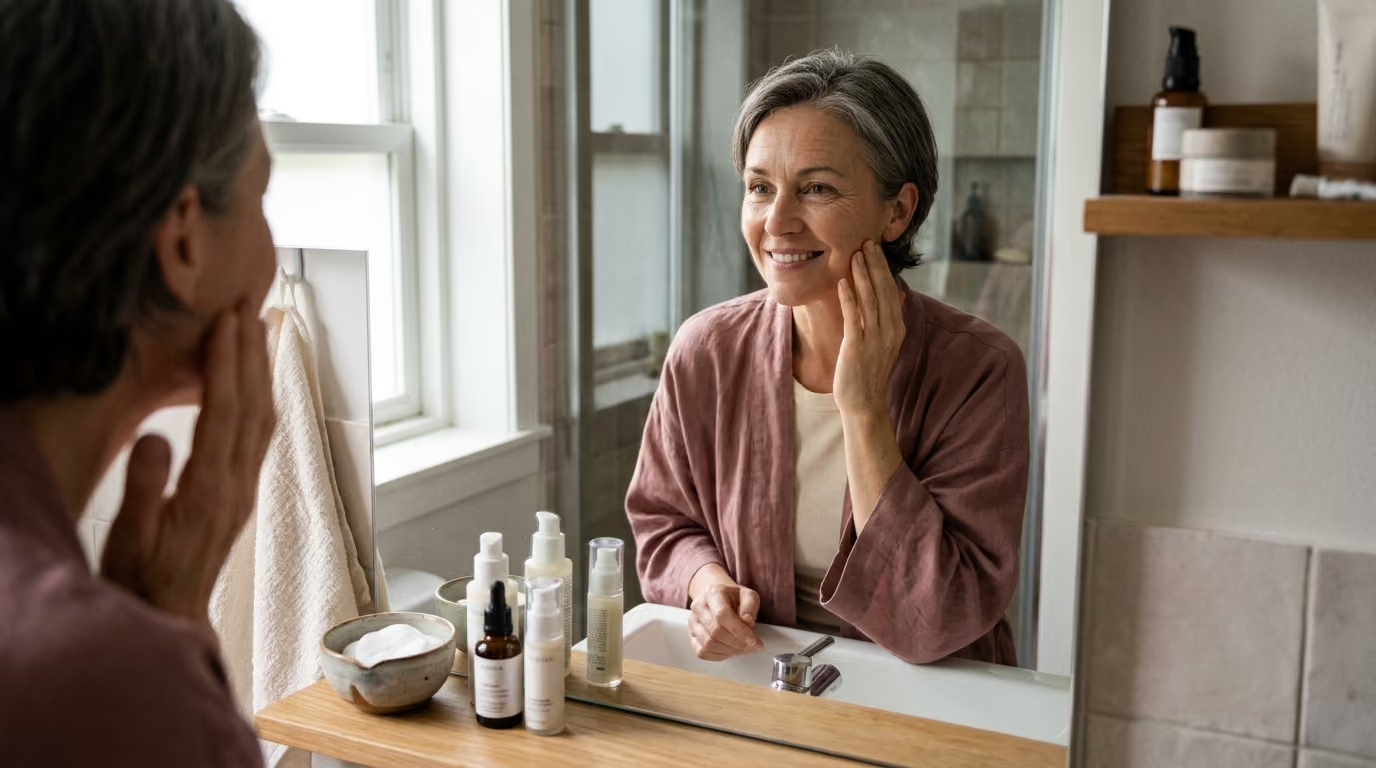

Realistic expectations about skincare peptides emerge from analyzing their biological mechanisms, skin penetration challenges, clinical evidence.





The most popular message in cosmetic marketing suggests that topical peptides act like tiny cellular architects, rebuilding the skin matrix on demand. The biological reality is far more restrained. The outermost layer of human skin is an evolutionary barrier designed specifically to keep large, water-soluble molecules from entering the living tissue beneath.
Topical peptides face severe physical, chemical, and biological obstacles before they can influence a single living cell. When properly formulated, certain peptides offer meaningful, well-tolerated support for hydration, surface smoothness, skin firmness, and the appearance of fine lines. They are valuable additions to a thoughtful routine, but they operate through subtle biological signals rather than rapid, dramatic transformation. Understanding how these molecules behave helps set realistic expectations for long term skin longevity and healthy aging.
A clear understanding of peptide technology begins with the underlying biochemical and clinical facts.
To evaluate topical peptides, one must understand their cellular role. In human physiology, proteins such as collagen, elastin, and fibronectin provide the extracellular matrix with its mechanical strength and resilience. When structural proteins break down due to ultraviolet exposure, metabolic stress, or normal turnover, enzymatic cleavage creates small protein fragments. These natural fragments act as information-bearing signals that tell local fibroblasts to synthesize fresh matrix components or regulate tissue repair.
Cosmetic peptide science attempts to recreate these communication pathways using synthetic or bio-fermented amino acid sequences. Researchers categorize these compounds based on their primary biological mechanism.
Signaling peptides, often called matrikines, mimic native breakdown fragments of structural proteins. When applied topically, they are designed to interact with cell surface receptors on fibroblasts and keratinocytes. This interaction triggers intracellular cascades that support the synthesis of collagen, elastin, and glycosaminoglycans.
Common examples include:
The biological objective of a signaling peptide is not to insert itself directly into the skin as physical building material. Instead, it acts as a molecular message, encouraging cells to maintain structural protein synthesis. Readers interested in extracellular matrix biology can review our guide to collagen and structural aging for deeper context.
Carrier peptides bind and stabilize trace elements, delivering them directly to enzymatic pathways that require metal cofactors. The most widely studied example is copper tripeptide-1, often written as GHK-Cu.
The tripeptide glycyl-L-histidyl-L-lysine (GHK) has a very high binding affinity for copper ions. Copper is an essential cofactor for lysyl oxidase, an enzyme responsible for cross-linking collagen and elastin fibers into functional, resilient dermal networks. Copper is also essential for superoxide dismutase, one of the primary antioxidant defense enzymes in human tissue.
GHK-Cu functions as both a delivery vehicle and an active signaling complex. Research indicates that GHK-Cu modulates the activity of matrix metalloproteinases, which are enzymes that degrade structural proteins. It also supports wound healing pathways, promotes glycosaminoglycan synthesis, and calms inflammatory cascades.
Enzyme-inhibiting peptides are designed to block or slow specific enzymes that degrade skin components or drive hyperpigmentation.
The structural integrity of the dermis depends on a delicate balance between matrix production and matrix degradation. Matrix metalloproteinases (MMPs), such as collagenase and elastase, break down structural proteins in response to ultraviolet light and oxidative stress. Certain botanical and synthetic peptides act as competitive or non-competitive inhibitors of these destructive enzymes, helping to preserve existing structural networks.
Other enzyme-inhibiting peptides target tyrosinase, the rate-limiting enzyme in melanin production. By temporarily occupying the active site of tyrosinase, these peptides help regulate uneven pigment distribution without the harsh irritation associated with aggressive depigmenting agents.
Often referred to as expression-line peptides, these sequences aim to influence neuromuscular signaling at the surface level. The most prominent example is acetyl hexapeptide-8, originally commercialized under the trade name Argireline.
In human neuromuscular junctions, muscle contraction requires the release of acetylcholine from vesicles. This process is governed by the SNARE protein complex. Acetyl hexapeptide-8 mimics a segment of the SNAP-25 protein, competing for its binding site. By destabilizing the SNARE complex in laboratory settings, it attenuates the release of acetylcholine, leading to relaxed local muscle movement.
In cosmetic applications, the degree of muscle relaxation achieved through topical application is exceptionally modest compared to clinical injections. However, by softening repetitive micro-contractions in the upper dermal layers, these peptides may slightly reduce the visible depth of expression lines around the eyes and forehead.
The greatest challenge in peptide skincare is not designing an active sequence in a laboratory. The primary challenge is delivering that intact sequence through the stratum corneum to its target site.
The stratum corneum is composed of dense, keratin-filled corneocytes surrounded by an organized lipid matrix of ceramides, cholesterol, and free fatty acids. For a molecule to passively diffuse across this barrier, it generally needs to conform to well-established physicochemical parameters:
Many unmodified peptides fail these criteria. They are often hydrophilic, carrying distinct electrical charges, and have molecular weights that exceed 500 Daltons. An unmodified tripeptide might weigh around 300 to 400 Daltons, but longer sequences easily exceed 600 to 1,000 Daltons. Without intentional formulation engineering, unmodified hydrophilic peptides remain trapped on the outer surface of the stratum corneum.
To overcome this barrier, cosmetic chemists use several delivery strategies:
Formulation scientists assess these mechanisms using in-vitro dermal penetration testing with human skin in Franz diffusion cells, following guidelines established by the OECD. Studies evaluating acetyl hexapeptide-8 demonstrate the reality of the barrier challenge. In standard aqueous vehicles, as little as 0.22 percent of applied acetyl hexapeptide-8 penetrated the stratum corneum in skin models, with over 99 percent remaining on the surface.
This barrier reality explains why raw ingredient potency in a test tube does not automatically translate into performance on human skin. The entire cosmetic vehicle, including its pH, lipid balance, and delivery technology, dictates whether a peptide reaches its intended target.
When we first started reviewing clinical trials on collagen supplementation and topical peptide complexes, our team was struck by how often the media misinterpreted the data. A study showing a minor increase in skin elasticity was suddenly headlined as a comprehensive biological reset. It made us realize how desperately consumers need a translator for beauty science, someone who can explain exactly what a study proves and what it does not prove.
The clinical literature evaluating topical peptides contains several genuine, statistically significant findings alongside meaningful limitations.
A systematic review published in cosmetic dermatology examined 12 papers encompassing 15 independent clinical studies on matrix-stimulating peptides. The aggregated data demonstrated that several lipidated peptides, notably palmitoyl pentapeptide-4 and palmitoyl tripeptide-1 combinations, produced measurable reductions in fine line visibility, skin roughness, and wrinkle depth over 8 to 12 weeks of consistent application.
Subjects utilizing palmitoyl pentapeptide-4 formulations demonstrated improvements in quantitative profilometry measurements compared to baseline. Optical imaging revealed subtle increases in dermal density and epidermal thickness. However, the magnitude of these changes was moderate. The average reduction in wrinkle depth across positive studies typically ranged between 8 percent and 18 percent, representing visible smoothing rather than complete structural restoration.
Copper tripeptide-1 (GHK-Cu) has been evaluated in several controlled human trials. In a 12-week clinical study involving 71 women exhibiting mild to advanced signs of photoaging, an application of a GHK-Cu cream was compared against a placebo vehicle and active control creams.
The GHK-Cu group demonstrated:
Another controlled investigation reported that a topical copper peptide complex produced a 31.6 percent reduction in overall wrinkle volume compared to baseline parameters. These findings confirm that copper peptides possess genuine biological activity on human skin, supporting structural maintenance and surface recovery.
Clinical studies frequently evaluate finished consumer formulations rather than isolated peptide molecules. In a 28-day trial evaluating a targeted ampoule containing a peptide blend alongside ascorbic acid, investigators documented statistically significant cosmetic improvements.
Clinical grading revealed a 9 percent reduction in crow's-feet wrinkles, an 11 percent reduction in forehead lines, and a 5 percent improvement in nasolabial fold appearance. Among the 47 human participants, 77 percent perceived their skin to be visibly smoother, 64 percent reported fine lines appeared less noticeable, and 79 percent noted improved skin radiance. In a follow-up assessment at 29 days, total counted wrinkles decreased by 11.5 percent from baseline measurements.
These findings show that properly formulated peptide products deliver visible, reliable improvements in skin texture, hydration, and fine lines. However, the data also indicates that these benefits develop gradually over weeks of consistent use, requiring continuous application to maintain results.
While the clinical data is encouraging, a rigorous scientific evaluation requires a candid look at the weaknesses present across the published peptide literature.
A major concern within cosmetic peptide research is study design quality. In the systematic review of matrix-stimulating peptides covering 15 independent clinical studies, only six trials utilized a true vehicle-placebo control. Furthermore, only five of those studies implemented double-blind protocols.
When a clinical study lacks blinding or a vehicle control, several confounding variables can artificially inflate the apparent success of the peptide:
A clear example of how study design influences outcomes is found in post-procedure research. In a controlled trial evaluating topical copper tripeptide-1 applied after ablative carbon dioxide laser resurfacing, patients using the GHK-Cu product reported substantially higher subjective satisfaction and perceived healing quality.
However, objective instrument measurements revealed no statistically significant difference in wrinkle reduction, erythema duration, or overall skin architecture between the copper peptide group and the standard post-procedure care group. This trial demonstrates how participant perception can diverge from measurable biological differences.
The cosmetic market frequently exaggerates the capabilities of peptide formulas. Comparing common marketing assertions against biological evidence brings clarity to daily purchasing decisions.
Peptides are chemically delicate molecules susceptible to several modes of degradation. If a peptide degrades inside the bottle, its biological signaling capacity is lost. Understanding formulation quality helps identify well-designed products that preserve active peptide integrity.
Peptides in aqueous cosmetic solutions face multiple degradation threats:
To ensure that topical peptides remain intact and biologically active throughout their intended shelf life, manufacturers must adhere to specific cosmetic science principles:
When evaluating a product on our beauty longevity blog, we look past dramatic marketing claims and examine the INCI list, the delivery packaging, and whether the manufacturer provides verified stability data.
Peptides work best as supportive elements within a well-structured skincare routine. They provide gentle biological signaling that complements foundational, structurally proven skincare interventions.
A thoughtful skincare strategy is organized hierarchically based on evidence strength:
The following step-by-step routines illustrate how to realistically integrate signaling, carrier, or expression-line peptides into daily life without overloading the skin barrier.
This routine suits individuals seeking progressive structural support while using an active retinoid at night.
Morning Routine:
Evening Routine:
This approach is ideal for individuals who cannot tolerate retinoids or those taking a temporary break from strong exfoliants to support barrier recovery.
Morning Routine:
Evening Routine:
To prevent irritation and protect formula stability, keep these practical guidelines in mind:
For those interested in optimizing broader biological pathways, our framework on advanced beauty science optimization provides extensive guidance.
The Cosmetic Ingredient Review (CIR) Expert Panel has repeatedly evaluated cosmetic peptides, including palmitoyl oligopeptides, pentapeptides, and copper tripeptide-1. The CIR concluded that these ingredients are non-toxic, non-sensitizing, and safe under current conditions of cosmetic use.
Because peptide formulations frequently contain botanical extracts, texturizers, penetration enhancers, and preservative complexes, adverse reactions can still occur.
Follow these safety steps:
Because peptides work through subtle cellular signaling rather than rapid chemical exfoliation, results require patience. Immediate improvements in skin softness and plumpness are usually driven by the moisturizing base of the serum. Measurable changes in fine line visibility, elasticity, and dermal density typically require 8 to 12 weeks of consistent, twice-daily application.
No. Prescription tretinoin directly binds to nuclear retinoic acid receptors, altering gene transcription, stimulating cellular turnover, and inducing profound dermal remodeling. Retinoids possess decades of robust, large-scale, randomized double-blind clinical evidence. Peptides provide a milder, highly tolerable alternative for those who cannot tolerate retinoids, but they do not produce equivalent tissue remodeling.
Copper peptides are not universally superior; they simply offer a distinct mechanism of action. GHK-Cu excels at supporting tissue repair, providing antioxidant defense, and aiding wound recovery alongside matrix support. Signaling peptides like palmitoyl pentapeptide-4 focus more specifically on fibroblast matrix communication. Many individuals achieve excellent results using a combination of both signaling and carrier peptides across their broader weekly routine.
Price differences in peptide skincare stem from raw material synthesis costs, delivery vehicle technology, patent licensing fees, and general brand positioning. Pure, specialized peptides complexed with proprietary delivery systems (such as lipid encapsulation or advanced nanocarriers) are expensive to manufacture and stabilize. However, an exorbitant price tag does not guarantee clinical efficacy. Look for transparent brands that use validated peptides, airtight packaging, and clear formulation standards.
When used as directed in cosmetic formulations, topical peptides remain largely confined to the upper layers of the skin. The minimal amount that penetrates the stratum corneum interacts locally with epidermal and dermal cells. Systemic absorption into the bloodstream is negligible, and toxicological evaluations by the Cosmetic Ingredient Review have confirmed their localized safety profile.
Topical peptides are reliable, scientifically grounded tools that support healthy skin aging when chosen with realistic expectations and formulated with care.
Stay connected for research and practical guidance on skin, hair, collagen, nutrition and beauty longevity. Clear ideas for people who want to understand how appearance changes with age and make better-informed choices over time.


Understand your skin, hair and body better without chasing every new trend, treatment or promise.
explore the Blog