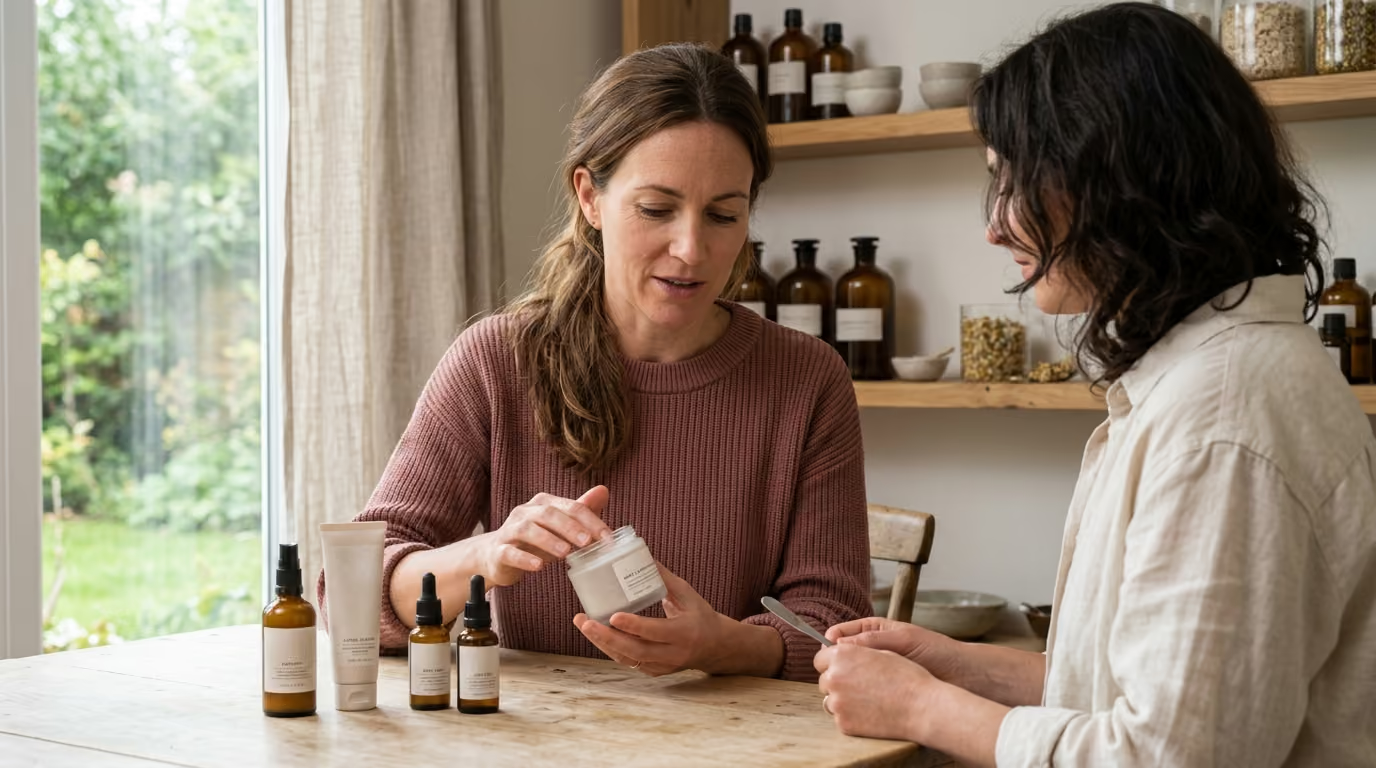

Popular beauty supplements promise dramatic rejuvenation, yet rigorous clinical trials reveal varying biological plausibility and distinct limitations.





You have likely typed variations of the same question into a search engine late at night: do beauty supplements actually work, or are they a waste of money? The sheer volume of conflicting advice makes it difficult to separate genuine clinical evidence from persuasive marketing. This comprehensive guide provides a definitive, research-grounded framework to help you evaluate oral collagen, hyaluronic acid, ceramides, silica, and biotin with complete clarity.
Evaluating beauty supplements requires looking beyond marketing promises and examining the underlying data. The scientific literature reveals distinct variations in study quality, biological behavior, and measurable outcomes across popular ingestibles:
Biological plausibility is the baseline test for any beauty supplement. It asks whether an ingested compound can survive digestion, enter the bloodstream, reach the target tissue, and prompt a meaningful cellular response. A biologically plausible mechanism does not guarantee a visible clinical result, but an implausible one makes real-world benefits nearly impossible.
The human body processes oral supplements through normal gastrointestinal pathways. Ingested proteins, complex carbohydrates, and lipids undergo enzymatic breakdown in the stomach and small intestine before absorption. An oral supplement cannot simply travel unchanged to a single patch of facial skin or a specific hair follicle. It must function either by supplying essential biochemical building blocks or by acting as a cellular signaling molecule.
Hydrolyzed collagen consists of collagen that has undergone enzymatic processing to break long protein chains into short peptides. When you consume hydrolyzed collagen, your digestive enzymes break it down further into free amino acids and small bioactive dipeptides and tripeptides, such as proline-hydroxyproline. These specific peptides appear in systemic circulation and can stimulate dermal fibroblasts to produce new extracellular matrix components. Ingested collagen does not directly insert itself into the dermis as intact fibers, but rather acts as a cellular trigger and a source of specialized amino acids.
Topical collagen operates under entirely different biological constraints. Intact, native collagen possesses a molecular weight of approximately 300,000 Daltons. The human stratum corneum generally prevents molecules larger than 500 Daltons from penetrating into the deeper dermis. As a result, applying native collagen topically creates a moisturizing film on the surface of the skin, but it cannot rebuild deeper structural architecture. Understanding the physiological principles of skin longevity and healthy aging helps clarify why oral peptides and topical treatments serve completely different functions.
Oral hyaluronic acid presents a unique biological pathway. Hyaluronan is a high molecular weight glycosaminoglycan naturally present in the extracellular matrix that binds large amounts of water. Ingested hyaluronic acid is degraded into smaller fragments by intestinal microflora or intestinal cells before absorption. Research indicates these smaller fragments can interact with intestinal immune receptors or circulate to peripheral tissues, prompting fibroblasts to increase endogenous hyaluronic acid synthesis.
Oral ceramides support the lipid matrix of the outermost skin layer. In the stratum corneum, ceramides make up roughly half of the intercellular lipid barrier, preventing excessive water loss and protecting against environmental irritants. When consumed orally from plant sources such as wheat, rice, or konjac, ceramides are hydrolyzed during digestion into sphingoid bases and fatty acids. These components are transported via the bloodstream to epidermal layers, where they are re-synthesized into barrier lipids to support skin barrier integrity.
Silicon, particularly in the bioavailable form of choline-stabilized orthosilicic acid, participates in the structural stabilization of connective tissues. Silicon acts as an essential cofactor in collagen synthesis and plays a role in cross-linking glycosaminoglycans within the extracellular matrix. For hair and nails, bioavailable silicon interacts with keratin proteins, contributing to tensile strength and reduced brittleness.
Biotin serves as a necessary coenzyme for five carboxylases involved in fatty acid synthesis, amino acid catabolism, and gluconeogenesis. When a clinical deficiency exists, the lack of these enzymatic functions causes dermatitis, alopecia, and brittle nails. However, in individuals who already consume adequate dietary biotin, the carboxylase enzymes operate at full physiological capacity. Adding excess biotin does not increase enzyme activity or accelerate hair growth.
A biologically plausible mechanism must be verified through rigorous clinical testing in humans. When assessing clinical trials, researchers evaluate both surrogate outcomes, such as instrumental hydration measurements, and consumer-observable changes. The clinical evidence base varies substantially depending on the ingredient and formulation studied.
Hydrolyzed collagen has been evaluated in multiple systematic reviews and meta-analyses. A comprehensive 2023 systematic review and meta-analysis analyzed 26 randomized controlled trials involving 1,721 participants. The researchers found statistically significant improvements in skin hydration and elasticity in participants taking oral collagen compared to those receiving a placebo.
An earlier meta-analysis examining 10 randomized trials with 646 participants reported a standardized mean difference of 1.25 for skin hydration and 0.61 for skin elasticity. The daily doses in these studies ranged between 1 gram and 10 grams, with a median effective dose of approximately 3.5 to 4 grams per day. Another systematic review covering 14 clinical studies and 967 participants noted improvements in transepidermal water loss, firmness, and optical radiance after four to eight weeks of daily use.
When evaluating hair outcomes, the evidence for collagen is far more preliminary and complex. Many published hair studies utilize multi-ingredient nutraceutical formulas containing collagen alongside marine extracts, antioxidants, and minerals. One randomized trial evaluated a multi-ingredient supplement over 180 days and documented significant increases in terminal hair counts and shaft diameter compared to placebo. A separate trial reported a 32.4 percent reduction in shedding over six months. However, because these products combined multiple active ingredients, the specific contribution of collagen peptides alone cannot be isolated. Readers exploring collagen and structural aging should distinguish between single-ingredient trials and combination formulas.
Clinical investigations into oral hyaluronic acid show consistent improvements in skin moisture levels. A systematic review and meta-analysis evaluating four randomized controlled trials with 196 participants reported a statistically significant increase in skin hydration, showing a standardized mean difference of 0.40. Daily dosages across these trials ranged from 120 milligrams to 200 milligrams.
Molecular weight influences the clinical outcomes of oral hyaluronan. A randomized, double-blind study tested 100 milligrams and 200 milligrams daily of a 300-kilodalton hyaluronic acid preparation. The researchers observed significant improvements in skin hydration across both younger and older cohorts over an eight-week period.
A larger 12-week randomized trial evaluated 150 healthy participants using a high molecular weight sodium hyaluronate of 1.8 megadaltons. Participants receiving 120 milligrams daily experienced significant improvements in stratum corneum hydration and elasticity, alongside measurable reductions in transepidermal water loss and periorbital wrinkle depth compared to placebo. Participants receiving 60 milligrams daily showed positive trends, but the higher dose produced more consistent results.
Oral ceramides possess targeted clinical data focused on epidermal barrier restoration and moisture retention. A systematic review of eight randomized controlled trials found that daily intake of plant-derived ceramides significantly increased skin hydration and lowered transepidermal water loss. The studied doses ranged from 0.4 milligrams to 30 milligrams of purified ceramides per day.
A meta-analysis of seven clinical trials confirmed these findings, documenting improved stratum corneum barrier measurements across diverse adult populations. In a clinical trial using 20 milligrams and 40 milligrams daily of corn-derived glucosylceramides over three weeks, participants exhibited higher leg stratum corneum water content and improved barrier integrity. While percentage improvements from baseline can vary based on starting dryness, oral ceramides consistently support barrier recovery.
Silicon compounds have been evaluated in smaller, specialized clinical studies. In a randomized, double-blind, placebo-controlled trial, 50 women with photoaged facial skin took 10 milligrams of elemental silicon daily as choline-stabilized orthosilicic acid for 20 weeks. Instrumental testing revealed significant improvements in skin surface microrelief, mechanical elasticity, and self-reported hair and nail brittleness compared to the placebo group.
A 90-day clinical study tested a plant-derived combination of 1.25 milligrams of biotin and 21.75 milligrams of bamboo-derived silica in 97 completing participants. The active group exhibited reductions in hair shedding and improvements in hair growth rate and skin elasticity. However, because this intervention combined silica with botanical biotin, the independent effect of the silicon component cannot be definitively determined. Those interested in hair growth and hair longevity must carefully evaluate whether a study tests a single compound or an aggregate mixture.
Interpreting beauty science requires an honest evaluation of study design and research limitations. In our experience, many consumers feel frustrated because a product that claimed to be clinically proven failed to produce visible changes in their own mirror.
I remember speaking with a dermatologist who told me her patients were coming in with severe anxiety about normal skin aging. That anxiety was driven entirely by social media filters and aggressive marketing. That conversation became a cornerstone of our philosophy. We decided right then that our publication would never frame natural changes like wrinkles or thinning hair as personal failures.
A primary challenge in ingestible beauty research involves the reliance on surrogate endpoints. Instrumental tools such as the Corneometer, which measures electrical capacitance to estimate hydration, or the Tewameter, which measures water evaporation to assess barrier function, provide precise objective numbers. However, a five percent increase in electrical capacitance does not automatically translate into a visible transformation in the mirror. Statistical significance simply means an outcome was unlikely to occur by random chance, but it does not tell you if the difference is visually noticeable.
Sample sizes and trial durations in nutritional dermatology are frequently modest. Many trials follow fewer than 50 participants for durations ranging between four and twelve weeks. While epidermal hydration can shift within a month, structural collagen remodeling and hair growth cycles operate over much longer timelines. Evaluating hair shedding or follicle density requires at least six months of continuous observation to account for seasonal shedding variations and telogen phase durations.
Placebo matching introduces additional methodological complexity. Collagen peptides and plant ceramides often have distinct tastes, aromas, and textures that can make true blinding difficult. If participants can deduce whether they are consuming an active beverage or an inert maltodextrin powder, their subjective reporting regarding skin radiance, firmness, and hair shedding becomes biased.
Funding sources also warrant objective transparency. A significant proportion of beauty supplement studies are financed directly by ingredient manufacturers or finished-product brands. Industry funding does not automatically invalidate a study, but it creates a documented tendency toward publication bias, where unfavorable results remain unpublished while positive trials receive prominent publicity. Consumers reviewing the wider beauty science research should check whether trial protocols were pre-registered on public databases like ClinicalTrials.gov before recruitment began.
The wellness industry frequently exaggerates preliminary biological findings into sweeping promises. Distinguishing reality from promotional messaging helps set realistic expectations for any oral routine.
Marketing narratives often depict ingested collagen as traveling intact to the face and weaving directly into existing tissue. In biological reality, your digestive tract dismantles collagen peptides into smaller amino acid chains. These fragments stimulate fibroblast activity and provide building blocks, but they do not automatically reconstruct damaged dermal architecture. A collagen supplement supports normal matrix maintenance, but it cannot completely prevent or reverse structural aging.
Skincare labels frequently imply that applying collagen creams will replenish deep dermal stores. In reality, the 500-Dalton molecular size rule prevents intact collagen proteins from reaching living fibroblasts. Topical collagen remains an effective surface-conditioning agent and humectant, but it functions entirely on the outermost stratum corneum.
Biotin is widely marketed as an essential daily vitamin for thick hair and strong nails. The scientific literature demonstrates that biotin supplementation benefits individuals experiencing documented nutritional deficiency, malabsorption, or genetic metabolic errors. For healthy adults consuming balanced diets, excess water-soluble biotin is excreted in the urine without altering hair growth rates or follicle activity.
Supplements that improve water retention often claim to eliminate fine lines and wrinkles. While increasing stratum corneum moisture smooths superficial dehydration lines, it does not repair UV-induced solar elastosis, loss of subcutaneous fat pads, or bone resorption. Hydration improves surface texture and comfort, but it should not be conflated with reversing structural photoaging.
Brands frequently use the phrase clinically proven to suggest that every user will experience identical results. Clinical research measures statistical averages across a specific test cohort under controlled conditions. An individual's unique diet, baseline nutritional status, sun exposure, genetics, and topical skincare habits will heavily influence their real-world outcome.
Choosing between oral supplements requires a clear comparison of active ingredients, target outcomes, studied dosages, and key limitations. The following breakdown outlines the evidence profile for the most common ingestibles.
Hydrolyzed collagen provides targeted signaling peptides and high concentrations of glycine, proline, and hydroxyproline. It demonstrates consistent clinical evidence for improving skin hydration, mechanical elasticity, and superficial roughness. Studied daily dosages range from 2.5 grams to 10 grams, with most clinical trials utilizing between 3 grams and 5 grams.
The primary limitation of collagen research is product heterogeneity. Studies use varied raw material sources, including bovine, porcine, and marine tissues, with differing degrees of enzymatic hydrolysis. An individual evaluating a product should confirm whether the manufacturer specifies the molecular weight distribution and uses hydrolyzed peptides rather than native gelatin.
Oral hyaluronan supports systemic hydration and barrier function. The clinical evidence base indicates improvements in skin moisture content, reduction in transepidermal water loss, and modest improvements in surface elasticity. The most common clinically tested dosages range from 100 milligrams to 200 milligrams daily of purified sodium hyaluronate.
Molecular weight remains the most significant variable among hyaluronic acid supplements. Research suggests that low to medium molecular weight preparations, ranging between 300 kilodaltons and 1.8 megadaltons, are effective in human trials. Products that combine low-dose hyaluronic acid with numerous unrelated botanicals make it difficult to determine whether an effective therapeutic threshold is being met.
Purified plant ceramides, also known as phytoceramides, directly target the intercellular lipid matrix of the epidermis. Clinical trials consistently report reduced transepidermal water loss, enhanced stratum corneum water retention, and improvements in clinical dryness. Effective studied dosages range from 0.4 milligrams of highly purified ceramides to 30 milligrams of concentrated plant lipid extracts.
Ceramides are suited for individuals with chronic dry skin, compromised barrier function, or seasonal moisture depletion. They do not claim to rebuild structural proteins or stimulate hair follicle growth. Ceramides function as specialized barrier support rather than broad-spectrum rejuvenation agents.
Choline-stabilized orthosilicic acid provides a stabilized, bioavailable form of silicon that resists polymerization in the digestive tract. Clinical trials indicate positive effects on skin microrelief, mechanical resistance, and nail and hair brittleness when taken at a daily dose providing 10 milligrams of elemental silicon.
The evidence base for orthosilicic acid is smaller and more specialized than the literature for collagen or ceramides. It is relevant for individuals experiencing physical brittleness in keratinized tissues, but it does not serve as a primary intervention for pattern hair loss or deep dermal volume loss.
Biotin is a water-soluble B vitamin essential for normal metabolic function. While it is necessary for physiological health, clinical evidence does not support high-dose biotin supplementation for improving hair thickness or skin texture in adults with adequate dietary intake. The recommended dietary allowance for adults is 30 micrograms daily, which is easily achieved through common dietary sources.
A major concern with high-dose biotin supplements, which often contain between 2,500 and 10,000 micrograms per serving, is diagnostic interference. High concentrations of exogenous biotin in the blood can interfere with immunoassays that utilize biotin-streptavidin technology. This can cause falsely low or falsely high readings on thyroid panels, troponin cardiac markers, and hormone assays. Anyone consuming supplemental biotin should disclose their usage to healthcare providers prior to routine or emergency laboratory testing.
Applying beauty science to your daily life requires matching your specific goals with the appropriate evidence category. Rather than taking multiple multi-ingredient gummies, consider structured approaches tailored to common concerns.
If your primary concern is dry, flaky skin or a damaged moisture barrier that does not respond fully to topical moisturizers alone, oral barrier lipids offer targeted support. Oral ceramides or oral hyaluronic acid provide the strongest clinical evidence for lowering transepidermal water loss and supporting stratum corneum hydration.
When selecting a product, verify that it delivers a clinically tested dose, such as 120 milligrams of sodium hyaluronate or a verified phytoceramide extract. Pair this oral support with a gentle, fragrance-free topical skincare routine and adequate dietary intake of essential fatty acids. Evaluating your overall approach to nutrition and beauty from within ensures your baseline diet supports skin hydration.
For individuals noticing subtle changes in skin firmness, elasticity, or superficial fine lines, hydrolyzed collagen peptides represent a reasonable, research-supported consideration. Look for products providing between 2.5 and 5 grams of hydrolyzed peptides with transparent disclosure of molecular weight and protein content.
Ingestible collagen works incrementally over two to three months. It should never replace foundational topical strategies, including daily broad-spectrum sun protection, topical retinoids, and topical antioxidants. Collagen supplements provide cellular signaling and amino acids, but shielding existing collagen from ultraviolet degradation remains the single most effective intervention for long-term dermal integrity.
When the structural integrity of hair strands or fingernails is compromised, resulting in split ends, chipping, or breakage, silicon compounds like choline-stabilized orthosilicic acid offer a targeted option. A daily dose providing 10 milligrams of elemental silicon has clinical support for improving mechanical resistance.
Before starting a supplement for brittle hair or nails, evaluate basic dietary variables. Ensure your daily intake includes sufficient complete protein, iron, and essential minerals. Silicon can support keratin structure, but it cannot overcome an overall dietary protein deficit.
If you are experiencing sudden or progressive hair shedding, starting an unverified hair supplement is rarely the best initial step. Hair follicles are sensitive to systemic physiological stressors, including iron deficiency, thyroid dysfunction, hormonal shifts, rapid weight loss, and recent severe illness.
Schedule an evaluation with a physician or board-certified dermatologist to perform basic blood work, including a complete blood count, ferritin panel, thyroid-stimulating hormone test, and vitamin D assessment. If an underlying deficiency is identified, targeted medical correction will resolve the issue. If the shedding is caused by androgenetic alopecia or an unaddressed medical condition, general beauty vitamins will not address the root cause. You can learn more about clinical approaches to follicle support in our dedicated guide to hair health and density.
Yes, oral collagen and hyaluronic acid can be taken concurrently. They operate through distinct biological pathways: collagen peptides provide amino acids and stimulate fibroblast signaling, while hyaluronic acid fragments support extracellular matrix hydration and water-binding capacity. Many clinical trials evaluate combination products containing both ingredients without documenting adverse interactions.
Most clinical trials evaluate skin hydration and barrier metrics after four to twelve weeks of daily, consistent use. Structural changes in skin elasticity typically require eight to twelve weeks of observation. Because the human hair growth cycle is slow, measurable improvements in hair shaft thickness or shedding reduction require at least three to six months of continuous supplementation.
High concentrations of supplemental biotin in the bloodstream interfere with laboratory immunoassays that use biotin-streptavidin binding technology. This interference can distort test results, producing falsely high or falsely low readings for thyroid hormones, troponin cardiac markers, and reproductive hormones. Always inform your healthcare provider about any biotin-containing supplements before undergoing routine or diagnostic laboratory tests.
No, plant-based collagen builders are fundamentally different from hydrolyzed animal or marine collagen. Plants do not produce collagen. Products marketed as vegan or plant-based collagen builders typically contain vitamin C, amino acids, and plant extracts intended to support the body's natural synthesis pathways. While these nutrients are useful for general health, they do not deliver the specific bioactive dipeptides and tripeptides found in hydrolyzed collagen.
Ingestible barrier supplements support ongoing cellular turnover and lipid replenishment, but they do not permanently alter your genetics or chronic environmental exposure. When you discontinue a supplement, your skin will gradually return to its baseline hydration and moisture retention levels over several weeks. Maintaining skin health long term depends on consistent daily sun protection, effective topical skincare, and a nutrient-dense dietary foundation.
To bring structured, evidence-based clarity to your daily regimen, apply this practical checklist over the coming week:
Stay connected for research and practical guidance on skin, hair, collagen, nutrition and beauty longevity. Clear ideas for people who want to understand how appearance changes with age and make better-informed choices over time.


Understand your skin, hair and body better without chasing every new trend, treatment or promise.
explore the Blog