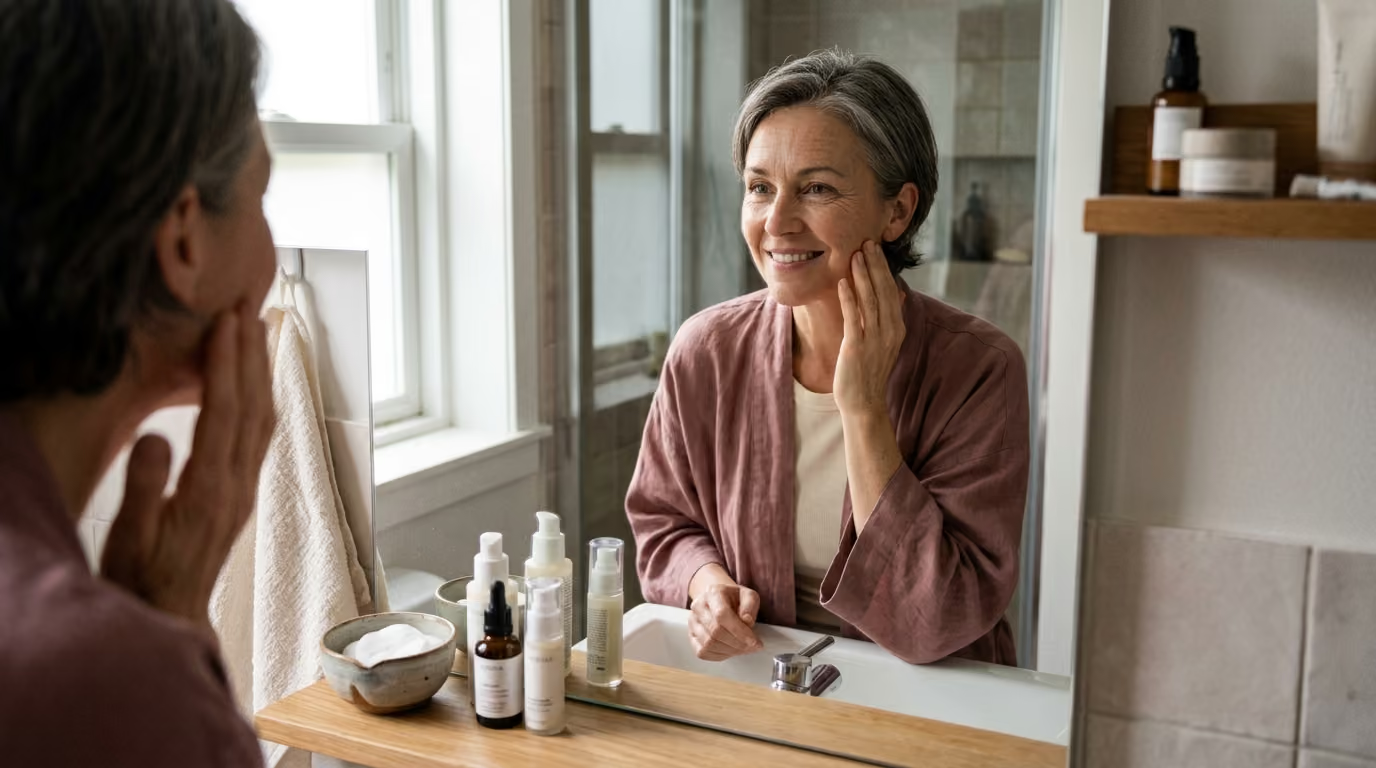

Evidence-based clarity on at-home skin tools helps you compare clinical mechanisms behind LED masks, microcurrent devices, facial massage, and face yoga.





At-home skin longevity tools encompass non-invasive modalities designed to stimulate facial tissues, modulate cellular signaling, or alter fluid dynamics. These methods include mechanical massage, facial exercise, low-level light therapy, microcurrent, and home radiofrequency. They do not represent surgical replacements or permanent structural corrections for advanced tissue laxity. Understanding the boundary between transient cosmetic changes and durable biological remodeling is essential for making informed choices.
The current scientific landscape presents a spectrum of biological targets, clinical rigor, and measurable outcomes.
Evaluating these modalities requires examining the specific physiological mechanisms that govern human facial anatomy and cutaneous aging. Readers interested in broader frameworks for cellular health can review our beauty science and advanced optimization guide to understand how tissue signaling changes across the lifespan.
Facial aging is a multi-layered biological process that involves the skin, subcutaneous fat compartments, facial musculature, and underlying bone structure. The epidermis and dermis undergo thinning, loss of extracellular matrix integrity, and degradation of structural proteins over time. Fibroblasts reduce their baseline synthesis of type I and type III collagen, while matrix metalloproteinases break down existing elastic fibers. Intercellular communication slows, microcirculation diminishes, and the lymphatic clearance of interstitial fluid becomes less efficient.
Different home modalities interface with distinct anatomical layers. Manual massage and gua sha interact primarily with the superficial skin, interstitial fluid, and microvasculature. Mechanical pressure stimulates endothelial cells to release nitric oxide, which causes transient vasodilation and increased local blood perfusion. Concurrently, directional mechanical pressure moves interstitial fluid into lymphatic capillaries. This clearance reduces localized facial puffiness without altering the underlying dermal matrix or repairing photoaged elastic fibers.
Facial exercise targets the mimetic muscles of the face, which are structurally unique because they insert directly into the superficial musculoaponeurotic system and the overlying dermis. Repeated isometric or isotonic contraction recruits muscle fibers, which promotes localized muscular hypertrophy and increased resting muscle tone. When muscle volume expands beneath the superficial fat pads, it provides greater structural projection to the midface. This mechanical enlargement of muscle tissue does not stimulate dermal fibroblast proliferation or reverse solar elastosis in the overlying skin.
Photobiomodulation operates through photophysical rather than mechanical pathways. Visible red light between 620 and 700 nanometers and near-infrared light between 700 and 1,440 nanometers penetrate into the dermal layers. Within the mitochondria of dermal fibroblasts, cytochrome c oxidase acts as a primary photoacceptor. Photon absorption stimulates the electron transport chain, which increases adenosine triphosphate production and modulates low-level reactive oxygen species. This mitochondrial signaling cascade upregulates gene transcription for procollagen synthesis and downregulates collagen-degrading enzymes.
Radiofrequency devices introduce alternating electrical currents into the tissue, creating resistance that generates controlled thermal energy within the reticular dermis. When dermal temperatures reach approximately 40 to 42 degrees Celsius during home applications, the triple-helix structure of existing collagen molecules undergoes subtle contraction. This mild thermal stress activates heat shock proteins, which signals local fibroblasts to initiate a controlled wound-healing cascade. Over weeks of consistent application, this process encourages the deposition of newly organized collagen fibrils within the dermal matrix.
Manual facial manipulation has a long history in cultural and esthetic traditions. Modern marketing frequently claims that facial rollers and gua sha tools sculpt the jawline, lift sagging skin, and rebuild collagen. The clinical reality is more modest and centers on fluid dynamics rather than structural dermal remodeling.
A 2023 systematic review examining facial gua sha and jade rollers concluded that while mechanical stimulation possesses biological plausibility for increasing local perfusion, definitive evidence for lasting rejuvenation remains absent. The reviewed trials were characterized by small sample sizes, brief intervention windows, and a lack of standardized pressure controls. Many commercial claims extrapolate findings from high-pressure clinical gua sha used for musculoskeletal pain to gentle facial protocols, which represents a significant scientific mismatch.
A 2025 randomized controlled trial compared the physiological effects of facial rollers against gua sha massage over an eight-week period. The researchers observed that the two modalities produced distinct regional outcomes on facial contour, muscle tone, and skin elasticity measurements. Participants in the gua sha group demonstrated a mean reduction of 2.2 to 2.4 millimeters in selected facial surface distance measurements across the lower face. These changes reflected localized fluid shifts and altered resting tissue compliance rather than true mechanical lifting or dermal neocollagenesis.
The immediate post-treatment radiance observed after facial rolling or gua sha stems from transient microvascular hyperemia. When a smooth tool compresses and shears the superficial tissue, endothelial mechanoreceptors respond by dilating local capillary networks. This response brings a short-term increase in nutrient delivery and skin warmth, which subsides within hours. Mechanical manipulation also assists in moving stagnant lymphatic fluid toward regional lymph nodes in the submandibular and preauricular areas.
The clinical literature demonstrates that manual tools produce temporary, maintenance-dependent improvements in puffiness and subjective facial contour. There is no controlled evidence showing that jade rolling, metal rollers, or gua sha stones prevent intrinsic skin aging or repair chronic UV-induced elastosis. For individuals looking to understand fundamental skin physiology, exploring research on skin longevity and healthy aging frameworks provides context on how structural changes occur over time.
Facial exercise programs propose that intentional contraction of facial muscles can counteract age-related volume loss and laxity. Because facial muscles insert into the skin, changes in their size or resting tone directly influence surface topography. The scientific support for this concept relies heavily on a limited number of structured clinical investigations.
The most widely cited trial on this topic was published in JAMA Dermatology by researchers who evaluated an intensive 20-week facial exercise regimen in middle-aged women. Participants aged 40 to 65 performed 30 minutes of daily facial exercises for eight weeks, followed by alternate-day 30-minute sessions for the remaining 12 weeks. Out of 27 enrolled participants, 16 completed the entire protocol and were evaluated by blinded dermatologists using standardized photographic scales.
Blinded clinician ratings revealed that participants showed a statistically significant improvement in both upper-cheek and lower-cheek fullness after completing the 20-week intervention. Upper-cheek fullness scores increased from a mean of 1.1 at baseline to 1.8 at study completion, while lower-cheek fullness scores improved from 0.9 to 1.6 on a validated scale. The mean estimated age of participants dropped from 50.8 years at baseline to 48.1 years after 20 weeks, representing an average perceived age reduction of approximately 2.7 years.
When our team first started reviewing clinical trials on collagen supplementation and non-invasive facial modalities, we were struck by how often the media misinterpreted data. A study showing a minor increase in cheek fullness was suddenly headlined as an effortless way to reverse facial aging. It made us realize how desperately consumers need an accurate translator for beauty science, someone who can clarify precisely what a study proves and what it leaves unanswered.
The JAMA Dermatology findings confirm that targeted muscle hypertrophy can improve localized midface projection in dedicated individuals. The study did not demonstrate any reduction in fine lines, improvement in epidermal barrier health, or stimulation of dermal collagen synthesis. Facial exercise cannot replace lost deep fat pads or reverse bone resorption in the orbit and mandible. Performing repetitive facial movements also carries a theoretical risk of reinforcing dynamic expression lines, particularly in areas prone to hyperdynamic creasing like the forehead and periorbital zones.
Low-level light therapy delivered by light-emitting diodes represents one of the most thoroughly investigated categories of home skincare technology. Unlike manual massage or facial exercise, photobiomodulation operates at a direct photochemical level within dermal cells.
A landmark controlled trial evaluated the efficacy of red-light-only photobiomodulation compared to broadband polychromatic light for skin rejuvenation and intradermal collagen density. The researchers observed that broadband light offered no therapeutic advantage over narrow-band red light. Both active light sources demonstrated statistically significant improvements in skin roughness, subjective complexion scores, and ultrasonographically measured intradermal collagen density compared to untreated control groups.
A comprehensive systematic review of LED applications in dermatology established that red and near-infrared wavelengths possess a favorable safety profile across diverse skin phototypes. Across dozens of clinical trials, reported adverse events were limited to mild and transient erythema, minor dryness, and brief stinging sensations. Red and near-infrared wavelengths do not generate ionizing radiation or induce DNA mutations, setting them apart from ultraviolet wavelengths. The review emphasized that blue light requires distinct safety parameters, as shorter wavelengths carry higher risks of inducing hyperpigmentation in darker skin tones.
A 2025 home-use clinical study examined the performance of a flexible silicone mask delivering 630 nanometer red light and 850 nanometer near-infrared light over a 12-week protocol. Among 60 enrolled participants, the authors documented measurable reductions in periorbital wrinkle depth and significant increases in dermal elasticity. Four participants experienced minor adverse events, including mild localized dryness, while no severe complications occurred. The researchers concluded that home-use red and near-infrared photobiomodulation is safe, comfortable, and clinically effective when used according to standardized dosing schedules.
The clinical efficacy of any home LED device depends strictly on physical parameters that are rarely detailed in consumer advertisements. These critical factors include:
A low-powered mask with poor diode placement will not replicate the results of clinical trials, regardless of how similar it looks on the surface. When appropriately calibrated, LED therapy serves as a supportive, maintenance-dependent tool for improving skin texture, mild redness, and subtle fine lines.
Electrical and thermal modalities introduce external energy into cutaneous and subcutaneous tissues to achieve visible tightening or lifting. While these technologies are widely used in professional dermatology clinics, their home-use counterparts operate under strict power limitations to ensure consumer safety.
Microcurrent devices deliver low-amperage electrical currents, typically ranging between 50 and 500 microamperes, across the skin via conductive treatment probes. Proponents claim that microcurrent stimulates intracellular ATP generation, boosts protein synthesis, and tones facial muscles. Clinical data isolating the effects of pure microcurrent remains constrained. A 2026 preprint reported immediate improvements of 18.37% and one-month improvements of 21.18% in forehead wrinkle appearance within a 30-person cohort. These preliminary findings require verification through larger, peer-reviewed split-face trials to confirm their reproducibility.
Much of the published literature on home microcurrent evaluates combination platforms rather than isolated electrical stimulation. An eight-week clinical study investigated a multi-energy device combining radiofrequency, microcurrent, and LED phototherapy. The investigators recorded statistically significant improvements in stratum corneum hydration, skin elasticity, surface roughness, and periorbital wrinkle volume compared to baseline and untreated control sites. Because multiple energy modalities were delivered simultaneously with conductive gel, the specific biological contribution of microcurrent could not be isolated.
Home radiofrequency devices utilize high-frequency alternating electrical currents to generate non-specific bulk heating within the dermal tissue. A 2021 systematic review evaluated low-power home RF systems across multiple clinical applications and reported favorable safety profiles along with measurable reductions in mild facial rhytides. A 2025 scoping review of home-based dermatologic equipment classified radiofrequency as having moderate scientific evidence for facial rejuvenation, placing it alongside low-level light therapy in overall clinical backing.
Home RF devices are engineered to limit tissue heating to a safe range of 40 to 42 degrees Celsius. This temperature range stimulates low-level fibroblast activity and temporary collagen contraction without causing structural tissue coagulation. Professional in-office systems, by contrast, achieve internal temperatures exceeding 55 to 65 degrees Celsius, triggering profound neocollagenesis. While home RF can provide modest improvements in skin firmness, it cannot duplicate the lifting outcomes of clinical radiofrequency, focused ultrasound, or surgical intervention.
Interpreting the scientific literature on at-home beauty devices requires a critical understanding of the methodological limitations that affect this field. Many commercial claims rely on preliminary, poorly controlled, or methodologically compromised research designs.
Small participant cohorts represent a primary vulnerability in at-home device studies. A trial that enrolls 15 to 30 participants may detect broad statistical trends, but it lacks the statistical power to identify subtle variations in efficacy or capture uncommon adverse events. When studies suffer from high attrition rates, the final data set becomes vulnerable to survivor bias, as participants who experience poor results or skin irritation are more likely to withdraw before study completion.
The absence of sham controls or robust split-face designs represents another significant limitation. In many trials, participants apply an active device to their entire face while concurrently initiating a new skincare routine that includes hydrating serums or conductive gels. Without an inactive sham device group, it is difficult to determine whether skin improvements result from the device energy or from the hydrating vehicle and enhanced routine consistency.
Measurement bias also influences reported outcomes in device research. Many studies rely on subjective self-assessment questionnaires or non-standardized photographic evaluations. Subtle shifts in room lighting, camera angles, facial expression, and skin hydration can create the illusion of reduced wrinkle depth or enhanced contour in before-and-after photographs. Objective biophysical tools, such as high-frequency ultrasound, cutometry, and standardized 3D optical profilometry, are essential for validating genuine biological remodeling.
A 2025 sham-controlled trial examining photobiomodulation highlighted another important principle: increasing the number of treatment sessions does not automatically produce proportionally greater clinical improvements. The researchers found that escalating session frequency beyond a specific threshold failed to alter esthetic outcomes evaluated 30 days post-treatment. This demonstrates that cellular signaling pathways experience saturation points, disproving the assumption that more device use always yields superior results.
Methodological constraints also limit the literature on controlled-injury tools designed for home use. A 2026 scoping review evaluated home fractional lasers, LED, RF, and home microneedling. While home fractional lasers demonstrated high-quality evidence and LED and RF showed moderate evidence, home microneedling demonstrated low-quality evidence and was associated with infectious complications. Mechanical punctures created in a non-sterile home environment introduce substantial risks of bacterial contamination, granulomatous reactions, and post-inflammatory hyperpigmentation.
Distinguishing biological reality from commercial exaggeration requires evaluating products against established dermatological principles. Marketing campaigns routinely use scientific terminology to present transient surface changes as profound cellular rejuvenation.
One prevalent misconception is that immediate lifting observed after facial massage or microcurrent represents lasting tissue remodeling. When a practitioner performs directional massage, interstitial fluid moves out of the midface, reducing localized volume and sharpening the jawline for several hours. Similarly, microcurrent can induce temporary muscle tonus and mild edema, creating an impression of firmness. Neither process alters the genetic expression of fibroblasts or replaces degraded elastic fibers in the dermis.
Another misconception is that mechanical tools are entirely harmless because they operate without electricity. Aggressive scraping with gua sha tools, excessive pressure with rigid rollers, and overzealous massage can rupture superficial dermal capillaries, producing petechiae and bruising. In individuals with deeper skin tones, this mechanical trauma can trigger post-inflammatory hyperpigmentation. For those with rosacea or active inflammatory acne, physical friction can disrupt the stratum corneum barrier and worsen underlying vascular reactivity.
Consumers often mistake regulatory clearance for an endorsement of clinical performance. In the United States, the Food and Drug Administration grants 510(k) clearance to medical and cosmetic devices based on substantial equivalence to an existing predicate device. This clearance confirms that a device is reasonably safe for consumer operation when used as directed. It does not certify that the product has undergone rigorous, double-blind clinical trials demonstrating wrinkle reduction, collagen synthesis, or long-term structural remodeling.
Equally problematic is the assumption that professional-grade treatments can be safely replicated at home. The FDA published an explicit safety communication warning that radiofrequency microneedling is an advanced medical procedure that should never be performed in a home setting. Performing RF microneedling without medical training and sterile protocols carries severe risks of deep dermal burns, permanent scarring, subcutaneous fat necrosis, and facial disfigurement. Recognizing these boundaries helps consumers avoid unnecessary injuries while selecting evidence-based tools that support skin health over time.
Selecting and using at-home skin tools should be guided by specific skin characteristics, realistic timelines, and consistent safety practices. Rather than adopting every available modality, individuals achieve better outcomes by matching specific tools to their primary biological goals.
For individuals experiencing mild morning fluid retention, a gentle manual massage or a cooled metal roller offers a quick, accessible intervention. The technique should utilize light pressure directed from the center of the face outward and downward toward the supraclavicular lymph nodes. This movement encourages fluid clearance through natural lymphatic pathways without tugging the skin or causing capillary trauma. A light slip agent, such as a gentle facial oil or hydrating serum, should always be applied first to eliminate surface friction.
When addressing mild photoaging, fine lines, and general skin texture, red and near-infrared LED masks provide the most consistent, evidence-backed approach. Users should confirm that the device emits validated wavelengths, specifically red light near 630 to 660 nanometers and near-infrared light near 830 to 850 nanometers. Treatment should involve three to five sessions per week on clean, dry skin for an initial period of eight to 12 weeks. Following device-specific eye protection guidelines is essential to prevent ocular strain, particularly for masks incorporating near-infrared diodes.
For those noticing age-related flattening of the midface, a structured facial exercise routine can help support cheek contour by strengthening underlying muscles. Practitioners should follow a standardized program that emphasizes controlled muscle contractions while minimizing unnecessary skin creasing. Sessions should last 15 to 20 minutes on alternating days to allow muscle recovery, avoiding excessive repetitions that could deepen dynamic expression lines. Readers interested in lifestyle factors that support tissue structure can explore our guide on nutrition and beauty from within to learn how dietary protein and micronutrients influence connective tissue integrity.
Individuals with compromised skin barriers, active eczema, rosacea flares, or cystic acne should avoid mechanical, thermal, and electrical devices entirely. Applying heat, current, or physical friction to inflamed skin exacerbates barrier dysfunction, increases transepidermal water loss, and intensifies inflammatory cascades. In these situations, the appropriate strategy focuses on gentle barrier restoration, sun protection, and professional medical care before reintroducing any active home device. Those exploring long-term skin health strategies can consult our complete skin longevity framework for foundational guidance on barrier maintenance and environmental protection.
Device hygiene represents a critical component of at-home safety. All tools, whether manual quartz stones or electronic masks, must be sanitized before and after every use using appropriate antimicrobial cleansers. Storing devices in clean, dry environments prevents bacterial colonization that could lead to folliculitis or contact dermatitis. Users should periodically inspect power cords, conductive surfaces, and silicone housing for damage to ensure safe electrical operation.
Photobiomodulation devices delivering red and near-infrared light do not generate thermal coagulative energy and cannot cause subcutaneous fat necrosis or facial fat loss. Red and near-infrared wavelengths operate at low, non-thermal power densities to support mitochondrial activity. Microcurrent devices deliver low-amperage electrical currents that stimulate superficial tissue and muscle without reaching temperatures capable of damaging adipocytes. Subcutaneous fat loss is primarily a risk associated with high-energy, uncalibrated radiofrequency devices, intense focused ultrasound, or off-label home RF microneedling.
The visible contouring and de-puffing effects of manual facial massage or gua sha typically persist for four to 24 hours. Because these changes result from the displacement of interstitial fluid and enhanced microvascular circulation, fluid naturally re-accumulates as vascular permeability and hydrostatic pressure return to baseline. Manual techniques do not structurally alter the deep fat compartments, tighten lax connective tissue, or rebuild the dermal collagen matrix. Sustaining a less puffy appearance requires ongoing, gentle maintenance alongside adequate hydration and balanced sodium intake.
Facial exercise can potentially deepen dynamic expression lines if movements repeatedly fold the overlying skin in hyperdynamic areas. When muscles underlying the forehead, glabella, or periorbital regions contract forcefully, they crease the skin perpendicular to the direction of the muscle fibers. If these exercises are performed with high frequency over many months, they can accelerate the transition of dynamic movement lines into static surface wrinkles. To minimize this risk, routines should focus on isometric contractions that stabilize the midface without causing exaggerated creasing across the brow or around the eyes.
Using a properly calibrated red and near-infrared LED mask daily is generally safe for most individuals, but it does not necessarily deliver greater benefits than an alternate-day schedule. Photobiomodulation follows a biphasic dose-response curve, meaning that cellular benefits peak at an optimal energy dose and plateau thereafter. Exceeding recommended session times or treatment frequencies can saturate mitochondrial chromophores without providing additional collagen stimulation. Adhering to a schedule of three to five sessions per week allows target cells to process signaling cascades effectively while minimizing the risk of transient dryness or irritation.
Stay connected for research and practical guidance on skin, hair, collagen, nutrition and beauty longevity. Clear ideas for people who want to understand how appearance changes with age and make better-informed choices over time.


Understand your skin, hair and body better without chasing every new trend, treatment or promise.
explore the Blog