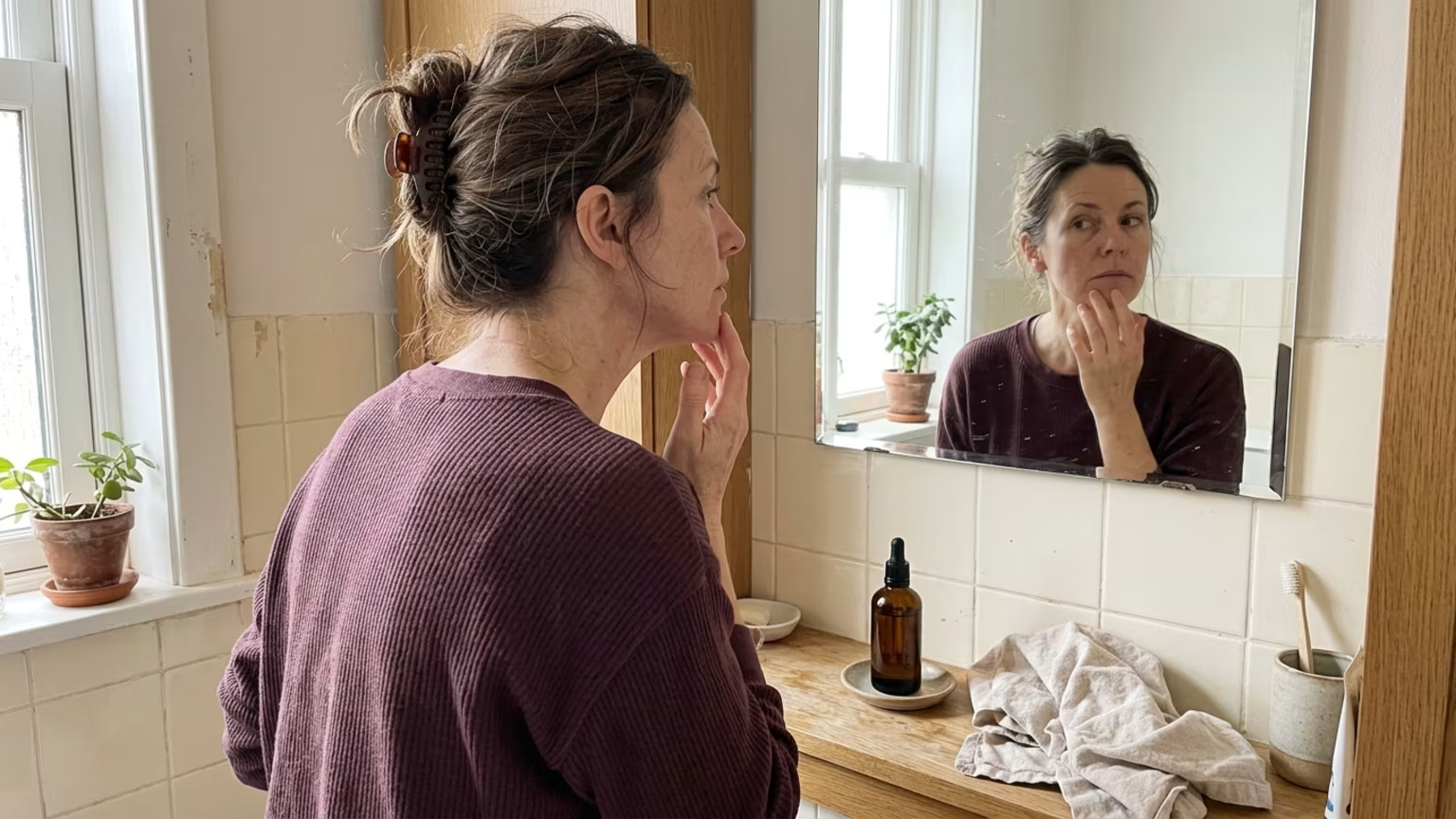
A recent observational study links complex social media skincare routines to skin inflammation, highlighting the clinical risks of active ingredient overload.





In October 2026, researchers presented a new observational study at the European Academy of Dermatology and Venereology Congress regarding modern skincare habits. The presentation examined dermatology patients who developed new or aggravated skin conditions after using cosmetic products promoted heavily on social platforms. According to coverage by the European Medical Journal, the study highlighted how complex routines can lead to unintended complications. These findings offer a clear reminder that layering multiple active ingredients requires a careful and measured approach.
Many popular online routines encourage users to apply multiple potent ingredients at once. When people stack exfoliating acids, retinoids, and brighteners, they can easily overwhelm the natural barrier function of the skin. Exfoliating acids work by loosening the bonds between dead cells, while retinoids encourage rapid cellular turnover. Both processes demand a period of rest and recovery from the protective outer layer of the skin.
When applied in isolation, the body has time to recover and adapt to these structural changes. However, combining several concentrated steps removes this necessary recovery window. This constant state of biological stress creates chronic inflammation. Understanding the relationship between inflammation and beauty aging is crucial for maintaining a resilient complexion over the decades.
Healthy skin relies on a delicate balance of moisture, lipids, and beneficial bacteria. Every time you introduce a potent new chemical exfoliant or brightening serum, you force this system to adapt. When these adaptations are stacked too closely together, the skin loses its ability to retain moisture and defend against environmental stressors. This biological reality explains why simplifying your daily steps often produces better long-term results than accumulating more bottles on your bathroom counter.
The European Medical Journal notes that researchers did not identify Korean skincare itself as the problem. Instead, the issue stems from complex, one-size-fits-all regimens that lack appropriate safety information. When the skin cannot process so many active inputs simultaneously, it responds with visible irritation and sensitivity. For those looking to build resilience, understanding why beauty routines fail often comes down to simplifying these overlapping steps.
The observational study evaluated 94 dermatology patients who experienced adverse reactions after adopting viral routines. The European Medical Journal reports that nearly half of these individuals had adopted complete routines inspired by social media. Among this group, 63 percent were using more than three active skincare ingredients at the same time. The clinical outcomes showed a clear pattern of barrier disruption and inflammation.
The most common reaction was irritant contact dermatitis, which affected 42 percent of the patients. Researchers also noted acne onset or significant worsening in 28 percent, rosacea-like dermatitis in 12 percent, and post-inflammatory hyperpigmentation in 11 percent. Additionally, 7 percent of the patients experienced superficial chemical burns. These figures highlight the physical toll of applying too many concentrated formulas simultaneously.
Specific product categories were frequently implicated in these adverse reactions. According to the European Medical Journal, alpha-hydroxy or beta-hydroxy acid exfoliants were involved in 34 percent of the cases. Over-the-counter retinoids accounted for 27 percent of the reported issues. Yahoo Health adds that high-concentration vitamin C serums were associated with inflammation in 14 percent of cases, while products containing niacinamide were linked to 11 percent.
A separate video analysis presented at the same congress examined 38 Korean-skincare and glass-skin videos. The European Medical Journal reports that nearly 95 percent of these videos contained at least one potentially misleading claim. Furthermore, 84 percent failed to account for different skin types, and 45 percent promoted active ingredient combinations without safety guidance. Only one video mentioned the risk of irritation.
The video researchers also highlighted a significant gap in clinical safety standards. Out of the 38 videos analyzed, none mentioned the risk of contact dermatitis or recommended consulting a medical professional. Only two videos addressed the essential step of daily sun protection. This separate analysis underscores the disparity between popular digital advice and dermatological realities.
While these findings provide valuable context, it is important to view them with scientific objectivity. This was a small observational study focused on 94 patients who were already experiencing new or aggravated skin conditions. The coverage from Yahoo Health notes that this is not a general population sample, and the research lacks a control group or a population-wide prevalence estimate. Therefore, the data does not establish that social media exposure directly causes these conditions for everyone.
The exact study dates, statistical methods, and detailed participant demographics were not provided in the reporting. It is also unclear if the percentages for specific reactions or ingredients overlap. These findings serve as a signal to exercise caution rather than definitive proof that all active ingredients are harmful. Readers should not assume that personal suitability matches the exact percentages seen in this limited clinical group.
The findings should also be viewed within the broader context of beauty marketing. While the research points to a correlation between viral trends and skin complications among these patients, it does not evaluate the long-term habits of those who use single active ingredients safely. The lack of demographic diversity in the reported data further restricts how broadly these specific percentages can be applied. Ultimately, this clinical snapshot serves as an important talking point for dermatologists rather than a comprehensive ruling on modern cosmetics.
Health-conscious adults can use this research to refine their daily habits and prioritize long-term skin resilience. Instead of adopting an entire multi-step regimen overnight, introduce one new product at a time. Yahoo Health quotes dermatologist Cindy Wassef, who recommends waiting one to two weeks before adding another new item. This gradual approach allows you to monitor your skin carefully for any signs of irritation.
If your goal is to build a sustainable regimen, patience is more effective than product volume. Dermatologist Joshua Zeichner, also quoted by Yahoo Health, warns that complicated regimens may look compelling online but often fail to suit an individual viewer's skin. Tracking how your skin responds to each isolated variable is a core part of any personal beauty science protocol. If you notice redness or sensitivity, simplify your routine immediately.
There is a common misconception that skin needs to peel or sting to show that a product is working. However, clinical evidence suggests that chronic irritation only compromises the structural integrity of your skin over time. If a product causes discomfort, it is not a sign of efficacy but a signal of barrier distress. A truly effective longevity routine focuses on continuous cellular support rather than frequent biological disruption.
When persistent issues arise after trying heavily promoted products, seeking professional guidance is the safest path forward. Both dermatologists advise checking product choices with a medical professional rather than relying on generalized advice from digital creators. Learning how long skin changes take can help set realistic expectations without rushing into aggressive treatments. By focusing on your own biological responses, you can avoid the common pitfalls of trend-driven routines.
The beauty industry continues to produce highly concentrated formulas at a rapid pace. As consumers gain access to professional-strength ingredients, the conversation must shift from how many products we can layer to how our biological systems actually process them. Will the next generation of clinical research finally encourage a return to precise, individualized routines over exhaustive multi-step regimens?
Stay connected for research and practical guidance on skin, hair, collagen, nutrition and beauty longevity. Clear ideas for people who want to understand how appearance changes with age and make better-informed choices over time.



Understand your skin, hair and body better without chasing every new trend, treatment or promise.
explore the Blog