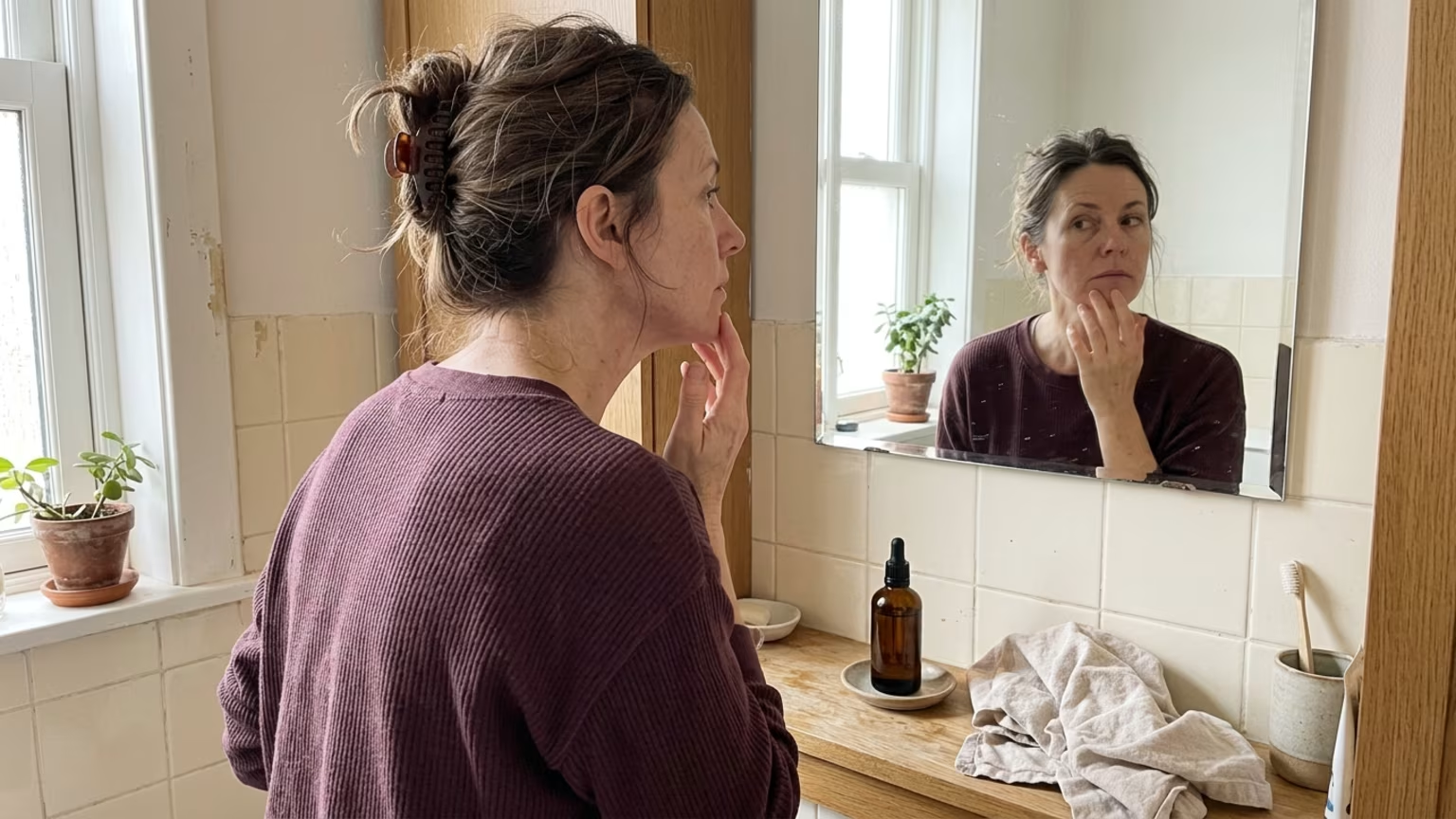
A new 2026 clinical study examines the complex relationship between sleep, stress, and dark eye circles. Learn what the latest evidence says about skin habits.





On October 8, 2026, a new study published in Clinical, Cosmetic and Investigational Dermatology examined the relationship between lifestyle habits and dark eye circles. The researchers assessed sleep patterns, smoking history, and stress levels alongside clinical skin measurements. This peer reviewed article offers a measured look at how daily routines might relate to under eye appearance. It provides a more cautious foundation for discussing lifestyle links than typical beauty marketing claims usually allow.
Persistent under eye darkness is a common aesthetic concern for many health conscious adults. Consumers frequently encounter aggressive marketing campaigns that blame poor sleep or stress for their appearance. This newly published observational study sought to document patient characteristics, clinical measurements, and participant reported quality of life. The findings help us separate the biological reality of skin presentation from popular marketing narratives.
Translating the clinical findings into everyday terms reveals that under eye darkness is rarely a single condition. The study authors reported that multiple dark circle types commonly occurred together within individual patients. Pigmented features, vascular visibility, and structural shadow effects frequently appeared together rather than presenting in isolation. This layered biological reality explains why single target topical treatments often fail to deliver meaningful results.
The research also points toward strong familial patterns in skin presentation. A majority of the study participants reported having at least one family member with a similar history. Specifically, 26.2 percent of participants reported a maternal history of dark eye circles. The authors suggest that family history and natural tissue changes over time may play a significant role in this condition.
At Younell, our goal is to help readers understand the science behind skin and collagen so they can separate useful evidence from marketing noise. This study serves as a strong reminder that visible skin traits are biologically complex. The frequent coexistence of multiple features shows that human tissue does not respond to simplistic categorisation. Recognising this complexity allows consumers to make informed, long term choices about their care routines.
Understanding this complexity helps reframe how we view facial aging and structural skin changes. When multiple physiological factors combine, the resulting appearance is highly individualized. The researchers recommend considering the specific presentation type, overall severity, skin type, and patient history during clinical assessments. These are clinical interpretations from the authors, rather than a universally tested treatment protocol.
The clinical data from this publication challenges several widespread assumptions about lifestyle and skin appearance. The single center observational study included 42 participants aged 25 to 50. All of these participants presented with at least mild dark eye circles. On average, the participants reported getting about six hours of sleep per night.
Interestingly, the researchers found no clear pattern connecting sleep deprivation or smoking to the severity of the circles. Reported lack of sleep actually appeared less common in the more severe groups. It was reported by 44.4 percent of the mild group, 33.3 percent of the moderate group, and 20.0 percent of the severe group. Furthermore, 83.3 percent of the total study population had never smoked.
Participant stress levels also failed to show a straightforward linear relationship with symptom severity. The study reported stress in 27.8 percent of the mild group, 14.3 percent of the moderate group, and 20.0 percent of the severe group. The published article supplies no statistical significance test for these specific percentage comparisons. Real world outcomes often differ from isolated data points, but these numbers suggest a highly complicated relationship.
The researchers also attempted to measure how this aesthetic concern impacts daily life. Only 20 participants completed the FACE-Q quality of life assessments during the study. The authors reported lower scores on several measures among participants with severe dark circles. However, they noted that this subgroup was small and the comparisons were primarily descriptive.
Making scientific uncertainty visible is a core principle at Younell, and this study carries several notable limitations. The authors explicitly characterize their findings as preliminary and largely descriptive. A primary constraint is the small, single center sample size, which limits how broadly the results can be applied. The study also featured uneven representation across different Fitzpatrick skin type groups.
Perhaps the most significant limitation is the study design itself. The research was observational, meaning it cannot establish that factors like sleep or stress actually cause dark circles. Additionally, the trial completely lacked an unaffected control group for comparison. Every single person enrolled in the study already had at least mild dark eye circles.
Transparency regarding research funding is also necessary when evaluating clinical publications. The study was supported by Allergan Aesthetics, which is an AbbVie company. Three of the listed authors were officially affiliated with Allergan Aesthetics. Readers should weigh these descriptive findings while keeping the small sample and industry funding in mind.
Health conscious women can use this research to build a more realistic perspective on their daily beauty routines. First, it is crucial to treat the six hour sleep figure as a simple observation of this specific group. It is not a recommended sleep target, nor is it clinical proof that sleeping six hours causes under eye darkness. You can safely step back from the guilt often pushed by aggressive wellness marketing.
Readers should avoid assuming that poor sleep or occasional stress is the sole explanation for their skin changes. This study found no pattern connecting sleep deprivation or smoking to the severity of the condition. Instead of chasing a single root cause, you can focus on building broad resilience. Learning about Allostatic Load and Lifestyle Recovery: A Practical Guide to Doing Less, Better offers a healthier framework for long term well being.
Because the study describes multiple physiological features occurring together, a single lifestyle change is unlikely to address every case. A cosmetic product claiming to resolve all under eye issues would go far beyond the clinical evidence provided here. We recommend taking a holistic approach to Lifestyle, Recovery & Environmental Aging to support your overall tissue health. Consistent, supportive habits are far more valuable than searching for quick fixes.
If you regularly experience low energy, addressing your sleep schedule remains highly beneficial for your overall health. However, you should separate the goal of systemic recovery from the expectation of structural skin changes. Readers navigating chronic exhaustion can find actionable strategies in our guide on Persistent Fatigue and Poor Recovery: An Evidence-Based Lifestyle Framework. Focus on feeling well rested rather than scrutinising your skin in the mirror.
Ultimately, these results are not a basis for diagnosing an individual or predicting specific visual outcomes. Changing your sleep schedule might improve your overall energy, but it may not drastically alter your genetic skin presentation. Managing expectations is a vital part of healthy aging and long term skin longevity. The best approach prioritizes how you feel over time rather than fixating on minor aesthetic variations.
The complexity revealed in this publication highlights the need for more rigorous clinical investigation. The authors rightly call for larger, multicenter studies with more balanced skin type representation. Future trials must also include unaffected control groups to truly test whether these preliminary observations hold across broader populations. As research methods improve, will clinical science finally map out the precise interactions between our daily habits and our inherited biology?
Stay connected for research and practical guidance on skin, hair, collagen, nutrition and beauty longevity. Clear ideas for people who want to understand how appearance changes with age and make better-informed choices over time.



Understand your skin, hair and body better without chasing every new trend, treatment or promise.
explore the Blog