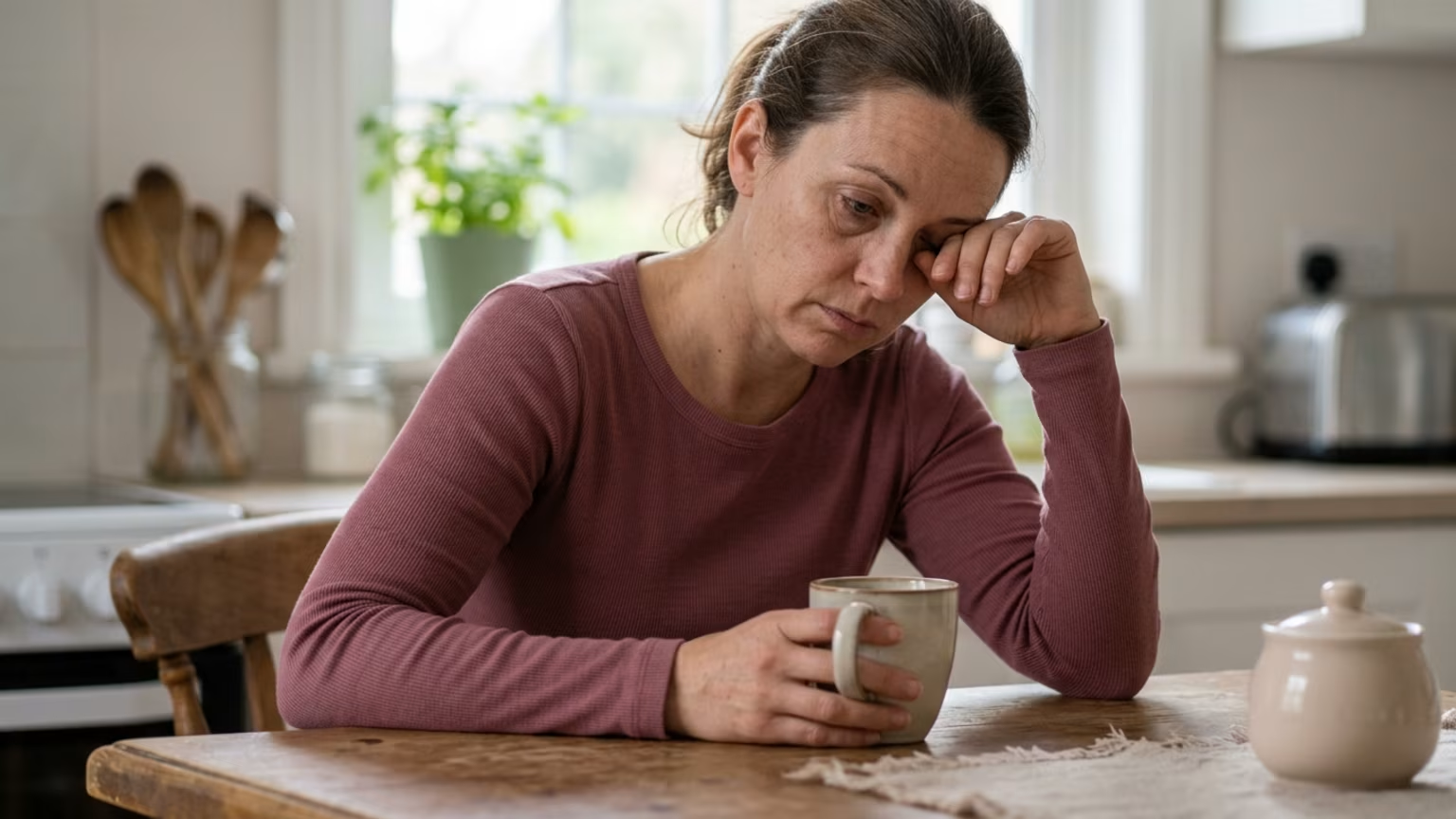

A 2026 report examined how disrupted sleep impacts cellular health and biological aging. Learn what the evidence actually says about nighttime recovery habits.





In October 2026, a new report published in la Repubblica Europe reviewed evidence linking chronically disrupted sleep with older biological age measures. The analysis examined population research and expert interviews to understand how long-term sleep patterns affect cellular health. Rather than making dramatic claims about lost years, the report carefully evaluated how restorative sleep supports healthy aging. It highlighted that short sleep durations are consistently associated with poorer long-term health outcomes.
At Younell, our priority is translating the actual science behind daily habits and visible aging. Conflicting advice can create unnecessary anxiety around nighttime routines, so this recent review offers a measured perspective on how recovery impacts our bodies. It connects restorative habits directly to cellular health without resorting to alarming language. Understanding these biological links helps us make informed, realistic choices about our longevity.
When we rest, our bodies cycle through different phases that serve distinct recovery functions. Psychiatrist Sylvie Royant-Parola distinguishes between these essential dimensions of nighttime recovery. Deep sleep is closely associated with physical restoration and repairing daily wear and tear. Meanwhile, rapid eye movement sleep plays a greater role in psychological and emotional balance.
If these natural cycles are consistently cut short, the body has less time to maintain itself. This lack of consistent recovery can influence biological aging markers over time. Biological age refers to how old our cells appear based on chemical modifications to our DNA. When experts discuss epigenetic clocks, they are looking at these specific cellular changes rather than chronological years.
The immediate effects of poor rest are familiar to most adults. The report describes morning tiredness, reduced alertness, and greater emotionality following a bad night. However, the body is highly resilient and partly recovers after a single poor night. Understanding this resilience is a core part of creating a consistent sleep environment for healthy aging.
A 2024 United States study of 3,795 adults aged 56 to 100 provided a notable result regarding these biological clocks. Participants who spent less than six hours a night in bed had a GrimAge epigenetic clock measure around 1.3 years older on average. This was compared to participants who spent seven to eight and a half hours in bed. This difference is a specific biological measure rather than a calculation of lost life expectancy.
A separate 2025 analysis in Sleep Advances covered more than 3,100 United States counties. It found that places with more short sleepers tended to have lower life expectancy. This association remained but weakened after obesity and diabetes were included in the analysis. Real-world outcomes often differ from controlled trials, and broad population data requires careful interpretation.
A September 2026 paper indexed by the US National Institutes of Health added important context to these findings. The study reported a U-shaped relationship between sleep duration and biological age gaps. The lowest gaps occurred at roughly 6.4 to 7.8 hours, depending on organ and sex. The same paper described 153 significant associations between abnormal sleep duration and future disease endpoints.
The broader clinical landscape consistently links chronic sleep deprivation to systemic health issues. The report refers to a 2017 meta-analysis linking short sleep with higher rates of cardiovascular disease, diabetes, and mortality. Additionally, the 2021 British Whitehall II study found an association between sleep and dementia risk. Recognizing these patterns, the American Heart Association has included sleep duration among important cardiovascular health factors since 2022.
Making scientific uncertainty visible is fundamental to how we evaluate beauty longevity research. The report emphasizes that these studies show associations rather than proof that poor sleep directly causes faster aging. Sleep specialist Pierre Philip notes that poor sleep and poor health can occur together. The actual direction of cause and effect remains difficult to establish conclusively.
Depression, pain, stress, or an existing medical condition may easily disrupt nighttime rest. Because of this, sleep problems can sometimes be a consequence of ill health rather than its original cause. Furthermore, the 2025 county-level analysis compared broad geographic areas rather than following individual sleepers. It cannot show that the people sleeping less in a county were the specific individuals who lived shorter lives.
Demonstrating a direct aging effect would require highly controlled, long-term human trials. Researchers would need to improve sleep for one group of poor sleepers over a sustained period. They would then compare their health several years later with a similar group of individuals. Philip points out that such definitive, long-term studies are currently not available.
It is crucial to avoid misinterpreting these scientific reports as reasons to panic over a few restless nights. A single bad night does not permanently subtract years from your life. The research supports concern about persistent problems, but it does not establish a universal rule about lost time. Managing sleep anxiety is an important step in addressing persistent fatigue and poor recovery.
For women seeking to support their long-term health, this research offers practical and realistic guidance. If your sleep is persistently disrupted, Philip recommends keeping a simple one-week record. You should track your sleep times, waking times, and how long you actually sleep to observe your baseline pattern. This basic observation helps you understand your habits without requiring expensive monitoring devices.
Consistency is often more valuable than forcing an unrealistic schedule. The article places a strong emphasis on keeping your waking time reasonably consistent every day. It explicitly advises against forcing an early alarm after a very late night. This measured approach helps stabilize your circadian rhythm without creating unnecessary stress about missed hours.
You should also be cautious about using daytime sleep to compensate for a poor night. The report cautions against repeatedly taking naps to catch up on lost rest. Daytime sleep can reduce sleep pressure before the next night, and Philip warns that naps can increase insomnia risk. A 2026 companion item on siestas noted that long or badly timed naps can indicate a circadian imbalance.
Artificially extending your time in bed after a bad night can also be counterproductive. The report states that this habit can dilute sleep, increase awakenings, and perpetuate an insomnia cycle. Instead of forcing sleep, many find success by reducing evening screen time, limiting alcohol, and avoiding late work. These practical adjustments form a strong foundation for effective overnight skin repair.
The biological connection between nighttime recovery and long-term health continues to evolve. As researchers develop more precise epigenetic clocks, we will gain clearer insights into how daily habits influence our cells. This ongoing research shifts the conversation away from chasing eternal youth and toward building sustainable, evidence-based routines. Will future clinical studies finally identify the exact mechanisms that separate direct cellular aging from the secondary symptoms of modern stress?
Stay connected for research and practical guidance on skin, hair, collagen, nutrition and beauty longevity. Clear ideas for people who want to understand how appearance changes with age and make better-informed choices over time.



Understand your skin, hair and body better without chasing every new trend, treatment or promise.
explore the Blog