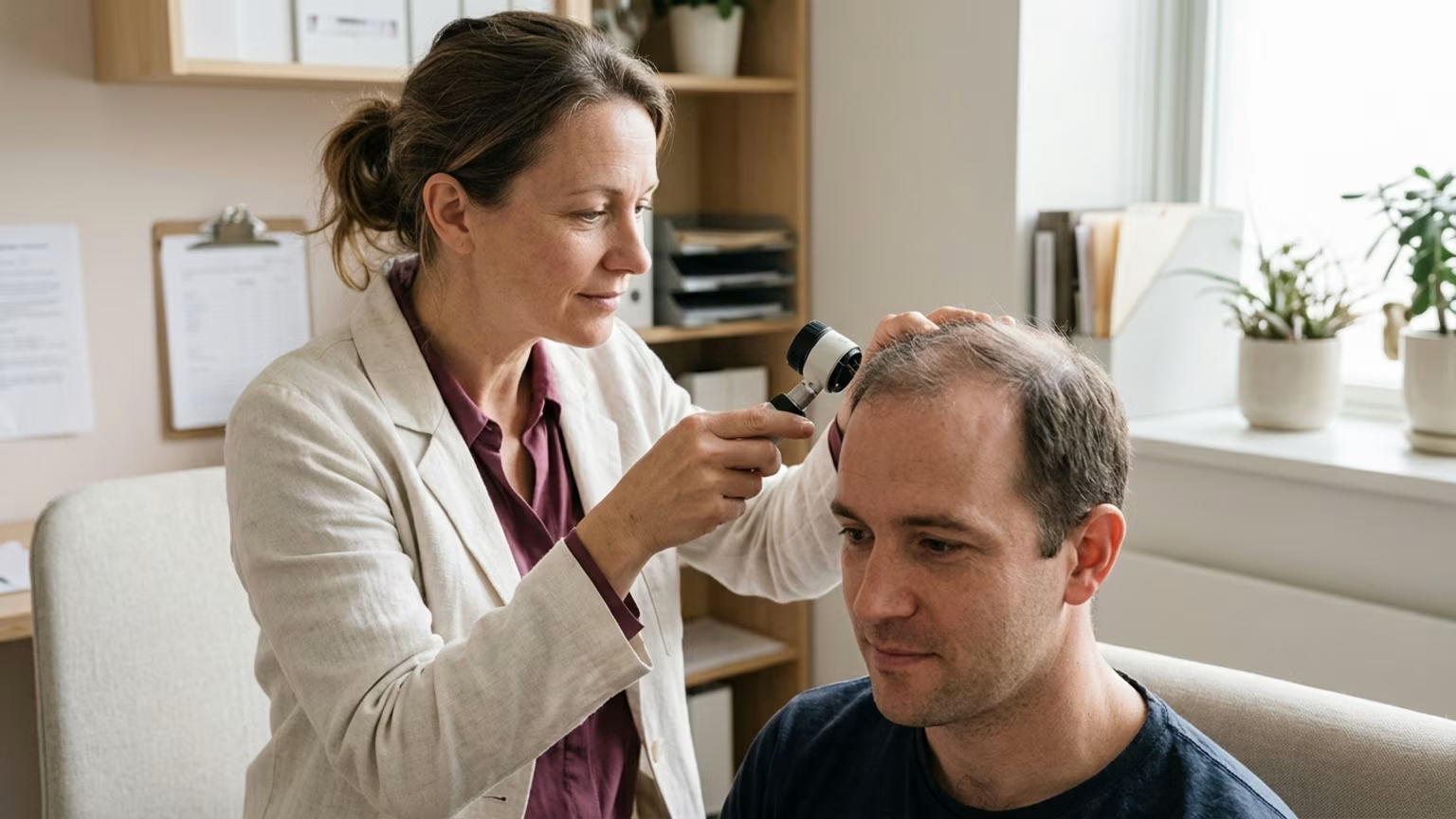

A breakdown of the NewBeauty report on Kiehl’s CollaShot serum for GLP-1 users. We review the survey data, manufacturer claims, and clinical limitations.





In October 2026, a new report published in NewBeauty examined consumer testing for Kiehl’s 1cc CollaShot Plumping Serum. The brand introduced the topical treatment to address the visible facial volume loss that often accompanies GLP-1 weight management use. NewBeauty reviewed both a post-campaign consumer survey and specific clinical figures provided by the manufacturer. While the initial feedback appears positive, health-conscious consumers benefit from looking closely at what these early numbers actually represent.
Evaluating new skincare interventions requires separating subjective user enthusiasm from documented physiological changes. A highly rated product might feel pleasant to use without necessarily altering underlying skin architecture. For individuals navigating rapid weight loss, the distinction between a cosmetic improvement and structural repair is incredibly important. Analyzing the specific claims behind this recombinant collagen serum provides a helpful framework for reading modern beauty science.
The Kiehl’s formula centers on recombinant collagen polypeptides. These ingredients are essentially biosynthetic collagen fragments designed to interface with the skin. The company states that its supra-liposome delivery system is engineered to penetrate 10 layers of skin. This penetration statement is a company claim rather than an independent confirmation in the NewBeauty article.
Understanding the biological root cause of the skin changes being targeted is a necessary first step. Henry Ford Health dermatologist Alison Boucher notes that rapid weight loss is the biggest factor in what is commonly called "Ozempic face." Losing fat quickly can reduce facial volume and alter the structural appearance of the skin. She cautions that there is no evidence that GLP-1 medications directly change facial appearance on their own.
Boucher emphasizes that similar facial changes can follow rapid weight loss from causes other than GLP-1 medication. Losing weight at a highly accelerated pace simply does not allow the skin adequate time to adjust. Conversely, she points out that a slower rate of weight loss gives the body more time to adapt naturally. This context is critical when evaluating any topical product claiming to reverse structural volume loss.
A 2026 review in the Aesthetic Surgery Journal Open Forum echoes this careful perspective. The review notes that proposed direct effects of GLP-1 drugs on dermal cells remain preclinical and should be interpreted cautiously. However, it points out that reduced food intake may lower the intake of nutrients involved in collagen biosynthesis and wound repair. These nutritional deficiencies are presented as plausible contributors to changing skin quality rather than proof that a particular serum reverses the condition.
The NewBeauty report presents two completely distinct types of data. On October 1, 2026, NewBeauty fielded an SMS survey to 1,200 BeautyPass members who received the serum. The publication reported results from the 998 members who tried the product. These figures provide a broad snapshot of user satisfaction following the promotional campaign.
In this specific survey group, the serum earned an average rating of 4.3 out of five stars. The data shows that 85.4 percent of respondents rated the product four or five stars. Nearly half, or 49.8 percent, gave the serum a full five stars. When asked about product performance relative to other options, 62.6 percent said it worked better than similar products.
NewBeauty shared an entirely separate set of findings attributed to Kiehl’s clinical testing. This brand study reported a 22 percent improvement in cheek sagging at eight weeks among consumers prescribed a GLP-1 for weight management. The study also noted a threefold improvement in skin plumpness across testers over the same period. The brand states that these clinical results were measured over eight to 12 weeks of twice-daily use.
A related consumer study conducted by the manufacturer also yielded highly positive self-reported figures. According to the article, 94 percent of participants said their skin looked more radiant. Another 93 percent found their skin looked plumper. Finally, 90 percent felt their facial contours appeared more defined after using the formulation.
While the reported figures show high user satisfaction, measuring real-world outcomes requires careful context. The NewBeauty survey reflects subjective feedback from recipients of a product trial rather than a controlled comparison. These results capture user preference and intent, with 70.1 percent saying they were likely or very likely to buy it again. They do not constitute independent proof of efficacy in a controlled clinical trial.
The manufacturer testing also comes with important clinical caveats. The NewBeauty article does not give the sample sizes or exact dates for the Kiehl’s studies. Without a published protocol or transparent measurement methods, independently evaluating the absolute scale of these claims is impossible. Readers should remember that the NewBeauty survey and the Kiehl’s studies have different sources and methods.
It is also crucial to contextualize the biological claims made by the brand. The assertion that supra-liposomes penetrate 10 skin layers remains a company statement rather than an independently validated delivery outcome. As experts have noted, rapid weight loss is the primary driver of facial fat reduction. Treating a complex metabolic adaptation with a topical cosmetic requires recognizing the boundaries of what a serum can realistically achieve.
The lack of specific methodological detail for the brand studies is a significant limitation. The reported 22 percent improvement and the threefold improvement in plumpness are not described with enough clarity to establish what was actually measured. Without knowing how the changes were quantified, properly evaluating their true clinical impact is very difficult. Consumers should look for published protocols and comparison groups before accepting brand claims as proven scientific facts.
For those managing facial changes during weight loss, setting realistic expectations is essential. Kiehl’s brand partner and dermatologist Jane Yoo clearly stated that the serum will not replace injectables. Topical serums serve as supportive care rather than a substitute for in-office medical volume restoration. If you decide to incorporate the product, Kiehl’s recommends applying it every morning and night.
Cost remains a practical consideration for any daily maintenance regimen. The NewBeauty article lists the serum at $55 for 30 mL and $78 for 50 mL. In the consumer survey, 16.2 percent of respondents actually cited the price as an unappealing feature. Understanding how skincare formulation affects results can help you decide if a premium price aligns with your personal goals.
Beyond a single product, a comprehensive daily routine is vital for long-term skin health. Boucher suggests applying daily sunscreen to limit UV damage. She also points to topical retinoids as potentially helpful for collagen, tone, and wrinkles. Anyone experiencing overly intense weight loss should discuss their individual nutritional and dermatological needs with a clinician to ensure safe adaptation.
Navigating the shifting landscape of beauty science means looking beyond the marketing copy. Finding collagen support strategies that work for your lifestyle requires patience and consistent habits. Those interested in steady beauty longevity insights often benefit from combining targeted topicals with a strong foundational routine. Careful evaluation of new evidence ensures you invest your resources wisely over time.
The introduction of products formulated specifically for GLP-1 users marks a notable shift in beauty product development. As researchers continue to study the physical adaptations of rapid weight loss, the distinction between fat loss and direct skin changes will become clearer. Will future clinical studies prioritize independent verification over manufacturer claims when evaluating these highly targeted formulations? The intersection of cosmetic chemistry and medical weight management is still unfolding, leaving plenty of room for more rigorous scientific investigation.
Stay connected for research and practical guidance on skin, hair, collagen, nutrition and beauty longevity. Clear ideas for people who want to understand how appearance changes with age and make better-informed choices over time.




Understand your skin, hair and body better without chasing every new trend, treatment or promise.
explore the Blog