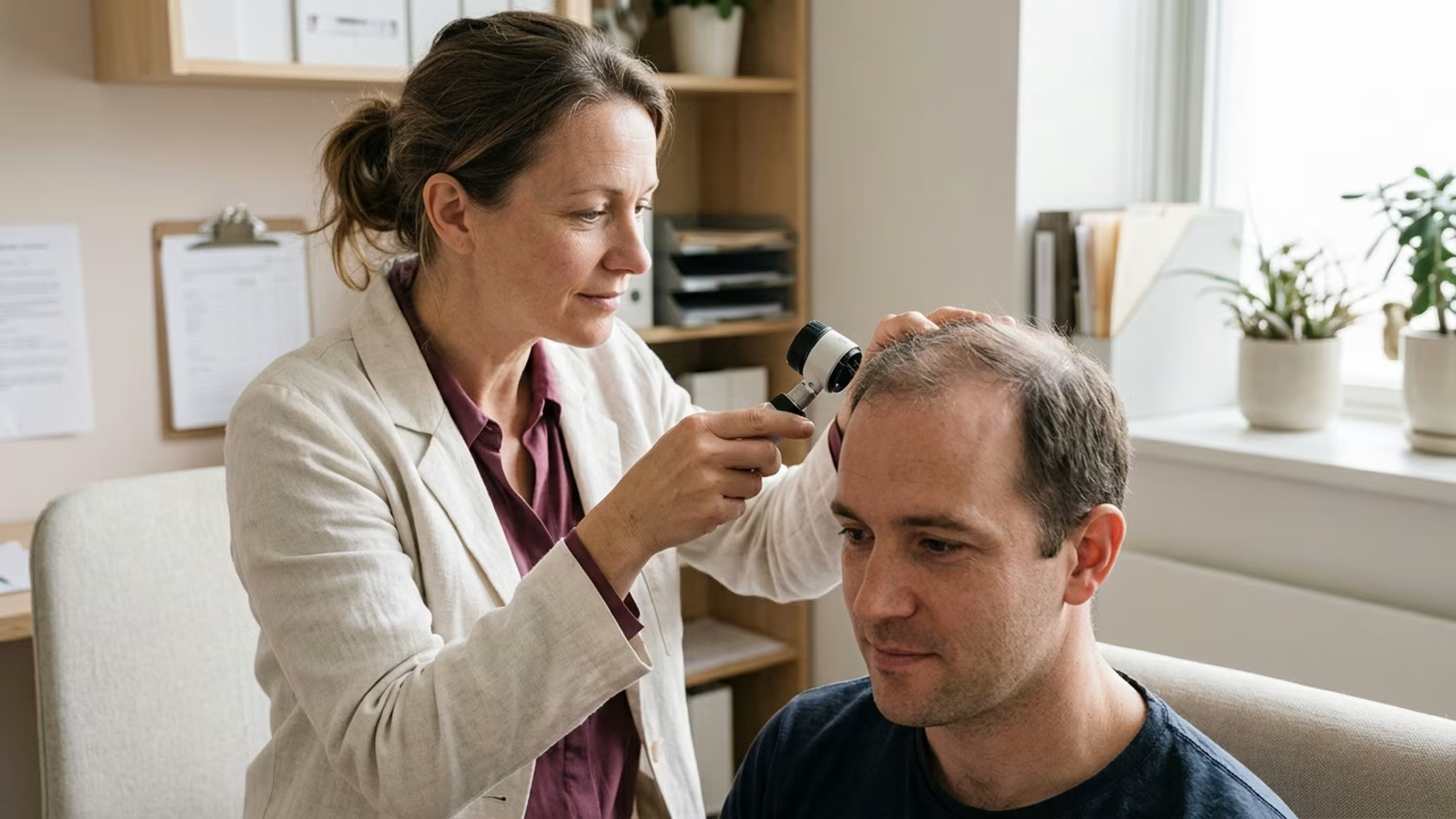

A planned clinical trial for RLS-1496 introduces senescence biology to hair loss research. We review the preclinical data and its clinical limitations.





In September 2026, Rubedo Life Sciences announced a planned clinical study of an investigational drug called RLS-1496. This particular trial is intended for people diagnosed with androgenetic alopecia. The company expects the study to officially begin in October 2026. Initial data from this critical research phase is anticipated in the first half of 2027.
The study is to be led by David Pariser. Practical Dermatology notes he is a professor of dermatology at Eastern Virginia Medical School and a principal investigator at Virginia Clinical Research, Inc. He characterized the preliminary findings as scientifically intriguing and stated that they warranted clinical evaluation. He further described RLS-1496 as a novel approach to senescence biology in androgenetic alopecia.
This development introduces a senescence-focused biological framework to standard dermatologic research. The planned trial represents a necessary step forward in evaluating how cellular aging mechanisms might relate to common forms of hair thinning. For readers closely tracking developments in longevity research, this planned trial offers a clear look into how emerging biological theories are tested. It highlights the rigorous path from isolated laboratory concepts to potential human applications.
Rubedo describes the investigational drug RLS-1496 as a specific GPX4 modulator. The company officially classifies it as a SenoAdaptive compound intended to target senescent and stressed cells. Senescent cells are damaged cells that have stopped dividing but remain metabolically active. They often release inflammatory signals that can negatively affect surrounding tissue function over time.
By aiming to selectively eliminate or restore function to these specific cells, researchers hope to alter how entire tissues respond to biological stress. The targeted elimination of these stressed cells aims to create a healthier environment for the remaining healthy tissue. In theory, clearing damaged cellular material allows follicles to resume their normal growth cycles without continuous inflammatory interruption. While this mechanism has gained traction in broader longevity research, its specific application to the scalp remains highly experimental.
The current scientific rationale for testing this drug in androgenetic alopecia relies heavily on an isolated laboratory model. Researchers utilized an ex vivo model featuring intact hair follicles collected from male patients with the condition. To simulate the natural biological environment of genetic hair loss, these extracted follicles were directly challenged with dihydrotestosterone. This specific hormone is heavily associated with the physical miniaturization and weakening of hair follicles over time.
In this carefully controlled laboratory setting, Rubedo reported that RLS-1496 increased overall follicle elongation compared to a standard vehicle control. The physical changes observed in these isolated tissues prompted the company to advance the drug toward official human trials. Such an experimental approach illustrates a growing industry trend of applying broader cellular longevity concepts to varied dermatologic conditions.
A September 2026 life-sciences industry analysis from L.E.K. Consulting noted other early clinical applications for this specific investigational drug. The analysis listed RLS-1496 among therapies that reported interim Phase 1b/2a results in actinic keratosis in May 2026. Actinic keratosis is another dermatologic condition closely associated with cumulative cellular damage and prolonged environmental stress. Testing a single developmental candidate across both skin and hair applications highlights how interconnected these underlying cellular mechanisms might be.
While laboratory findings can guide future research efforts, they do not guarantee successful clinical outcomes. Practical Dermatology explicitly characterizes the ex vivo findings for RLS-1496 as entirely preclinical. These initial laboratory results do not establish that the investigational drug is safe or effective for hair loss in humans. A controlled ex vivo environment cannot replicate the complex circulatory and immune responses present in a living scalp.
Furthermore, the current reporting lacks the precise metrics required for a thorough and independent scientific evaluation. Rubedo stated that a higher dose of RLS-1496 showed a numerical trend toward greater mean elongation than finasteride in their model. However, Practical Dermatology notes that the formal announcement omitted several crucial pieces of data. The publication stated the announcement lacked numerical results, sample sizes, specific concentrations, and formal statistical comparisons with finasteride.
Without these specific mathematical details, researchers cannot definitively assess the validity of the comparison. This absence of transparent statistical data is a common feature of early corporate development announcements. Companies often report broad observational trends before publishing complete datasets in independent, peer-reviewed journals. Therefore, the reported numerical trend cannot be interpreted as proof that this candidate outperforms existing treatments.
The scientific and medical community requires robust human data to validate any comparative claims. Understanding the different types of hair loss in women relies on evidence gathered from large-scale clinical trials. Moving from a laboratory observation to an approved treatment involves rigorous safety testing and long-term efficacy monitoring. The upcoming clinical trial will be a significant test of whether this biological theory translates into measurable human results.
For health-conscious individuals managing changes in their hair density, this update is an observation point rather than an actionable recommendation. The planned clinical study of RLS-1496 represents an early step in a very long regulatory process. It is not a clinical directive to alter an existing protocol or abandon currently supported dermatologic methods. Meaningful changes in hair volume and retention require therapies that have already demonstrated clear long-term safety profiles.
Understanding the timeline of clinical testing is crucial for making informed personal health decisions. Many investigational candidates show promising physical changes in laboratory models before facing challenges in complex human trials. Therefore, replacing a currently prescribed regimen with an unproven concept based on a preliminary announcement often leads to disappointment. Reliable longevity and beauty science emphasizes patience while clinical investigators complete their formal evaluations.
When evaluating emerging beauty science, it is helpful to maintain a clear boundary between experimental theories and proven regimens. The translation of a senescence-targeting mechanism from a laboratory dish to a viable treatment takes many years. During this necessary observation period, maintaining a consistent routine with known interventions remains the most practical strategy. Readers should continue prioritizing strategies that have established clinical consensus.
If you are currently noticing shifts in your hair density or scalp health, early evaluation remains vital. Prompt consultation with a qualified dermatologist can help determine whether you are experiencing common thinning or something requiring specific medical intervention. Recognizing the signs of complex conditions like scarring alopecia relies on timely professional assessment rather than waiting for experimental treatments. Addressing visible hair changes proactively with established options provides the most reliable path forward.
In the meantime, Younell will continue tracking the crossover between cellular biology and practical dermatologic care. We will monitor the clinical progress of candidates like RLS-1496 as they transition toward published human trials. Learning how collagen aging is measured and understanding cellular health helps readers separate genuine scientific progress from marketing noise. Following the science allows you to make informed decisions about your long-term wellness.
As researchers increasingly apply the complex biology of cellular stress to dermatologic conditions, our understanding of visible aging continues to evolve. Will the concept of targeting senescent cells eventually yield reliable treatments for age-associated hair changes, or will human biology require a more multifaceted approach?
Stay connected for research and practical guidance on skin, hair, collagen, nutrition and beauty longevity. Clear ideas for people who want to understand how appearance changes with age and make better-informed choices over time.





Understand your skin, hair and body better without chasing every new trend, treatment or promise.
explore the Blog


