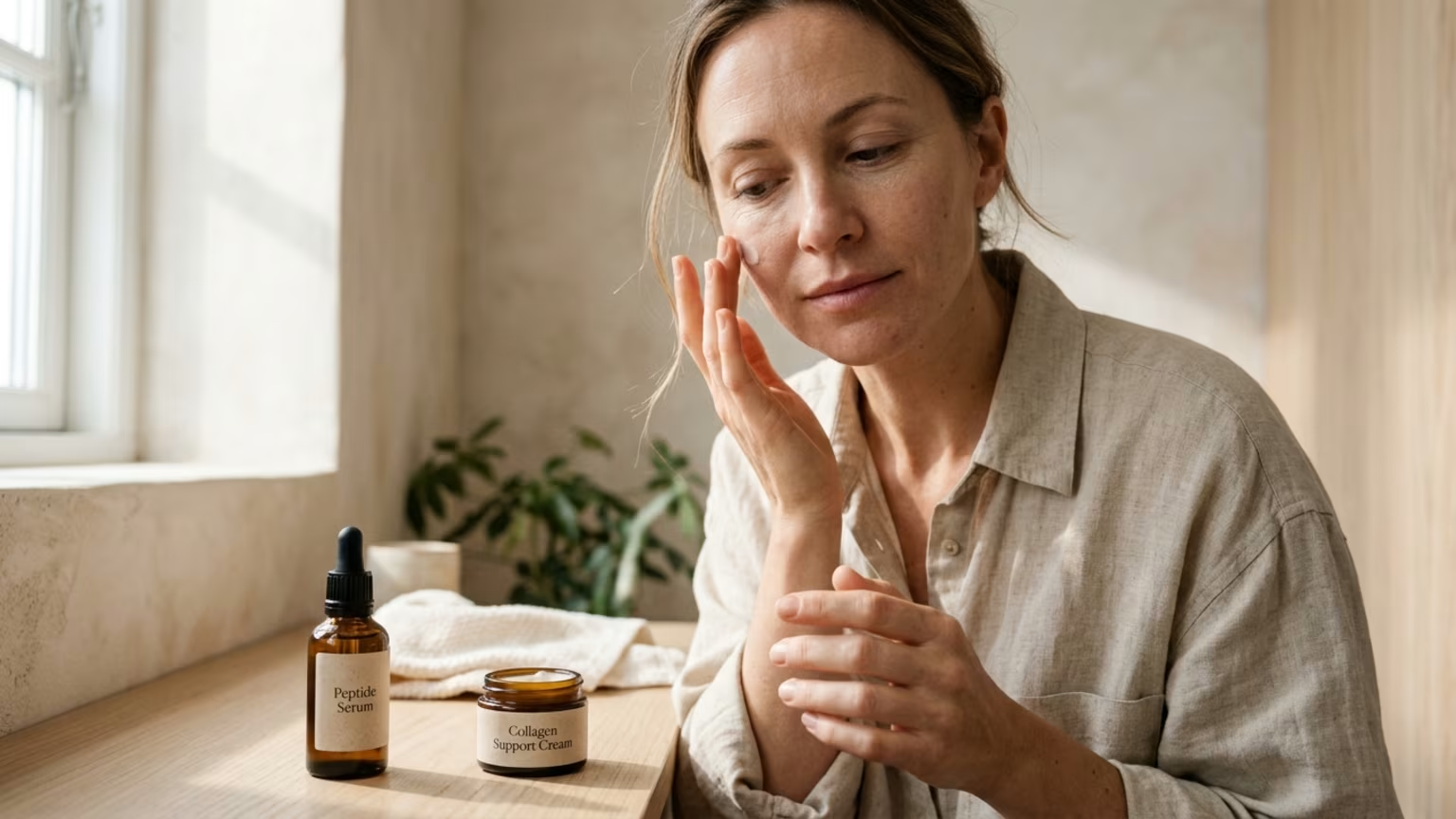

A 2026 review of peptide skincare claims explores how signal, copper, and neurotransmitter-inhibiting peptides compare to retinoids for collagen support.





In October 2026, Metro published a product-oriented feature examining the rising popularity of peptide skincare formulations. The article discussed how specific signal peptides are currently marketed to support skin structure. It highlighted three main categories of these ingredients while framing them as receiving heightened consumer attention this year. The publication also disclosed that it may earn commission from purchases made through its links, which is common in product roundups.
The feature positioned these formulations as a major skincare moment for consumers seeking new topical options. It described several popular retail items that feature these protein fragments as their primary active components. While the piece focused heavily on purchasing recommendations, it also provided a platform for clinical commentary. This combination of product marketing and expert opinion illustrates how new skincare science reaches the general public.
To understand the appeal of these ingredients, we first need to look at how skin maintains its structure. Collagen helps the skin appear firm and plump over time. Dr. Hasaneen Al Janabi, founder and lead injector at Dr Hass Clinic, provided comments to Metro regarding how these ingredients function. He characterized signal peptides, such as palmitoyl pentapeptide, as encouraging collagen and elastin production within the skin.
Dr. Al Janabi also detailed the proposed roles of other distinct peptide categories. He described copper peptides as helping with wound healing processes. Furthermore, he noted that neurotransmitter-inhibiting peptides, like argireline, specifically target expression-related lines on the face. These descriptions offer a simplified view of how topical applications might interact with cellular processes to maintain a youthful appearance.
The basic science suggests that these ingredients act as messengers within the cellular matrix. When natural structural proteins break down over time, they leave behind smaller chains of amino acids. These residual fragments naturally signal the body that repairs are needed. Cosmetic chemists attempt to mimic this precise signaling process by formulating topical skincare with synthetic versions of these messengers.
The structural integrity of our skin relies heavily on a dense, interwoven network of proteins. As we age, the natural rate of biological degradation gradually begins to outpace our internal synthesis. This subtle shift slowly alters the visible texture and overall resilience of the skin surface. Learning about how collagen changes by decade provides a more comprehensive view of healthy aging.
Relying on a single topical ingredient to reverse this complex biological shift is an unrealistic expectation. A multifaceted approach prioritizing daily protection and gentle support offers a more reliable path to long-term skin health. While marketing materials often focus on rapid transformations, cellular repair remains a slow, steady process. Setting realistic expectations helps consumers make informed choices about their daily longevity routines.
The statistical claims surrounding skin aging require careful context and closer examination. Metro states that collagen production falls by roughly 1 to 1.5 percent annually starting around age 25. However, the retrieved article text does not identify the underlying scientific source for this specific estimate. While biological degradation is a recognized reality, real-world outcomes often differ drastically from generalized statistics.
Furthermore, laboratory concepts do not easily translate into guaranteed clinical results for the average consumer. The explanation that peptides simply trigger the skin to make collagen is a simplified description of a proposed mechanism. The article does not present independent clinical trial evidence establishing that all topical peptide products produce meaningful structural changes in users. Consumers should recognize that expert comments reported in a feature are not definitive proof of universal efficacy.
The scientific uncertainty surrounding over-the-counter cosmetics remains a significant factor for health-conscious buyers. The Metro story provides no market-size figures, sales data, or independent trend measurement to quantify the stated attention on peptides. More importantly, the article lacks product-by-product tolerability data to support the broad claim that these ingredients avoid all irritation. Asserting that peptides bypass redness and peeling entirely should not be read as a guarantee for every unique formulation.
We must also carefully distinguish between laboratory evidence and comprehensive human trials. A proposed mechanism demonstrated in a controlled environment is not equivalent to proving a visible effect from a retail cream. Skincare formulations are complex chemical mixtures, and clinical evidence often comes from testing complete products rather than isolated active ingredients. Readers seeking to understand how skincare formulation affects results should weigh these scientific limitations carefully before purchasing.
Retinoids are well known for promoting cellular turnover and supporting structural health over extended periods of time. Metro notes that many people find exfoliating acids and retinoids difficult to tolerate due to peeling and sensitivity. Consequently, peptides are frequently positioned as a soothing, hydrating alternative for individuals with sensitive skin barriers. While they may offer a more comfortable user experience, their evidence base differs significantly from that of traditional retinoids.
Consumers often wonder if they must completely choose between these two separate categories of ingredients. Understanding what topical peptides can realistically do helps clarify their optimal role as a supplementary option. They provide immediate hydration and may support the skin barrier without the intense adjustment period associated with standard vitamin A derivatives. Ultimately, their function is chemically distinct from ingredients that actively accelerate the shedding of dead skin cells.
Health-conscious women can realistically apply these findings by maintaining highly measured expectations for their cosmetics. Treat product claims about collagen and elastin support as strictly specific to the individual formulation in question. You should not assume that any product vaguely labeled as a peptide treatment will automatically deliver identical, proven results. When evaluating your personal longevity routine, prioritize consistent daily habits over rapidly shifting, isolated ingredient trends.
For a truly balanced approach, place these newer formulations alongside established staples rather than using them as total replacements. Ingredients like retinoids and vitamin C have long-documented roles in supporting overall skin structure. If you actively choose to test signal peptides, read the ingredient list closely to thoroughly understand the specific claims being made. It is helpful to independently research the scientific evidence behind core skincare ingredients before drastically overhauling your daily regimen.
Patience is absolutely essential when testing any new topical product designed to support your structural proteins. Biological processes consistently operate on a scale of several months rather than just a few days. Focus primarily on how a product actually makes your skin feel in terms of hydration, texture, and overall comfort. If a gentle hydration step fits well into your morning lifestyle, a peptide cream may be a worthwhile addition despite the scientific caveats.
The ongoing conversation around cosmetic chemistry continues to shift as consumers increasingly demand both gentle application and measurable outcomes. Current evidence certainly highlights the immediate hydrating benefits of these ingredients, but independent validation of their long-term structural impact remains necessary. Brands will face growing pressure to transparently prove their specific claims rather than relying solely on generalized ingredient science. As researchers continue to rigorously study complex formulations, will the beauty industry eventually provide standardized clinical testing for all peptide claims?
Stay connected for research and practical guidance on skin, hair, collagen, nutrition and beauty longevity. Clear ideas for people who want to understand how appearance changes with age and make better-informed choices over time.




Understand your skin, hair and body better without chasing every new trend, treatment or promise.
explore the Blog