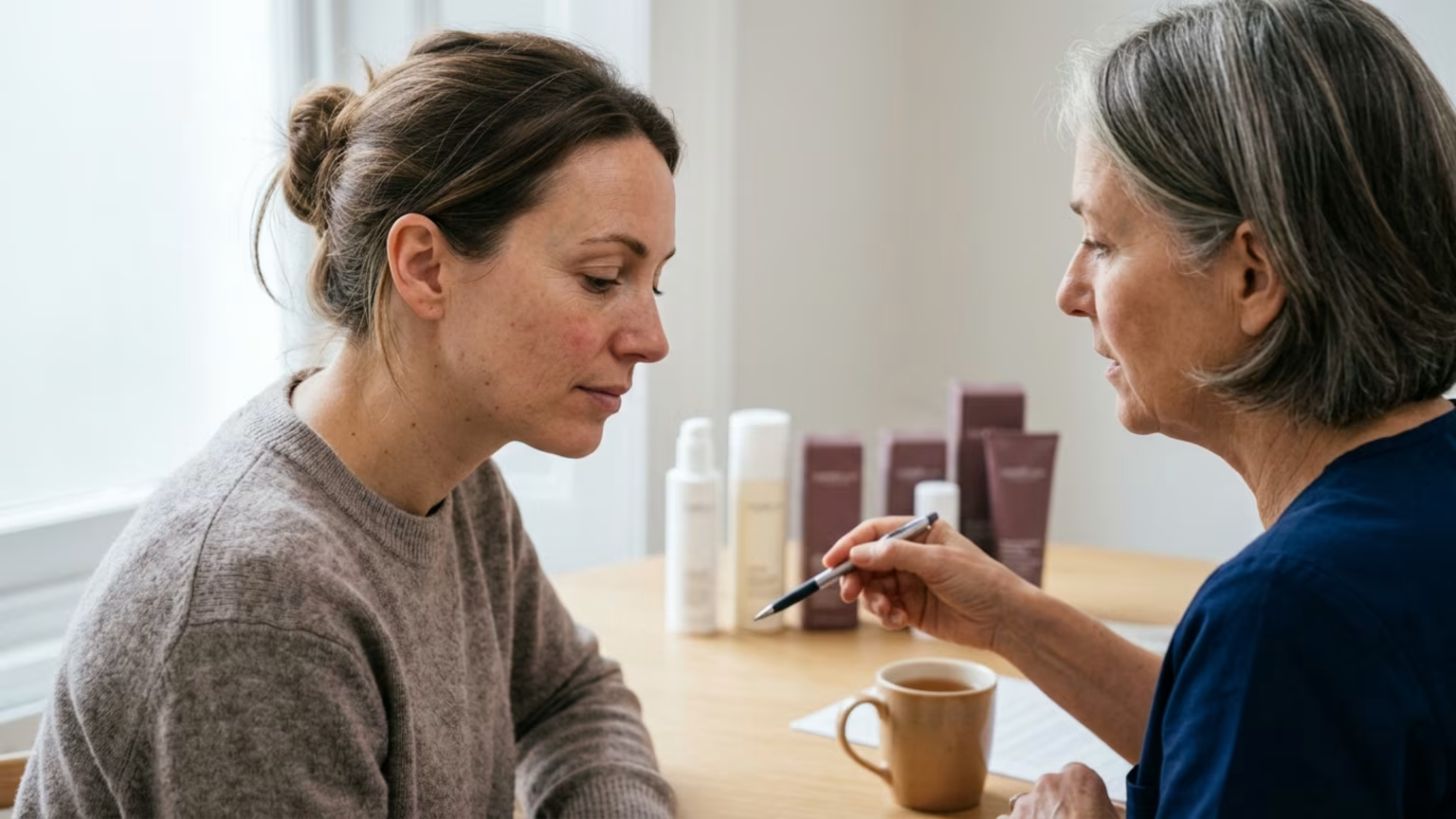

A new Forbes analysis urges consumers to evaluate aesthetic treatments by clinical evidence rather than popularity. Learn how to navigate procedures safely.





In September 2026, Forbes published a detailed article on aesthetic treatments. The piece argues that consumers should evaluate procedures by clinical evidence, safety and risk. Forbes cautions against choosing treatments based solely on social media popularity. Americans underwent more than 28 million minimally invasive cosmetic procedures in 2024.
Neuromodulators such as Botox and Dysport made up a massive portion of these treatments. These specific injectables accounted for nearly 9.9 million procedures in 2024. This volume represents a 4% increase from the previous year according to the figures cited by Forbes. The scale of this demand highlights how routine these once niche interventions have become.
Forbes identifies New York City board-certified dermatologist Hy Eldik, M.D., as its principal expert source. Eldik calls retinoids the guiding light for navigating the saturated skincare market. He places retinoids and broad-spectrum sunscreen at the absolute foundation of a routine. These topicals are highly relevant to fine lines and skin texture while also targeting enlarged pores and sunspots.
The biological mechanisms behind these improvements are well documented. A 2026 prospective study of 38 women aged 40 to 61 measured these effects directly. Researchers found that analytically verified 0.104% and 0.247% retinol formulations improved multiple biophysical markers. These verified creams reduced transepidermal water loss while increasing hydration and brightness over the study period.
The same study observed changes in the deeper layers of the skin. Researchers noted that the retinol formulations improved both epidermal thickness and dermal density. These verified formulations also optimized sebum levels over the exact same timeframe. These objective measurements demonstrate how targeted ingredients support the cellular environment over time. Consistency with these active topicals often yields more sustainable outcomes than chasing viral trends.
The immense volume of cosmetic procedures extends far beyond domestic clinics. The Forbes article describes a growing international interest in aesthetic care, particularly in South Korea. In 2025 alone, 173,363 Americans traveled to South Korea for services. This represents a 70.4% year-over-year increase in medical tourism to the country.
Dermatology is clearly driving this international travel boom. Forbes attributes these figures to the South Korean Ministry of Health and Welfare. Dermatology accounted for 44.3% of all American medical visits in the country. Looking at the global picture, South Korea recorded nearly 1.3 million dermatology visits from all international patients.
This staggering figure represented 62.9% of all international patient visits. Forbes uses price comparisons to illustrate this intense cross-border demand. The publication reports an approximate United States price of $500 for 50 units of facial Botox. In stark contrast, the same treatment costs about $20 in South Korea.
While injectables are popular, patients are also turning to at-home technology. A separate multicenter and randomized 2026 trial evaluated a sham-controlled red and near-infrared light mask over 16 weeks. Researchers found statistically significant improvements in periorbital-wrinkle assessments. These clinical findings demonstrate that certain noninvasive protocols can produce measurable structural improvements.
Despite these encouraging findings, consumers must navigate substantial scientific uncertainty. The 2026 retinol study was small and exclusively included women with Fitzpatrick skin phototypes II through III. Its results should not automatically be generalized to every age group, skin type or consumer product. Every formulation interacts uniquely with individual skin chemistry and barrier function.
Evidence regarding other popular interventions is equally nuanced. Eldik argues that red-light masks promise too much and deliver too little when marketed for major effects. Forbes also reports Eldik’s skepticism about collagen gummies and similar supplements. A 2026 peer-reviewed paper specifically examined oral collagen peptides and skin biophysical properties, indicating that this remains an active research area rather than a settled question.
In our experience reviewing clinical trials on beauty science, we frequently see how easily consumers can misinterpret early data. A single study showing a minor increase in skin elasticity requires careful translation. We must clarify exactly what the evidence proves and what it simply suggests. This critical lens is especially vital when evaluating injectable treatments.
For example, Forbes reports that Eldik considers excessive filler the procedure of greatest concern. He notes that over-treatment can alter facial proportions and expose patients to avoidable risks. The American Academy of Dermatology states that cosmetic procedures carry risks. The organization emphasizes the importance of choosing appropriately trained, board-certified dermatologists.
Health conscious women can apply these insights by building a routine rooted in verified evidence. Start by treating retinoids as a gradual intervention rather than a rapid fix. Introduce these active ingredients cautiously to protect the delicate skin barrier. Seek professional advice if you develop persistent irritation or prolonged sensitivity.
Before paying for a procedure, readers should assess the provider carefully. The AAD recommends asking specific questions to reduce the risk of complications. For chemical peels, the organization suggests asking exactly who will perform the procedure. Patients should also inquire about the provider's experience with their specific skin coloring.
It is also vital to establish clear expectations regarding recovery. Ask what results and side effects to expect following the session. Confirm whether downtime is required and what the complete treatment will cost. This level of diligence helps separate highly beneficial medical care from unnecessary interventions.
Readers should also evaluate the long-term commitments proposed by many clinics. Consumers must be especially cautious with subscriptions and memberships that make repeat treatments feel routine. A recurring payment should not substitute for a reassessment of whether treatment remains medically or cosmetically necessary. Ask if a recommended treatment actually supports the fundamental components of collagen or elastin production.
The cosmetic landscape is clearly shifting toward a high volume of elective procedures and international treatment travel. As the market expands, the burden falls increasingly on consumers to scrutinize the data behind popular claims. How will the industry balance the immense demand for accessible aesthetics with the rigorous clinical evidence required to ensure patient safety?
Stay connected for research and practical guidance on skin, hair, collagen, nutrition and beauty longevity. Clear ideas for people who want to understand how appearance changes with age and make better-informed choices over time.


Understand your skin, hair and body better without chasing every new trend, treatment or promise.
explore the Blog