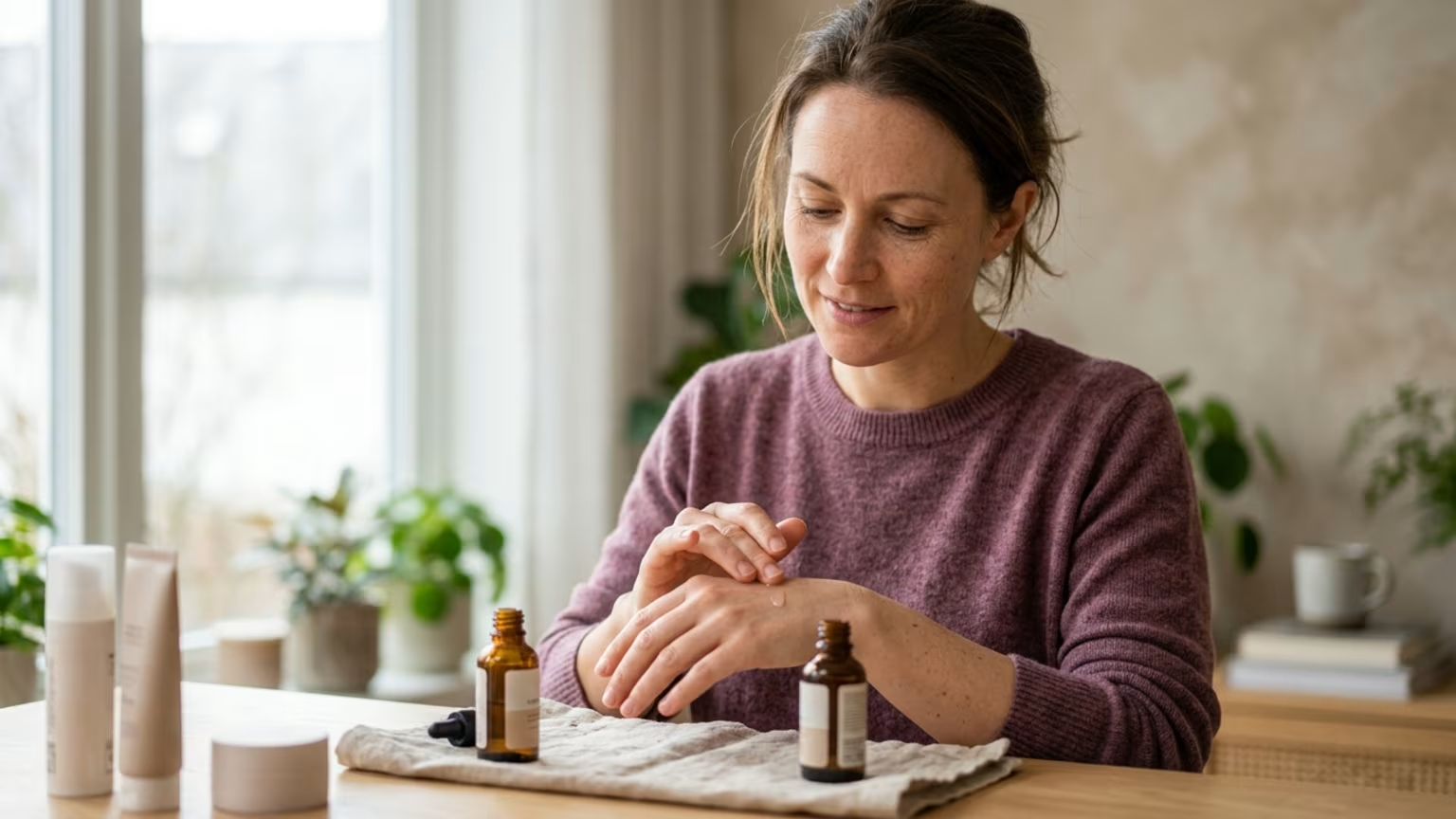

A September 2026 expert guide updates dermatologist advice on layering hydrating serums. This review examines how humectants and barrier lipids improve skin.





In September 2026, Cosmopolitan UK published an updated guide detailing the ten best hydrating serums for plump and dewy skin. The publication evaluated a wide range of products. They combined editorial testing with practical commentary from consultant dermatologists. The reviewed formulas ranged from accessible options like the £13.99 Byoma Hydrating Serum to prestige choices like the £86 Tatcha The Dewy Serum.
The article also included products from Sunday Riley and Medik8. Other featured brands were Cetaphil, CeraVe, and Beauty of Joseon. Serums from Dr Jart, Prequel, and Dermalogica were tested as well. The resulting guide provides clear instruction on how water-binding ingredients can improve skin texture. It gives consumers multiple entry points into the hydrating serum category.
Younell focuses on helping readers separate useful evidence from marketing noise. We know that clear, honest guidance is essential. I remember speaking with a dermatologist who told me her patients were coming in with severe anxiety about normal skin aging. That anxiety was driven entirely by social media filters and aggressive marketing.
That conversation became a cornerstone of our philosophy. We decided right then that our publication would never frame natural changes like wrinkles or thinning hair as personal failures. Instead, we look closely at what the science actually supports. This approach helps health-conscious women make informed choices about their daily routines.
The guide identifies humectants as central ingredients for maintaining skin moisture. These ingredients include hyaluronic acid and glycerin. Polyglutamic acid and panthenol are also highlighted. They work by attracting water or helping to retain it within the skin layers.
Consultant dermatologist Dr Derrick Phillips notes that these hydrating ingredients are important for maintaining moisture balance. He explains that they also help reduce irritation. This is particularly helpful for those with dry or sensitive skin. Effective hydration, however, goes beyond simply drawing water to the skin surface.
Recent findings distinguish basic hydration from comprehensive barrier support. Ingredients like ceramides, cholesterol, fatty acids, and squalane are presented specifically as compounds that support the skin barrier. Panthenol serves a dual purpose. It acts as both a soothing agent and a helpful compound for moisture retention.
Modern product positioning increasingly emphasizes complete formulation systems rather than a single hero ingredient. Formulators are looking at complex blends to achieve optimal results. Many featured products combine humectants with barrier-supporting lipids. For instance, the Byoma formula combines ceramides and cholesterol. It also includes fatty acids, glycerin, and squalane.
Similarly, the CeraVe serum blends hyaluronic acid with three ceramides and vitamin B5. Dr Alia Ahmed confirms that the most effective hydrating serums combine humectants with these barrier-supporting lipids. Soothing actives are also a key part of these formulas. The guide lists other advanced components like multi-weight hyaluronic acid and natural moisturizing factors. Ectoin, osmolytes, amino acids, and plant-derived sugars are also emerging as popular formulation additions.
While the expert recommendations provide excellent practical advice, we must view the findings through an evidence-based lens. The Cosmopolitan UK feature is an expert-led consumer guide and product-testing article. It does not report a randomized clinical trial for the featured serums. A systematic review or other formal clinical endpoint is not provided.
Furthermore, the article does not provide comparative clinical data. It cannot prove that one hyaluronic acid molecular weight or concentration is superior to another. Statements suggesting that skin feels plumper within minutes are attributed to clinical observation by Dr Ahmed. Claims about barrier changes occurring after one to two weeks are also observational. They are not backed by cited trial data in the article.
Consumers should interpret terms like plump cautiously. Short-term plumping often reflects increased surface hydration and reduced tightness. It does not indicate permanent structural remodeling or collagen regeneration. For readers interested in deeper changes, understanding how the skin's extracellular matrix ages provides more context on true structural support.
Marketing descriptions highlighting natural sources or multi-weight formulas do not automatically establish superior performance. The article provides no head-to-head clinical comparison among these specific formulations. Additionally, some featured products from Sunday Riley, Tatcha, and Dermalogica are not fragrance-free. This is a highly relevant caveat for those with sensitive skin.
More hydration is not always better. Dr Ahmed warns that over-hydration is entirely possible. She notes that excessive product use may cause uneven or bumpy texture. It can also lead to clogged pores, redness, increased sensitivity, or even dryness.
Translating this expert advice into daily life requires a structured approach to sequencing. The basic sequencing rule from Cosmopolitan UK is to apply a hydrating serum before moisturizer. A serum should never be treated as a replacement for a moisturizing lotion or cream. Dr Phillips specifically cautions against applying heavy creams before serums.
He explains that rich creams may block the absorption of the serum’s active ingredients. For a morning routine, Dr Ahmed recommends starting with a gentle cleanse. Next, you can apply vitamin C or an exfoliating acid. Follow this with a hydrating serum, moisturizer, and daily SPF.
Placing a hydrating serum after vitamin C may buffer potential irritation and improve overall tolerability. Harvard Health similarly advises applying hyaluronic acid serum to damp skin. They recommend following immediately with an occlusive moisturizer to help seal in the hydration. Managing your routine wisely helps mitigate lifestyle factors that accelerate skin aging.
The evening routine focuses heavily on barrier protection and active ingredient management. Dr Ahmed suggests cleansing, applying a hydrating serum, using retinol, and then finishing with moisturizer. Using hydration before a retinoid can reduce irritation without reducing efficacy. This sequencing strategy is widely supported when looking at retinoids for healthy aging skin.
For highly sensitive skin, Dr Ahmed recommends a retinol sandwich. This involves applying moisturizer before and after the retinol. Women with dry skin may prefer formulas combining humectants with barrier-supporting ingredients. Those with acne-prone skin should look for lightweight, non-comedogenic products.
Texture and compatibility are practical differentiators to keep in mind. Some formulas sit beautifully under makeup. Conversely, Cosmopolitan notes that CeraVe’s serum can potentially pill when layered with other products. Adjusting product pairings or reducing layers can usually resolve these texture issues.
If a serum causes bumps or worsening dryness, users should consider simplifying their routine. Reducing product quantity and complexity is a practical first step. Dr Ahmed specifically warns that over-treating the skin can disrupt the delicate barrier. Prioritizing tolerability and realistic hydration goals is far more effective than chasing marketing claims.
The days of relying solely on solitary humectants to sustain skin hydration appear to be fading. Dermatologists are increasingly pointing toward comprehensive formulas. These new products prioritize the overall health of the skin barrier. The article illustrates a distinct shift away from treating dewy skin as purely a cosmetic finish.
Dermatologist commentary now closely links visible plumpness and softness directly with active barrier support and reduced tightness. As consumer knowledge deepens, product testing will need to reflect a more rigorous standard of evidence. The current landscape offers many excellent, well-tolerated options across a wide spectrum of price points. Yet, as formulas become increasingly complex, how will future clinical trials isolate and measure the long-term structural benefits of these advanced hydration systems?
Stay connected for research and practical guidance on skin, hair, collagen, nutrition and beauty longevity. Clear ideas for people who want to understand how appearance changes with age and make better-informed choices over time.



Understand your skin, hair and body better without chasing every new trend, treatment or promise.
explore the Blog