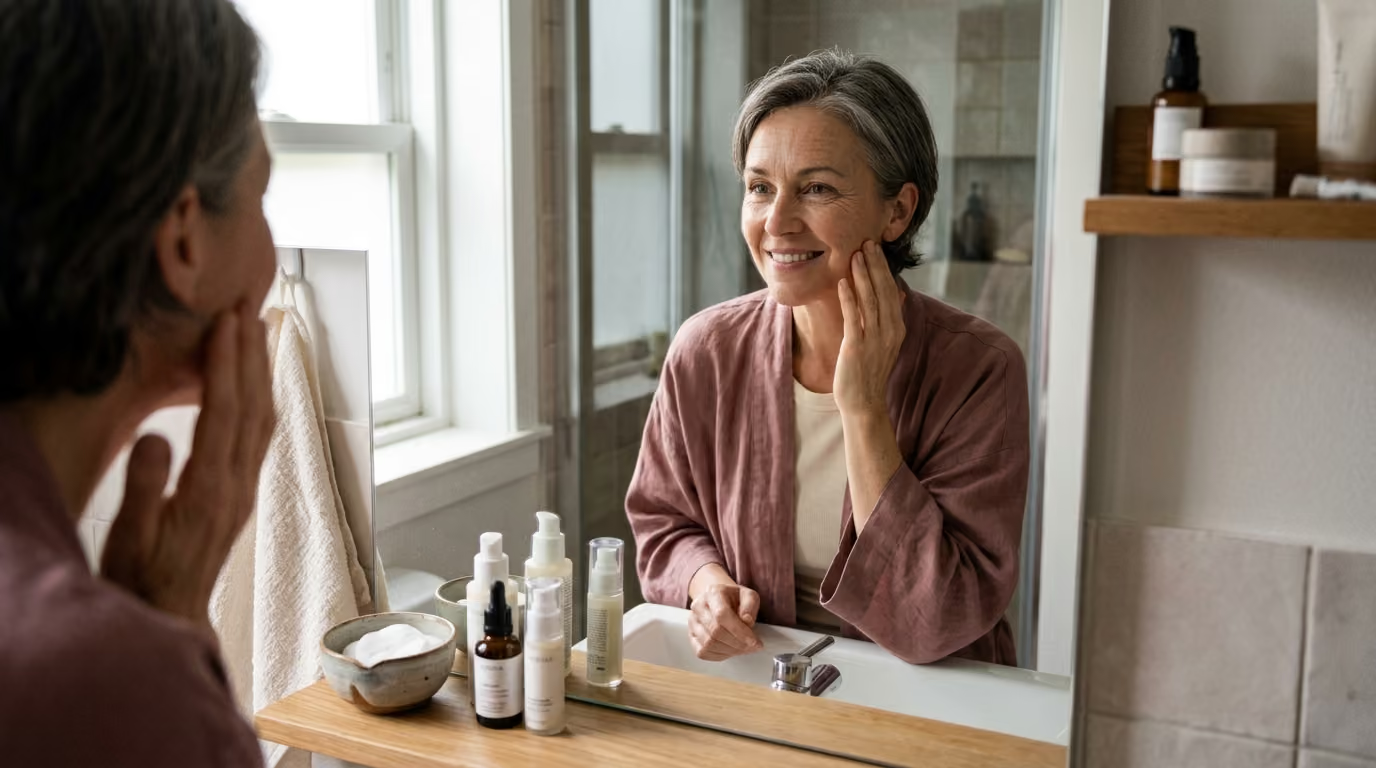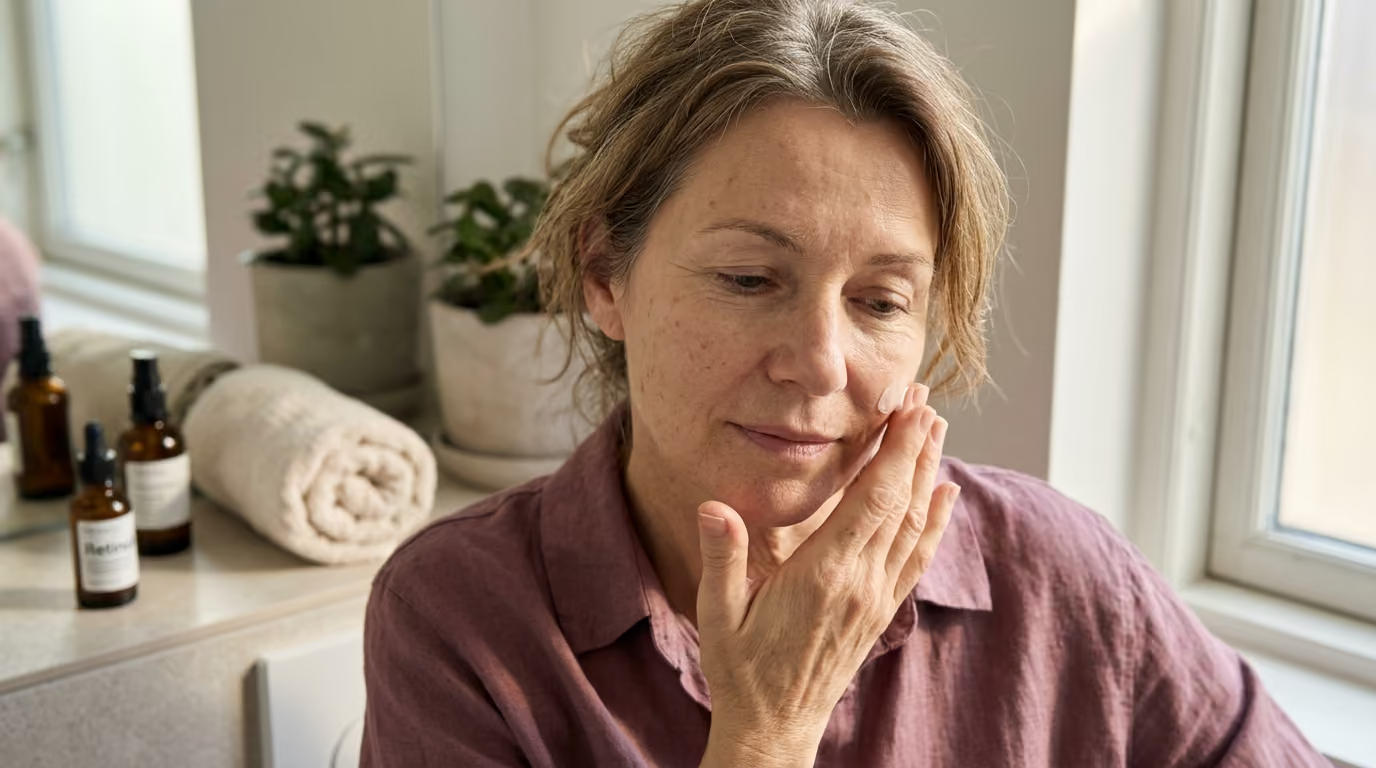

Retinoids do not need to cause severe irritation to smooth fine lines, boost collagen production, and support long-term skin health.





You are likely familiar with the evening skincare dilemma. You uncap a new tube of vitamin A, hoping to improve uneven texture and fine lines, while worrying that your skin barrier might rebel by morning. Skincare discussions often swing between dramatic promises of total transformation and alarming stories of severe flaking. The biological reality sits comfortably in the middle.
Topical retinoids are among the most thoroughly investigated ingredients in dermatologic science. When used thoughtfully, they offer meaningful improvements in surface smoothness, pigmentation balance, and collagen maintenance.
Understanding how these compounds function allows you to build a sustainable routine. Rather than chasing rapid changes through aggressive application, an evidence-based approach prioritizes barrier health and long-term consistency.
Scientific literature over the last five decades provides clear insights into how topical vitamin A compounds interact with human skin. The core findings from clinical trials and molecular research can be summarized into several key principles:
Understanding these molecules begins with understanding their classification. The term retinoid describes a broad family of natural and synthetic vitamin A derivatives.
Prescription all-trans-retinoic acid, known generically as tretinoin, is the active compound that binds directly to cellular receptors. Over-the-counter options such as retinol and retinaldehyde are precursor molecules. These precursors require enzymatic conversion inside living skin cells before they can activate retinoic acid pathways.
Third-generation synthetic retinoids like adapalene target specific receptor subtypes. Originally developed for acne management, adapalene provides notable stability and a lower risk of surface irritation. Meanwhile, potent prescription agents like tazarotene offer strong efficacy for both photoaging and keratinization disorders, though they carry a higher potential for initial skin dryness.
To understand why retinoids are so widely recommended for skin longevity and healthy aging, it helps to examine their activity beneath the surface. Retinoids do not act like simple surface exfoliants. Instead, they function as cell-signaling molecules that reprogram cellular behavior.
The visible surface of your skin depends on a precise balance between cell division in the lower epidermis and cell shedding at the top. With natural aging and ultraviolet exposure, this orderly progression slows down. Cells can accumulate unevenly, leading to a dull complexion, rough tactile texture, and clogged pores.
When a retinoid enters a keratinocyte, it travels to the nucleus and binds to retinoic acid receptors. This interaction stimulates the expression of genes responsible for healthy differentiation.
The practical outcome is an organized epidermal architecture. The stratum corneum, which is the outermost protective layer, becomes more compact and uniform. At the same time, the viable layers of the epidermis experience healthy thickening.
This structural reorganization explains why skin often appears more reflective and luminous after several months of consistent use. It is not merely that dead cells are falling away faster. The entire living tissue is organizing itself with greater structural precision.
Beneath the epidermis lies the dermis, a supportive matrix made largely of collagen and elastin fibers. Ultraviolet radiation generates reactive oxygen species that activate a transcription factor called activator protein 1. This factor triggers the production of matrix metalloproteinases, which degrade existing collagen scaffolding.
Topical tretinoin directly interferes with this destructive signaling cascade. By antagonizing activator protein 1, retinoids shield structural proteins from premature breakdown.
At the same time, retinoids stimulate dermal fibroblasts to produce fresh type-I procollagen. In our comprehensive research into collagen and structural aging, the evidence consistently shows that protecting existing fibers while supporting new synthesis is the most reliable strategy for maintaining dermal integrity over time.
Uneven skin tone and dark spots, known clinically as actinic lentigines, are hallmark signs of cumulative sun exposure. Retinoids influence pigmentation through multiple complementary pathways.
By promoting regular epidermal turnover, retinoids accelerate the upward movement and shedding of melanin-laden keratinocytes. This prevents pigment from pooling into dense, visible clusters on the surface.
Laboratory research also indicates that retinoic acid exerts an inhibitory effect on tyrosinase, a key enzyme involved in melanin production. Over several months, this combined action helps diffuse mottled discoloration, resulting in a more even tone.
Many adults in their thirties, forties, and fifties manage both fine lines and recurring breakouts. Retinoids address blemishes at their root by preventing the formation of microcomedones.
Microcomedones occur when dead skin cells stick together inside the hair follicle, trapping sebum and encouraging bacterial overgrowth. By normalizing follicular desquamation, retinoids keep pore linings clear and functional. This dual benefit makes vitamin A derivatives an exceptional option for adults experiencing simultaneous signs of congestion and photoaging.
Dermatology relies on rigorous clinical trials to separate real biological changes from short-term cosmetic effects. Decades of peer-reviewed data confirm that topical retinoids produce measurable improvements in photodamaged tissue.
A comprehensive systematic review evaluated eight controlled trials involving 1,361 participants with median ages ranging from 29 to 76 years. The study periods spanned from 16 weeks to two years of consistent treatment. Compared to inert vehicle creams, topical tretinoin produced statistically significant reductions in both fine facial wrinkles and deeper coarse lines.
The histological evidence is equally compelling. In a classic clinical investigation evaluating dermal changes, researchers measured procollagen production using skin biopsies. Patients treated with topical tretinoin demonstrated an 80 percent increase in type-I collagen formation. In contrast, participants assigned to the inactive vehicle experienced a 14 percent decrease over the same observation period.
Fibroblasts within the tretinoin group showed a 119 percent increase in collagen immunostaining. These numbers confirm that the visible improvements observed in clinical settings correspond directly to physical remodeling in the dermal matrix.
When evaluating over-the-counter options, researchers have found encouraging parallels. A double-blind clinical trial compared stabilized cosmetic retinol formulations directly against prescription tretinoin across a 12-week timeframe. Both compounds achieved statistically significant improvements from baseline in fine lines, tactile roughness, and mottled pigmentation.
While prescription retinoic acid acts faster, high-quality retinol formulations can achieve comparable cosmetic outcomes over longer durations with lower reported rates of initial discomfort. Synthetic options like adapalene also show strong performance. Although primarily documented for acne clearance, trials evaluating adapalene for photoaging show meaningful improvements in epidermal texture and solar lentigines.
While the benefits of vitamin A derivatives are well documented, scientific honesty requires acknowledging what the research does not show. Retinoids are potent tools for skin health, but they are not universal remedies for every aging concern.
Clinical trials evaluate specific endpoints such as surface roughness, fine lines, and superficial pigment dispersion. Retinoids cannot restore lost subcutaneous fat, reposition shifted facial fat pads, or tighten lax underlying ligaments. Deep folds caused by structural bone resorption and gravity remain largely unchanged by topical skincare.
Furthermore, studies examining over-the-counter retinol must be interpreted carefully. In the cosmetic market, product formulations vary widely in concentration, packaging stability, and lipid delivery systems. A result achieved by a stabilized, airless-pump clinical formula cannot be automatically applied to every retinol serum on beauty store shelves.
It is also vital to distinguish general photodamage from serious medical concerns. Retinoids should never be used to treat undiagnosed, changing, or irregular pigmented spots. Any new or evolving skin lesion requires an evaluation by a qualified medical professional rather than cosmetic experimentation.
Introducing a retinoid successfully is entirely an exercise in dose management and barrier protection. The goal is to build tolerance without triggering inflammatory dermatitis.
During our research into lifestyle, recovery, and environmental aging, we tested how various lifestyle factors impact skin barrier recovery. It was fascinating to see the data clearly show that simple habits like sleep and basic hydration often outperform the most expensive topical treatments. This reinforced our commitment to emphasizing foundational health over product hype.
Before applying your first drop of a retinoid, assess your current baseline skin health. If your moisture barrier is compromised, red, or stinging from other products, pause all active ingredients for two weeks.
Ensure your daily routine includes three essentials: a gentle non-foaming cleanser, a fragrance-free barrier moisturizer rich in ceramides or fatty acids, and a broad-spectrum mineral or chemical sunscreen. Daily ultraviolet protection is non-negotiable, as UV exposure degrades delicate new collagen fibers and worsens pigment instability.
A conservative introduction minimizes the risk of redness, flaking, and discomfort. You can follow this structured progression:
Using more than a pea-sized amount will not accelerate your results. It will only increase the likelihood of localized irritation.
How you apply your retinoid matters just as much as how often you apply it. Follow these steps to protect vulnerable areas:
This buffering method slows the penetration rate of the active molecule, making the adjustment period significantly more comfortable without neutralizing long-term cellular benefits.
Even with careful application, your skin may experience temporary adjustments during the first month. Knowing how to respond prevents minor dryness from escalating into severe barrier damage.
Mild peeling around the chin or nose is a standard initial response. When this occurs, do not attempt to scrub away the flakes with physical scrubs, cleansing brushes, or exfoliating acids.
Instead, reduce your retinoid frequency by one night per week. Increase your use of barrier creams containing physiological lipids, such as ceramides, cholesterol, and free fatty acids. These compounds support stratum corneum repair and reduce trans-epidermal water loss.
Some individuals experience an increase in small breakouts during the first four to six weeks of treatment. This response, often termed purging, happens because accelerated cell turnover brings pre-existing microcomedones to the surface more quickly.
True purging occurs in areas where you typically experience blemishes and resolves relatively quickly. In contrast, if you develop widespread redness, swelling, burning, or hives in areas where you never break out, you may be experiencing contact dermatitis. If these symptoms appear, discontinue the product immediately and allow your skin to recover.
For individuals with deeper skin tones, managing inflammation is critical. When melanocytes in pigmented skin experience irritation or dermatitis, they can overproduce melanin as a defense mechanism. This can cause post-inflammatory hyperpigmentation.
If you notice lingering redness, darkening, or burning sensations, step back immediately. Reduce application frequency and focus on calming, hydrating topicals. Maintaining skin comfort is essential for achieving an even tone.
Topical retinoids are powerful compounds that require clear safety precautions. They must be avoided entirely during pregnancy due to the documented risks associated with systemic vitamin A toxicity.
Individuals who are breastfeeding or actively planning a pregnancy should consult their healthcare provider to discuss safe, pregnancy-compatible alternatives like azelaic acid. Additionally, individuals experiencing active flare-ups of eczema, rosacea, or severe seborrheic dermatitis should resolve the underlying inflammation before introducing topical vitamin A.
Skin is a dynamic organ that changes across every decade of life. A retinoid protocol should reflect your current age, environment, and biological priorities.
During these decades, skin maintains robust natural collagen reserves and rapid turnover rates. However, adult acne, early sun freckles, and post-blemish marks often emerge.
In this stage, retinoids serve primarily to maintain clear pores and defend dermal proteins against early photoaging. A gentle over-the-counter retinol or a third-generation adapalene gel is frequently ideal, providing reliable follicular clearance without unnecessary dryness.
During perimenopause and menopause, declining estrogen levels impact dermal thickness, moisture retention, and microcirculation. Skin often becomes noticeably drier while fine lines and mottled pigmentation become more pronounced.
At this stage, transitioning to prescription tretinoin or a rich retinaldehyde cream can yield substantial benefits. Because the skin barrier produces fewer natural lipids during these years, pairing your retinoid with rich, lipid-replenishing creams is essential for long-term comfort.
Mature skin tends to feature a thinner epidermis, reduced natural oil production, and greater capillary fragility. For older adults, aggressive treatment schedules can easily lead to persistent barrier disruption.
A low-concentration cosmetic retinoid applied two to three nights per week provides meaningful support for cellular organization without overwhelming fragile tissue. Emollient bases containing squalane, shea butter, and ceramides help maintain barrier resilience and comfort.
Misunderstandings about topical vitamin A can lead to improper application and unnecessary frustration. Examining these ideas through a scientific lens brings clarity to your routine.
Many people assume that if their face is not visibly peeling, the retinoid is not working. In reality, peeling is an inflammatory side effect of barrier irritation, not a marker of dermal protein synthesis.
Receptor-mediated collagen stimulation occurs quietly within the deeper dermal layers. The most successful retinoid routines produce visible radiance and firmness over time without persistent flaking or visible irritation.
A 1 percent retinol serum is not equivalent to a 1 percent tretinoin cream. Because retinol must undergo two biochemical conversion steps inside the skin, it is substantially less potent by volume than pure prescription retinoic acid.
Comparing concentrations across different chemical molecules creates confusion. A 0.05 percent tretinoin cream delivers far more active retinoic acid to cellular receptors than a 0.3 percent retinol serum. Always evaluate the specific molecule alongside the stated percentage.
This common concern stems from observing initial flaking on the surface. While retinoids do cause the outermost stratum corneum to become more compact and orderly, they simultaneously stimulate thickening within the living epidermis and dermis.
By boosting cellular density and procollagen production, long-term retinoid use actually reinforces structural skin thickness rather than diminishing it.
Because retinoic acid is sensitive to sunlight, it should always be applied as part of your evening skincare routine. However, the cellular changes induced by retinoids remain active throughout the day.
Newly formed epidermal cells are delicate and vulnerable to ultraviolet radiation. Applying a retinoid at night while skipping broad-spectrum sunscreen in the morning undermines your results and exposes vulnerable skin to renewed photodamage.
The skin around the eyes is significantly thinner and more delicate than the rest of the face, making it prone to irritation and redness. Standard facial retinoids should not be applied directly to the upper or lower eyelids.
If you want to address fine lines around the orbital rim, use a product specifically formulated for the eye area, or apply your regular facial moisturizer as a protective buffer before applying your retinoid nearby.
A skin purge typically presents as small whiteheads or temporary blemishes in areas where you routinely experience congestion. It generally subsides within four to six weeks as cellular turnover stabilizes.
A broken skin barrier presents as widespread redness, stinging when applying basic moisturizers, tight shiny skin, and rough dry patches across the entire face. If your skin stings when applying plain water or gentle lotion, your barrier is compromised and requires immediate rest.
Combining multiple potent active ingredients in the same evening routine frequently leads to barrier breakdown and severe irritation. If you wish to use vitamin C, apply it in the morning underneath your daily broad-spectrum sunscreen to assist with antioxidant defense.
Keep your chemical exfoliants, such as glycolic, lactic, or salicylic acids, separated from your retinoid nights, or set them aside entirely while your skin adapts to vitamin A. You can review our beauty science guides for more detailed protocols on combining active ingredients safely.
Skin biology operates on natural, gradual cycles. While modest improvements in surface smoothness can appear within four to eight weeks, significant remodeling of fine lines and mottled pigmentation typically requires three to six months of regular use.
Because retinoids manage cellular behavior rather than permanently altering your genetics, maintaining your results requires ongoing, consistent application as part of a balanced skincare lifestyle. You can read more within our broader library of healthy aging resources.
Return to this guide whenever you experience shifts in your skin barrier, such as seasonal weather changes, travel to dry climates, or hormonal transitions. You should also revisit these guidelines if you decide to change your retinoid molecule, increase your concentration, or adjust your weekly application frequency.
Healthy, resilient skin is built through consistent care and patience, allowing well-researched ingredients to support your natural biology over time.
Stay connected for research and practical guidance on skin, hair, collagen, nutrition and beauty longevity. Clear ideas for people who want to understand how appearance changes with age and make better-informed choices over time.


Understand your skin, hair and body better without chasing every new trend, treatment or promise.
explore the Blog