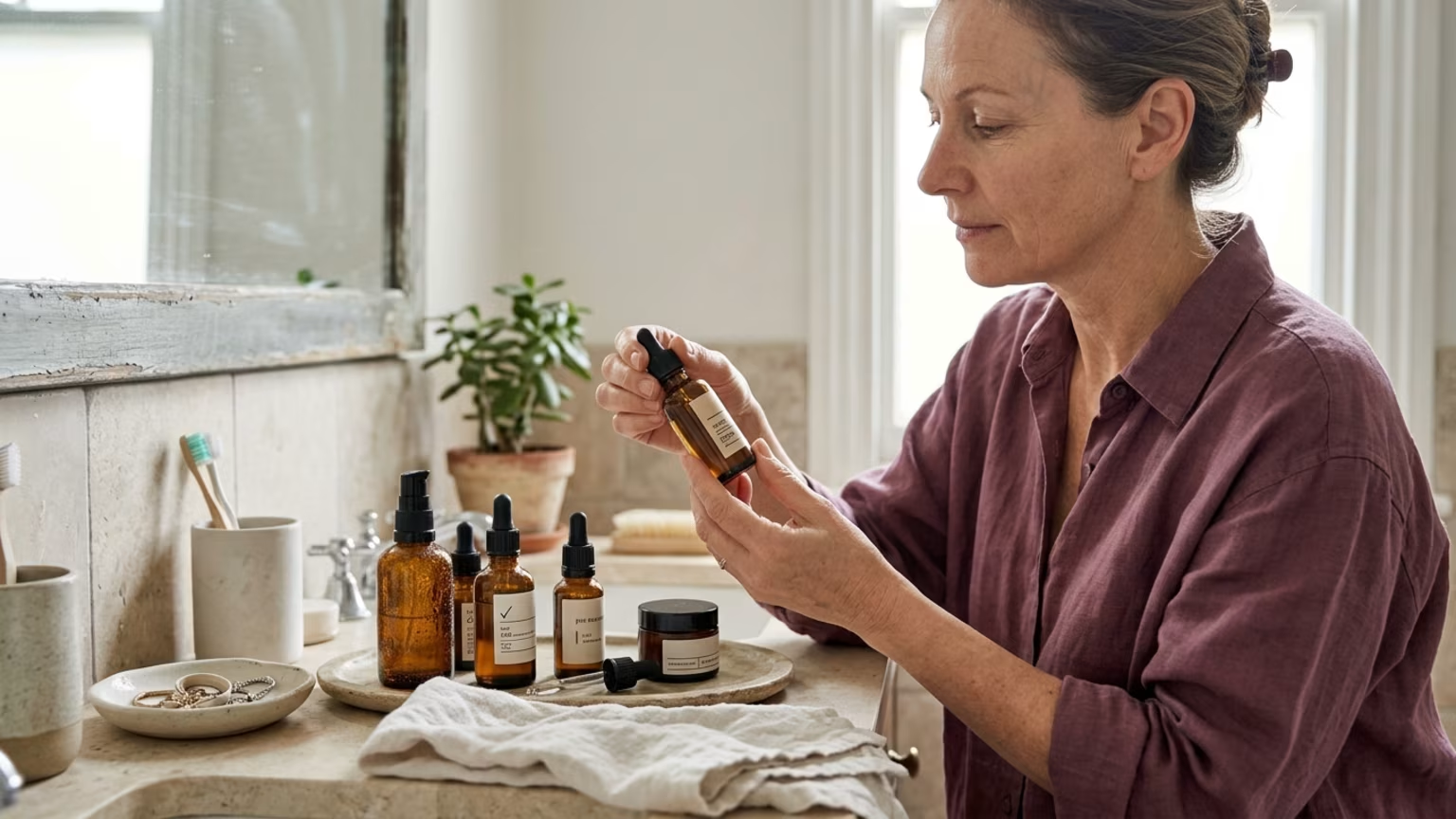

Learn the science behind oral collagen peptides. Understand how they are digested, what clinical data reveals about wrinkles, and how to read supplement labels.





A shopper stands in the supplement aisle, holding two expensive bottles of peptides. She wonders if either powder will actually change her skin, or if she is just buying clever marketing. In August 2026, a new systematic review published in Dermatology Times revealed that oral collagen supplements can improve skin hydration and elasticity. However, the study also noted that benefits for wrinkles remain unproven.
When our team first started reviewing clinical trials on collagen supplementation, we were struck by how often the media misinterpreted the data. A study showing a minor increase in skin elasticity was suddenly headlined as a dramatic transformation. It made us realize how desperately consumers need a translator for beauty science, someone who can state exactly what a study proves and what it does not prove.
The marketing of these products often oversimplifies complex human biology. Consumers are told that swallowing a scoop of powder will directly rebuild their facial tissue. The actual biological process is far more nuanced, and it requires a careful look at digestion. Understanding this process is the first step in separating clinical facts from commercial promises.
The terms hydrolyzed collagen and collagen peptides describe a protein that has been broken down. Enzymatic or chemical processes cut the large molecules into shorter protein fragments. When you swallow these supplements, they do not travel directly to your face intact. Digestion breaks the material down into free amino acids and small peptides.
Some of these resulting fragments contain specific sequences like hydroxyproline. Human studies have detected these collagen-derived peptides in the bloodstream after ingestion. Research from Balance Journal notes that concentrations generally peak within roughly two hours. These levels remain measurable in the blood for several hours.
This data establishes that the peptides are successfully absorbed into the body. However, finding these fragments in the blood only demonstrates bioavailability. Absorption alone does not prove that a supplement produces a visible cosmetic benefit. Much of the digested material is simply metabolized like any other dietary protein you consume.
The leading biological hypotheses suggest these absorbed peptides act as circulating signals. They might influence fibroblast activity and support the production of the extracellular matrix. Laboratory studies show some direct effects on these skin cells. We must remember that a laboratory response does not guarantee a visible result in people.
Understanding how skin collagen works requires distinguishing between elasticity and line reduction. Skin elasticity is typically assessed with an instrument such as a cutometer. This device applies mechanical suction and records how the skin deforms and recoils. This provides an objective physiological measurement of the tissue.
However, instrument-measured elasticity is not the same as a person seeing fewer lines in a mirror. Wrinkle outcomes are measured differently, using standardized photography or volume assessments. These visual endpoints are completely separate from elasticity measurements. A statistically significant change in skin bounce does not automatically equal shallower lines.
The recent August 2026 review reported positive shifts in skin physiology. The researchers found pooled standardized mean differences of 0.44 for hydration and 0.62 for elasticity. They also reported a score of -0.39 for transepidermal water loss. These numbers indicate a measurable improvement in the function and moisture of the skin.
Despite these positive physiological shifts, the data on deep lines tells a different story. The same updated analysis found that apparent benefits for wrinkles and dermal density were not robust. The researchers reached this conclusion after accounting for study heterogeneity and influential outliers. This statistical reality check shows that real-world visual outcomes often differ from controlled trial data.
We must always make scientific uncertainty visible when evaluating dietary supplements. Older evidence painted a slightly more favorable picture of visual skin changes. A 2021 meta-analysis looked at 19 randomized trials involving 1,125 participants. This older review reported improvements in hydration, elasticity, and wrinkle appearance after roughly 90 days.
The difference between that 2021 conclusion and the newer 2026 assessment highlights a major limitation. The strength of a claim depends heavily on the studies included and statistical sensitivity analyses. Individual trials vary widely in daily dose, participant age, outcome instruments, and funding sources. This deep heterogeneity makes it difficult to declare a universal rule for all collagen products.
Another limitation is the increasing use of combination formulas in clinical testing. One 2026 study tested a product containing collagen peptides, ergothioneine, and sodium hyaluronate. The researchers reported improvements in hydration, elasticity, and several wrinkle measures among Chinese women. Because this was a combination formula, we cannot attribute the benefits to the peptides alone.
Learning how to read collagen supplement studies also means understanding product regulations. In the United States, dietary supplements are not approved by the FDA before they are marketed. The FDA generally does not pre-approve supplement products or their labels before sale. Their oversight is primarily focused on post-market monitoring rather than pre-market efficacy reviews.
Manufacturers making claims that a product supports skin elasticity must possess truthful substantiation. However, they generally do not have to submit this supporting evidence to the FDA before marketing. Labels carrying these structure or function claims must include a standard legal disclaimer. That disclaimer simply confirms the FDA has not evaluated the specific claim being made.
Products containing a qualifying new dietary ingredient have a separate requirement. The manufacturer must generally notify the FDA at least 75 days before introducing it to the market. They must submit information concluding the product is reasonably expected to be safe. This notification process is absolutely not the same thing as FDA approval.
The source of the protein is another critical factor to consider when evaluating your options. Supplements are commonly derived from fish, bovine, porcine, or other animal tissues. These different sources matter significantly for common allergies, dietary restrictions, and personal sustainability preferences. A product that works for one person might trigger a severe allergic reaction in someone else.
A label should also provide credible information about the quality testing of the formulation. Independent testing or a transparent certificate of analysis offers highly useful data. These documents provide verifiable facts about ingredient identity, potency, and potential contamination. Keep in mind that a passing quality test establishes safety and purity, but it does not establish that the product smooths lines.
You must also remember that a clinical study on one branded preparation does not apply universally. A positive result for a specific powder does not establish that every gummy, capsule, or drink works equally well. Products can vary wildly in their peptide profile, daily dose, and overall purity. This is why evaluating the exact study-product match is a crucial part of informed purchasing.
Health-conscious women can realistically apply these findings to their beauty longevity routines by setting precise expectations. The most defensible expectation is a possible modest improvement in instrument-measured hydration. You might also see slight changes in elasticity after consistent use for roughly 8 to 12 weeks. You should not expect guaranteed structural changes to deep lines.
When shopping, you must prioritize transparency over glamorous marketing promises. Look for a label that clearly identifies the exact amount of hydrolyzed collagen provided per serving. Avoid products that use proprietary blends, as they make it difficult to determine the actual dosage consumed. You should also check the source, noting if it aligns with your specific dietary needs.
You should also carefully evaluate the specific language used on the packaging. A claim that a powder supports elasticity aligns closely with the current evidence base. Phrases promising to rebuild your dermis or replace injectable treatments overstate the proven science. Keep your claims measured, and always check that the marketing does not promise more than the evidence measures.
Finally, oral supplements should never displace established skin health practices. Daily broad-spectrum sunscreen, adequate dietary protein, and sleep remain foundational to healthy aging. Evidence-supported topical treatments have an entirely different evidence base. A powdered drink should be viewed as a potential addition rather than a replacement for these daily habits.
The field of skin longevity is moving toward more precise distinctions among hydration, barrier function, and elasticity. Researchers are no longer treating all signs of aging as a single clinical endpoint. Will future supplement trials finally isolate specific peptide sequences to prove definitive visual changes in human skin?
For now, your best immediate action step is to audit your current supplement routine. Check the back of your bottle today to ensure the active ingredient is explicitly listed as hydrolyzed collagen or collagen peptides, rather than a vague beauty complex.
Stay connected for research and practical guidance on skin, hair, collagen, nutrition and beauty longevity. Clear ideas for people who want to understand how appearance changes with age and make better-informed choices over time.


Understand your skin, hair and body better without chasing every new trend, treatment or promise.
explore the Blog