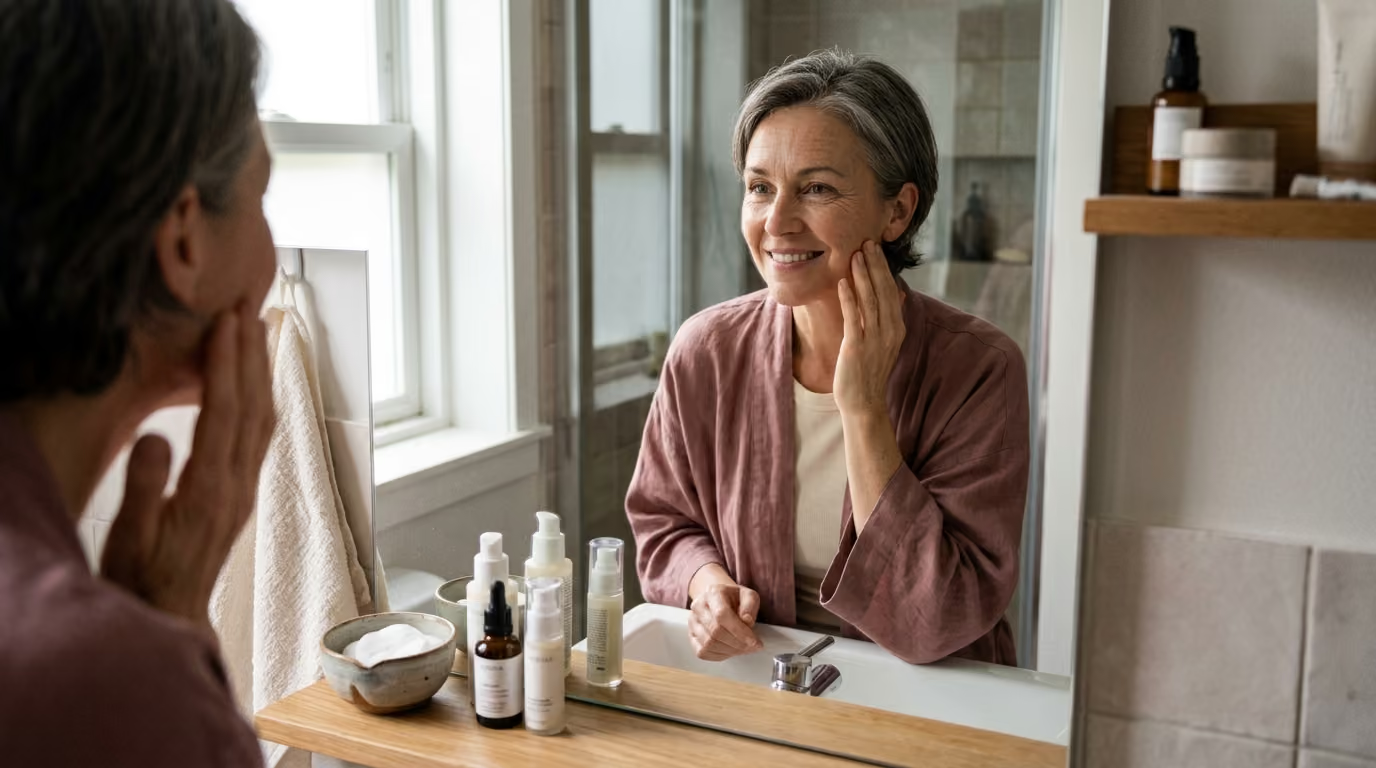

Eight to twelve weeks of daily collagen supplementation improves measurable skin hydration, though clinical trial evidence regarding deeper structural.





Oral collagen supplements are dietary products containing enzymatically broken protein fragments designed to support connective tissue. They are not structural fillers that travel directly from the digestive tract into facial fine lines, nor are they a replacement for fundamental sun protection.
Understanding what oral collagen can and cannot accomplish requires looking past enthusiastic marketing claims. In this guide, we examine the human clinical trials, the biological mechanisms of peptide absorption, the difference between laboratory instrument readings and visible changes, and the methodological nuances that shape modern beauty science research.
To evaluate the validity of collagen supplementation, one must first understand protein digestion. Dietary collagen in its native state is a large, complex triple-helix protein with a high molecular weight. In this raw form, the human gastrointestinal tract cannot absorb it intact.
Hydrolyzed collagen, often labeled as collagen peptides or collagen hydrolysate, undergoes an enzymatic process that breaks long amino acid chains into smaller fragments. When you consume these hydrolyzed peptides, digestive enzymes in the stomach and small intestine break them down further.
A significant portion of ingested collagen is reduced to single free amino acids like glycine, proline, and hydroxyproline. However, research demonstrates that specific low-molecular-weight peptide sequences can survive digestion intact. In particular, dipeptides and tripeptides such as proline-hydroxyproline and hydroxyproline-glycine appear in human blood circulation following oral ingestion.
The presence of these peptides in the bloodstream provides a plausible biological rationale for systemic effects. Rather than acting as passive physical building blocks, circulating peptides may function as biological messengers.
Inside the dermal layer of the skin, specialized cells called fibroblasts manage the extracellular matrix. Fibroblasts synthesize new structural proteins, including type I and type III collagen, elastin, and glycosaminoglycans like hyaluronic acid. In laboratory cell studies, exposure to specific collagen dipeptides appears to stimulate fibroblast activity.
These signaling fragments may bind to cell surface receptors, prompting fibroblasts to increase matrix production. Additionally, some research suggests these peptides may help regulate matrix metalloproteinases, which are enzymes responsible for degrading existing collagen fibers.
While cell cultures demonstrate this signaling potential, laboratory models do not automatically reflect complex human biology. Circulating peptides must reach dermal tissue in sufficient concentrations to trigger a sustained biological response.
Furthermore, the human body does not direct absorbed amino acids or peptide fragments exclusively to facial skin. The body distributes these metabolic resources across all connective tissues, including joints, bones, blood vessels, and internal organs, based on physiological need.
The clinical literature on oral collagen peptides has expanded significantly over the past decade. Most human studies follow a randomized, double-blind, placebo-controlled design spanning eight to twenty-four weeks. Understanding this data requires distinguishing between different physiological endpoints.
Hydration is the most consistently reported positive outcome across published trials. In a representative 12-week study involving 99 healthy Japanese women aged 35 to 50, participants received either a placebo, 1 gram, or 5 grams of collagen peptides daily. Researchers observed statistically significant increases in stratum corneum water content and natural moisturizing factors, accompanied by a decrease in transepidermal water loss.
Interestingly, that same trial found no significant changes in skin elasticity or dermal thickness in either active group. This outcome demonstrates that an improvement in surface moisture does not guarantee a change in deeper structural matrix density.
Skin elasticity is another frequently measured variable in clinical trials. Elasticity is typically evaluated using specialized suction devices called cutometers, which measure how skin deforms and returns to its original position.
In another randomized trial evaluating 1,650 milligrams of collagen peptides daily in 100 women aged 30 to 60, researchers documented improvements in hydration at 4 weeks, with measurable changes in elasticity and surface roughness appearing at 12 weeks. This sequential pattern suggests that surface moisture adjustments often precede measurable mechanical shifts in the tissue.
A separate study evaluated 72 healthy women aged 35 and older who consumed either a collagen supplement or a placebo for 12 weeks. The investigators tracked hydration, elasticity, roughness, and ultrasound-measured dermal density.
The collagen group demonstrated statistically significant improvements across all measured parameters compared to the placebo group. When researchers monitored participants during a four-week washout period after stopping the supplement, the improvements were substantially retained. While encouraging, a four-week retention window does not prove permanent structural rejuvenation or ongoing protection against natural aging processes.
To better understand the range of clinical evidence, researchers often compare how different trials measure outcomes across varying durations:
Dosing comparisons present another important layer of the data. Trials have evaluated daily doses ranging from 1 gram to 10 grams of hydrolyzed peptides. In a 2026 randomized trial involving 119 healthy women aged 35 to 55, participants took either 2.5 grams or 10 grams of bioactive collagen peptides daily for 12 weeks.
Both dosage groups showed statistically significant improvements in skin elasticity and hydration compared to the control group. However, the higher dose of 10 grams did not show a clear, proportional superiority over the 2.5-gram dose.
Across the broader literature, taking higher quantities does not necessarily yield greater physiological improvements. The optimal intake appears tied to the specific peptide sequence and molecular weight distribution rather than raw mass alone.
You can learn more about how dietary choices influence dermal structure in our guide to nutritional strategies for skin support.
When reading scientific papers on collagen, readers often encounter impressive percentage improvements. To interpret these numbers accurately, one must understand the difference between surrogate outcomes and clinically meaningful cosmetic improvements.
A surrogate outcome is an instrumental measurement used as a stand-in for a biological state. These measurements are collected under strictly controlled laboratory conditions using highly sensitive diagnostic tools.
Common surrogate markers in collagen research include:
While these instruments are objective and valuable for research, an instrument-detected change does not always translate into a visible difference to the human eye. A five-percent improvement in cutometer elasticity is statistically significant in a computer model, but it rarely produces an obvious lifting effect in real life.
Similarly, an increase in corneometer readings indicates better surface water retention. This improved hydration can smooth rough outer skin cells, making the skin feel softer and appear temporarily plumper, without altering the underlying collagen framework.
Statistical significance simply indicates that an observed difference between groups is unlikely to have occurred purely by random chance. It does not measure the visual magnitude or practical importance of the change.
When evaluating clinical trials, researchers examine the absolute difference between the active and placebo groups, rather than just the relative change from baseline. A study may report a 20 percent improvement from baseline within the collagen group, but if the placebo group also improved by 15 percent due to seasonal humidity changes or study compliance, the true treatment effect is modest.
Many trials also fail to include blinded photographic evaluations by independent dermatologists or validated patient satisfaction scoring. Without these assessments, connecting a laboratory device reading to a noticeable aesthetic outcome remains challenging.
Exploring the broader beauty science literature helps place these laboratory metrics into a practical everyday context.
While individual trials frequently present optimistic findings, systematic reviews and meta-analyses paint a more complex picture. Meta-analyses combine data from multiple clinical trials to evaluate overall trends across a larger population.
Earlier pooled analyses suggested broad benefits. A 2023 systematic review and meta-analysis evaluated 26 randomized controlled trials with a total of 1,721 participants. The authors reported statistically significant overall improvements in both skin hydration and elasticity for participants consuming hydrolyzed collagen compared to those receiving a placebo.
Another meta-analysis covering 14 trials and 967 participants noted similar improvements in hydration and elasticity, alongside favorable findings for surface roughness.
However, newer and more granular meta-analyses highlight significant methodological concerns that complicate these conclusions. A systematic review reported standardized mean differences of 0.44 for skin hydration, 0.62 for elasticity, and -0.39 for transepidermal water loss.
Yet, when evaluating wrinkle depth across the same trial dataset, the multilevel estimate was approximately -0.02. This indicates essentially zero meaningful reduction in wrinkles across pooled studies.
The authors also concluded that apparent benefits in ultrasound dermal density likely reflected statistical anomalies rather than consistent structural remodeling.
Funding bias represents one of the most critical issues in this research field. A comprehensive 2025 meta-analysis examined 23 randomized controlled trials involving 1,474 participants.
When researchers pooled every available study together, collagen supplements appeared to significantly improve hydration, elasticity, and wrinkle appearance.
However, when investigators separated the studies based on funding source and methodological rigor, the results shifted dramatically:
These subgroup findings do not automatically mean every industry-funded study is fraudulent or incorrect. Supplement companies naturally fund research into their proprietary raw materials, and running clinical trials is expensive.
Nevertheless, when positive results appear primarily in industry-sponsored or methodologically weaker trials, the overall certainty of the evidence decreases.
Small sample sizes further limit the strength of collagen research. Many published studies enroll only 30 to 60 individuals per treatment arm. Small trials can easily detect large swings on sensitive electronic probes, but they often lack the statistical power to reliably detect modest structural changes or rare side effects.
Furthermore, most trials last only 8 to 12 weeks. This timeframe is too short to determine whether oral peptides can alter the biological trajectory of skin over years of continuous use.
Understanding these research limitations is a central component of evaluating collagen and structural aging realistically.
Commercial marketing often simplifies complex biochemistry into catchy phrases that misrepresent how oral supplements function. Comparing these popular claims against established physiology clarifies what you can reasonably expect from a daily supplement.
Reality: The digestive system breaks down ingested collagen into single amino acids and small peptide fragments before absorption. The body does not transport intact collagen molecules to specific facial locations.
Circulating peptides are distributed throughout the entire body, where they may provide raw materials or act as mild cellular signals for connective tissues generally.
Reality: Clinical trials comparing different daily doses show no linear dose-response relationship. A study comparing 2.5 grams with 10 grams daily showed comparable improvements in skin elasticity and hydration in both groups.
Once cellular signaling pathways are engaged and adequate amino acids are available, excess peptides are simply metabolized for energy or used in unrelated protein synthesis.
Reality: Intact collagen molecules are large proteins with molecular weights around 300,000 Daltons. The outer layer of human skin, the stratum corneum, generally prevents molecules larger than 500 Daltons from penetrating deeply.
Topical collagen acts as an effective humectant that binds moisture to the skin surface, improving temporary softness, but it cannot penetrate into the dermis to rebuild matrix structure.
Reality: Ultraviolet radiation is the primary external driver of dermal matrix degradation, triggering enzymes that actively break down collagen networks. No dietary supplement can prevent ultraviolet-induced cellular damage.
Daily broad-spectrum sunscreen, alongside proven topical ingredients like retinoids, remains the foundation for protecting existing dermal structures.
Navigating the supplement market requires a systematic approach to reading product labels and evaluating formulations. If you choose to incorporate a collagen supplement into your routine, focusing on specific quality indicators helps ensure you select an appropriate product.
First, examine the exact form of collagen listed on the ingredient panel. Look for terms like hydrolyzed collagen, collagen peptides, or specific branded peptide preparations that have been evaluated in peer-reviewed clinical trials.
Native, unhydrolyzed collagen is poorly absorbed and will not provide the specific signaling dipeptides studied in dermatological literature.
Second, consider the animal source. Collagen is inherently an animal-derived product, sourced from bovine connective tissue, porcine tissue, poultry, or marine sources like fish skin and scales.
Marine collagen primarily contains type I collagen, which is the predominant structural protein found in human skin. Bovine and porcine sources typically provide a blend of type I and type III collagen.
While manufacturers frequently claim that marine collagen is superior for skin due to smaller peptide particle sizes, clinical trials show positive hydration and elasticity signals across bovine, porcine, and marine preparations. Personal ethical, religious, and dietary preferences should guide this choice.
Be aware that true vegan collagen does not exist in standard dietary supplements. Products marketed as plant-based collagen boosters do not contain actual collagen peptides.
Instead, they consist of amino acid blends (such as glycine, proline, and lysine) combined with vitamins and botanical extracts intended to support the body's natural collagen production. While these nutrients are useful, they do not provide the specific peptide signaling fragments evaluated in clinical collagen trials.
Third, evaluate whether the supplement is a single-ingredient product or a complex multi-ingredient formula. Many commercial powders and liquids blend collagen peptides with ingredients like vitamin C, hyaluronic acid, zinc, biotin, or botanical antioxidants.
Vitamin C is an essential cofactor for the enzymatic hydroxylation of proline and lysine, which stabilizes the collagen triple helix. However, if a clinical trial tests a combination supplement containing collagen, vitamin C, and zinc, researchers cannot determine whether observed skin changes resulted from the collagen peptides or the added micronutrients.
If you already take a daily multivitamin or eat a nutrient-rich diet, single-ingredient collagen peptides allow you to isolate your intake and avoid consuming redundant micronutrients.
Fourth, verify manufacturing standards and independent third-party testing. In the United States, the Food and Drug Administration does not approve dietary supplements for efficacy before they enter the market.
Quality control rests largely with the manufacturer. Look for products verified by independent testing organizations such as NSF International, USP (United States Pharmacopeia), or Informed Choice.
These independent certifications confirm that the product contains the ingredients listed on the label and is free from harmful levels of heavy metals, pesticides, and microbial contaminants.
For a broader overview of how targeted supplementation fits into long-term skin health, read our guide on approaches to skin longevity and healthy aging.
Because skin concerns, baseline nutrition, and age profiles vary, the practical utility of collagen supplements looks different for different individuals. Reviewing realistic scenarios helps illustrate how to set appropriate expectations.
A 42-year-old woman experiences chronic skin tightness and dryness, particularly during winter months, despite using rich topical moisturizers.
In this scenario, adding 2.5 to 5 grams of hydrolyzed collagen peptides daily aligns well with the strongest available clinical evidence.
Studies consistently show improvements in stratum corneum moisture content and reductions in transepidermal water loss within 8 to 12 weeks.
She might reasonably expect a modest improvement in skin softness and surface hydration, but should not expect the supplement to replace her gentle cleansing and topical moisturizing routine.
A 58-year-old individual with a history of significant sun exposure is looking for a way to reverse established facial laxity and deep forehead wrinkles.
Here, oral collagen supplements are unlikely to deliver the desired outcome. The latest meta-analytic research shows near-zero pooled effects for structural wrinkle reduction, especially in high-quality, independent trials.
While taking collagen may slightly improve tissue hydration and elasticity, it cannot remodel sun-damaged dermal architecture.
This individual would achieve more noticeable results by focusing on daily broad-spectrum sun protection, topical retinoids, and professional dermatological procedures.
A 35-year-old individual who follows a pescatarian diet and has a known shellfish allergy wants to try collagen for general skin support.
Careful label evaluation is vital here. While marine collagen fits a pescatarian diet, some marine products are derived from or processed alongside shellfish, presenting a risk of allergic reactions.
The individual must choose a certified fish-derived product that explicitly screens for crustacean allergens, or consult an allergist before beginning use.
Additionally, someone already consuming adequate dietary protein from fish, eggs, and legumes may experience less noticeable benefits from extra amino acids than someone with low baseline protein intake.
A 48-year-old begins taking a 5-gram daily collagen powder and assesses results after three weeks. Seeing no visible change in facial firmness, they wonder whether to discontinue use.
Clinical research indicates that three weeks is generally insufficient to evaluate response. While some hydration markers begin shifting at 4 weeks, measurable changes in elasticity typically require 8 to 12 weeks of consistent daily intake.
A sensible protocol involves committing to a consistent 12-week trial while maintaining a stable topical skincare routine.
If no perceptible changes in skin texture, moisture, or comfort occur after 12 weeks, continuing the supplement indefinitely is unlikely to provide meaningful cosmetic value.
To learn more about how dietary supplements interact with overall lifestyle, explore our complete library of collagen supplement research.
Hydrolyzed collagen supplements demonstrate a favorable safety profile across short-term and medium-term clinical trials. Because collagen is a dietary protein derived from animal connective tissue, the body generally metabolizes it efficiently.
Mild gastrointestinal symptoms represent the most common reported side effects. Some individuals experience minor bloating, a sensation of fullness, mild heartburn, or an unpleasant aftertaste, particularly when consuming higher doses in unflavored powder forms.
Dividing the daily dose between morning and evening or taking the supplement alongside a meal often resolves these mild digestive complaints.
Allergic reactions represent a more serious consideration. Individuals with known allergies to fish, shellfish, eggs, or specific animal proteins must inspect product sourcing carefully.
Marine collagen derived from fish skin or scales can trigger hypersensitivity reactions in allergic individuals. Cross-contamination can also occur in manufacturing facilities that process multiple marine sources.
Always check for clear allergen statements and source disclosures on the packaging.
Contamination risks require attention as well. Because collagen is sourced from animal bones, hides, and scales, heavy metal accumulation (such as lead, cadmium, or arsenic) is a potential concern if raw materials are not properly purified.
Opting for brands that provide batch-specific Certificates of Analysis or third-party verification minimizes exposure to unwanted contaminants.
Long-term safety data extending beyond one to two years of daily continuous use remains limited in the scientific literature. While there is no current evidence suggesting harm from sustained intake in healthy adults, individuals with pre-existing kidney disease, impaired protein metabolism, or those on protein-restricted diets should consult their healthcare provider before introducing daily protein supplements.
Pregnant or breastfeeding individuals should also seek medical guidance, primarily because finished multi-ingredient formulations may contain added botanicals, high-dose vitamins, or sweetening agents that have not been established as safe during pregnancy.
The scientific evidence surrounding oral collagen peptides can be organized into three clear categories:
Approaching collagen supplementation with realistic expectations allows you to make informed, evidence-based decisions for your skin health routine.
Clinical studies have not established an optimal time of day for consuming collagen peptides. Whether you take collagen in the morning with coffee, in an afternoon smoothie, or in the evening before bed does not meaningfully alter its digestion or systemic absorption.
The most important factor in published trials is consistent daily intake over an 8 to 12 week period. Choose a time of day that easily fits your established routine.
Traditional bone broth contains gelatin, which is denatured collagen, along with various minerals and amino acids. However, bone broth differs from hydrolyzed collagen supplements in several ways.
The collagen in bone broth is not enzymatically hydrolyzed into standardized low-molecular-weight dipeptides and tripeptides, meaning its peptide profile and absorption rates vary significantly.
Additionally, the exact protein concentration in homemade or commercial broth varies widely from batch to batch. While bone broth is a nutritious food, it does not deliver the precise, calibrated peptide doses evaluated in clinical trials.
Hydrolyzed collagen peptides are relatively heat-stable compared to raw, native proteins. The enzymatic hydrolysis process already breaks the protein down into small, sturdy peptide fragments.
Adding hydrolyzed collagen powder to hot liquids like coffee, tea, or soup does not significantly degrade these short amino acid chains or reduce their potential bioavailability.
However, boiling collagen at high temperatures for extended periods should be avoided to prevent further unintended thermal degradation.
Pure hydrolyzed collagen peptides are not considered comedogenic and do not directly cause acne vulgaris in clinical literature.
However, some users report experiencing skin breakouts after starting a new collagen product. This reaction is often related to other ingredients in multi-component formulas, such as high doses of biotin, artificial sweeteners, dairy derivatives, or flavoring additives.
If you notice skin irritation or breakouts, try switching to a pure, single-ingredient unflavored peptide powder or discontinue use to evaluate whether your skin clears.
Stay connected for research and practical guidance on skin, hair, collagen, nutrition and beauty longevity. Clear ideas for people who want to understand how appearance changes with age and make better-informed choices over time.


Understand your skin, hair and body better without chasing every new trend, treatment or promise.
explore the Blog