
A clinical guide from Clinicana details how at-home derma rollers impact hair growth, covering safety protocols, needle sizes, and realistic expectations.





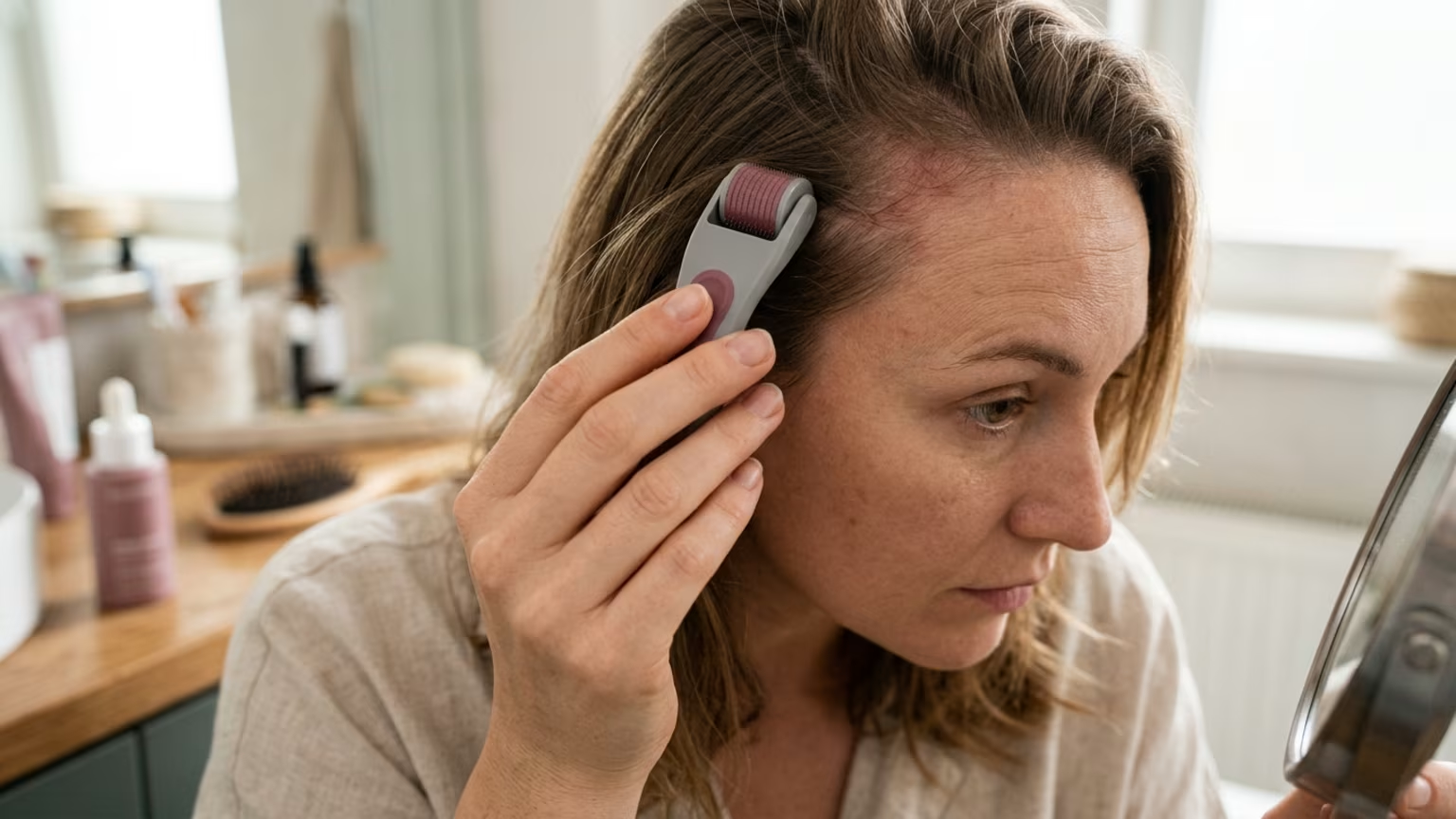
A woman stands before her bathroom mirror holding a spiked roller, unsure if the tool will restore her hair or damage her scalp. A newly published clinical guide from Clinicana recently addressed this exact tension. If you are noticing thinning hair, you are likely wondering: do at-home derma rollers actually work, and are they safe to use? Here is the science-backed answer.
Microneedling works by creating controlled micro-injuries in the scalp to encourage local circulation and follicle-related activity. According to the new guide from Clinicana, these tiny punctures are intended to stimulate the skin's natural repair processes. This mechanical action is designed to support a healthy scalp environment rather than acting as a guaranteed cure. The American Academy of Dermatology notes that early studies suggest this process may stimulate hair growth.
However, medical professionals strongly advise consulting a dermatologist before starting treatment with over-the-counter devices. A derma roller cannot determine whether shedding is due to female-pattern hair loss, telogen effluvium, or scarring disease. Using a microneedling device on the wrong condition could delay appropriate care. Therefore, identifying the true cause of hair loss remains a critical first step.
Many consumers assume that creating physical stimulation will automatically force follicles back into a growth phase. The reality of scalp biology is far more complex than simple mechanical stimulation. While blood flow is important for follicle nourishment, poor circulation is rarely the primary cause of genetic or hormonal hair thinning. Medical assessment is essential to rule out thyroid disease or iron deficiency before trying mechanical devices.
For these reasons, microneedling is being studied primarily as an adjunct to established treatments rather than as a proven stand-alone therapy. At-home derma rolling should not replace a proper diagnostic workup. Women dealing with sudden, diffuse, or painful shedding should prioritize a professional medical evaluation over buying new cosmetic tools.
The most favorable evidence currently available focuses primarily on men using microneedling alongside topical medications. For example, the American Academy of Dermatology describes a study involving men aged 20 to 35 with mild-to-moderate hereditary hair loss. In this 12-week trial, participants using weekly microneedling with twice-daily 5% minoxidil saw significantly more growth than those using minoxidil alone. This highlights the potential of combination therapies.
Another reported study evaluated 100 men with Norwood III vertex or IV hair loss over a similar timeframe. Researchers observed a mean increase of 91.4 hairs/cm² with weekly 1.5-mm microneedling plus twice-daily 5% minoxidil. In contrast, the control group using only minoxidil experienced an increase of 22.2 hairs/cm². This specific numerical result occurred under controlled clinical conditions in male participants.
While a 2024 meta-analysis reported better density and thickness outcomes when microneedling was combined with topical treatment, direct evidence for women is limited. The strongest clinical signals involve male androgenetic alopecia populations rather than adult females. Therefore, women aged 30 to 60 should treat these statistics as suggestive rather than a promise of expected results. Individual outcomes may differ substantially from the controlled data.
Because the core audience for most large trials has been younger or middle-aged men, the long-term effectiveness of solo derma rolling for women remains unverified. Consumers should interpret clinical statistics carefully. An impressive result in a specialized male study does not guarantee that a woman using a roller at home will achieve the same hair density.
Marketing often suggests that deeper needles yield better results, but clinical reviews show no significant difference in hair-count outcomes between protocols using needles of 1.0 mm or less and those using longer needles. One source notes that 0.5 to 1.5 mm is a typical range, with shorter needles designated specifically for home use. Deeper needles increase the risk of discomfort, bleeding, and potential tissue injury. Using more aggressive tools at home is an unsafe assumption.
Because treatment schedules differ among practitioners, some clinics advise a rest period of two to three weeks between sessions. There is no single universally accepted home protocol established in the current medical literature. The exact recommendations vary widely depending on the device brand and the specific clinic providing the guidance. Readers should always follow the device manufacturer's instructions.
The broader hair-restoration field continues to investigate microneedling-assisted delivery of other treatments. However, registered studies in this area indicate ongoing research interest rather than proof of routine safety for consumers. Users should seek clinical guidance before increasing needle depth. Treating inflamed skin or combining long needles with active topical products requires professional oversight.
A cautious approach is always the best strategy when introducing physical trauma to the scalp. Shorter needles may provide enough superficial stimulation without the severe risks associated with deeper clinical devices. Prioritizing safety over intensity ensures that the scalp barrier remains intact and functional.
Proper hygiene is non-negotiable because a roller repeatedly placed on the scalp can easily transfer microorganisms. Clinicana recommends cleaning the roller head in 70% isopropyl alcohol for 10 to 15 minutes before and after each use. The clinic advises washing the scalp with a mild shampoo and ensuring it is completely dry. The scalp must be free from styling products, synthetic hair fibers, and excess sebum.
When applying the device, Clinicana suggests rolling affected areas in horizontal, vertical, and diagonal directions. The protocol calls for making approximately four to five passes per area with gentle pressure. To minimize damage, it is absolutely critical to lift the device between passes rather than dragging it across the skin. Dragging can cause unwanted tearing and increase the risk of permanent scarring.
Users should never needle over active skin infections, painful pustules, open wounds, or significantly inflamed skin. The American Academy of Dermatology also advises against treatment for individuals with a history of keloids or a weakened immune system. Operating a microneedling device over compromised skin can spread bacteria and worsen underlying dermatological conditions.
Finally, Clinicana advises replacing the roller after approximately 10 to 12 uses to maintain needle integrity. Alcohol disinfection instructions should not be treated as permission to reuse a device that is damaged or visibly dull. Dull needles can cause unnecessary trauma, leading to increased inflammation and delayed healing. Following a strict replacement schedule protects the scalp from mechanical damage.
Short-term irritation, pinpoint bleeding, mild swelling, and flaking are recognized as common possible effects of the procedure. Clinicana also warns that temporary shedding may occur after treatment, which should not automatically be interpreted as permanent follicle damage. However, severe shedding accompanied by pain or patchy loss requires immediate medical assessment. Continued heavy shedding is not a routine aftercare effect.
Less common complications reported in clinical guidance include infection, pigmentary changes, persistent post-inflammatory pigmentation, and scarring. Granulomatous reactions and herpes reactivation have also been documented in medical safety summaries. These serious side effects highlight why appropriate medical training is often recommended for deeper procedures. If spreading redness, fever, or persistent bleeding occurs, users must stop treatment and consult a doctor.
Aftercare requires careful attention to product application. The reviewed guidance cautions against applying potentially irritating products immediately to freshly needled skin, while some commercial protocols encourage rapid application to increase absorption. This conflict is important because increased penetration can cause unwanted systemic absorption or severe localized irritation.
Users should not apply active ingredients like minoxidil, finasteride, acids, or essential oils immediately after needling without professional approval. A qualified clinician or pharmacist should determine whether and when topical medicines are safe to use. Prioritizing gentle barrier protection in the days following treatment is the safest approach for long-term scalp health.
While microneedling shows fascinating potential as a supportive therapy for thinning, long-term hair wellness requires prioritizing professional diagnosis over aggressive home treatments. Before purchasing a derma roller, schedule a baseline evaluation with a board-certified dermatologist to map out the exact root cause of your shedding.
Stay connected for research and practical guidance on skin, hair, collagen, nutrition and beauty longevity. Clear ideas for people who want to understand how appearance changes with age and make better-informed choices over time.




Understand your skin, hair and body better without chasing every new trend, treatment or promise.
explore the Blog