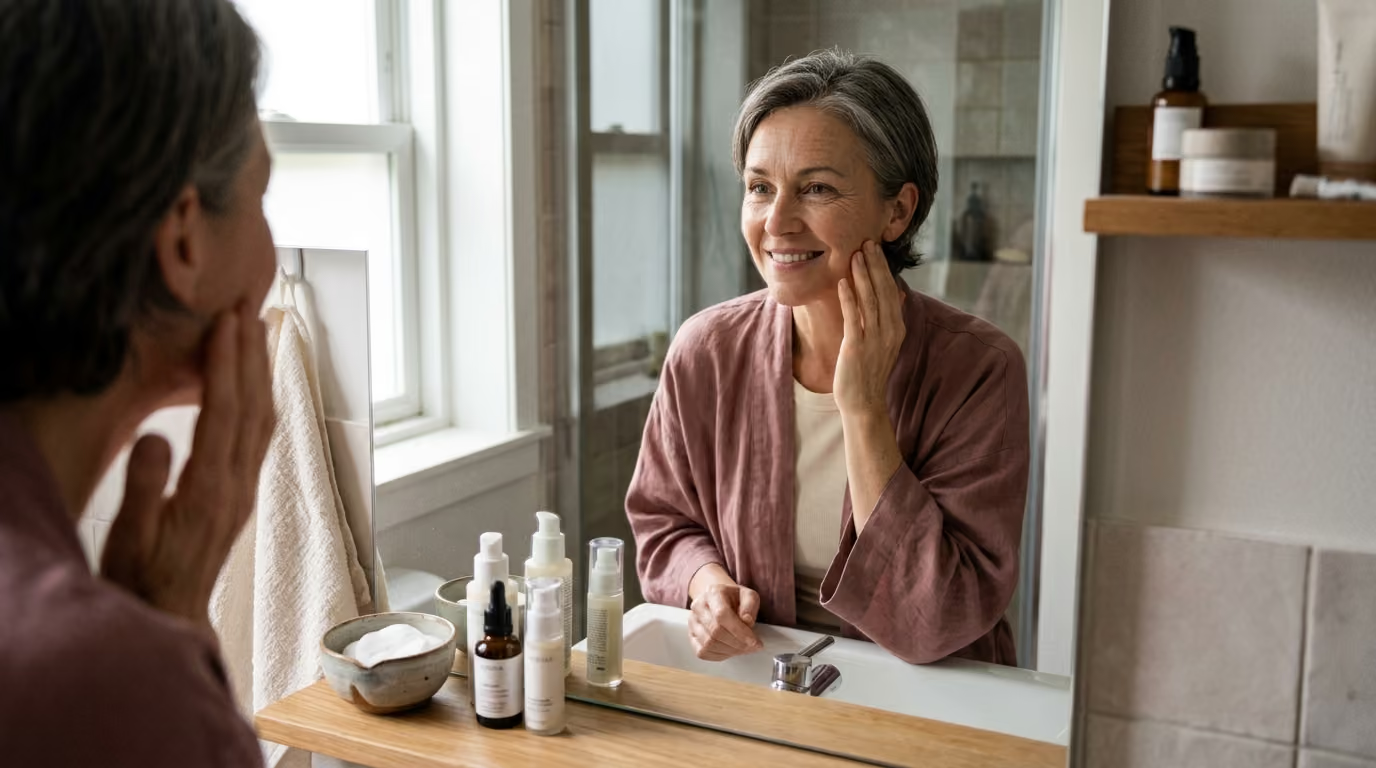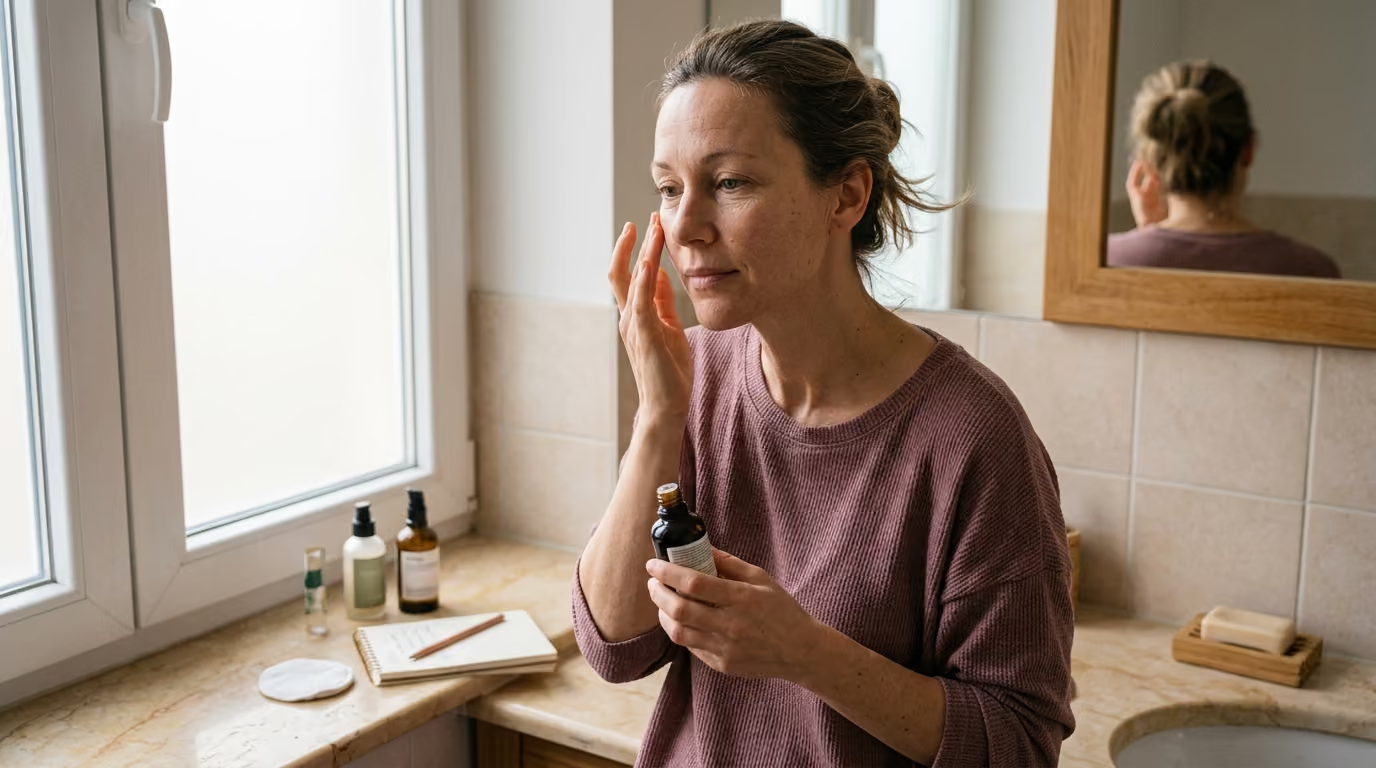

Fine lines and sudden skin sensitivity often signal an overwhelmed barrier that benefits from a strategic, science-based longevity routine instead of more active products.





Most conventional skincare advice operates on the assumption that visible skin health requires an ever-expanding routine of complex serums. When people notice subtle textural shifts, redness, or pigment changes, the instinct is often to introduce multiple strong products at once. This additive approach frequently backfires by compromising the stratum corneum, increasing subclinical inflammation, and forcing individuals into a cycle of reactivity.
True skin longevity is not about piling on active ingredients. It is a systematic process of cumulative risk reduction, barrier preservation, targeted correction, and long-term adherence.
When we first started reviewing clinical trials on collagen supplementation and topical formulations, our team was struck by how often the media misinterpreted the data. A study showing a minor increase in skin elasticity was suddenly headlined as a major breakthrough. It made us realize how desperately consumers need a translator for beauty science. People need clear guidance that states exactly what a study proves and what it does not prove.
Building a sustainable routine requires looking at your unique biology, environmental exposures, and lifestyle constraints. The following framework provides an evidence-based roadmap to assess, protect, correct, and maintain your skin over time.
Skin longevity is the long-term preservation of cutaneous structure, physiological barrier integrity, cellular resilience, and tissue health. Rather than chasing short-term cosmetic improvements, this approach focuses on reducing cumulative damage and supporting the tissue as it matures.
Research across dermatology and geroscience establishes several baseline facts regarding how skin ages:
A successful plan treats skin care as preventive medicine. For deeper context on cellular aging, read our guide on skin longevity and healthy aging to understand how tissues change across decades.
Understanding the distinction between intrinsic and extrinsic drivers allows you to focus resources where they matter most. Intrinsic aging proceeds at a biologically set pace influenced by genetics and endocrine changes. Extrinsic aging, by contrast, represents cumulative structural damage that you can meaningfully reduce.
Personalization begins by auditing your individual exposures, biological sensitivities, and health history. Without this foundation, introducing active ingredients is simply guesswork.
The biological machinery of the skin relies on a delicate balance between structural protein synthesis and continuous environmental defense. The outermost layer, the stratum corneum, functions as a brick-and-mortar shield. Corneocytes act as the bricks, surrounded by a lipid matrix composed of ceramides, cholesterol, and free fatty acids.
When external aggressors disrupt this lipid matrix, transepidermal water loss increases rapidly. This structural breach allows irritants, micro-particulates, and pathogens to penetrate the deeper viable epidermis. The resulting immune response triggers the release of pro-inflammatory cytokines such as interleukin-1 alpha and tumor necrosis factor-alpha.
Chronic low-grade inflammation, often termed inflammaging, accelerates the degradation of structural collagen and elastin. In the dermis, specialized fibroblasts synthesize type I and type III collagen fibrils, which provide tensile strength and firmness. Ultraviolet radiation and environmental oxidants stimulate cell-surface receptors that upregulate activator protein-1. This transcription factor activates matrix metalloproteinases, which are enzymatic proteins that actively fragment collagen fibers and impair new matrix formation.
Visible light and ultraviolet radiation also activate melanocytes, the specialized cells responsible for pigment synthesis within the basal layer of the epidermis. Through a process called melanogenesis, the enzyme tyrosinase converts the amino acid tyrosine into melanin pigment packages called melanosomes. In skin with higher baseline melanin or in skin experiencing hormonal fluctuations, visible light wavelengths can trigger sustained pigment production. This often leads to melasma or post-inflammatory hyperpigmentation.
Hormonal shifts introduce further biological changes. During perimenopause and menopause, declining estrogen levels reduce dermal thickness, glycosaminoglycan synthesis, and natural sebum production. Estrogen receptors in dermal fibroblasts play a key role in maintaining collagen density and moisture retention. When circulating estrogen drops, the skin often experiences increased dryness, decreased structural suppleness, and heightened neurosensory reactivity.
Evidence-based skincare requires separating marketing enthusiasm from reproducible clinical findings. Decades of dermatological research show that only a small number of interventions consistently alter the trajectory of visible skin aging.
The most compelling interventional evidence exists for daily broad-spectrum photoprotection. In a landmark randomized controlled trial published in the Annals of Internal Medicine, researchers evaluated 903 adults over a 4.5-year period. The participants were assigned to either daily broad-spectrum sunscreen application or discretionary sunscreen use.
The daily-sunscreen group showed no detectable increase in microtopographic skin aging over the 4.5-year trial. In contrast, the discretionary group demonstrated a 24% increase in skin aging markers over the same duration. This trial provided clear, prospective evidence that consistent daily photoprotection prevents cumulative extrinsic structural damage.
Topical retinoids represent the most thoroughly investigated topical active category. Prescription tretinoin, tazarotene, and over-the-counter retinol have demonstrated consistent structural benefits in randomized, vehicle-controlled clinical trials. Biopsy-backed studies confirm that topical tretinoin stimulates type I procollagen gene expression, reduces dermal matrix degradation, and normalizes epidermal keratinocyte differentiation.
Clinical studies report improvements in fine wrinkling, tactile roughness, lentigines, and mottled hyperpigmentation. These positive histological and clinical changes become measurable after three to six months of regular use, with continuous benefits documented through 24 months of consistent therapy.
Recent research has also illuminated the clinical importance of visible light protection, particularly for individuals with Fitzpatrick skin types IV through VI. Standard non-tinted mineral and chemical sunscreens block ultraviolet radiation effectively, but they do not block visible light.
Clinical trials have shown that visible light, especially short-wavelength high-energy visible light, induces significant and long-lasting hyperpigmentation in darker skin phototypes. Formulations containing iron oxides provide a physical barrier against visible light wavelengths. Studies demonstrate that using iron-oxide-tinted formulations significantly reduces pigment darkening and helps prevent the relapse of conditions like melasma.
While clinical trials provide valuable guidance, they also present clear limitations that must be understood. Skincare studies often enroll narrowly defined cohorts under strictly controlled conditions, which may not reflect real-world usage.
Many cosmetic studies rely heavily on subjective self-assessment questionnaires, which introduce significant reporting bias. Commercial trials frequently use small sample sizes, ranging from 15 to 40 participants, and run for short durations of four to eight weeks. These brief timelines are insufficient to evaluate genuine structural collagen remodeling or long-term barrier tolerance.
Furthermore, systemic interventions often fail to replicate the results suggested by preliminary laboratory data. In the same 4.5-year randomized trial that proved sunscreen efficacy, researchers also tested daily oral beta-carotene supplementation. The data revealed that beta-carotene supplementation produced no statistically significant difference in skin aging outcomes compared to placebo.
Topical peptides present another area where marketing frequently outpaces clinical data. While synthetic peptides demonstrate promising signaling activity in isolated cell cultures, their ability to penetrate an intact stratum corneum and trigger dermal remodeling in living human skin remains variable.
Treatment tolerance also represents a major practical boundary. A topical active may demonstrate profound efficacy in a clinical setting, but it offers zero value if it causes severe irritant dermatitis that forces the user to discontinue treatment. The scientific literature consistently highlights that patient adherence and barrier tolerability are the primary determinants of real-world success.
Personalizing a skin longevity plan requires a disciplined prioritization model. Rather than attempting to address every cosmetic concern simultaneously, interventions should be ranked based on evidence, individual vulnerability, and lifestyle reality.
To establish clarity, our research team utilizes a practical planning heuristic:
Priority equals the product of severity, preventability, evidence, and adherence, divided by biological risk.
This decision model ensures that high-impact, preventative interventions are established before higher-risk treatments are introduced.
Photoprotection represents the highest-priority intervention for every skin profile. Because cumulative ultraviolet and visible light exposure drive the vast majority of extrinsic tissue breakdown, sun protection delivers the highest preventative return on investment.
Barrier stabilization takes precedence over any corrective active. A person presenting with stinging, active flaking, or chronic redness must repair the stratum corneum before introducing exfoliating acids or retinoids. Applying strong actives to a compromised barrier exacerbates inflammation and worsens underlying concerns.
Medical evaluation is mandatory whenever atypical lesions, rapid pigmentary shifts, or chronic inflammatory eruptions appear. Skincare products are formulated for healthy tissue maintenance, not for treating undiagnosed dermatological conditions.
Once the foundation is secure, select a single active ingredient that targets your primary aesthetic or structural priority. This singular focus allows you to monitor tolerance accurately and prevents ingredient interactions that provoke irritation.
In-office treatments such as chemical peels, microneedling, or laser therapies should only be considered after a functional home routine has been maintained for several months. High-intensity procedures cannot compensate for an unstable barrier or inconsistent daily sun protection.
A successful routine is built on simplicity, mechanical gentleness, and ingredient compatibility. The goal is to construct a baseline framework that can be sustained consistently across decades.
The morning protocol is designed entirely around environmental defense, hydration retention, and photoprotection.
Cleanse only as necessary based on your skin type. Dry, mature, or barrier-compromised skin often benefits from a simple lukewarm water rinse in the morning. Oily skin profiles can utilize a mild, non-stripping gel cleanser that removes overnight sebum without disrupting surface lipids.
Apply a well-formulated moisturizer or hydrating serum containing physiological humectants. Ingredients like glycerin, hyaluronic acid, and sodium PCA draw water into the upper layers of the epidermis. This improves structural suppleness and optimizes cellular enzyme function.
Apply a generous layer of broad-spectrum sunscreen with an SPF rating of 30 or higher. The product must provide balanced protection against both UVB rays, which cause erythema, and UVA rays, which penetrate deeply to degrade dermal collagen. If you have a deeper phototype or struggle with hyperpigmentation, choose an iron-oxide-tinted formulation to block visible light wavelengths.
The evening protocol centers on gentle purification, tissue recovery, and controlled cellular stimulation.
Remove accumulated sunscreen, environmental pollutants, and makeup without aggressive mechanical scrubbing. If you wear water-resistant sunscreen, use a gentle cleansing oil or micellar water followed by a mild water-based cleanser. Avoid harsh washcloths or abrasive cleansing tools that create micro-tears in the stratum corneum.
Apply your chosen active ingredient to clean, dry skin. If you are introducing a topical retinoid, use a pea-sized amount for the entire face. To learn more about ingredient formulations and physiological delivery systems, review our analysis in beauty science.
Seal the skin with a nourishing moisturizer rich in barrier-identical lipids. Look for formulations containing ceramides, cholesterol, squalane, and fatty acids. These lipids integrate into the intercellular matrix, preventing overnight moisture loss and mitigating potential irritation from active treatments.
Every individual presents a unique combination of biological traits, hormonal dynamics, and environmental exposures. Skincare personalization requires matching your daily routine to your specific physiological profile.
During hormonal transitions like menopause, declining estrogen levels reduce sebum output and glycosaminoglycan synthesis. The skin becomes thinner, drier, and more susceptible to neurosensory irritation.
The priority for this profile is aggressive moisture retention and absolute elimination of unnecessary irritants. Individuals should avoid synthetic fragrances, drying alcohols, and aggressive physical scrubs.
Adult blemish development involves a combination of follicular hyperkeratinization, excess sebum production, and localized microbial dysbiosis. The common mistake is utilizing overly aggressive astringents that strip the barrier, which ultimately exacerbates inflammation.
The objective is to normalize follicular cell turnover while maintaining stratum corneum hydration. You can find detailed strategies for balancing lipid production in our comprehensive skin research archive.
Individuals with Fitzpatrick skin types IV through VI possess highly active melanocytes that respond readily to inflammation and light exposure. In this demographic, post-inflammatory hyperpigmentation and melasma are significant concerns.
The core strategy requires strictly minimizing cutaneous inflammation while providing robust protection against both ultraviolet radiation and visible light.
Athletes, outdoor workers, and individuals living at high altitudes or equatorial latitudes face an elevated exposome burden. This group experiences intense UV radiation, infrared heat, wind exposure, and environmental particulate pollution.
The focus must be on durable photoprotection, frequent reapplication, and robust antioxidant defense.
Pregnancy involves dynamic hormonal fluctuations that frequently trigger melasma and increased vascular reactivity. Additionally, certain gold-standard ingredients are clinically contraindicated during pregnancy and breastfeeding.
Clinical references strongly advise discontinuing oral and topical retinoids during pregnancy due to safety considerations. Hydroquinone is also generally avoided due to its high systemic absorption rate.
Skincare adjustments should be deliberate, methodical, and guided by objective tracking rather than emotional reactions to daily fluctuations. Biological remodeling of the epidermis and dermis requires months of sustained application.
To accurately gauge the performance of your routine, establish an objective tracking schedule. Take standardized photographs once every four weeks rather than scrutinizing your skin daily in magnifying mirrors.
Capture photos under identical conditions:
Alongside photographs, rate your skin comfort on a 1-to-10 scale across three subjective metrics: tightness after cleansing, stinging during product application, and persistent daytime redness.
Biological turnover of the epidermis takes roughly 28 to 40 days, while dermal collagen remodeling requires 12 to 24 weeks. Evaluate your routine on a structured 12-week review cycle before altering your active treatments.
Use the following decision pathways to guide your adjustments:
If your barrier is healthy and you experience no stinging or flaking, your skin has adapted to the baseline routine. You may cautiously increase the application frequency of your targeted active, for example moving a retinoid from two nights weekly to three or four nights weekly. Alternatively, you may discuss a higher active concentration with your dermatologist.
This is a clear clinical indicator of stratum corneum impairment. Immediately suspend all targeted actives, exfoliating acids, and cleansing brushes. Return strictly to a gentle cleanser, a lipid-rich barrier cream, and daily sunscreen for a minimum of two to three weeks until baseline comfort is fully restored.
Examine your photoprotection habits immediately. Ensure you are applying the recommended two milligrams per square centimeter of sunscreen and reapplying during outdoor exposures. If you are using an untinted sunscreen, transition to an iron-oxide-tinted formula to ensure protection against visible light. Verify that your active treatments are not inducing low-grade inflammation, which can drive rebound pigmentation.
Personalized skin care does not require massive financial expenditure. Allocating resources effectively means investing where formulation science matters most.
Navigating the skincare industry requires distinguishing verifiable biological mechanisms from commercial marketing narratives.
Reality: SPF numbers reflect protection against UVB radiation under rigorous laboratory conditions using a standardized application thickness. An SPF 100 product does not provide double the protection of an SPF 50 product, nor does it allow you to stay outdoors indefinitely.
Real-world application is often uneven and thin, and sunscreens degrade due to sebum production, sweating, and mechanical touching. Broad-spectrum protection, adequate dosing, and regular reapplication remain necessary regardless of the labeled SPF number.
Reality: Tingling, burning, and persistent stinging are neurosensory indicators of stratum corneum disruption and acute chemical irritation. Actives do not need to burn to stimulate cellular repair.
Allowing products to cause chronic irritation upregulates inflammatory pathways that degrade structural collagen and accelerate visible tissue aging.
Reality: Natural botanical extracts, essential oils, and unrefined plant fragrances are complex chemical mixtures containing dozens of individual compounds. They represent some of the most frequent causes of allergic contact dermatitis and phototoxic reactions in clinical dermatology.
Refined, synthetic, and fragrance-free formulations are often far better tolerated by sensitive or barrier-compromised skin.
Reality: In-office procedures like lasers, chemical peels, and microneedling create controlled tissue micro-injuries to stimulate wound healing and collagen synthesis. However, these interventions cannot shield cells from daily ultraviolet damage or restore everyday lipid loss.
Undergoing expensive clinical treatments while neglecting daily photoprotection and barrier care leads to poor results and heightened risks of post-inflammatory complications.
Reality: While fine lines and gradual pigment changes are typical features of biological aging, rapidly changing spots, asymmetrical pigmented lesions, non-healing sores, and persistent scaling are potential warning signs of cutaneous malignancies.
Cosmetic products should never be used as a substitute for professional evaluation. Any changing or symptomatic lesion requires prompt examination by a board-certified dermatologist.
Clinical studies indicate that cellular changes, such as improved stratum corneum compaction and increased glycosaminoglycan synthesis, begin within the first month. However, visible improvements in fine lines, tactile firmness, and mottled pigmentation generally require three to six months of consistent use. Maximum structural remodeling is typically observed after 12 to 24 months of continuous adherence.
Using alpha-hydroxy acids or beta-hydroxy acids alongside topical retinoids significantly increases the risk of barrier impairment and irritant contact dermatitis. Most individuals achieve superior long-term results by relying primarily on a retinoid for cellular turnover. If exfoliating acids are utilized, they should be applied on alternate evenings or reserved for occasional use, and suspended immediately if stinging occurs.
Mineral filters, specifically zinc oxide and titanium dioxide, are inorganic compounds that primarily reflect and scatter UV rays while also absorbing a portion of UV radiation. Chemical filters are organic carbon-based molecules that absorb UV photons and convert them into harmless heat energy. Both filter types provide effective photoprotection when properly formulated, so your choice should depend on individual skin tolerance, aesthetic preference, and whether visible light protection from a tinted formula is required.
Declining estrogen levels during perimenopause and menopause downregulate sebum production and reduce the synthesis of natural hyaluronic acid and ceramides in the dermis and epidermis. This accelerates transepidermal water loss and thins the dermal matrix. Managing menopausal skin requires transitioning to richer, lipid-replenishing moisturizers, using gentle cleansing agents, and eliminating irritating fragrances.
Double cleansing is beneficial if you wear long-wearing, water-resistant sunscreen, physical mineral pastes, or heavy makeup, as an initial oil-based cleanser dissolves these lipophilic substances efficiently. However, if you wear light daily sunscreen and no makeup, a single wash with a thorough, non-stripping water-based cleanser is entirely sufficient and helps avoid over-cleansing.
By approaching your skincare as an evolving, evidence-based system of risk reduction and physiological support, you can build a sustainable routine that preserves the health, function, and resilience of your skin over the course of your life.
Stay connected for research and practical guidance on skin, hair, collagen, nutrition and beauty longevity. Clear ideas for people who want to understand how appearance changes with age and make better-informed choices over time.


Understand your skin, hair and body better without chasing every new trend, treatment or promise.
explore the Blog