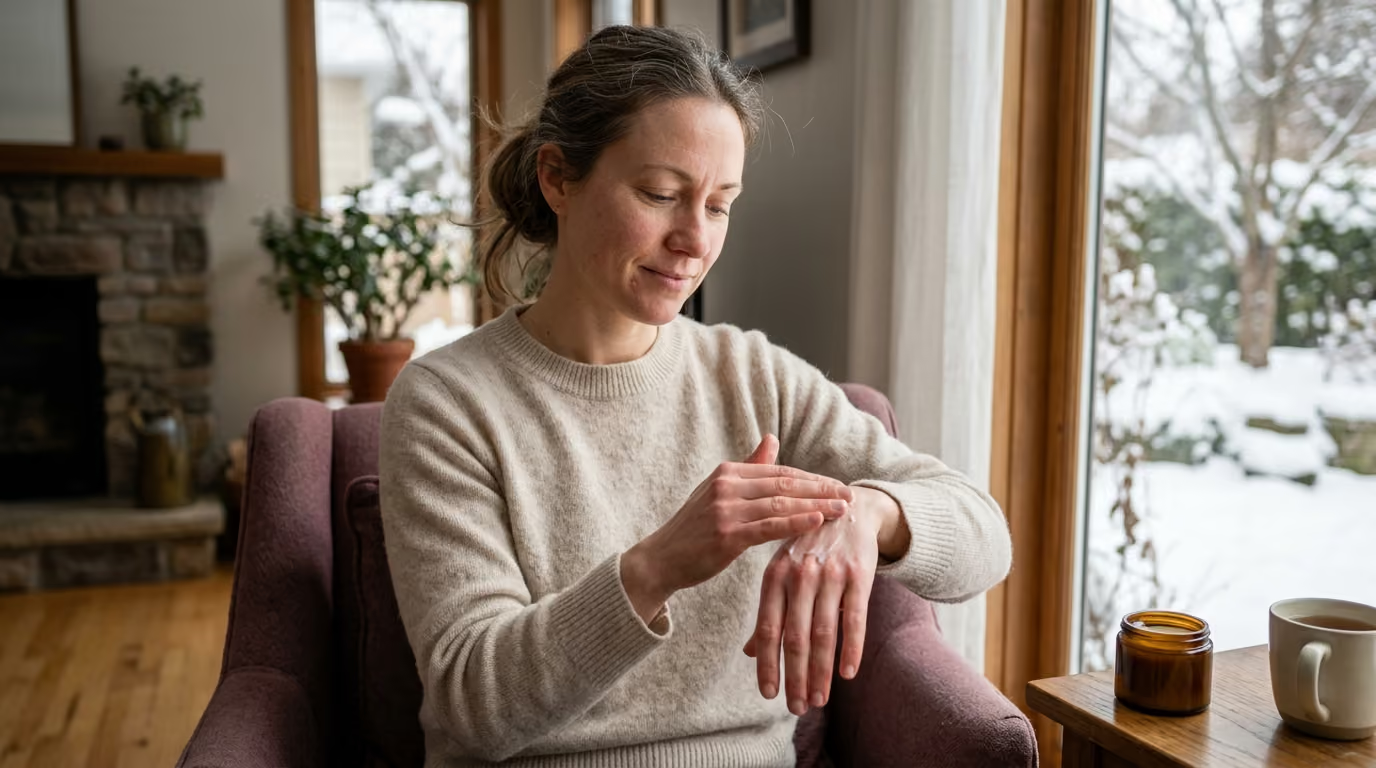

Cosmetic fixes promise instant rejuvenation, but true physiological recovery depends on sleep, nutrition, and cellular repair across skin, hair.





Physiological recovery is not a luxury spa treatment or an elaborate ten-step skincare routine. It is the biological capacity of your body to restore internal balance after encountering daily physical, metabolic, and environmental stressors. These stressors include sleep restriction, intense exercise, emotional strain, ultraviolet light, poor nutrition, and ambient pollution. True recovery is an active, continuous biological system rather than a collection of specialized products.
Understanding recovery requires looking beyond cosmetic promises and examining the cellular processes that rebuild tissue. When your body experiences stress, resources are directed toward immediate survival and adaptation. Repair processes in the skin, hair follicles, and connective tissues slow down until the nervous system signals safety and nutritional resources become available. By understanding how rest, nutrition, movement, and stress regulation interact, you can build daily habits that preserve physical function, maintain the skin barrier, and support hair density over time.
This guide examines the scientific evidence behind recovery. It details how tissues repair themselves, what clinical research confirms about daily lifestyle habits, where current science reaches its limits, and how to structure a realistic routine adapted to your life.
The scientific literature surrounding tissue repair, circadian biology, and metabolic health highlights several core principles:
Biological recovery occurs across four interconnected physiological fronts: barrier integrity, inflammatory regulation, structural growth, and functional reserve. Each front relies on specific cellular mechanisms to repair daily wear and tear.
The stratum corneum is the outermost layer of your skin. It consists of protein-rich corneocytes surrounded by an organized lipid matrix composed of ceramides, cholesterol, and free fatty acids. This structure serves as a selective shield that keeps environmental irritants out while retaining internal moisture.
A central objective measure of barrier integrity is transepidermal water loss, or TEWL. When the stratum corneum is disrupted by environmental exposure, harsh washing, or inadequate physiological rest, TEWL increases as water evaporates rapidly from deeper epidermal layers. This moisture loss leads to dehydration, micro-fissures, and heightened sensitivity to topical products. Barrier recovery involves synthesizing new lipids and processing structural proteins to re-establish this protective seal.
Sleep is a primary driver of tissue repair. During deep sleep stages, blood flow shifts toward the skin and peripheral tissues, facilitating cellular division and nutrient delivery. Conversely, sleep deprivation activates the sympathetic nervous system and the hypothalamic-pituitary-adrenal axis.
This activation releases cortisol and other glucocorticoids into circulation. Elevated glucocorticoid signaling impairs lipid synthesis within the epidermis, compromises stratum corneum cohesion, and delays the normalization of TEWL following physical disruption. When sleep loss becomes chronic, the skin remains in a state of compromised barrier defense, making it more vulnerable to external irritants and persistent dryness.
Hair follicles are among the most metabolically active structures in the human body. Follicles progress through distinct phases: anagen (active growth), catagen (transition), telogen (resting), and exogen (shedding). Because the hair cycle takes place over months and years, hair acts as a delayed-readout tissue.
When your body encounters acute physiological stress, prolonged calorie deficits, or illness, a higher proportion of follicles can be prematurely pushed from the growth phase into the resting phase. This condition, known as telogen effluvium, results in diffuse shedding that appears two to three months after the initial stress event. It is essential to distinguish between hair shedding, which involves the follicle cycle, and hair breakage, which reflects structural damage to the external hair fiber.
Recovery is not passive stillness. Muscle tissue requires appropriate mechanical loading followed by nutrient-supported rest to maintain its structural mass and metabolic function. Resistance exercise creates micro-tears in muscle fibers and triggers a temporary, localized immune response.
This acute inflammatory reaction is essential for clearing damaged cellular debris and signaling satellite cells to repair and strengthen the muscle. However, if physical exertion is not balanced with sufficient recovery time, systemic inflammation can become chronic. Chronic, low-grade inflammation accelerates the breakdown of muscle mass and impairs tissue regeneration across the body, a process often described in skin longevity and healthy aging literature as inflammaging.
Examining controlled clinical studies allows us to separate measurable physiological outcomes from speculative wellness claims.
Clinical research demonstrates a clear relationship between sleep quality and the speed of skin repair. In a controlled laboratory study published in the Journal of Applied Physiology, researchers evaluated the effects of severe sleep restriction on skin recovery after standardized tape stripping. Participants who experienced 72 hours of sleep restricted to two hours per night had significantly delayed barrier recovery compared to unrestricted sleepers. The unrestricted group normalized their skin barrier in an average of 4.2 days, whereas the sleep-restricted group required 5.0 days to reach the same level of recovery.
A clinical investigation of 60 women published in Clinical and Experimental Dermatology categorized participants as either good or poor sleepers based on standardized sleep quality indices. The researchers found that good sleepers exhibited 30 percent greater skin barrier recovery 72 hours after tape stripping compared to poor sleepers. Good sleepers also demonstrated lower baseline transepidermal water loss and cleared ultraviolet-induced erythema more efficiently.
Nutritional status profoundly influences inflammatory pathways and recovery capacity. A systematic review and meta-analysis of five cross-sectional studies evaluated adherence to a Mediterranean dietary pattern, characterized by whole plant foods, unsaturated fats, lean proteins, and minimal ultra-processed foods. The analysis revealed a statistically significant inverse association between Mediterranean diet adherence and circulating C-reactive protein levels, showing a standardized mean difference of -0.26 with a 95 percent confidence interval of -0.41 to -0.11.
A 2025 systematic review and meta-analysis examining older adults indicated that combining structured exercise training with targeted protein intake provided superior benefits for mitigating age-related inflammatory markers compared to either intervention alone. These findings confirm that physical activity and nutritional intake work synergistically to maintain structural tissue and regulate systemic immune signaling.
External stressors degrade tissue architecture independently of chronological age. Clinical and dermatological research has established that ultraviolet radiation, environmental particulate matter, and tobacco smoke stimulate matrix metalloproteinase enzymes, particularly MMP-1. These enzymes break down native collagen and elastin fibers within the dermis.
Observational data indicate that heavy smoking combined with more than two hours of daily unprotected sun exposure produces a substantially higher risk of premature facial wrinkling than low-exposure baselines. Protecting the skin from these environmental insults prevents structural degradation that recovery mechanisms would otherwise struggle to repair.
While published research provides clear guidance, it is critical to acknowledge what current studies do and do not prove.
Many sleep studies rely on extreme acute protocols, such as restricting sleep to two hours per night or enforcing complete 24-hour deprivation. While these models prove that severe sleep loss disrupts biological repair, they do not perfectly replicate the everyday reality of sleeping six hours instead of seven. Experiencing one night of poor sleep will not cause permanent skin aging or sudden hair shedding. Biological systems possess resilience, and repair mechanisms catch up when adequate sleep opportunity is restored.
Much of the data connecting Mediterranean-style eating patterns with lower inflammatory markers originates from cross-sectional and observational studies. These studies establish a reliable correlation, but they cannot fully isolate dietary choices from other healthy habits. People who eat nutrient-dense diets often engage in more physical activity, sleep more consistently, and experience lower socioeconomic stress, all of which contribute to lower inflammation.
The American Academy of Dermatology identifies nutritional inadequacies, including insufficient protein, iron, zinc, or biotin, as recognized causes of hair shedding. However, clinical research does not support the idea that taking over-the-counter supplements will reverse hair loss in individuals who are not deficient. Hair loss is multifactorial and can stem from androgenetic pattern loss, thyroid dysfunction, autoimmune conditions, or mechanical traction. Assuming that all shedding is caused by stress or a simple vitamin deficit often delays accurate medical diagnosis and effective treatment.
There is no universally validated formula for the exact amount of protein, exercise volume, or sleep timing that optimizes recovery for every single person. Individual needs fluctuate based on chronological age, metabolic health, physical training load, biological sex, and underlying medical conditions. Clinical guidelines provide broad targets rather than rigid prescriptions.
Building a recovery routine does not require perfection. It requires setting sustainable default behaviors across sleep, movement, nutrition, and skin support. You can read more about structured habit design in our lifestyle and recovery guides.
A resilient daily structure balances work and life demands while protecting fundamental biological needs:
Life is unpredictable, and rigid routines often collapse during demanding periods. Implementing a three-tier system ensures consistent baseline recovery regardless of external circumstances.
This is your standard routine for ordinary weeks. It includes planned strength workouts, home-cooked meals emphasizing diverse plant foods and lean protein, consistent sleep and wake times, and regular stress-regulation habits.
Use this plan during weeks with intense work deadlines, family emergencies, or travel. Protect your regular wake time, take three five-minute walking breaks during the day, complete one brief full-body strength session per week, and rely on convenient whole-food protein sources like canned fish or pre-washed legumes. Keep skincare strictly focused on gentle cleansing, basic moisturizing, and sun protection.
This plan is designed for recovering from acute illness, injury, or severe emotional burnout. Pause all high-intensity exercise in favor of gentle walking and mobility work. Prioritize sleep duration above all else, increase fluid and electrolyte intake, and slowly reintroduce training volume over two to three weeks.
Examining common scenarios demonstrates how recovery principles apply in everyday situations.
Psychological stress is not merely an emotional state. It is a full-body physiological response with measurable effects on physical recovery and long-term health.
The autonomic nervous system alternates between sympathetic (fight or flight) and parasympathetic (rest and digest) states. When you are continuously focused on demanding tasks or processing emotional distress, sympathetic tone dominates. In this state, blood vessels constrict in peripheral tissues, digestion slows, and systemic immune defenses shift toward acute, reactive inflammation.
Parasympathetic activation is required for tissue repair. In this state, heart rate slows, peripheral blood flow increases, and cellular maintenance pathways operate efficiently. Learning to downshift your nervous system several times throughout the day creates physiological windows where recovery can occur.
You do not need lengthy meditation retreats to regulate your nervous system. Simple, brief techniques can shift your physiological state:
A helpful framework for managing long-term resilience is the concept of recovery debt. Just as financial debt accumulates when spending exceeds income, recovery debt builds up when daily physiological wear exceeds restorative sleep, nutrition, and rest.
Recovery debt is not a formal medical diagnosis, but it describes the compound fatigue that arises from weeks of minor sleep deficits, skipped meals, and chronic stress. Attempting to clear weeks of recovery debt with a single weekend of sleeping in is rarely effective. Resolving recovery debt requires consistent, small adjustments to your daily baseline over multiple weeks.
Misinformation regarding recovery and aging is widespread. Aligning your daily habits with research requires letting go of several pervasive myths.
While acute sleep loss temporarily increases TEWL and reduces skin radiance, it does not permanently alter the structural integrity of your dermis. The body possesses robust repair pathways that resume normal function once adequate sleep opportunity is restored. Anxiety over a single night of poor sleep causes unnecessary stress that harms recovery more than the lost sleep itself.
Marketing often suggests that taking antioxidant capsules, collagen powders, or adaptogen blends can neutralize the effects of chronic sleep deprivation and high stress. Clinical evidence shows that while supplements can correct genuine nutritional deficiencies, they cannot replace the physiological benefits of deep sleep, dietary protein, and physical movement. Foundational lifestyle habits must come first.
Inflammation is a necessary biological defense mechanism. Without acute inflammatory signaling, your body could not repair cuts, fight off cutaneous infections, or rebuild muscle tissue after a workout. The goal of a recovery routine is not to eliminate inflammation entirely, but to resolve acute inflammatory events efficiently and prevent low-grade systemic inflammation from becoming chronic.
Many consumers assume that topical botanical extracts and essential oils are gentler on a damaged skin barrier than synthetic formulations. In reality, unrefined plant oils, natural fragrances, and concentrated botanical extracts are frequent culprits in allergic contact dermatitis and barrier irritation. When repairing a compromised skin barrier, simple, fragrance-free formulations containing refined lipids and humectants are significantly safer and more reliable.
Recovery needs are not uniform throughout life. Adapting your habits to your specific circumstances ensures that your recovery routine remains effective and sustainable.
Working night shifts or rotating schedules creates severe circadian challenges. Shift workers should focus on creating a dark, quiet sleep environment during the day using blackout curtains and eye masks. Keep meal timing consistent on workdays to help peripheral organs maintain a coherent rhythm. Use bright light exposure during the first half of a work shift and wear blue-light-blocking glasses on the commute home to prepare for daytime sleep.
Hormonal fluctuations during perimenopause often lead to disrupted sleep, night sweats, changes in skin hydration, and shifts in body composition. Women in this stage benefit from prioritizing resistance training to maintain muscle and bone density. Focus on regular protein intake to support tissue maintenance, and seek medical guidance for severe vasomotor symptoms or sleep disturbances rather than relying entirely on over-the-counter supplements.
As we age, the focus of recovery broadens from cosmetic appearance to preserving physical independence and functional reserve. The World Health Organization specifically recommends that older adults incorporate multimodal physical activity that emphasizes balance and coordination alongside regular strength training to prevent falls. Protein needs also increase slightly with age due to anabolic resistance, making it vital to consume sufficient protein across all daily meals.
People who engage in intense sports or high-volume physical training must guard against under-fueling. Low energy availability impairs hormone production, weakens bone density, and can trigger diffuse hair growth and hair longevity issues. Active individuals must ensure they consume enough carbohydrates and total calories to match their training output. Persistent soreness, elevated resting heart rate, and chronic fatigue indicate that training volume must be reduced to allow physiological adaptation.
Vegan, vegetarian, and allergen-restricted diets can fully support tissue repair, but they require thoughtful nutritional planning. Individuals following plant-based diets should ensure they consume diverse plant proteins to obtain all essential amino acids. Pay careful attention to dietary iron, zinc, and vitamin B12, as low levels of these micronutrients can impair physical energy, skin healing, and hair follicle function over time. You can explore structured eating strategies in our nutrition and beauty from within resource library.
In healthy adults, mild barrier disruption from over-cleansing or light weather exposure typically improves within three to seven days when using gentle skincare and simple moisturizers. Severe barrier damage, such as chemical burns from over-using strong acids or retinoids, can take two to four weeks to fully resolve. During this time, you should avoid all active exfoliants, fragrances, and scrubs, focusing entirely on gentle cleansing and protective hydration.
Hair follicles operate on an extended biological cycle. A major physical or psychological stressor can cause a large group of follicles to shift simultaneously from the active growing phase into the resting phase. These hairs remain in the scalp for two to three months before they naturally release and shed. This delayed response means that shedding you notice today is often the biological result of a stress event, illness, or crash diet that occurred several months ago.
Exercise is a healthy physical stressor that stimulates cellular adaptation and strengthens tissues. However, if intense training is consistently combined with chronic sleep deficits, inadequate calorie intake, and high psychological stress, your body cannot complete the necessary repair processes. Over time, this imbalance can lead to persistent fatigue, elevated systemic inflammation, hormonal disruptions, and increased injury risk. Balancing training effort with adequate rest and nutrition ensures exercise supports long-term health rather than draining your physiological reserves.
Track functional, objective measures rather than evaluating daily cosmetic changes in the mirror. Positive indicators include waking with stable energy, experiencing less daytime sleepiness, maintaining consistent workout performance, and noticing that your skin feels comfortable and calm throughout the day. Hair improvements take several months to become visible, so focus on tracking consistent daily habits rather than expecting overnight physical changes. You can discover more evidence-based guides across our longevity research resources.
Stay connected for research and practical guidance on skin, hair, collagen, nutrition and beauty longevity. Clear ideas for people who want to understand how appearance changes with age and make better-informed choices over time.


Understand your skin, hair and body better without chasing every new trend, treatment or promise.
explore the Blog