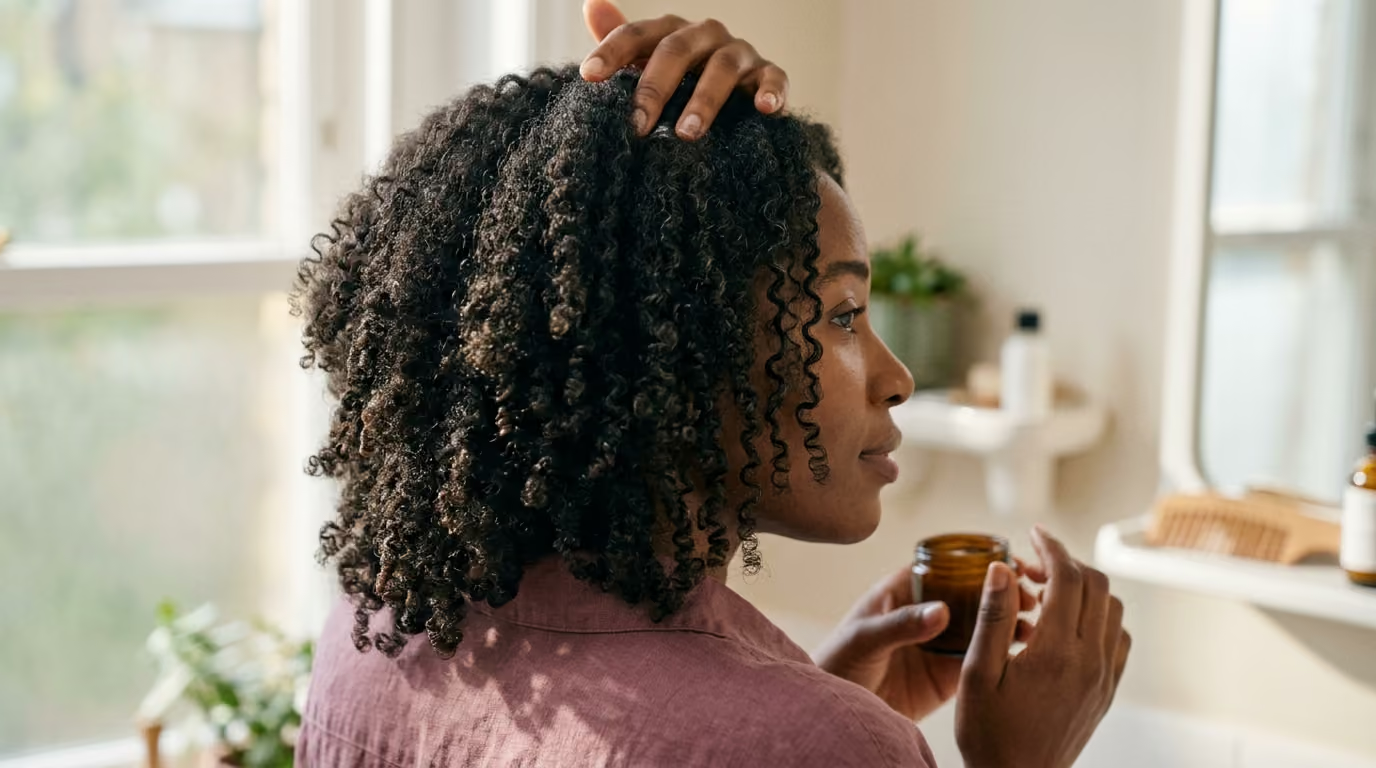
You notice a persistent dusting of white flakes across your dark clothing and feel an irritating itch across your crown. Your first instinct might be to reach for an ultra-hydrating hair oil or a generic flake shampoo. However, visible scalp flaking and discomfort can stem from several distinct biological causes. Treating an inflammatory skin condition with heavy cosmetic oils can worsen the underlying problem and increase shedding.
The health of your scalp forms the direct biological foundation for sustained hair retention and fiber quality. When the scalp barrier breaks down or sustains ongoing inflammation, the hair follicle environment suffers. In this resource, we break down the distinct symptoms, biological causes, and evidence-based care strategies for common scalp disorders. You can find more comprehensive guides in our hair longevity research library.
Key research on scalp disorders and hair retention
- Scalp disorders do not all impact the hair follicle in the same way. The primary clinical distinction is between non-scarring hair loss and irreversible scarring alopecia.
- Dandruff and seborrheic dermatitis exist on an inflammatory continuum. They are linked to individual sensitivity to metabolic byproducts of normal skin yeast rather than poor hygiene.
- Psoriasis is an immune-mediated condition characterized by rapid epidermal turnover. The resulting thick plaques cause hair loss primarily through local inflammation, mechanical scratching, and secondary telogen effluvium.
- Contact dermatitis results from specific chemical irritants or delayed immune allergens. Common triggers include hair dyes, preservatives, and styling fragrances.
- Tinea capitis is a contagious fungal infection that invades the hair shaft directly. It requires systemic prescription antifungal therapy because topical creams cannot penetrate deep into the follicle.
- Scratching, aggressive scale picking, and harsh mechanical scrubbing frequently cause secondary hair breakage and premature telogen shedding.
- Diagnostic clarity is critical before starting intensive treatments. Suppressing symptoms with topical steroids without a diagnosis can worsen fungal or bacterial infections.
How scalp inflammation affects the hair follicle cycle
The scalp is a dense environment rich in large terminal hair follicles and active sebaceous glands. Under healthy conditions, the scalp maintains a balanced acid mantle, a stable microbiome, and an intact stratum corneum. When this biological equilibrium is disrupted, the follicular unit experiences stress that can alter normal hair production. To understand how scalp conditions disrupt hair, we must separate the superficial epidermal reaction from the deeper follicular response.
- SCALP EPIDERMIS
- (Microbiome balance, Sebum production, Stratum corneum)
- Inflammatory Disruption
- FOLLICULAR IMPACT
- 1. Non-Scarring Shedding 2. Mechanical Damage
- (Telogen Effluvium) (Scratching, Breakage)
- 3. Direct Follicle Damage 4. Follicular Destruction
- (Fungal Shaft Invasion) (Scarring Alopecia)
The hair growth cycle and inflammatory disruption
Hair follicles operate in continuous, asynchronous cycles consisting of three major phases:
- Anagen: The active growth phase, lasting between two to seven years.
- Catagen: The brief transitional phase of follicular regression, lasting about two weeks.
- Telogen: The resting phase, lasting two to four months before the old fiber sheds.
When the scalp undergoes significant acute or chronic inflammation, inflammatory signaling molecules such as cytokines surround the follicular bulb. This chemical stress can prematurely push actively growing anagen follicles into the resting telogen phase. Approximately two to four months after the inflammatory trigger, an abnormally large volume of hair sheds simultaneously. This diffuse, non-scarring shedding response is known as telogen effluvium.
The four pathways of hair loss from scalp conditions
Scalp disorders impair hair growth and retention through four primary biological pathways:
- Inflammatory telogen shift: Chemical messengers from inflammatory plaques disrupt follicular signaling. This shortens the anagen phase and triggers premature shedding across the scalp.
- Mechanical trauma and breakage: Persistent itching leads to intense scratching. Scratching tears the protective outer cuticle of the hair shaft and can forcibly rip hairs from inflamed follicles.
- Direct microbial invasion: Certain fungal organisms physically penetrate and degrade the internal keratin structure of the hair shaft. This causes the hair to snap off flush with or just above the scalp surface.
- Folliculocentric scarring destruction: Severe, deep inflammatory conditions target the stem cell region located in the follicular bulge. Once this stem cell niche is destroyed and replaced by fibrous scar tissue, the follicle loses its capacity to generate a new hair fiber.
Distinguishing whether hair loss is scarring or non-scarring is the most vital clinical distinction in evidence-based hair science. Non-scarring hair loss leaves the follicle architecture intact, meaning full recovery remains possible once the inflammation resolves. Scarring alopecia destroys the follicle permanently, requiring rapid medical intervention to preserve remaining density.
Differential guide to common scalp disorders
Flaking, redness, and itching are shared symptoms across many distinct dermatological conditions. Misidentifying your scalp concern often leads to using ineffective or counterproductive products. Below is a comprehensive diagnostic breakdown of the most common scalp concerns affecting hair health.
Dandruff (Pityriasis Capitis)
Dandruff represents the mildest, uninflamed end of the seborrheic dermatitis spectrum. It is characterized by small, loose, white or greyish flakes distributed evenly throughout the hair-bearing scalp.
- Primary lesion: Fine, diffuse, loose white-to-translucent scales without visible skin redness.
- Location: Strictly confined to hair-bearing areas of the scalp.
- Hair impact: Minimal direct follicular impact. Temporary mild shedding can occur from persistent scratching, but permanent loss does not occur.
- Sensory symptoms: Mild intermittent itching without burning, soreness, or pain.
- Core cause: Overgrowth of normal Malassezia yeast interacting with scalp sebum. This process generates irritating free fatty acids that accelerate epidermal turnover.
Seborrheic Dermatitis
Seborrheic dermatitis is a chronic, relapsing inflammatory condition that targets areas with high concentrations of sebaceous glands. Unlike basic dandruff, seborrheic dermatitis involves clear cutaneous inflammation, erythema, and thicker, adherent scale.
- Primary lesion: Poorly demarcated red patches covered with greasy, yellowish, or crusty flakes.
- Location: The scalp, hairline, eyebrows, sides of the nose, behind the ears, and occasionally the central chest.
- Hair impact: Can induce diffuse telogen effluvium during intense inflammatory flares. Aggressive removal of greasy scales can pull out attached hairs prematurely.
- Sensory symptoms: Moderate to severe itching, mild burning, and scalp tenderness.
- Core cause: An exaggerated inflammatory and immune response to Malassezia yeast metabolites. This is compounded by altered skin lipid composition and impaired epidermal barrier function.
Scalp Psoriasis
Scalp psoriasis is a chronic, immune-mediated inflammatory disorder. It occurs when dysregulated T-cell signaling drives keratinocytes to multiply at an extraordinarily rapid pace. This rapid cell turnover prevents normal shedding, creating dense, stacked plaques.
- Primary lesion: Sharply demarcated, raised, erythematous plaques covered by thick, silvery-white, mica-like scale.
- Location: Often extends beyond the anatomical hairline onto the forehead, nape of the neck, and retroauricular areas. Commonly coexists with plaques on elbows, knees, or the sacrum.
- Hair impact: Causes localized non-scarring hair loss within active plaques. Severe systemic inflammation can trigger widespread telogen effluvium beyond the plaques.
- Sensory symptoms: Severe pruritus, burning sensations, tightness, and local pain if plaques crack.
- Core cause: Genetic predisposition combined with immune dysregulation involving interleukin pathways. This drives hyperproliferation of epidermal keratinocytes.
Allergic and Irritant Contact Dermatitis
Contact dermatitis is an acute or subacute inflammatory reaction caused by direct contact with an external chemical agent. It falls into two distinct categories: irritant contact dermatitis (direct chemical damage) and allergic contact dermatitis (a delayed Type IV hypersensitivity reaction).
- Primary lesion: Intense, bright erythema, localized edema, small vesicles, weeping erosions, or dry cracked fissures.
- Location: Concentrated where the product was applied or along run-off zones like the hairline, earlobes, and neck.
- Hair impact: Acute temporary shedding following severe chemical burns or widespread inflammatory edema. Follicular damage is typically reversible unless chemical ulceration occurs.
- Sensory symptoms: Irritant reactions cause immediate stinging and burning. Allergic reactions produce intense, delayed itching that peaks 24 to 72 hours after exposure.
- Core cause: Exposure to paraphenylenediamine (PPD) in hair dyes, synthetic fragrances, chemical preservatives (like methylisothiazolinone), or harsh bleaching agents.
Scalp Folliculitis
Scalp folliculitis refers to inflammation centered directly on the hair follicles. It can arise from bacterial proliferation, fungal colonization, or non-infectious chemical and mechanical occlusion.
- Primary lesion: Small, dome-shaped pustules or tender inflammatory papules centered directly around individual hair shafts.
- Location: Scattered across hair-bearing areas, often concentrated at the hairline, crown, or nape of the neck.
- Hair impact: Superficial folliculitis produces temporary local shedding without scarring. Deep or chronic forms (such as folliculitis decalvans) can destroy follicular stem cells and cause permanent scarring alopecia.
- Sensory symptoms: Tenderness, soreness to touch, localized throbbing, and sharp itching.
- Core cause: Staphylococcus aureus bacterial infection, Malassezia yeast overgrowth, or occlusion from heavy oils, waxes, and tight headwear.
Tinea Capitis (Scalp Ringworm)
Tinea capitis is a dermatophyte fungal infection of the scalp skin and hair shafts. It is predominantly seen in children but can occur in adults, particularly those with compromised immunity or exposure to infected household members.
- Primary lesion: Round or irregular scaly plaques with broken, stubby hair shafts. In severe cases, it forms a boggy, highly inflamed, pus-filled mass known as a kerion.
- Location: Isolated or multiple patches across the scalp, often accompanied by swollen, tender posterior cervical lymph nodes.
- Hair impact: Broken hairs snap off right at the surface, creating a "black dot" appearance. If an inflammatory kerion goes untreated, permanent scarring alopecia can develop.
- Sensory symptoms: Moderate to severe itching, scalp tenderness, pain, and localized swelling.
- Core cause: Infection by dermatophyte fungi such as Microsporum or Trichophyton species. The fungal hyphae directly invade the hair shaft cuticle and cortex.
Less Common Scalp Patterns
A complete differential requires awareness of overlapping and rarer scalp conditions that affect hair density:
- Pityriasis Amiantacea: Not a single standalone disease, but a reaction pattern characterized by thick, silver-yellow scales that cement hair shafts together like roof shingles. It typically develops on top of underlying psoriasis, seborrheic dermatitis, or atopic eczema.
- Alopecia Areata: An autoimmune condition causing sudden, smooth, round patches of complete hair loss. It typically lacks erythema, pustules, or visible scaling, distinguishing it from inflammatory scalp dermatoses.
- Erosive Pustular Dermatosis: A rare condition primarily affecting sun-damaged, thinning scalps in older individuals. It produces chronic, painful crusts, erosions, and pustules that lead directly to scarring alopecia.
- Primary Scarring Alopecias: Inflammatory disorders such as Lichen Planopilaris (LPP) and Frontal Fibrosing Alopecia (FFA). These conditions attack the follicle directly, causing perifollicular redness, pinpoint scale, loss of follicular openings, and smooth, shiny patches of permanent hair loss.
What clinical research reveals about scalp disorders and shedding
Understanding clinical findings helps set realistic expectations for treatment timelines, recurrence rates, and hair recovery. The science shows that scalp conditions are highly prevalent, biologically complex, and deeply interconnected with the hair cycle.
- GLOBAL PREVALENCE OF SCALP CONDITIONS
- Dandruff (Pityriasis Capitis) 50% Population
- Seborrheic Dermatitis (Adults) 1% - 5% Adults
- Scalp Involvement in Psoriasis 45% - 80% Patients
Prevalence and demographic patterns
Large-scale epidemiological studies highlight how common these conditions are across the global population:
- Dandruff: Clinical reviews establish that dandruff affects approximately 50% of the worldwide population at some point after puberty. Its incidence peaks in early adulthood and gradually decreases in later decades as sebum production declines.
- Seborrheic Dermatitis: The adult prevalence of seborrheic dermatitis ranges from 1% to 5% in general clinical populations. An extensive international observational study examining scalp-specific seborrheic dermatitis identified a point prevalence of 3.3%.
- Scalp Psoriasis: In patients diagnosed with chronic plaque psoriasis, clinical reviews indicate that between 45% and 80% experience scalp involvement. For many individuals, the scalp represents the initial site of disease manifestation.
- Tinea Capitis: Dermatophyte infections represent up to 80% of pediatric scalp disorders in urban environments. However, they represent less than 3% of adult scalp complaints due to the protective fungistatic properties of mature adult sebum.
Data on inflammatory shedding and regrowth timelines
Clinical research evaluating hair loss during active scalp disease provides encouraging data regarding follicle survival:
- Non-scarring outcomes: Over 90% of hair loss associated with uncomplicated dandruff, seborrheic dermatitis, and scalp psoriasis is non-scarring. When inflammation is brought under control, normal follicular dynamics resume.
- Regrowth duration: Because the telogen resting phase lasts between 60 to 120 days, clinical trials measure visible hair recovery at 3 to 6 months after scalp stabilization. Expecting visible hair density changes within two weeks of starting medicated shampoo is physiologically impossible.
- Telogen effluvium incidence: In clinical assessments of moderate-to-severe scalp psoriasis, up to 20% of patients show measurable diffuse shedding. This shedding often extends well beyond the physical borders of the active psoriatic plaques.
Efficacy data for active therapeutic ingredients
Extensive randomized controlled trials have established clear efficacy benchmarks for active ingredients in medicated scalp therapies:
- Ketoconazole (1% to 2%): Clinical trials demonstrate a 65% to 75% reduction in scaling and itch within four weeks of twice-weekly use. Ketoconazole also reduces local micro-inflammation around the follicular infundibulum.
- Zinc Pyrithione (1% to 2%): Studies confirm broad-spectrum antimicrobial activity against Malassezia, showing a 50% to 60% improvement in objective flaking scores over 28 days of regular use.
- Selenium Sulfide (1% to 2.5%): Demonstrates strong cytostatic activity by slowing the rapid turnover of epidermal cells. It achieves a 60% to 70% reduction in scaling, though it requires thorough rinsing to avoid cosmetic residue.
- Salicylic Acid (2% to 3%): Acts as an effective keratolytic agent. Clinical data shows it breaks down intercellular desmosomes, accelerating the clearance of thick, adherent scales without damaging healthy hair shafts.
- Topical Corticosteroids: High-potency topical solutions reduce psoriatic plaque thickness and erythema by 70% to 85% within two to four weeks. However, they require intermittent use to prevent skin atrophy and rebound flares.
Study limitations and diagnostic challenges
While clinical dermatological literature is extensive, research into scalp conditions and hair retention carries several notable limitations:
- CLINICAL RESEARCH LIMITATIONS
- 1. Diagnostic Overlap (Sebopsoriasis gray zones)
- 2. Study Cohort Homogeneity (Skin tone representation)
- 3. Short Trial Durations (Lack of 12 month follow-up)
- 4. Subjective Endpoint Measurements (Self-reported itch)
- 5. Overlooked Follicle Dynamics in Flake Studies
Diagnostic overlap and classification gray zones
Clinical studies often struggle with conditions that share biological features. The most prominent example is sebopsoriasis, an overlap disorder showing features of both seborrheic dermatitis and scalp psoriasis.
Dermatologists frequently debate whether sebopsoriasis is a distinct clinical entity or an evolutionary stage between the two conditions. When clinical trials exclude these intermediate cases, their results may not fully apply to real-world patients whose symptoms sit between categories.
Limitations in trial design and cohort diversity
- Short trial duration: Most randomized trials for medicated shampoos run for four to eight weeks. These short studies evaluate immediate symptom clearance well, but they offer little data on long-term recurrence, follicular adaptation, or maintenance regimens.
- Underrepresentation of diverse skin and hair textures: Historical dermatology research disproportionately evaluated straight hair types and lighter skin tones. Thick plaques on darker skin types often appear violaceous or hyperpigmented rather than classic salmon-pink with silvery scale. Furthermore, textured hair types require less frequent washing, making daily application protocols studied in clinical trials impractical.
- Subjective versus objective measurements: Many studies rely heavily on self-reported patient assessments for itching and shedding. Subjective reporting introduces recall bias and emotional distress factors that can skew the measured efficacy of a treatment.
- Separating shed hairs from broken fibers: Many clinical trials fail to distinguish between true whole-bulb telogen shedding and distal hair shaft breakage caused by scratching. As a result, reported "hair loss" data often mixes mechanical grooming damage with true follicular shifts.
Practical steps for managing an inflamed scalp
Effectively managing a chronic scalp condition requires combining targeted active ingredients with protective hair-care habits. Treating the scalp requires treating the skin directly, not just running product over the hair strands. To read more about foundational skin and hair routines, visit our beauty science articles.
Choosing the right active ingredients
Select topical active ingredients that match your specific condition rather than relying on generic cosmetic shampoos:
- TARGETED ACTIVE INGREDIENTS BY CONDITION
- Dandruff (Mild Flaking)
- Zinc Pyrithione (1%), Piroctone Olamine
- Seborrheic Dermatitis (Greasy, Red Flakes)
- Ketoconazole (1-2%), Selenium Sulfide (1-2.5%)
- Scalp Psoriasis (Thick, Silvery Plaques)
- Salicylic Acid (2-3%), Coal Tar, Prescription Steroids
- Bacterial Folliculitis (Tender Pustules)
- Benzoyl Peroxide washes, Topical/Oral Antibiotics
- For uninflamed dandruff: Look for zinc pyrithione, piroctone olamine, or low-strength salicylic acid to normalize cell turnover and manage yeast populations.
- For seborrheic dermatitis: Rotate between ketoconazole (2%) and selenium sulfide or ciclopirox. This multi-pathway strategy prevents fungal adaptation and keeps scaling under control.
- For thick psoriatic plaques: Use a dedicated keratolytic like 3% salicylic acid or coal tar to loosen dense scale. This allows topical prescription anti-inflammatories to penetrate down to the scalp skin.
- For superficial folliculitis: Use an antibacterial cleanser containing benzoyl peroxide or tea tree oil extract. Avoid thick styling waxes and heavy leave-in pomades that trap sweat and bacteria around the follicle openings.
The evidence-based scalp washing technique
Many treatments fail simply because of poor application technique. Follow this structured washing protocol to maximize the benefit of medicated formulas:
- Thorough pre-rinse: Saturate the scalp and hair completely with lukewarm water. Avoid hot water, which strips natural barrier lipids and increases baseline erythema.
- Target the scalp, not the lengths: Part the hair into sections and apply the medicated shampoo directly onto the scalp skin. Use your fingertips, never your fingernails, to work the product across the entire surface.
- Respect the contact time: Medicated active ingredients require adequate contact time to work. Allow the lather to sit undisturbed on the scalp for 5 to 10 minutes before rinsing. Washing it out immediately washes away the active compounds before they can penetrate the stratum corneum.
- Condition the hair lengths: Medicated shampoos can dry out the hair shaft. Apply a hydrating conditioner or mask strictly from the mid-lengths down to the ends. Keep heavy cosmetic conditioners off the scalp to prevent pore clogging and product buildup.
- Adjust frequency to your hair type: Straight and oily hair types benefit from using medicated washes three to four times per week. Tighter curl patterns and textured hair types should use medicated cleansers once weekly, following with an intensive moisturizing treatment on the lengths.
Mechanical protection and habit modifications
Managing scalp inflammation requires protecting both the delicate skin barrier and the fragile hair fibers:
- Stop manual scale picking: Picking or scraping off thick scale causes pinpoint bleeding (Auspitz sign in psoriasis) and can rip hair follicles out prematurely. Soften scales chemically with salicylic acid or mineral oil before washing them away gently.
- Keep fingernails short and rounded: Trimming your nails reduces accidental scratches and skin tears during sleep or involuntary scratching.
- Lower styling heat: High blow-dryer heat dries out the scalp barrier and flares underlying inflammation. Use the cool or medium heat setting and keep the dryer at least six inches away from the skin.
- Keep a detailed product log: If you suspect allergic contact dermatitis, record every new shampoo, dye, conditioner, or styling spray you use. Note the date of application, ingredients, and when your scalp reacts.
When to seek a professional dermatology assessment
Self-care strategies have limits. You should schedule an evaluation with a board-certified dermatologist if you notice any of the following clinical red flags:
- Scalp symptoms persist or worsen after four consecutive weeks of consistent medicated shampoo use.
- The scalp shows visible signs of infection, such as oozing pus, yellow honey-colored crusting, severe swelling, or warmth to the touch.
- You discover smooth, shiny bald patches, or notice that follicular openings look completely absent.
- You develop sudden patchy hair loss with broken hairs and swollen, tender lymph nodes in your neck.
- Scalp inflammation is accompanied by joint stiffness, lower back pain, or swollen fingers, which can point to psoriatic arthritis.
- Intense itching or burning disrupts your sleep or interferes with daily tasks.
A dermatologist can perform a detailed physical examination, dermoscopy (trichoscopy), bacterial cultures, fungal scrapings, patch testing, or a scalp punch biopsy to establish an accurate diagnosis. Learn more about medical hair evaluations in our guide to understanding hair thinning and shedding.
Common misconceptions about scalp health and hair loss
Misunderstandings about scalp care often lead people to use ineffective remedies that worsen underlying inflammation. Here, we address five widespread myths using clinical evidence.
- MYTH VERSUS REALITY
- MYTH: "All scalp flaking is caused by dry skin."
- REALITY: Most flaking stems from yeast-driven dermatitis
- psoriasis, or contact allergies, not low skin oil.
- MYTH: "Dandruff directly destroys hair roots permanently."
- REALITY: Dandruff causes superficial scaling; hair loss is
- non-scarring and temporary unless scratched severely.
- MYTH: "Scrubbing with scalp brushes removes flakes."
- REALITY: Physical scrubbing damages the skin barrier and
- breaks hair. Chemical keratolytics are much safer.
- MYTH: "Topical antifungal creams cure scalp ringworm."
- REALITY: Tinea capitis penetrates inside the hair shaft
- requiring oral prescription antifungal medications.
- MYTH: "Natural plant oils are always soothing and safe."
- REALITY: Plant oils feed Malassezia yeast and can cause
- allergic contact dermatitis on inflamed skin.
Myth 1: Scalp flaking is always caused by dry skin
A common belief is that any white flakes in the hair mean the scalp is simply dry and needs extra moisture. In reality, true dry skin flaking is relatively rare on the scalp because it has the highest concentration of oil glands on the human body. Most flaking stems from seborrheic dermatitis, psoriasis, or contact allergies. Smothering an inflamed scalp in heavy cosmetic oils provides food for Malassezia yeast, accelerating the flaking process.
Myth 2: Dandruff permanently destroys hair roots
Finding loose flakes alongside shedded hairs often leads people to worry about permanent baldness. In reality, uncomplicated dandruff is a superficial epidermal issue that does not damage deeper follicle structures. Any hair shedding during a dandruff flare is temporary, non-scarring telogen effluvium or mechanical breakage from scratching. Once the scalp balance is restored, normal hair growth resumes.
Myth 3: Vigorous mechanical scrubbing removes flakes safely
Many people try to scrub away stubborn flakes with abrasive exfoliating brushes or fingernails. However, mechanical abrasion damages the stratum corneum, increases baseline inflammation, and can snap hair shafts near the root. In psoriasis, physical trauma can trigger new inflammatory plaques through a reaction called the Koebner phenomenon. Loosening scale with gentle chemical keratolytics like salicylic acid is far safer and more effective.
Myth 4: Topical antifungal creams can cure scalp ringworm
People often assume over-the-counter antifungal creams will clear scalp ringworm just like they clear athlete's foot. In reality, tinea capitis fungi invade deep down into the hair follicle and inside the hair shaft cortex itself. Topical creams cannot penetrate deep enough to clear the infection. Tinea capitis requires oral prescription antifungal medications taken consistently for one to three months to clear the fungus completely.
Myth 5: Pure natural oils are always safe for an irritated scalp
Many believe natural plant oils like coconut, olive, or argan oil are completely harmless remedies for an itchy scalp. However, plant oils contain specific fatty acids that Malassezia yeast feed on to multiply. Furthermore, unrefined botanical oils and pure essential oils are common causes of allergic contact dermatitis. Applying raw oils to a cracked, inflamed skin barrier frequently makes inflammation worse.
Frequently asked questions
Can using dry shampoo cause scalp folliculitis?
Yes. Overusing dry shampoo without washing regularly can cause follicular occlusion. Dry shampoo formulas combine starches, talc, and fragrances that absorb sebum and sit on the scalp surface. When left on the skin for days, this buildup mixes with sweat, dead skin cells, and bacteria. This congested environment can trigger mechanical and bacterial folliculitis, leading to red, tender pustules around the hair follicles.
How can I tell if my hair loss is temporary or permanent?
Temporary hair loss, like telogen effluvium, is non-scarring. You will still see tiny, visible follicular openings across the scalp, and shedding is generally diffuse across the head. Permanent scarring alopecia, on the other hand, destroys the follicular openings entirely, leaving the skin looking unusually smooth, shiny, or porcelain-like. It is often accompanied by localized pain, burning, pustules, or expanding bald patches. A dermatologist can confirm whether follicular openings remain using a dermatoscope.
Why does my scalp condition flare up when I am stressed?
The brain and the skin share a close biological connection known as the brain-skin axis. Psychological stress triggers the release of systemic hormones like cortisol and neuroinflammatory neuropeptides. These chemical messengers disrupt normal skin barrier function, increase sebum production, and alter immune responses. This shift allows organisms like Malassezia to multiply and triggers inflammatory flares in conditions like seborrheic dermatitis and psoriasis.
Is it safe to dye my hair if my scalp is flaking?
You should avoid applying permanent hair dyes, bleaches, or chemical straighteners while your scalp is actively inflamed, cracked, or flaking. When the protective skin barrier is broken, harsh chemicals like paraphenylenediamine (PPD) and hydrogen peroxide can penetrate deeper into the dermis. This significantly raises your risk of chemical burns, severe contact dermatitis, and acute shedding. Wait until your scalp is completely calm and healed before using chemical treatments.
How often should I rotate my medicated shampoos?
Rotating between two different active ingredients can help maintain results over time. For example, you might use ketoconazole for two weeks, then switch to zinc pyrithione or selenium sulfide for the next two weeks. This rotation keeps the yeast from adapting to a single mechanism of action and prevents your scalp from becoming desensitized to treatment. If your condition is well controlled, you can step down to a single medicated wash once weekly for ongoing maintenance.
What is the difference between dandruff and cradle cap?
Cradle cap is the common name for infantile seborrheic dermatitis, which occurs in newborns and infants up to one year old. It presents as thick, greasy, yellowish, crusty plaques across the top of the scalp, eyebrows, or diaper area. Unlike adult dandruff and seborrheic dermatitis, cradle cap is generally not itchy or uncomfortable for the baby. It is driven by lingering maternal hormones that temporarily stimulate the infant's sebaceous glands, and it usually resolves on its own within a few months.
When to revisit this resource
Revisit this diagnostic guide whenever you introduce a new hair-care product, notice changes in seasonal shedding, or experience a return of scalp flaking, itching, or tenderness. Tracking changes in your symptoms will help you adapt your routine and know when it is time to consult a medical professional.
Maintaining a healthy scalp requires patience, diagnostic clarity, and consistent, evidence-based care. For more guides on supporting your skin and hair health over time, browse our complete collection of beauty longevity resources.
Sources
- Is your dry scalp something more serious?
- Psoriasis - NHS
- Hair loss - NHS
- Patch testing can find what's causing your rash
- Dandruff - NHS