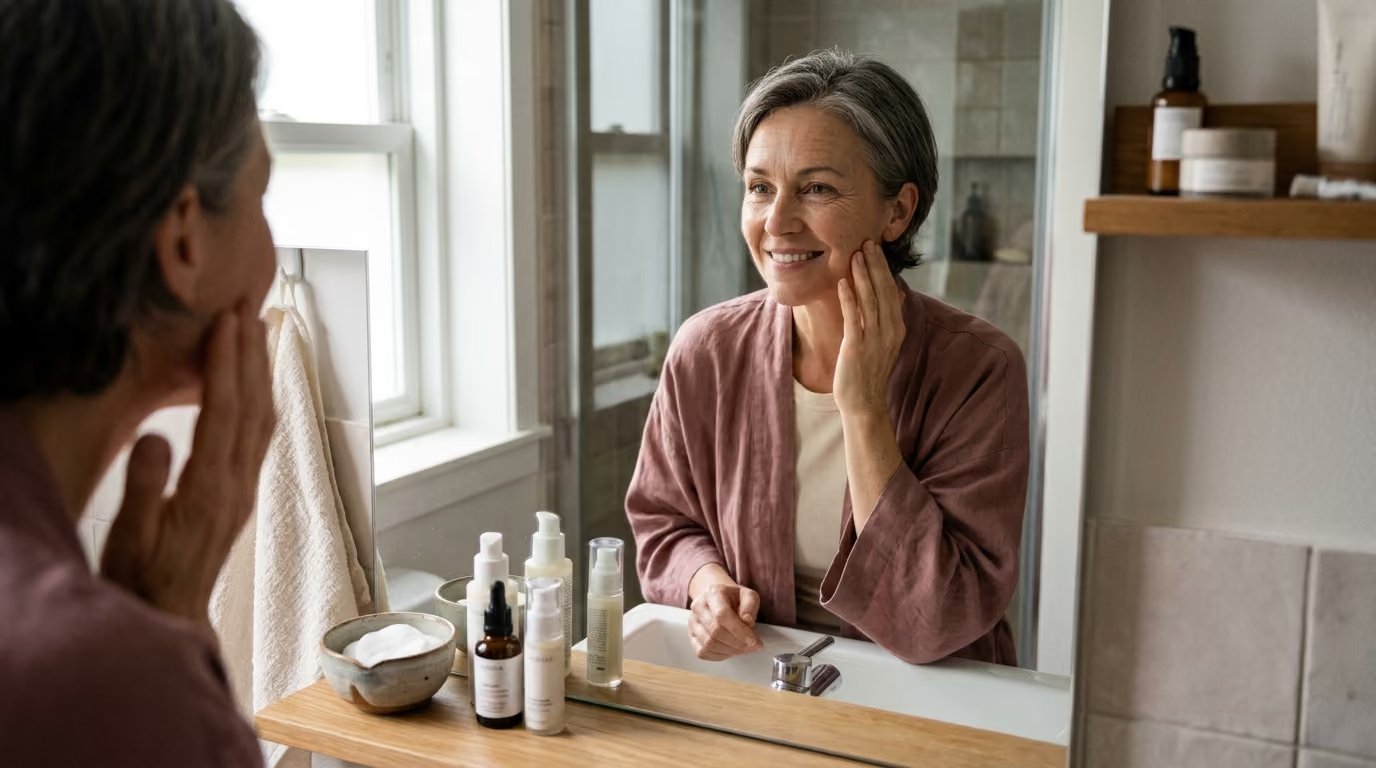

Red light therapy is not an overnight cosmetic miracle, but properly calibrated wavelengths stimulate genuine collagen production and cellular repair in aging skin.





Many people searching for red light therapy want to know if home devices actually improve aging skin or if the trend is merely clever marketing. The internet offers extreme claims, ranging from complete cellular rejuvenation to dismissals that light cannot alter tissue structure.
The biological reality sits in the middle. Photobiomodulation produces measurable cellular changes when delivered with the proper wavelength, irradiance, and cumulative dose. However, it will not replace invasive surgical procedures or eliminate structural skin changes overnight.
This guide reviews the clinical trial data, biological mechanisms, device parameters, safety considerations, and protocol designs so you can evaluate light therapy objectively.
Photobiomodulation refers to the use of non-ionizing optical radiation in the visible and near-infrared spectrum to alter biological activity. The process relies on low-energy light that does not heat, burn, or ablate the cutaneous surface. It was historically called low-level laser therapy, though modern devices predominantly use light-emitting diodes.
Understanding what this therapy does requires a clear look at its foundational research parameters:
Photobiomodulation differs fundamentally from other clinical light modalities. Ultraviolet phototherapy uses ionizing wavelengths that carry distinct carcinogenic risks to manage inflammatory skin conditions. Intense pulsed light delivers high-energy broad-spectrum flashes that target vascular or pigmented lesions through thermal damage. Ablative and non-ablative lasers create controlled thermal injuries to force a wound-healing response. Red light therapy stimulates repair pathways without causing microscopic injury or thermal stress.
Understanding these distinctions helps clarify realistic expectations for at-home and clinical devices within skin longevity and healthy aging strategies.
The primary biological target of red and near-infrared light is the mitochondrion. Within the inner mitochondrial membrane lies cytochrome c oxidase, a terminal enzyme in the electron transport chain. Cytochrome c oxidase contains iron and copper centers that act as photoacceptors for visible red and near-infrared photons.
When these chromophores absorb light energy, the transfer of electrons through the respiratory chain accelerates. This event prompts a temporary increase in mitochondrial membrane potential and stimulates the production of adenosine triphosphate. Cellular energy availability rises, enabling the cell to carry out repair and maintenance tasks more efficiently.
Light absorption also generates low, transient levels of reactive oxygen species. These molecules do not cause oxidative destruction at proper therapeutic doses. Instead, they act as secondary signaling messengers that activate downstream transcription factors.
These transcription factors initiate gene expression cascades involved in cell proliferation, protein synthesis, and tissue defense. The cellular response promotes the synthesis of antioxidant enzymes, supporting long-term cellular resilience.
In our work examining beauty science literature, we find that the dermal matrix response represents the most clinically relevant target. Dermal fibroblasts are the specialized cells responsible for producing structural proteins. When exposed to red light, fibroblasts increase their metabolic output and procollagen secretion.
Laboratory models show that red light at 660 nanometers can stimulate type I and type III procollagen production. Simultaneously, the light downregulates matrix metalloproteinases, specifically MMP-1. Matrix metalloproteinases are destructive enzymes that break down existing structural networks after sun exposure or inflammatory stress. By elevating collagen synthesis while reducing enzymatic breakdown, photobiomodulation shifts the tissue balance toward matrix preservation.
The biological response adheres to the Arndt-Schulz rule of biphasic dosing. A threshold of energy must be absorbed to trigger mitochondrial signaling. If the delivered energy is too low, no biological shift occurs. Conversely, if the tissue receives excessive irradiance or accumulated fluence, the cellular response plateaus and can reverse, inhibiting cellular activity.
This biphasic nature explains why simply increasing session length or buying exceptionally overpowered units does not yield faster improvements.
Evaluating light therapy requires an understanding of basic optical physics. Photons must penetrate to the correct tissue depth to reach target fibroblasts. The depth of penetration depends directly on the chosen wavelength.
Red light spans roughly 620 to 700 nanometers. In clinical dermatology, researchers favor narrow bands around 630, 633, and 660 nanometers. These wavelengths are absorbed predominantly within the epidermis and papillary dermis. Red light interacts with superficial blood vessels and fibroblasts, making it suitable for addressing skin roughness, mild discoloration, and fine textural changes.
Near-infrared light spans 700 to 1,440 nanometers, with cosmetic devices focusing between 810 and 850 nanometers. Near-infrared radiation is invisible to the human eye. Because it encounters lower absorption from melanin and hemoglobin, it penetrates deeper into the reticular dermis and subcutaneous layers.
Near-infrared energy targets deep structural components, supporting elasticity and deep tissue recovery. Combining 630-nanometer red light with 830-nanometer near-infrared light is common because it treats both superficial and deep dermal layers simultaneously.
Achieving a biological response requires proper dosing parameters. Dosing relies on two critical metrics: irradiance and fluence.
Irradiance measures the rate at which power is delivered per unit of surface area. It is expressed in milliwatts per square centimeter. Irradiance determines treatment intensity. If irradiance is too low, the light will not trigger the necessary biological threshold. If it is too high, it creates tissue heating, which invalidates the non-thermal principle of photobiomodulation.
Fluence represents the total energy delivered to the skin over time. It is measured in joules per square centimeter. Fluence is calculated using a standard physical formula:
$$\text{Fluence } (\text{J/cm}^2) = \frac{\text{Irradiance } (\text{mW/cm}^2) \times \text{Time } (\text{seconds})}{1{,}000}$$
For example, a home device delivering an irradiance of 30 milliwatts per square centimeter for 10 minutes (600 seconds) delivers:
$$\frac{30 \times 600}{1{,}000} = 18 \text{ J/cm}^2$$
Treatment distance alters delivered irradiance significantly. For freestanding panels, light spreads out and diminishes in intensity as distance increases according to the inverse-square law. A panel providing 50 milliwatts per square centimeter at three inches might deliver less than 15 milliwatts per square centimeter at twelve inches.
Flexible silicone masks maintain a constant distance because they rest directly against the cutaneous surface. When evaluating any device, verify the precise distance at which the manufacturer measured the stated irradiance.
Clinical evidence supporting photobiomodulation for visible aging has expanded over two decades. While the data shows meaningful physiological changes, the results are measured rather than dramatic.
A major prospective randomized controlled trial published by Wunsch and Matuschka investigated light therapy in 128 participants aged 27 to 79. The treatment cohorts completed 30 sessions scheduled twice weekly. The red-light treatment groups received narrow-band light between 611 and 650 nanometers. Delivered irradiance ranged from 5.9 to 13.3 milliwatts per square centimeter, yielding a fluence of 8.9 to 9.6 joules per square centimeter per session.
The investigators documented statistically significant improvements in multiple objective skin parameters compared to the untreated control group:
The difference between objective and subjective measures in this study provides valuable context. While objective roughness, collagen density, and blinded wrinkle scores reached statistical significance, self-reported complexion scores between groups did not show identical statistical separation.
This indicates that while cellular changes occur, they present as subtle, progressive refinements in texture rather than sweeping structural alterations.
Other clinical investigations support these findings across various device formats. A clinical trial evaluating 90 individuals receiving eight sessions of 590-nanometer red light across four weeks reported histological evidence of increased type I procollagen. A separate study examining 31 participants treated with combined 630-nanometer and 830-nanometer light documented that 81 percent experienced improvements in periorbital fine lines.
A 2023 split-face trial involving 137 subjects demonstrated a 31.6 percent reduction in fine line depth after consistent 660-nanometer red light application over several months.
These data points confirm that photobiomodulation can support collagen synthesis and improve skin quality. However, the outcomes depend heavily on treatment consistency, with benefits accumulating over weeks rather than appearing after a single treatment.
When we first started reviewing clinical trials on collagen supplementation and light therapy, I was struck by how often the media misinterpreted the data. A study showing a minor increase in skin elasticity was suddenly headlined as a total age reversal. It made me realize how desperately consumers need a translator for beauty science, someone who can say exactly what a study proves and what it does not prove.
The photobiomodulation literature contains several structural limitations that readers should understand before investing in equipment:
The difficulty of sham design deserves special attention. If an inactive control device emits no light, participants know they are in the control group. This lack of true blinding can introduce behavioral changes, such as altered topical product use, which can influence results.
Some researchers test alternative wavelengths as active controls, but these wavelengths often carry biological effects of their own.
Commercial funding also requires transparent consideration. Many prominent studies are funded directly by device manufacturers who supply equipment and employ the lead investigators. Industry funding does not invalidate empirical measurements, but it emphasizes the need for independent replications.
Surrogate endpoints present another interpretative challenge. Demonstrating an increase in ultrasound-measured collagen intensity confirms a biological reaction within the dermis. However, a 15 percent increase in dermal density does not automatically translate into a visible transformation in deep expression lines.
Consumers must separate microscopic biological changes from macro-level visual outcomes when managing expectations for structural aging and dermal matrix protocols.
Navigating the home device market requires assessing technical specifications rather than marketing claims. Many consumer masks lack the power density needed to produce the outcomes reported in clinical trials.
A credible manufacturer must clearly state the peak output wavelengths and their spectral bandwidth. Look for narrow-band output centered between 630 to 660 nanometers for red light, and 810 to 850 nanometers for near-infrared. Avoid products that use broad descriptions like broad-spectrum red or warm beauty light.
The device must also disclose its irradiance measured at the recommended treatment distance. For contact masks, irradiance should fall between 20 and 50 milliwatts per square centimeter. This allows you to accumulate a therapeutic dose of 10 to 30 joules per square centimeter within a 10 to 20 minute session. Freestanding panels should specify the exact irradiance at designated distances, such as six or twelve inches.
Regulatory terminology is another common point of confusion for consumers. The Food and Drug Administration clears medical devices under the 510(k) pathway when a manufacturer proves the device is substantially equivalent to a legally marketed predicate device. FDA clearance focuses primarily on consumer safety and manufacturing consistency. It does not mean the FDA conducted independent clinical efficacy trials to confirm the device removes wrinkles.
Phrases like FDA approved or FDA certified are incorrect for cosmetic LED devices.
Safety considerations also involve optical protection. While red light does not contain damaging ultraviolet rays, high-intensity visible light and near-infrared energy can stress retinal tissue. The American Academy of Dermatology recommends wearing opaque protective goggles during treatment sessions.
Users should never substitute standard sunglasses for certified protective eyewear designed for specific optical wavelengths. When evaluating devices, look for third-party photobiological eye safety validation, such as certification under the IEC 62471 standard.
Individual biology also influences treatment safety, particularly for individuals with higher melanin concentrations. Skin with higher baseline melanin absorbs visible light more readily, which can convert light into local heat. This thermal change can provoke post-inflammatory hyperpigmentation or trigger melasma flares in susceptible individuals.
Individuals with deeper skin tones or histories of pigmentation irregularities should begin with shorter exposure sessions and lower irradiance to confirm skin tolerance.
Users taking photosensitizing medications must exercise caution. Common prescriptions, including tetracycline antibiotics, topical retinoids, certain diuretics, and specific anti-inflammatory drugs, lower the threshold for cutaneous light reactions.
Individuals with active autoimmune disorders triggered by light, such as systemic lupus erythematosus, should avoid photobiomodulation unless cleared by their physician.
Commercial advertising often exaggerates basic photobiology. Separating verifiable clinical findings from promotional claims protects consumers from unrealistic expectations.
Marketing for high-powered panels suggests that higher wattage produces superior, accelerated outcomes.
In reality, photobiomodulation follows a biphasic dose response. Once the cellular system absorbs its optimal fluence, additional photons do not increase mitochondrial signaling. Excessive exposure can generate localized tissue heat and oxidative stress, which suppresses cell metabolism and may trigger inflammation.
Some manufacturers claim that near-infrared light is safe for the eyes because it cannot be seen.
In reality, near-infrared photons pass directly through the cornea and lens to reach the retina. Because near-infrared light does not trigger the natural human blink reflex, unprotected exposure to high-intensity sources can cause thermal retinal damage. Protective eyewear is necessary during near-infrared sessions.
Brand marketing often uses the FDA logo to imply government verification of product efficacy.
In reality, 510(k) clearance simply means the device is safe for home use and equivalent in design to existing commercial units. Clearance does not serve as an official endorsement of visual results or cosmetic performance.
Promotional materials occasionally describe light therapy as a complete replacement for topical anti-aging routines.
In reality, photobiomodulation serves as a supportive, complementary modality within broader skin care practices. It does not provide physical protection against ultraviolet radiation, nor does it replace the barrier-supportive benefits of moisturizers or topical antioxidants.
Integrating light therapy into a daily routine requires consistency, correct skin preparation, and appropriate timing.
Before beginning a session, cleanse the skin to remove makeup, mineral sunscreens, and surface sebum. Mineral sunscreens contain zinc oxide or titanium dioxide, which reflect and scatter visible and near-infrared light, reducing photon absorption. Heavy, petroleum-based ointments can also refract incoming light. Light therapy should be applied to clean, dry skin.
Water-based serums containing simple humectants like hyaluronic acid may be used beforehand if they do not contain light-scattering pigments.
Session frequency should follow evidence-based schedules rather than daily overuse. Most successful clinical protocols utilize treatments three to five times weekly for an initial period of eight to twelve weeks. Once desirable textural improvements occur, frequency can be adjusted to a maintenance schedule of two sessions weekly.
Positioning must remain consistent throughout the treatment period. If using a freestanding panel, sit at the exact distance specified by the manufacturer to ensure the intended irradiance reaches the skin. Moving further away reduces energy absorption, while moving too close can cause mild tissue heating.
Tracking progress objectively helps prevent premature discontinuation. Take standardized photographs every four weeks under identical, indirect room lighting without makeup. Assess changes in fine line depth, overall skin roughness, and redness over three months rather than checking for daily shifts.
Biological changes in cellular energy and protein synthesis begin during the initial treatment sessions. However, visible changes in skin texture, fine lines, and firmness require consistent cellular turnover and extracellular matrix remodeling.
Most clinical trials document measurable improvements after 8 to 12 weeks of consistent use, scheduled three to five times weekly. Subtle improvements in skin softness may appear earlier, but deep structural changes require sustained application.
Red light therapy can generally complement topical retinoid regimens, but skin tolerance should be monitored closely. Retinoids increase cellular turnover and can temporarily sensitize the skin to environmental stressors.
To minimize irritation, apply the light therapy device to clean skin before applying your nighttime retinoid. If you experience persistent erythema, peeling, or sensitivity, reduce treatment frequency until the skin barrier stabilizes.
Individuals with melasma must approach light therapy cautiously. Melasma melanocytes are hyper-reactive and can produce excess pigment in response to light and low-level heat.
While pure red wavelengths do not stimulate melanin directly, high-irradiance devices can generate localized warmth that triggers pigment production. Those with melasma should use low-irradiance settings, avoid near-infrared modes if they produce warmth, and consult a dermatologist before initiating treatment.
Neither format is universally superior; each offers distinct physical advantages. Wearable flexible masks ensure consistent distance and uniform energy delivery directly to the facial contours.
Freestanding panels provide higher overall power output and can treat larger areas simultaneously, such as the face, neck, and chest. However, panels require strict adherence to recommended treatment distances to ensure proper dosing.
Photobiomodulation can be performed effectively at any time of day, provided the skin is properly cleansed. Some individuals prefer morning sessions to take advantage of the mild anti-inflammatory signaling throughout the day.
Others prefer evening use as part of their nighttime skincare routine. Consistency in session frequency matters far more than the specific time of day.
To apply these scientific insights, follow this step-by-step checklist when evaluating equipment or establishing a home routine this week:
Stay connected for research and practical guidance on skin, hair, collagen, nutrition and beauty longevity. Clear ideas for people who want to understand how appearance changes with age and make better-informed choices over time.


Understand your skin, hair and body better without chasing every new trend, treatment or promise.
explore the Blog