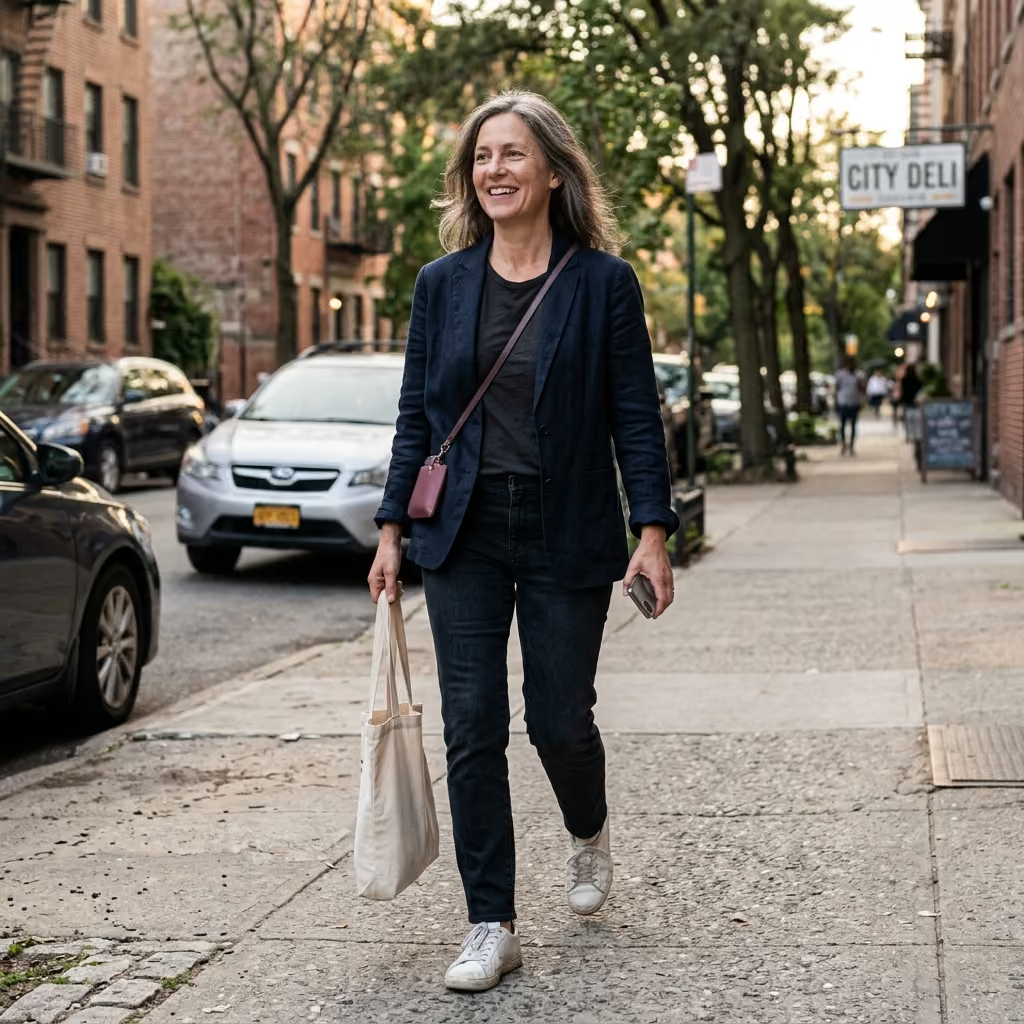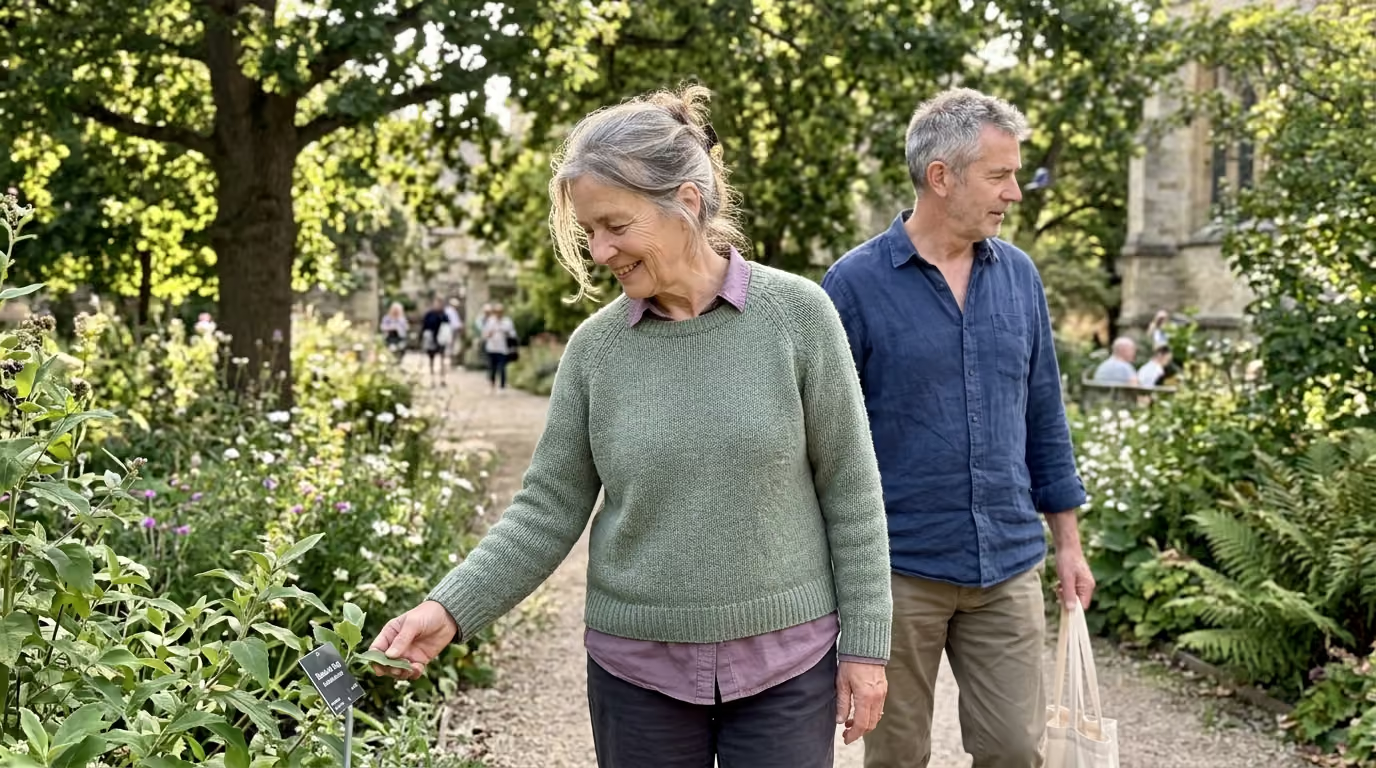

Outdoor immersion is often viewed as wilderness escapism, but regular green space exposure biologically supports stress regulation, sleep, and healthy aging.





Many wellness traditions treat outdoor immersion as an automatic cure for modern exhaustion. Popular culture often suggests that escaping into remote wilderness is the only genuine way to restore the nervous system. The biological reality is far more nuanced and practical.
Natural environments do not act as isolated clinical treatments or standalone remedies for aging. Instead, research indicates that green and blue spaces serve as supportive contexts that make healthy behaviors easier to initiate and maintain over decades. Exposure to daylight, vegetation, open water, and clean air alters baseline stress physiology, encourages regular movement, and supports restorative sleep.
Looking closely at the scientific literature reveals that dramatic wilderness expeditions are unnecessary for meaningful physiological benefit. Everyday natural elements, such as neighborhood trees, pocket parks, balcony gardens, and waterfront walking paths, provide measurable support for physical and cognitive longevity. Understanding how the human body interacts with natural surroundings allows you to design sustainable routines that support long-term vitality, regardless of your current living situation or physical mobility.
You can learn more about how physical habitats intersect with long-term vitality through our lifestyle, recovery, and environmental aging resources.
Decades of public health research show consistent links between natural environments and long-term well-being. The current scientific consensus points toward several foundational findings:
These findings suggest that nature is not a luxury or an optional leisure pursuit. It functions as an essential environmental input that helps human physiology maintain equilibrium throughout the aging process.
To evaluate the true value of outdoor time, it helps to understand the physiological pathways that translate sensory exposure into cellular and systemic changes. The body responds to natural landscapes through several distinct biological mechanisms.
When you navigate dense urban environments, your sensory system processes constant unpredictable inputs, such as traffic noise, flashing signage, and crowded sidewalks. This steady stream of high-demand stimuli keeps the sympathetic nervous system in a state of low-grade arousal. Over time, chronic sympathetic activation elevates baseline cortisol levels, raises resting blood pressure, and contributes to systemic inflammation.
Natural environments present patterns known as fractal geometry, alongside organic acoustics such as rustling leaves or running water. These stimuli trigger what environmental psychologists call soft fascination. Soft fascination engages your attention effortlessly without demanding active analytical focus. This cognitive shift allows the prefrontal cortex to rest, reducing neural activity in the amygdala. As a result, the parasympathetic nervous system engages, lowering heart rate, slowing respiration, and encouraging healthy autonomic balance.
Natural daylight is significantly brighter than standard indoor lighting, even on overcast winter days. Indoor environments rarely exceed 500 lux, whereas outdoor daylight ranges from 10,000 lux on cloudy mornings to over 100,000 lux in direct sunlight.
When bright natural light enters the eyes, specialized photosensitive retinal ganglion cells transmit signals directly to the suprachiasmatic nucleus in the brain. This master biological clock suppresses daytime melatonin production and aligns peripheral clocks throughout your organ systems. Proper daytime circadian signaling directly dictates the timing and volume of nighttime melatonin release. Higher sleep quality supports nighttime tissue repair, cellular autophagy, and optimal metabolic function, all of which are essential components of skin longevity and healthy aging.
Physical surroundings directly alter the environmental load placed on aging organ systems. Built environments characterized by asphalt, concrete, and high vehicle density create urban heat islands. Excessive ambient heat strains the cardiovascular system by forcing the heart to pump higher volumes of blood to the skin for thermoregulation.
Tree canopies, vegetated ground cover, and open water bodies significantly lower localized air temperatures through shade and evapotranspiration. Large urban parks can be several degrees cooler than surrounding concrete corridors. Vegetation also absorbs ambient noise pollution, which is an established contributor to elevated vascular resistance and sleep fragmentation. By lowering environmental stressors, green spaces create a microclimate that permits safe, restorative outdoor activity.
Natural spaces rarely act in complete isolation from human behavior. Instead, they serve as supportive infrastructure for movement and socialization. A safe, attractive, shaded park makes physical activity more pleasant and accessible. Walking on a scenic dirt trail or manicured path reduces the perceived exertion of movement compared to walking on a sterile treadmill or noisy street.
Furthermore, public green and blue spaces provide shared, neutral settings that reduce social isolation. Meaningful social engagement triggers oxytocin release and dampens neuroendocrine stress reactivity. When you combine natural light, low-intensity movement, and positive social contact in a single outing, the biological benefits compound.
While the biological mechanisms are compelling, analyzing population data helps clarify what realistic outcomes to expect from regular outdoor exposure. Researchers have evaluated nature contact across large cohorts to measure statistical associations and identify practical thresholds.
One of the most comprehensive investigations into nature exposure and well-being was conducted by researchers analyzing data from nearly 20,000 adults in England. The study examined the relationship between recreational nature contact in the previous week and self-reported health and psychological well-being.
The analysis revealed a distinct non-linear pattern in the data:
Importantly, this association remained consistent across varied demographic groups. It held true for older adults, individuals with chronic physical health conditions, and people living in both high-income and low-income neighborhoods. However, the researchers emphasized that 120 minutes is a population-level benchmark rather than a strict individual prescription.
Systematic reviews of environmental health data consistently report positive correlations between natural vegetation and cognitive performance. A comprehensive scoping review of 39 environmental intervention studies found that 92 percent reported consistent improvements in at least one health metric. Mental health and mood metrics improved in 98 percent of the included trials, while cognitive parameters showed measurable gains in 75 percent.
Research focusing specifically on blue spaces, such as coastlines, lakes, and rivers, demonstrates strong positive associations with emotional restoration and physical activity. Water environments provide dynamic visual and auditory feedback that promotes rapid mental decompression. However, the clinical data for blue space remains less consistent regarding direct cardiovascular biomarkers and metabolic endpoints compared to the broader green space literature.
Physicians and public health organizations increasingly evaluate structured nature prescriptions to encourage physical movement. A systematic review evaluating nature prescription trials found that participants given outdoor activity programs logged an average increase of approximately 900 steps per day compared to control groups.
Interestingly, the same review noted that nature prescriptions did not reliably increase the total minutes of structured, moderate-to-vigorous exercise per week. This distinction is critical for healthy aging. Time spent in nature primarily increases non-exercise physical activity and reduces sedentary sitting time. It encourages light ambulation and gentle functional movement, which supports joint health and glycemic control without requiring high cardiovascular output.
The World Health Organization provides clear physical activity recommendations for adults aged 65 and older. Meeting these targets is essential for maintaining musculoskeletal integrity, balance, and metabolic health over time:
Outdoor environments offer an ideal setting to meet these benchmarks. Walking on uneven terrain, tending a community garden, practicing balance routines on grass, or carrying gardening supplies naturally integrates aerobic, strengthening, and balance challenges into daily life.
To explore how these movement patterns integrate with holistic wellness strategies, review our dedicated lifestyle evidence guides.
To maintain scientific integrity, we must look at what the current research cannot prove. The field of environmental medicine contains real methodological challenges that warrant a measured interpretation of the literature.
The vast majority of studies linking green space to longevity are observational. This design makes it difficult to establish direct causality. In many societies, neighborhoods with mature tree canopies, clean parks, and water access are more affluent. Residents of these areas often have higher incomes, better access to nutritious food, superior medical care, and lower occupational stress.
Furthermore, reverse causation remains a constant factor. Healthier, more mobile individuals are naturally more likely to visit parks, walk on trails, and spend time outdoors. While researchers use statistical adjustments to control for income, education, and baseline health, observational models cannot entirely eliminate selection bias.
Many large epidemiological studies rely on satellite imaging to measure the Normalized Difference Vegetation Index (NDVI) around a participant's residential address. While NDVI measures greenness from space, it reveals nothing about whether an individual actually interacts with that vegetation.
A satellite image cannot tell if a green area is a secure, accessible public park with paved walking paths or an inaccessible private golf course surrounded by fences. Proximity to green space alone does not reliably predict physical activity in older adults. Safety, maintenance, level walking surfaces, shade, clean public restrooms, and comfortable seating dictate whether green space translates into actual health benefits.
Many nature exposure trials rely heavily on self-reported outcome measures, such as mood questionnaires, perceived stress scales, and self-rated vitality scores. When study participants are explicitly told that they are participating in a nature-based wellness study, expectation bias can easily inflate self-reported improvements.
Additionally, small-scale nature intervention trials that find no statistically significant changes in biomarkers often remain unpublished. While short-term improvements in salivary cortisol and blood pressure are frequently documented, these transient shifts do not automatically prove long-term reductions in chronic disease incidence. Nature must be viewed as an ongoing lifestyle context rather than a standalone cure.
Our team at Younell is dedicated to analyzing these nuances with editorial transparency; you can read more about our research methodology.
Applying environmental science to your life does not require relocating to the countryside or committing to strenuous mountain hikes. Effective outdoor routines are built on consistency, accessibility, and personal physical capacity.
Rather than focusing solely on accumulating minutes, evaluate your outdoor exposure across five distinct dimensions:
If you are managing persistent fatigue, joint pain, or limited mobility, standard recommendations to hike in a park can feel overwhelming. The minimum viable outing framework establishes low-barrier starting points that deliver sensory and circadian inputs without physical depletion:
These progressive entry points stimulate the nervous system gently, allowing you to build physical confidence and environmental tolerance over time.
To make outdoor time effortless, pair nature exposure with established daily routines. Combining multiple supportive behaviors into a single outdoor window maximizes time efficiency and improves habit consistency:
Urban residents often face barriers such as traffic noise, concrete dominance, and poor air quality. You can optimize your urban nature contact with practical adjustments:
Outdoor engagement should always prioritize safety and comfort, particularly for individuals navigating changes in balance, thermoregulation, or skin vulnerability.
When spending meaningful time outdoors, dermatological protection remains essential. Daily ultraviolet exposure contributes directly to collagen degradation and structural cellular damage. Protecting the cutaneous barrier with broad-spectrum mineral sunscreen, wide-brimmed hats, and protective clothing allows you to capture the systemic benefits of daylight while preserving long-term skin health.
Popular media often exaggerates environmental research, creating unrealistic expectations. Comparing these marketing narratives against clinical reality clarifies what nature can and cannot accomplish.
Natural daylight provides essential circadian signaling, but unprotected exposure to ultraviolet radiation accelerates cutaneous aging through oxidative stress and matrix metalloproteinase activation. The goal is intelligent, protected exposure.
Wear broad-spectrum sunscreen with adequate mineral or chemical filters, use protective sunglasses to prevent squint-induced periorbital strain, and wear lightweight, long-sleeved clothing. Seek shaded green spaces where tree canopies filter intense direct sunlight, allowing you to enjoy atmospheric benefits while minimizing ultraviolet damage.
Yes. Research indicates that urban green spaces provide significant sensory relief from cognitive fatigue. While large forests offer higher biodiversity, pocket parks, landscaped courtyards, and tree-canopied avenues provide the essential soft fascination needed to downregulate sympathetic nervous system activity. The key factor is the perceived quality of the space, including cleanliness, safety, and seating comfort, rather than total acreage.
Indirect nature exposure provides meaningful surrogate benefits when outdoor access is impossible. Position comfortable seating near a window that offers views of trees, gardens, or the sky.
Incorporate living indoor plants into your living space, as caring for indoor vegetation has been shown to reduce sympathetic arousal. Utilizing nature-based audio soundscapes, such as ocean waves or forest rainfall, can also encourage relaxation and lower subjective stress during periods of home confinement.
Blue spaces, such as oceans, lakes, and rivers, appear particularly effective for rapid psychological restoration and emotional decompression. The open horizons, acoustic rhythms of moving water, and reflective light patterns provide unique sensory inputs that alleviate mental fatigue.
However, green spaces typically offer more extensive physical infrastructure for walking, shade protection, and resistance-based activities like gardening. Combining both environments throughout your monthly routine offers a balanced sensory experience.
Regular outdoor engagement supports cognitive health primarily through indirect mechanisms. By reducing chronic psychological stress, improving nighttime sleep continuity, and encouraging daily physical movement, nature contact helps preserve vascular health and neural plasticity.
Navigating dynamic outdoor environments also requires multi-sensory processing, spatial orientation, and subtle balance adjustments, which provide light, continuous stimulation for the central nervous system.
Building a consistent, protected relationship with outdoor environments is one of the most accessible and sustainable investments you can make in your lifelong physical and cognitive vitality.
Stay connected for research and practical guidance on skin, hair, collagen, nutrition and beauty longevity. Clear ideas for people who want to understand how appearance changes with age and make better-informed choices over time.


Understand your skin, hair and body better without chasing every new trend, treatment or promise.
explore the Blog