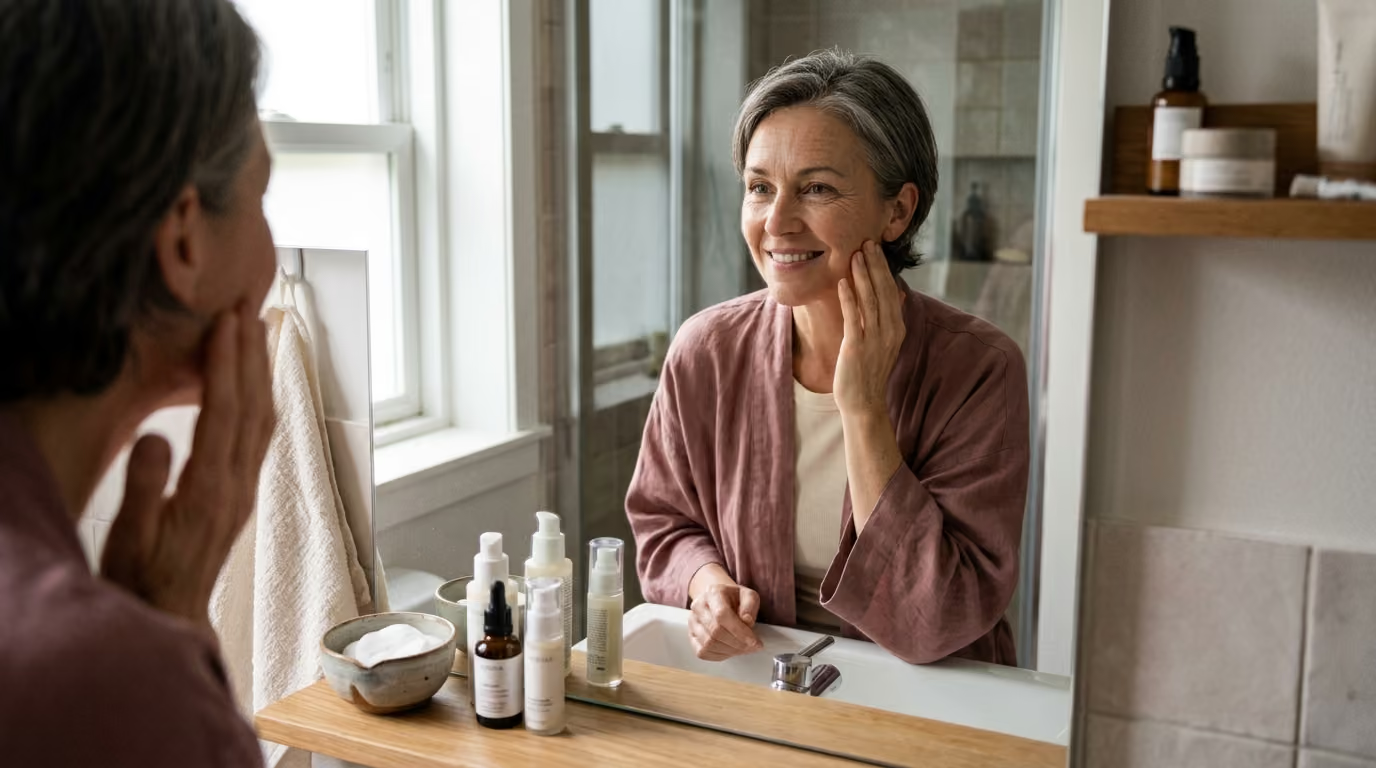

Aggressive clinical interventions seem necessary for aging, but matching anatomical skin layers with topical care, lasers.





Many consumers believe that an escalating skin concern always requires a more aggressive intervention. When a fine line deepens or uneven pigment lingers, the instinctive response is often to jump straight from over-the-counter creams to intensive laser resurfacing or clinical procedures. Conversely, others spend years purchasing expensive topical serums to fix structural skin laxity or undiagnosed inflammatory conditions that no topical product can biologically alter. Both approaches waste money, create unnecessary frustration, and occasionally delay critical medical care.
Selecting the right pathway requires understanding where home skincare ends, where clinical procedures offer genuine utility, and where medical diagnosis must take precedence. Navigating these choices is not about finding an aggressive shortcut. It is about matching the biological reality of your skin concern to the intervention best equipped to address it. A measured decision framework allows you to balance expected outcomes, recovery downtime, procedural risks, and financial investment.
Clinical decision-making in dermatology relies on categorizing interventions by their biological depth, safety profiles, and proven outcomes. Navigating the modern beauty landscape requires separating daily maintenance from procedural correction and medical evaluation.
The primary findings from clinical dermatologic literature highlight clear boundaries for each tier of care:
Understanding these research-backed benchmarks prevents unrealistic expectations. It ensures that you do not expect a topical cream to lift deep structural folds, nor expect an in-office laser to replace foundational sun protection.
To choose the right level of intervention, you must understand the anatomical layers of the skin. The skin consists of the outer epidermis, the structural dermis, and the deeper subcutaneous fat layer. Different concerns originate in different biological compartments. Consequently, an intervention must reach the specific layer where the biological issue resides.
The epidermis serves primarily as a protective barrier. It renews itself through cellular turnover, where basal keratinocytes divide, migrate upward, and shed as dead corneocytes. Topical skincare acts almost exclusively within this superficial realm. Sunscreen filters ultraviolet radiation before it can induce direct DNA damage or generate reactive oxygen species in epidermal cells.
Topical retinoids work through cellular signaling. When tretinoin binds to retinoic acid receptors within keratinocytes, it normalizes cell turnover and accelerates epidermal shedding. It also diffuses into the papillary dermis to inhibit matrix metalloproteinases, which are enzymes that break down collagen. However, topical molecules face strict penetration limits governed by molecular size, lipid solubility, and barrier integrity. Because of this, topicals are uniquely suited for surface roughness, subtle hyperpigmentation, and mild photoaging.
Deeper concerns, such as pronounced wrinkling, deep acne scarring, and loss of structural firmness, originate in the dermis. The extracellular matrix of the dermis consists of dense type I and type III collagen, elastin fibers, and glycosaminoglycans. These structural proteins degrade due to intrinsic chronological aging and chronic ultraviolet exposure. Topical skincare cannot physically break apart scarred tissue or instantly rebuild degraded extracellular matrices.
Clinical procedures intentionally bypass or penetrate the epidermal barrier to trigger a controlled wound-healing cascade in the dermis. Microneedling uses fine needles to create physical micro-conduits, stimulating platelet activation and growth factor release. Lasers utilize photothermolysis, targeting specific chromophores such as water, melanin, or hemoglobin to heat and vaporize microscopic zones of tissue. Chemical peels utilize acids to denature epidermal and dermal proteins at precise depths.
These controlled injuries activate dermal fibroblasts, which synthesize new collagen and organized elastin bundles over several months. You can learn more about these biological mechanisms within evidence-based skin longevity resources.
Below the dermis lies the subcutaneous layer, which contains distinct fat compartments and structural retaining ligaments. Over time, these fat pads atrophy and shift downward, while the underlying facial bones gradually resorb. This structural deflation creates deep nasolabial folds, hollow under-eye contours, and jowling along the jawline.
No topical cosmetic serum and no superficial skin resurfacing device can replace lost deep volume or re-anchor descended fat compartments. Treating structural volume loss requires structural modalities, such as injectable dermal fillers, biostimulatory agents, or surgical repositioning. Recognizing which anatomical layer is responsible for your concern is the most reliable way to select the appropriate treatment category.
Examining high-quality clinical data reveals clear differences in how quickly and significantly various interventions perform. Realistic expectations depend on looking at actual trial outcomes rather than promotional before-and-after imagery.
Sun protection is often dismissed as basic maintenance, but randomized controlled trials show it has profound corrective and preventive value. In a landmark 4.5-year randomized trial of 903 adults, researchers evaluated the effects of daily broad-spectrum sunscreen application against discretionary sunscreen use. The study utilized microscopic microtopography grading to track skin surface changes and photoaging progression.
The trial revealed that the daily sunscreen group experienced 24% less skin aging over the study period compared to the discretionary-use group. Furthermore, researchers detected no measurable increase in skin aging among the daily sunscreen users across the entire four-and-a-half years. Daily sun protection directly preserves the dermal extracellular matrix by blocking ultraviolet-induced collagen degradation.
Prescription retinoids have the most extensive randomized clinical data among all topical cosmetic agents. A comprehensive systematic review of randomized controlled trials confirmed that topical tretinoin consistently improves fine wrinkling, coarse wrinkles, mottled hyperpigmentation, and sallowness. Objective histological assessments demonstrate that tretinoin increases epidermal thickness and stimulates new type I collagen synthesis in the papillary dermis.
A systematic review analyzing eight randomized controlled trials with 1,361 patients evaluated the performance of topical tretinoin for photodamaged facial skin. The pooled data demonstrated statistically significant clinical improvement in both fine and coarse wrinkles. However, the data also highlights the necessity of patience. Measurable clinical improvements began appearing at four weeks, but peak structural and visible benefits required between sixteen weeks and twenty-four months of continuous daily or alternate-day application.
When topical timelines are too slow or concerns are moderate to severe, patients often look to in-office resurfacing. A 2026 systematic review and meta-analysis evaluated the comparative outcomes of lasers versus chemical peels for photoaging, acne, and acne scarring. The analysis revealed no statistically significant difference in overall therapeutic efficacy between the two modalities when appropriately matched to the condition.
The primary difference emerged in treatment logistics and patient experience:
Both options successfully stimulate dermal remodeling. The optimal choice depends on whether a patient prioritizes fewer clinic visits or lower procedural discomfort.
Microneedling has gained significant attention as a collagen-induction procedure that preserves the epidermis. A systematic review and meta-analysis examining microneedling for facial rejuvenation revealed an overall patient satisfaction rate of 83%. Patients reported noticeable improvements in fine lines, skin firmness, and overall surface texture.
A related safety review identified the precise incidence of typical procedural side effects:
While these figures show a favorable safety profile, dermatologic safety literature warns that complications can escalate when procedures are mismanaged. Persistent side effects include post-inflammatory hyperpigmentation, tram-track scarring from excessive needle pressure, and foreign-body granulomas from inappropriate topical serums applied post-needling. These risks are considerably higher in deeper skin phototypes or in patients with active skin infections.
Decisions to pursue cosmetic interventions are heavily influenced by emotional and social factors. In a prospective multicenter observational study of 511 patients seeking aesthetic procedures, researchers documented patient motivations:
Interestingly, 59.5% of respondents cited current financial affordability as the primary reason for scheduling the treatment at that specific point in time. An aesthetic surgery consumer survey noted that 70% of surveyed adults had actively considered a procedure, but delayed due to cost, potential pain, recovery downtime, and fear of unnatural results.
A systematic review on observer perceptions after cosmetic treatments showed that outside evaluators consistently rated treated patients as appearing younger, more attractive, and more socially approachable. However, the literature does not show that cosmetic procedures automatically produce permanent improvements in overall life satisfaction or mental health. Recognizing this helps ensure that aesthetic interventions are chosen to treat physical skin concerns rather than broader personal distress.
While clinical studies provide clear guidance on specific ingredients and devices, the broader body of aesthetic research has real methodological limitations. Understanding these gaps prevents over-interpreting study claims.
The most significant gap in dermatologic literature is the lack of a validated clinical scoring system that automatically dictates when to transition from topical care to in-office procedures. While studies prove that tretinoin works over six months and fractional lasers work over two sessions, no clinical trial has directly compared thousands of patients across identical timelines to establish a precise treatment ladder. Every individual possesses a distinct combination of skin thickness, melanin density, vascular reactivity, healing capacity, and lifestyle habits. As a result, treatment progression remains an individualized clinical judgment rather than a rigid formula.
The majority of clinical trials for cosmetic devices and topical formulations run for eight to twenty-four weeks. Very few studies track patients for five to ten years after completing a series of chemical peels, microneedling sessions, or laser resurfacing treatments. This creates two notable research gaps:
Many published device studies rely on small cohorts of twenty to fifty participants. Furthermore, historical dermatologic studies have disproportionately enrolled individuals with lighter skin types, specifically Fitzpatrick phototypes I through III.
Because melanin-rich skin (Fitzpatrick phototypes IV through VI) contains highly reactive melanocytes, thermal or mechanical trauma carries a much higher risk of post-inflammatory hyperpigmentation. Large-scale, randomized trials evaluating energy-based devices specifically across diverse phototypes remain limited. Readers can review deeper analyses of skin physiology within our scientific beauty research guides.
A final limitation involves how cosmetic trials measure success. Many studies use subjective physician visual assessments or patient satisfaction surveys rather than standardized digital profilometry or tissue biopsies. Subjective assessments are vulnerable to placebo effects and observer bias. An 83% patient satisfaction score demonstrates that patients felt positive about their treatment, but it does not provide an exact physical measurement of dermal collagen density.
Navigating the choices between home skincare, clinical procedures, and medical diagnosis requires a structured framework. By evaluating your concern against five core variables, you can make informed decisions.
Home skincare is the most cost-effective and lowest-risk approach for common cosmetic concerns. It should serve as the primary intervention under specific conditions:
A foundational home regimen does not need to be complex to be biologically effective:
You can read more about constructing an evidence-based routine within our specialized skin longevity guides.
When a concern extends into the deeper dermis or topical care has plateaued after six months of consistent use, clinical procedures offer a genuine advantage. In-office treatments are appropriate when:
When evaluating procedures, match the modality to your specific clinical goal:
The safety and success of any clinical procedure depends on the qualifications of the practitioner. The American Academy of Dermatology emphasizes that provider training is the single most important factor in minimizing cosmetic complications.
During an aesthetic consultation, a board-certified dermatologist should conduct a thorough medical intake that covers:
If a practitioner promises immediate, permanent results without discussing side effects, downtime, or maintenance requirements, seek a second opinion.
Cosmetic interventions and home skincare must immediately stop when a skin concern exhibits signs of medical pathology. Treating a skin disease or a malignant lesion as a simple cosmetic nuisance can lead to delayed diagnosis and poor clinical outcomes.
Any pigmented lesion, mole, or new spot that displays any of the classic ABCDE melanoma criteria requires prompt examination by a board-certified dermatologist:
In addition to the ABCDE rule, the "ugly duckling sign" is a valuable diagnostic clue. If a mole or spot looks distinctly different from all surrounding moles on your body, it warrants prompt clinical evaluation.
Not all cutaneous malignancies present as dark moles. Basal cell carcinomas and squamous cell carcinomas often mimic benign cosmetic blemishes or dry patches. Seek immediate medical evaluation if you notice:
Medical evaluation is also essential for severe, systemic, or inflammatory skin conditions that exceed the scope of over-the-counter care:
Aesthetic procedures, such as microneedling, laser resurfacing, or chemical peels, must never be performed across areas of active infection, open sores, or undiagnosed skin lesions. Prioritize accurate medical diagnosis before considering any cosmetic enhancement. You can find comprehensive overviews of dermatologic health across our broader skin health publications.
The skincare and aesthetic industries frequently use marketing language that blurs the line between cosmetic maintenance, clinical procedures, and medical therapy. Examining these claims against dermatologic biology brings clarity to your decision-making.
Beauty advertisements frequently claim that a topical peptide cream or firming serum can lift a sagging jawline or replicate clinical procedures.
Biological reality shows that skin sagging results from three deeper structural changes: facial bone resorption, subcutaneous fat pad deflation and descent, and the stretching of deep retaining ligaments. Topical formulations operate in the epidermis and the uppermost papillary dermis. They can improve surface hydration, increase epidermal thickness, and slightly smooth fine lines. However, no topical molecule possesses the mechanical or structural capability to reposition descended fat compartments or lift structural skin laxity.
Many consumers assume that if a mild chemical peel or conservative laser setting improves skin texture, an aggressive, high-intensity treatment will deliver twice the benefit in half the time.
Biological reality demonstrates that tissue remodeling depends on controlled stress. When thermal, mechanical, or chemical trauma exceeds the physiological healing capacity of the skin, the repair process fails. Excessive injury triggers prolonged inflammation, abnormal fibroblast proliferation, hypertrophic scarring, and severe post-inflammatory hyperpigmentation. This is especially true for individuals with melanin-rich skin. Conservative, appropriately spaced treatments consistently yield safer and more predictable outcomes than overly aggressive single sessions.
Some believe that investing in clinical procedures frees them from the daily chore of applying sunscreen, retinoids, or moisturizers.
Biological reality confirms that in-office procedures and daily skincare serve complementary, non-interchangeable functions. A laser resurfacing procedure or microneedling series remodels existing collagen at a single point in time. However, ultraviolet radiation, environmental oxidative stress, and natural chronological aging continue every day. Without daily broad-spectrum sun protection and cell-regulating topicals like retinoids, newly synthesized collagen degrades rapidly. Procedures provide structural correction, while daily home skincare protects that investment and maintains long-term skin health.
You should maintain a consistent home skincare routine for at least twelve to sixteen weeks before determining its effectiveness for photoaging, fine lines, or mild hyperpigmentation. While humectant moisturizers provide immediate surface hydration and temporary plumping, structural biological changes take time.
Epidermal cell turnover requires approximately twenty-eight to forty days, and topical retinoid-induced collagen synthesis in the papillary dermis unfolds over three to six months. If you experience persistent redness, burning, or allergic contact dermatitis, discontinue the product immediately. However, if your skin tolerates the routine well, allow four full months of consistent daily use before considering an escalation to in-office procedures.
Yes, but you must carefully adjust the timing around your procedure dates under the direct guidance of your treating physician. Topical retinoids strengthen the epidermis and enhance cellular turnover, which can optimize overall skin health before a procedure.
However, because retinoids can increase skin sensitivity and disrupt the stratum corneum barrier, dermatologists typically instruct patients to stop applying prescription tretinoin or over-the-counter retinol three to seven days prior to energy-based laser treatments, medium chemical peels, or microneedling. Following the procedure, you must pause retinoid use until the skin has completely re-epithelialized and post-treatment erythema has resolved, which usually takes five to ten days. Always follow the specific pre- and post-procedure protocols provided by your medical practitioner.
In-office procedures can be performed safely on darker skin tones, but they require careful device selection, conservative energy settings, and experienced medical practitioners. Melanin-rich skin contains highly reactive melanocytes that readily produce excess pigment in response to thermal or mechanical injury, creating a high risk of post-inflammatory hyperpigmentation.
Ablative resurfacing lasers that heat surrounding epidermal tissue carry significant risk for deeper phototypes. Safer alternatives often include mechanical microneedling, conservative superficial chemical peels (such as salicylic or lactic acid), and specialized long-pulsed Nd:YAG lasers that bypass epidermal melanin. Individuals with deeper skin tones should always consult a board-certified dermatologist who has demonstrated clinical experience in treating diverse phototypes.
A formal aesthetic or medical consultation should feel like a structured clinical evaluation rather than a sales pitch. The dermatologist will examine your bare skin under clinical lighting and dermoscopy, review your complete medical history, and evaluate any medications or systemic conditions that could affect wound healing.
They will identify whether your concerns are superficial, structural, or potentially medical, and provide a clear diagnosis of specific lesions. The physician will then present a realistic spectrum of treatment options, detailing the expected percentage of improvement, necessary treatment sessions, upfront and long-term costs, potential complications, and expected recovery downtime. You should leave the consultation with a clear understanding of the risks, realistic outcomes, and home-care requirements.
Navigating aesthetic choices becomes straightforward when you match your concern to the appropriate biological intervention. A balanced approach protects your health, respects your budget, and delivers predictable, long-term outcomes.
Selecting the right level of care allows you to care for your skin with clarity and confidence.
Stay connected for research and practical guidance on skin, hair, collagen, nutrition and beauty longevity. Clear ideas for people who want to understand how appearance changes with age and make better-informed choices over time.


Understand your skin, hair and body better without chasing every new trend, treatment or promise.
explore the Blog