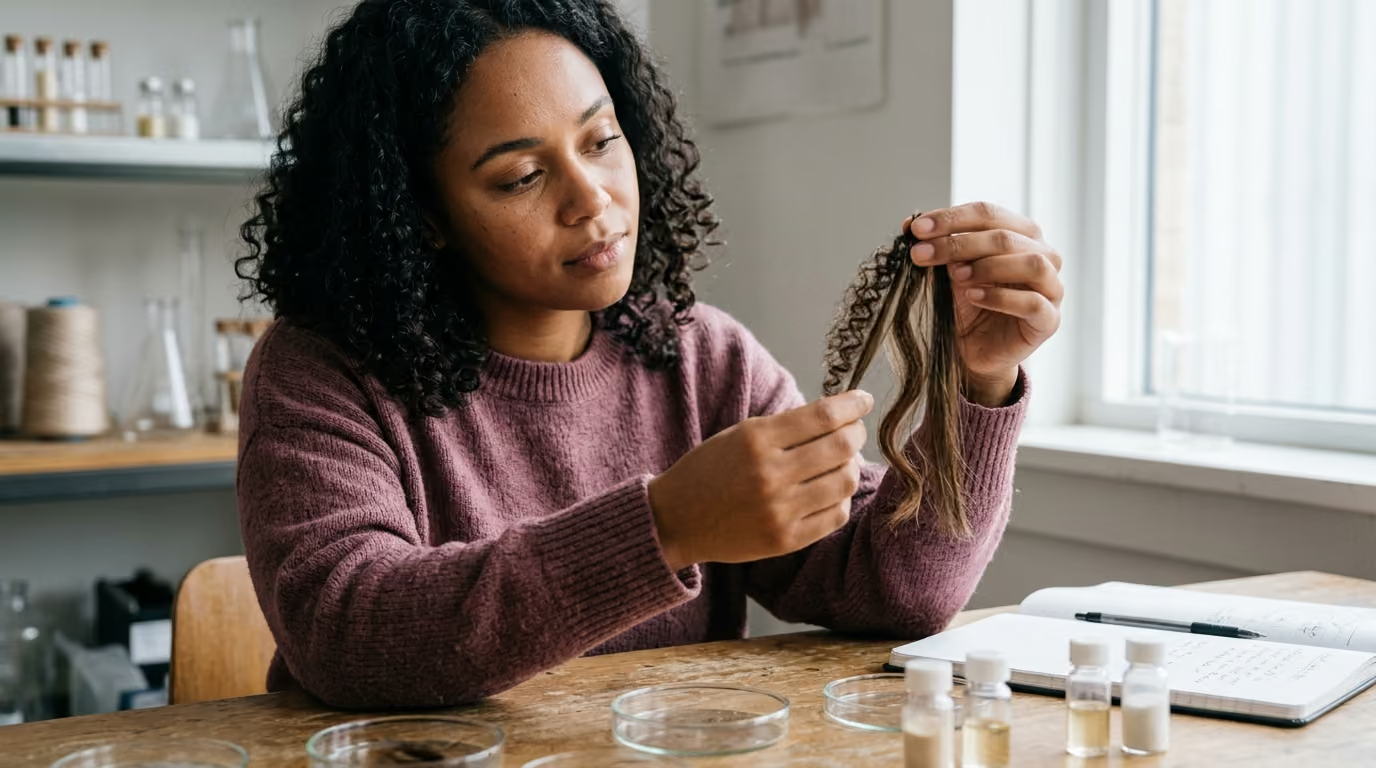

Resilient, damage-resistant hair results from understanding keratin architecture, moisture dynamics, tensile mechanics, and scientific strategies.





You comb your fingers through your hair after a shower and notice small, broken fragments gathering in the sink. The natural reaction is to wonder which single product failed or which styling tool caused the snap. Hair breakage is rarely the result of a single isolated mistake. It is the cumulative physical outcome of mechanical force, chemical history, heat exposure, water interactions, and the microscopic architecture of the fiber itself.
Hair behaves as a biological composite material. Its daily performance depends on both the structural integrity of its internal core and the smoothness of its protective outer barrier. When you understand the physics and chemistry of the hair fiber, caring for it becomes straightforward. Instead of relying on dramatic marketing claims, you can design a rational care routine based on materials science to preserve strength, prevent fractures, and maintain fiber longevity.
The following points summarize the current scientific consensus regarding hair fiber mechanics, structural degradation, and breakage prevention:
To understand why hair breaks, one must examine its structural organization under high magnification. A single human hair fiber measures approximately 50 to 100 micrometers in diameter. That slender cylinder contains three distinct morphological regions known as the cuticle, the cortex, and the medulla.
The cuticle serves as the outer barrier of the hair strand. It is composed of five to ten overlapping scale-like cells that form a protective envelope roughly 5 micrometers thick. Each individual cuticle scale is approximately 60 micrometers long and 0.5 micrometers thick. These cells point downward toward the tip of the hair, resembling shingles on a roof.
The cuticle is chemically stratified into distinct sub-layers. The outermost surface is the epicuticle, a delicate membrane roughly 3 nanometers thick. Beneath it lies the exocuticle, which constitutes approximately two thirds of the total cuticle structure. The exocuticle is rich in the amino acid cystine and contains heavy cross-linking, providing significant rigidity and abrasion resistance. Below the exocuticle sits the endocuticle, a low-sulfur layer that swells more readily in the presence of water.
Bound to the outer epicuticle is a natural lipid layer composed largely of 18-methyl eicosanoic acid, often abbreviated as 18-MEA. This fatty acid layer imparts natural hydrophobicity to the hair surface. It repels moisture, reduces surface friction, and allows strands to glide past each other smoothly. When 18-MEA is stripped away by chemical processing, hair becomes hydrophilic, absorbing water uncontrollably and creating friction that leads to mechanical tangling.
Beneath the cuticle lies the cortex, which accounts for the vast majority of the fiber's mass. The cortex is responsible for hair's tensile strength, elasticity, and bending stiffness. It is constructed of elongated cortical cells that measure roughly 100 micrometers in length, aligned parallel to the longitudinal axis of the hair strand.
Inside each cortical cell are dense cable-like assemblies called macrofibrils, which measure between 0.2 and 0.4 micrometers in diameter. These macrofibrils contain tightly bundled intermediate filaments measuring approximately 7.5 nanometers across. The intermediate filaments are crystalline structures composed of alpha-helical keratin proteins. They are embedded within an amorphous, non-filamentous protein matrix that is exceptionally rich in sulfur-containing cystine residues.
The cortex functions exactly like reinforced concrete in civil engineering. The crystalline intermediate filaments act as structural steel rods providing stiffness and tensile resistance. The surrounding sulfur-rich amorphous matrix acts as the concrete binder, absorbing compressive loads and transferring mechanical stress evenly across the cellular network.
At the center of thick or coarse hair fibers sits the medulla. The medulla consists of specialized, loosely packed cells containing air spaces. It can be continuous, interrupted, or completely absent in fine hair. In modern cosmetic science, the medulla plays virtually no meaningful role in tensile strength, elasticity, moisture management, or grooming-induced breakage.
Hair strength depends on multiple tiers of chemical bonding that hold its alpha-helical keratin chains together. The most durable of these are covalent disulfide bonds. These bonds form when two sulfur-containing cysteine amino acids oxidize to create a cystine cross-link. Disulfide bonds stabilize the intermediate filaments and anchor them into the surrounding matrix, giving hair its permanent structural shape.
Hair also relies heavily on non-covalent interactions. Hydrogen bonds exist in massive quantities between neighboring peptide groups. Although a single hydrogen bond is weak, millions of them acting together supply substantial structural stiffness in dry hair. Hydrogen bonds are easily broken by water molecules, which is why wetting hair allows temporary reshaping.
Ionic bonds, also known as salt bridges, form between charged acidic and basic amino acid side chains. These bonds are sensitive to shifts in pH, which alters their electrical charge and changes the fiber's mechanical stability. Hydrophobic interactions and physical mechanical interlocking between macrofibrils complete this multi-layered reinforcement network.
Scientific testing reveals that hair is a remarkably resilient material under baseline conditions. However, its mechanical properties change drastically under environmental and chemical stress. Evaluating hair strength requires looking at precise material measurements rather than vague descriptions.
In materials testing, human hair demonstrates an ultimate tensile strength ranging between 150 and 270 MPa. This measurement reflects the amount of physical force per unit of cross-sectional area that the fiber can endure before snapping. Because tensile strength is normalized to fiber diameter, thick and fine strands from the same individual often possess similar tensile stress thresholds, even though the thicker strand requires greater absolute force to break.
When dry hair is pulled, it exhibits a three-phase stress-strain response:
Hair is hygroscopic, meaning it constantly absorbs and releases water in response to surrounding relative humidity. Liquid water interacts directly with the amorphous protein matrix surrounding the intermediate filaments. As water penetrates the matrix, it disrupts internal hydrogen bonds and forces the protein chains apart.
Mechanical studies demonstrate that soaking hair causes its diameter to swell by approximately 10 to 16 percent. Specialized liquid-retention measurement techniques have documented swelling volumes exceeding 30 percent under prolonged immersion. In contrast, longitudinal expansion along the length of the strand remains negligible, typically under 2 percent. This uneven swelling occurs because water fills the space between parallel filaments rather than lengthening the crystalline proteins themselves.
Water functions as a powerful plasticizer within keratin structures. As water content increases, Young's modulus, which measures structural stiffness, drops dramatically. High relative humidity lowers hair's resistance to stretching while extending its ultimate elongation potential.
Dry hair can typically stretch between 20 and 30 percent of its original length before breaking. Wet hair, however, can stretch up to 50 percent under mechanical tension. This is why wet modulus testing serves as a sensitive indicator of chemical and physical damage. When hair is wet, the rigid matrix is temporarily neutralized, exposing any underlying weaknesses or voids in the intermediate filament network that remain hidden during dry testing.
A fiber that feels unusually stretchy or gummy when wet is not exhibiting healthy elasticity. It is showing significant loss of cortical matrix support and degraded intermediate filament structure.
Chemical processing, particularly oxidative bleaching, causes profound alterations across every structural compartment of the hair. Bleaching relies on alkaline hydrogen peroxide formulations to enter the cortex and solubilize melanin pigments. However, peroxide oxidation is non-selective. It attacks the structural proteins of both the cuticle and the cortex simultaneously.
Redox proteomic studies show that bleaching progressively oxidizes cystine disulfide bonds into cysteic acid residues. This chemical conversion introduces negative electrical charges into the protein network, causing electrostatic repulsion that loosens the matrix structure.
Microscopy and amino-acid leaching assays demonstrate that structural proteins leach out of the fiber during and after bleaching. These leached proteins originate from both the cuticle scales and the internal cortical macrofibrils. With repeated bleaching, the loss of native protein mass accelerates, directly reducing tensile strength, lowering wet modulus, and leaving the fiber vulnerable to fracture.
Thermal analytical investigations reveal that human hair undergoes structural transformations across a spectrum of temperatures. Between 25 and 170 degrees Celsius, hair loses bound water and undergoes reversible thermal expansion. As temperatures rise past 180 degrees Celsius, irreversible changes begin occurring in the secondary protein structure of the alpha-helical keratins.
Bulk thermal denaturation of dry keratin proteins is detected at approximately 237 degrees Celsius. However, this denaturation threshold does not represent a safe styling ceiling. Microscopic surface analyses demonstrate that daily blow-drying for the equivalent of one month produces pronounced cuticle scale lifting, edge chipping, and surface cracking. When flat irons exceed 185 degrees Celsius, cuticle scales become rigid, brittle, and prone to flaking off during subsequent combing.
Applying heated metal styling plates to damp hair represents an extreme thermal hazard. Trapped water vaporizes rapidly within the cortex and cuticle layers, expanding faster than it can diffuse out. This rapid phase transition generates localized pressure pockets, weakening the fiber walls and creating structural fractures.
While cosmetic science provides deep insights into fiber physics, laboratory findings must be interpreted with healthy scientific skepticism. Many common diagnostic procedures and product claims rely on simplified assumptions that fail to reflect real-world hair behavior.
Most tensile strength and wet modulus data originate from single-fiber automated testing instruments in controlled laboratory settings. In these tests, an isolated strand is mounted in pneumatic clamps and pulled at a constant strain rate under fixed temperature and humidity.
On a human head, hair fibers never operate in isolation. Breakage on the scalp is driven by complex multi-fiber tribological events. These include fiber-to-fiber friction, spatial entanglement, localized bending around comb teeth, torsional twisting, and uneven manual tension. A treatment that yields a modest 5 percent improvement in single-fiber tensile strength in a laboratory may deliver a much larger practical benefit if it substantially reduces surface friction during detangling.
A popular consumer method for assessing hair porosity involves placing shed strands into a glass of water to see if they float or sink. From a physical chemistry perspective, this test is fundamentally flawed.
Hair fibers naturally float on water due to surface tension, residual sebum, trapped micro-air bubbles along the cuticle edges, and cosmetic silicone coatings. A chemically porous fiber coated in lightweight conditioning oils can float indefinitely, while a healthy virgin fiber from which surface sebum was stripped with clarifying shampoo might sink quickly. Functional porosity is best understood as a dynamic behavioral trait, reflecting how quickly hair absorbs water, swells, dries, and takes up cosmetic ingredients across different sections of the same head.
The emergence of bond-building treatments has generated significant interest in chemical hair repair. These formulations are designed to mitigate oxidative stress and restore mechanical stability to chemically processed hair. Disulfide bond preservation during oxidative processing is chemically sound, but marketing claims often exaggerate the nature of the repair.
Independent laboratory reviews evaluating bond-building technologies indicate that many tested formulations do not produce statistically significant increases in permanent covalent disulfide bonds when compared to untreated controls. Instead, the measurable improvements in wet strength, reduced combing resistance, and reduced breakage often stem from electrostatic interactions, ionic cross-linking, and protective surface films.
In our experience analyzing clinical data at Younell, acknowledging these scientific boundaries is empowering rather than discouraging. I remember speaking with a dermatologist who told me her patients were coming in with severe anxiety about normal cosmetic hair changes. That anxiety was driven entirely by social media filters and aggressive marketing campaigns that promise to permanently restore damaged fibers to a virgin state. That conversation became a cornerstone of our philosophy. We decided right then that our publication would never frame natural changes or cumulative fiber wear as personal failures.
Hair is a non-living biological structure. Once the fiber emerges from the scalp follicle, it cannot biologically regenerate or grow new cells. Treatments can reinforce, lubricate, and protect the remaining structure, but they cannot permanently rebuild the original biological architecture.
Conditioning is often described as infusing the hair with moisture. In physical chemistry, the primary job of a conditioner is not adding water, but managing friction, controlling electrostatic charge, and depositing protective surface films.
When hair is washed with shampoo, anionic surfactants remove sebum and leave the fiber surface bearing a net negative electrical charge. This negative charge causes individual fibers to repel one another electrostatically while increasing fiber-to-fiber and fiber-to-comb friction. Conditioners solve this problem through targeted ingredient chemistry.
Cationic surfactants are the workhorses of rinse-off conditioners. These molecules feature a positively charged hydrophilic head group and a long hydrophobic lipid tail. Because opposites attract, the positively charged head groups electrostatically bind to the negatively charged damage sites on the hair surface.
This adsorption leaves the hydrophobic fatty tails pointing outward, recreating a synthetic mimic of the lost 18-MEA lipid layer. This newly formed monomolecular coating neutralizes static electricity, smooths lifted cuticle edges, and reduces wet combing forces.
Recent instrumental wet-combing analyses demonstrate that behenyltrimethylammonium chloride, commonly known as BTAC, significantly outperforms shorter-chain surfactants like stearyltrimethylammonium chloride in reducing detangling friction. The longer C22 hydrocarbon chain of BTAC provides superior surface lubrication and stronger hydrophobic adsorption on damaged keratin.
Fatty alcohols, including cetyl alcohol, stearyl alcohol, and cetearyl alcohol, do not function like drying cosmetic alcohols. Instead, they act as structural lipophilic building blocks. In modern formulations, fatty alcohols combine with cationic surfactants and water to form ordered lamellar gel networks.
These crystalline gel networks trap large volumes of water within microscopic lipid bilayers. When applied to wet hair, the gel network spreads evenly across the strands, providing immediate tactile slip and preventing friction-induced microfractures during detangling.
Silicones are among the most rigorously researched ingredients for hair breakage prevention. High-molecular-weight dimethicones deposit thin, flexible, highly lubricating films over the cuticle envelope. These films lower fiber friction, block excess environmental humidity, and protect the strand against mechanical wear.
Modified silicones, particularly amodimethicone, provide targeted protection. Amodimethicone contains amine functional groups that carry positive electrical charges in acidic formulations. These amine groups cause the polymer to deposit selectively on highly damaged, negatively charged areas, such as frayed ends or bleached sections. Once deposited, the polymer cross-links into a breathable, friction-reducing shield that resists washing off, without building up on healthier root sections.
Cationic polymers, such as Polyquaternium-10, Polyquaternium-67, and guar hydroxypropyltrimonium chloride, enhance conditioning efficiency during shampooing. When a shampoo is diluted with water during rinsing, anionic surfactants and cationic polymers undergo phase separation to form a microscopic complex called a coacervate.
This coacervate precipitates directly onto the hair surface, depositing a smooth polymer film and carrying suspended silicone droplets with it. This process shields the cuticle from rough abrasive forces while the hair is being rinsed and cleansed.
Hydrolyzed proteins derived from wheat, silk, soy, or keratin consist of short-chain peptides and free amino acids. Because of their reduced molecular weight, small peptide fragments can penetrate shallow fissures in a compromised cuticle and deposit within the outer cortical layers.
These proteins do not permanently re-knit broken keratin intermediate filaments. Instead, they act as temporary structural fillers and moisture-buffering agents. They occupy microscopic voids, alter the fiber's internal rigidity, and reduce water absorption speed, helping to stabilize over-processed or gummy hair fibers.
Protecting hair from breakage requires a systematic routine tailored to your fiber's specific structural state. You can learn more about general fiber maintenance in our guide to hair health and structure. Rather than guessing which treatments to buy, diagnose your hair's primary structural failure mode and apply the targeted strategies below.
Heat styling requires a measured approach to protect the fiber's internal composite architecture:
Cosmetic marketing often simplifies fiber physics into catchy slogans. Correcting these misconceptions helps you make objective decisions about product choices and styling habits.
Many people assume that snapping hair is simply dry and needs more water or hydrating mists. In reality, water plasticizes the protein matrix, lowers Young's modulus, and makes hair stretchier and more vulnerable to physical breaking forces.
Excessive wetting and drying cycles cause hygral fatigue, where repeated radial swelling and contracting weakens the internal cell membrane complex. Hair strength depends on intact disulfide bonds, well-preserved intermediate filaments, and low surface friction, not on saturating the cortex with water.
When a rich conditioning treatment leaves compromised hair feeling silky and smooth, it is easy to assume the fiber has been restored to full health. In truth, conditioners work by depositing cationic surfactants, fatty alcohols, and silicones onto the outer cuticle layer.
These ingredients reduce combing forces and enhance tactile softness, which helps prevent future grooming damage. However, lowering surface friction does not replace leached cortical proteins or reconnect broken internal peptide chains. Acknowledging this distinction allows you to value conditioners for what they actually do: protect the surface and reduce handling stress.
Porosity is frequently discussed as an unchangeable trait like eye color. In biological reality, porosity varies significantly along the length of a single hair strand.
New growth at the scalp consists of virgin fiber with intact 18-MEA lipids and tightly sealed cuticles, exhibiting low porosity. The older ends of that same strand have weathered years of UV exposure, washing, detangling, and heat styling, resulting in higher porosity. Porosity is a dynamic measure of cumulative fiber wear, not a fixed personal identity. You can find more research-backed information across our library of hair longevity resources.
Hydrolyzed protein treatments are often promoted as a universal remedy for snapping strands. While damaged, chemically lightened hair benefits from the temporary rigidity proteins provide, applying concentrated protein products to healthy or already stiff hair can backfire.
Excessive protein deposition can make fibers overly rigid, reducing their natural flexibility and causing them to snap under normal bending forces. Protein treatments should be used selectively on chemically compromised hair, balanced with lubricating conditioning agents to preserve natural flexibility.
Cosmetic serums frequently claim to mend split ends. A split end represents a complete longitudinal fracture of the hair shaft where the protective cuticle has worn away and the cortical macrofibrils have physically separated.
Formulations containing cross-linking polymers or polyelectrolyte complexes can temporarily glue these frayed fibers together until the next wash. However, no cosmetic formulation can re-knit fractured cortical cells back into a seamless biological unit. Precision trimming remains the only definitive way to remove split ends and prevent fractures from traveling further up the hair shaft.
Wet hair breaks more easily because water molecules penetrate the amorphous protein matrix in the cortex, temporarily disrupting internal hydrogen bonds. This plasticization lowers the fiber's structural stiffness, known as Young's modulus, causing wet hair to stretch much further under lower loads.
While dry hair stretches roughly 20 to 30 percent before fracturing, wet hair can stretch up to 50 percent. When wet hair is stretched past its yield point, its alpha-helical proteins unfold into weakened beta-sheets, leading to permanent deformation and early fiber snapping if pulled with a comb or brush.
No cosmetic product can fully reverse the damage caused by oxidative bleaching. Bleaching permanently oxidizes cystine disulfide bonds into cysteic acid and leaches native structural proteins from both the cuticle and cortex.
Bond-building formulations can help reduce oxidative damage during processing and provide temporary ionic reinforcement and surface lubrication. However, they do not fully restore the original cellular architecture or replace all lost cortical intermediate filaments. To explore the broader science behind beauty longevity, visit our beauty science articles.
Silicones protect hair fibers primarily by dramatically lowering surface friction. High-molecular-weight dimethicones and functional amodimethicones deposit a micro-thin, flexible hydrophobic coating over the cuticle scales.
This smooth coating reduces the physical force required to pass a comb or brush through the hair, preventing the snagging and tension spikes that cause mechanical fractures. Silicones also seal the fiber surface against humidity fluctuations, helping to prevent swelling-induced cuticle lifting.
Hair shedding is a natural biological process governed by the follicle's growth cycle. Shed hairs have completed their telogen resting phase and fall out naturally from the scalp, featuring a tiny white keratin bulb at the root end.
Hair breakage is a mechanical material failure that occurs anywhere along the length of the hair shaft. Broken hairs do not have a bulb at the end, are typically shorter than your overall hair length, and often display frayed or fractured tips under close inspection.
Revisit this guide whenever you introduce a major chemical service to your routine, such as bleaching, permanent coloring, or chemical straightening. It is also helpful to review these principles if you change your heat styling habits, notice a sudden increase in short, broken strands after brushing, or want to explore our evidence-based skin and hair guides.
Preserving hair strength is an ongoing commitment to materials management rather than a search for quick cosmetic fixes. When you shield your cuticle layers from unnecessary friction, respect the internal composite structure of your cortex, and manage heat and water exposure with care, you give your hair fibers the physical foundation they need to stay resilient over time.
Stay connected for research and practical guidance on skin, hair, collagen, nutrition and beauty longevity. Clear ideas for people who want to understand how appearance changes with age and make better-informed choices over time.


Understand your skin, hair and body better without chasing every new trend, treatment or promise.
explore the Blog