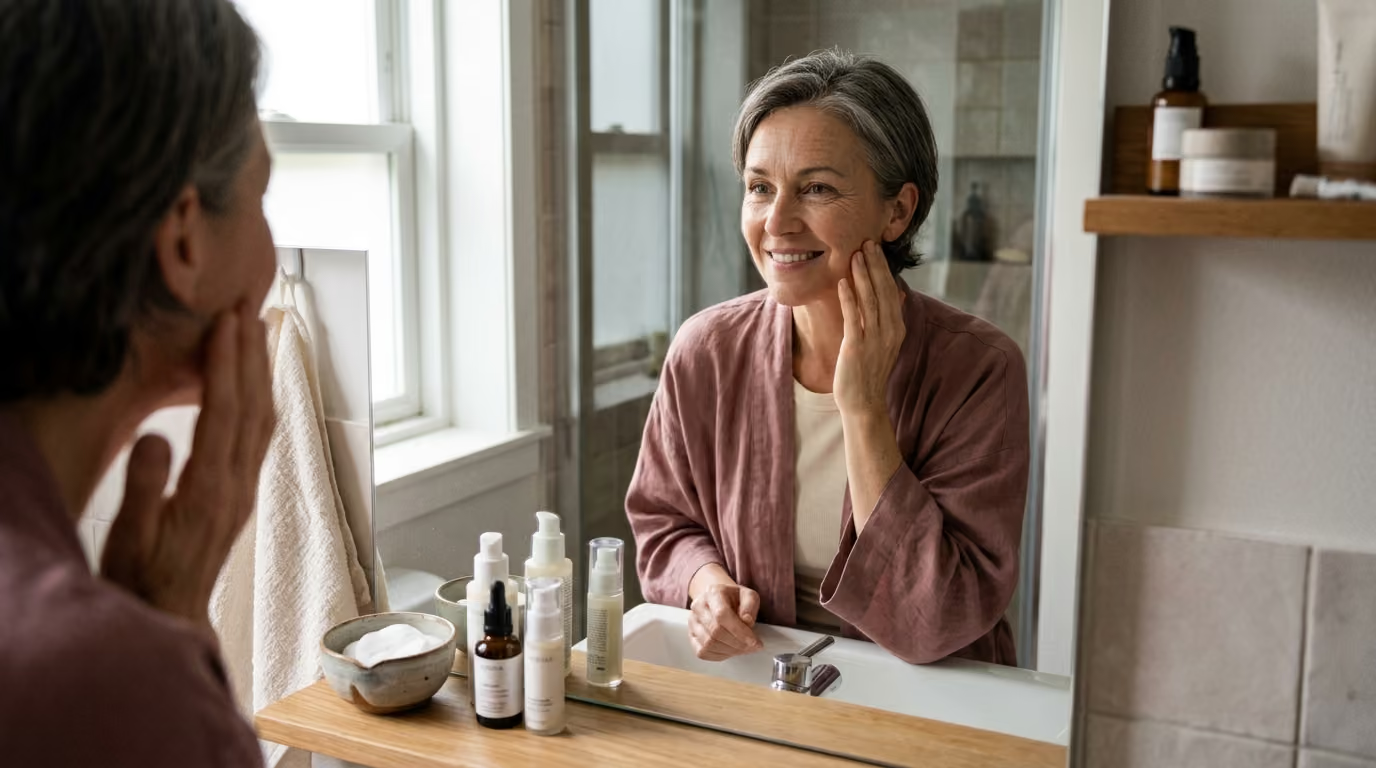

Thirty to fifty percent slower turnover in aging skin requires gentle chemical or enzymatic exfoliation to safely smooth texture without barrier damage.





When skin begins to look dull, dry, or rough, the instinctive reaction is often to scrub it away. Most skincare marketing reinforces this impulse by framing exfoliation as an essential daily reset that reveals fresh, glowing tissue underneath. In mature skin, this assumption is often incorrect. Surface roughness is frequently a visible sign of an impaired lipid barrier and diminished water retention, not simply an excess buildup of dead cells.
Aggressive exfoliation on an already fragile epidermis accelerates moisture loss, triggers low-grade inflammation, and impairs the skin's natural repair pathways. Navigating exfoliation during the aging process requires understanding that cell turnover naturally slows down, but barrier recovery capacity declines even faster. The goal of mature skincare is never to maximize cell removal. The goal is to support the skin's physiological equilibrium by selecting the gentlest intervention capable of meeting specific textural and pigmentary goals.
Understanding modern exfoliation science requires looking directly at clinical and physiological trial data. The following summary provides an overview of how chemical, mechanical, and enzymatic resurfacing impacts mature cutaneous biology:
To understand why exfoliation must be approached conservatively as we grow older, one must examine the biology of desquamation. Desquamation is the continuous, invisible shedding of individual corneocytes from the outermost layer of the stratum corneum. In young, healthy skin, keratinocytes are generated in the basal layer, differentiate as they migrate upward, and eventually transform into flattened, anucleated corneocytes. These cells are glued together by specialized protein structures called corneodesmosomes.
In optimal conditions, endogenous hydrolytic enzymes degrade these corneodesmosomes in a finely tuned sequence. This enzymatic breakdown allows individual cells to detach invisibly during daily washing and movement. This natural shedding process relies heavily on cutaneous hydration and an acidic surface pH. Specialized enzymes such as stratum corneum chymotryptic enzyme and cathepsin D require adequate water content and a specific acidic environment to function properly.
As skin undergoes intrinsic aging and accumulated photoaging, several physiological changes impair this elegant mechanism. Microcirculation to the upper dermis declines, leading to reduced nutrient delivery and diminished natural moisturizing factor production. Lipid production by epidermal keratinocytes decreases dramatically, leading to lower concentrations of ceramides and essential fatty acids. Without adequate lipids and hydration, the enzymes responsible for dissolving corneodesmosomes lose their functional efficiency.
Corneocytes fail to detach individually when these enzymes lose activity. Instead, they remain adhered to one another and shed in macroscopic clumps, which creates the visible appearance of flaking, rough texture, and uneven light reflection. The surface appears dull and dry because light scatters across irregular clusters of adhered cells. This visual presentation often leads individuals to believe they need to scrub their faces vigorously.
When you apply aggressive mechanical friction or highly concentrated free acids to this fragile system, you remove the irregular surface clumps. However, you also strip away the scarce intercellular lipids that mature skin struggled to produce. Research published in skin physiology journals demonstrates that aged stratum corneum has reduced barrier reserve. When mature skin is subjected to barrier disruption, its rate of lipid synthesis and structural repair is markedly slower than that of young skin.
A compromised barrier leads directly to elevated transepidermal water loss. As internal moisture evaporates into the atmosphere, the deeper layers of the epidermis become dehydrated. This dehydration triggers keratinocytes to release pro-inflammatory cytokines such as interleukin-1 alpha. Chronic, low-level inflammation accelerates the degradation of structural proteins in the dermis, undermining your long-term collagen and structural aging preservation goals. Exfoliation must therefore be viewed as an intentional challenge to the barrier rather than a benign cleansing step.
Selecting an appropriate method requires evaluating how different physical and chemical agents interact with mature tissue. Exfoliants vary widely in their depth of penetration, chemical mechanisms, and irritation profiles.
Alpha hydroxy acids, commonly known as AHAs, are water-soluble organic carboxylic acids derived from botanical or synthetic sources. The most widely studied AHAs include glycolic acid, lactic acid, and mandelic acid. These compounds work by weakening the calcium-dependent ionic bonds that hold corneodesmosomes intact, allowing the outer layers of the stratum corneum to shed more uniformly.
Glycolic acid has the smallest molecular weight of any AHA, consisting of just two carbon atoms. This minute molecular footprint allows it to penetrate rapidly through the stratum corneum. In clinical evaluations of photoaged skin, glycolic acid formulations have been shown to improve surface smoothness, reduce the appearance of superficial hyperpigmentation, and stimulate epidermal thickness.
This rapid penetration represents both glycolic acid's greatest benefit and its primary risk. Rapid entry into the epidermis can trigger transient stinging, erythema, and localized irritation, particularly when applied to skin with existing barrier vulnerabilities. If the skin's moisture barrier is compromised, the free acid penetrates unevenly, increasing the likelihood of inflammatory flares.
Lactic acid features a three-carbon chain and a larger molecular structure, which slows its rate of penetration into the epidermis. In addition to its keratolytic activity, lactic acid forms an integral part of the skin's natural moisturizing factor. Clinical studies indicate that lactic acid functions as an effective humectant, drawing water into the stratum corneum while simultaneously loosening cohesive surface cells. It is frequently tolerated better than glycolic acid by mature individuals experiencing concurrent dryness.
Mandelic acid, derived from bitter almonds, possesses an eight-carbon aromatic ring structure. This significantly larger molecular size restricts its penetration to the most superficial layers of the stratum corneum. Mandelic acid penetrates slowly and evenly, minimizing sensory discomfort and redness. Research indicates that mandelic acid is particularly useful for sensitive mature complexions and individuals prone to post-inflammatory hyperpigmentation.
Beta hydroxy acids, primarily represented in dermatology by salicylic acid, differ structurally and functionally from AHAs. Salicylic acid is an oil-soluble compound, meaning it can mix with and penetrate through sebum within the pilosebaceous unit. It is officially classified as a keratolytic agent with documented comedolytic and mild anti-inflammatory properties.
Salicylic acid functions by dissolving intercellular lipids and desmosomal proteins within the pore lining and across the skin surface. Because it is lipid-soluble, it can access follicular impactions that water-soluble acids cannot reach. In mature complexions, salicylic acid provides targeted utility for individuals experiencing persistent adult acne, enlarged pores, or localized t-zone congestion.
The clinical literature confirms that salicylic acid reduces microcomedone formation and smooths follicular roughness without requiring abrasive physical scrub techniques. However, its lipid-clearing properties mean that widespread application across dry, non-oily areas can precipitate excessive dryness. When used on mature complexions, salicylic acid should generally be reserved for localized areas of congestion rather than applied indiscriminately across the entire face.
Polyhydroxy acids, or PHAs, represent an advanced evolution in hydroxy acid technology. The primary PHAs used in skin longevity formulations are gluconolactone and lactobionic acid. PHAs contain multiple hydroxyl groups, which fundamentally changes how they interact with human skin compared to traditional AHAs.
The primary distinguishing characteristic of PHAs is their substantially larger molecular dimensions. Gluconolactone, for instance, is considerably larger than glycolic acid, preventing it from rapidly flooding the deeper layers of the epidermis. Instead, it works gradually on the uppermost corneocyte layers.
In a landmark twelve-week clinical trial comparing a PHA-based regimen against an AHA-based regimen, researchers evaluated both objective anti-aging parameters and subjective tolerance metrics. The trial demonstrated that the PHA regimen delivered equivalent improvements in skin smoothness, firmness, and mottled pigmentation compared to the AHA regimen. Crucially, subjects in the AHA group reported significantly higher levels of stinging, burning, and sensory irritation at weeks six and twelve, whereas the PHA group demonstrated excellent skin compatibility.
PHAs also provide robust humectant and antioxidant activities due to their multiple hydroxyl groups. Lactobionic acid, a bionic acid formed by the oxidation of lactose, has been shown to form a hydrating gel matrix that binds environmental water to the skin surface. Clinical evaluations show that PHAs are compatible with clinically sensitive complexions, including individuals with rosacea, eczema, and those recovering from in-office cosmetic procedures.
Enzymatic exfoliants utilize proteolytic enzymes, typically derived from fruits such as papaya (papain), pineapple (bromelain), or pumpkin ferment. These enzymes act by selectively breaking down peptide bonds within the protein structures holding dead surface cells together. They do not depend on an acidic pH mechanism to achieve their exfoliating effect, which is why they are often marketed as gentle, natural alternatives to acid formulations.
Despite their widespread popularity in spa environments and retail skincare, the published clinical data supporting enzyme exfoliation remains remarkably limited. A comprehensive systematic review identified only eleven peer-reviewed articles evaluating cosmetic enzyme formulations, with extremely few controlled clinical trials assessing their efficacy and safety.
Enzyme activity is notoriously difficult to stabilize within consumer skincare packaging. Proteolytic enzymes are sensitive to fluctuations in temperature, pH, and water content, which can cause them to denature and lose functional activity over time. Furthermore, unpurified botanical extracts carrying these enzymes have a documented potential to cause contact sensitization and allergic dermatitis in reactive individuals. While enzymes can offer a non-acid option for short-contact surface softening, claims regarding their superiority or complete safety are not supported by rigorous dermatological literature.
Mechanical exfoliation involves physically abrading the surface of the skin using textured particles, cleansing cloths, or motorized brushes. Common scrub particles include crushed walnut shells, apricot pits, sugar crystals, jojoba beads, and synthetic polymer microspheres. Mechanical methods rely entirely on frictional force to detach corneocytes from the stratum corneum.
The primary benefit of mechanical exfoliation is immediate tactile smoothness. Physical abrasion shears off protruding, partially detached corneocyte clusters instantly, requiring no chemical interaction or waiting period. A soft, clean washcloth used with gentle circular motions can be an accessible and non-irritating option when executed correctly.
However, mechanical exfoliation presents significant risks for mature and barrier-compromised skin. The intensity of physical abrasion is notoriously difficult to standardize. It depends on the hardness and edge-geometry of the particles, the manual pressure applied by the individual, the duration of the scrubbing, and the baseline vulnerability of the skin.
Irregular, jagged particles like crushed nut shells create microscopic fissures and micro-tears across the stratum corneum. These physical micro-injuries disrupt the lipid bilayer, accelerate transepidermal water loss, and create entry pathways for environmental irritants and pathogenic microbes. The American Academy of Dermatology recommends that individuals with dry, sensitive, or aging skin avoid aggressive mechanical scrubs entirely, advising gentle washcloths or mild chemical alternatives instead.
Professional chemical peels involve the controlled application of chemical exfoliating agents at significantly higher concentrations and lower pH levels than consumer products. These procedures intentionally induce chemical destruction of specific skin layers to stimulate epidermal regeneration and dermal remodeling. Chemical peels are classified clinically by their depth of penetration:
When administered by a qualified medical provider, superficial and medium-depth peels can provide profound aesthetic improvements for photoaged skin. However, the American Academy of Dermatology warns against the use of unverified high-strength chemical peel solutions sold for home application. Inappropriate home chemical peeling frequently causes severe chemical burns, permanent scarring, and intractable pigmentary disorders.
When interpreting clinical studies on exfoliation, one must maintain a critical perspective regarding study design and research limitations. Many published cosmetic studies suffer from structural constraints that prevent sweeping conclusions about lifelong skin longevity:
For a deeper look into clinical analysis and methodology, you can explore our independent beauty science research archives.
Because mature skin varies widely in its lipid production, thickness, and inflammatory reactivity, exfoliation protocols must be strictly personalized. The goal is always to apply the lowest effective chemical concentration and the lowest practical frequency necessary to achieve the desired clinical endpoint.
Mature, dry skin is characterized by diminished natural lipid synthesis, reduced natural moisturizing factors, and impaired enzymatic desquamation. For this profile, mechanical scrubs should be eliminated entirely, as friction will exacerbate barrier disruption.
The preferred intervention is a low-concentration polyhydroxy acid, such as four to eight percent gluconolactone or lactobionic acid. Alternatively, a low-strength lactic acid formulation (five percent or lower) combined with soothing humectants like glycerin or hyaluronic acid can be utilized.
Begin by applying the product once per week in the evening on clean, dry skin. Immediately follow with a barrier-restorative moisturizer rich in physiological ceramides, cholesterol, and free fatty acids. If the skin maintains optimal comfort and shows no signs of tightness over a three-week period, application may be increased to twice per week.
Skin prone to facial flushing, persistent redness, stinging, or diagnosed rosacea possesses an inherently hyper-reactive neurovascular and immune response. Active inflammatory flares should never be exfoliated under any circumstances.
When the skin is calm and medically stable, gentle chemical resurfacing may be cautiously considered if surface roughness is present. Polyhydroxy acids are the single most defensible choice here, as their large molecular structure restricts activity to the superficial stratum corneum, avoiding the stimulation of deeper epidermal nerve endings.
Patch test a PHA serum behind the ear and along the jawline for three consecutive nights before full-face application. If tolerated, introduce the product once every seven to ten days. Leave-on acid products should never be combined with physical washcloth friction or active botanical extracts in this demographic.
When mature skin presents with concurrent adult acne, open comedones, and excess sebum production alongside textural aging, a dual approach is required. The priority is clearing follicular impactions without stripping the non-oily areas of the face.
Salicylic acid at a concentration of 0.5% to 2% is the standard choice. Rather than applying a leave-on salicylic acid serum across the entire face, practice targeted application exclusively to the t-zone, chin, and areas of active congestion.
Alternatively, a short-contact salicylic acid cleanser may be used two to three mornings per week. Massaging the cleanser over congested zones for thirty seconds before rinsing minimizes prolonged lipid depletion while still delivering the necessary keratolytic effect within the pores. Follow immediately with non-comedogenic hydration to maintain barrier stability.
Individuals with Fitzpatrick skin types IV through VI possess highly active melanocytes that respond aggressively to cutaneous injury and inflammation. In these skin types, any exfoliation method that produces heat, severe stinging, or mechanical trauma can trigger post-inflammatory hyperpigmentation (PIH).
Strong mechanical scrubs and high-concentration glycolic acid peels should be avoided. The safest chemical exfoliants for hyperpigmentation-prone skin are mandelic acid, lactic acid, and polyhydroxy acids. Mandelic acid is particularly valuable due to its large molecular size and documented ability to inhibit abnormal pigment production without generating significant inflammation.
Exfoliating products should be introduced at low concentrations no more than once or twice weekly. Daily application of broad-spectrum sunscreen with a high SPF and zinc oxide or iron oxides is mandatory, as freshly exfoliated melanocytes are exquisitely sensitive to ultraviolet and visible light.
Prescription retinoids (such as tretinoin, tazarotene, and trifarotene) and over-the-counter retinol increase epidermal cell turnover and compact the stratum corneum from the basal layer upward. When a retinoid is already active in a routine, the skin is already undergoing profound cellular renewal.
Adding hydroxy acids or scrubs on top of a retinoid regimen often produces severe barrier failure, leading to peeling, burning, and increased water loss. If peeling or flaking occurs while using a retinoid, it is almost always a sign of retinoid dermatitis, not an indication that the skin needs to be scrubbed.
If you are using a nightly retinoid and wish to incorporate chemical exfoliation, pause the retinoid on the night you apply the acid. Never apply an AHA, BHA, or scrub in the same routine as a retinoid. For most mature individuals on a consistent retinoid, chemical exfoliation is necessary no more than once every two weeks, if at all.
To better understand how lifestyle factors and topicals influence tissue recovery, consult our guide on environmental stress and barrier recovery.
Over-exfoliation is one of the most common self-induced dermatological issues seen in aesthetic practices. Because the symptoms of an impaired barrier often mimic the very concerns people attempt to fix with exfoliation, individuals frequently respond to irritation by exfoliating even more.
Recognizing the subtle, early-stage signs of over-exfoliation is vital for protecting mature skin from chronic inflammation:
If you observe two or more of these clinical markers, your barrier has been compromised. You must initiate an immediate rescue protocol to halt structural damage and restore physiological equilibrium.
First, cease all forms of chemical acids, retinoids, vitamin C serums, scrubs, cleansing brushes, and washcloths immediately. Return to an ultra-minimalist routine consisting solely of three essential steps: a non-foaming, surfactant-gentle cleanser; a barrier-repair moisturizer containing a 3:1:1:1 ratio of ceramides, cholesterol, and fatty acids; and a mineral sunscreen.
Second, avoid washing your face with hot water, which further solubilizes and strips fragile epidermal lipids. Use lukewarm or cool water and pat the skin dry with a clean, soft towel without rubbing.
Third, maintain this strict restorative routine for a minimum of two to four weeks. Because mature skin requires longer to synthesize new lipids and replace damaged corneocytes, re-introducing active ingredients too early will simply restart the inflammatory cycle. Only when the skin can tolerate a basic moisturizer with zero stinging and maintains normal hydration throughout the day should gentle actives be cautiously reconsidered.
For broader foundational guidance on managing fragile tissue, read our overarching framework for skin longevity and healthy aging.
The aesthetic marketplace is filled with persistent misconceptions regarding how exfoliation works. Evaluating these claims against dermatological science clarifies realistic expectations:
No. Exfoliation operates primarily within the stratum corneum and upper epidermis. While superficial smoothing can soften the look of fine surface lines by improving light reflection, deep wrinkles stem from dermal collagen loss, subcutaneous fat redistribution, and repetitive muscle movement. These structural changes require interventions like sun protection, topical retinoids, or in-office procedural treatments rather than epidermal resurfacing alone.
Chemical exfoliants, particularly alpha hydroxy acids, thin the protective outer layer of the stratum corneum and can increase cutaneous sensitivity to ultraviolet radiation by up to eighteen percent. If you choose to exfoliate during seasons with high UV indices, restrict application to the evening, use gentle PHAs or low-strength lactic acid, and apply a broad-spectrum sunscreen with an SPF of 30 or higher every morning without exception.
The total percentage of an acid printed on a cosmetic label does not tell the full story. The biological activity of an acid is determined by its pH and the resulting free acid availability. An acid formula with a low pH (below 3.5) contains a high proportion of free, unneutralized acid, making it significantly more potent and irritating. A formula with the same percentage of acid at a pH of 4.5 is buffered, delivering a much milder effect with lower irritation risk.
No. Retinol-induced flaking is a symptom of retinoid dermatitis, indicating that the epidermal barrier is inflamed and struggling to adapt. Scrubbing or applying chemical acids to this peeling skin strips away cells that have not fully matured, severely damaging the moisture barrier. Instead, temporarily reduce your retinoid frequency, increase your moisturizer application, and allow the skin to stabilize naturally.
Yes. Airborne particulate matter, ozone, and environmental pollutants can settle on the skin surface, oxidizing surface sebum and impeding normal desquamation. A gentle chemical exfoliant, such as a low-concentration PHA or mandelic acid used once weekly, helps dislodge oxidized surface debris and supports uniform light reflection without disrupting the underlying lipid structure. You can learn more about daily maintenance within our general evidence-based skin health section.
Achieving healthy, resilient skin over time requires shifting your perspective from aggressive correction to thoughtful biological preservation. Exfoliation should never be viewed as a mandatory daily habit or an aggressive contest to strip the surface of your face. When utilized with precision, patience, and deep respect for the epidermal barrier, targeted resurfacing can gently refine texture and support a radiant complexion throughout every decade of life.
True skin longevity is built on sustaining the health of your cutaneous barrier rather than constantly stripping it away.
Stay connected for research and practical guidance on skin, hair, collagen, nutrition and beauty longevity. Clear ideas for people who want to understand how appearance changes with age and make better-informed choices over time.


Understand your skin, hair and body better without chasing every new trend, treatment or promise.
explore the Blog