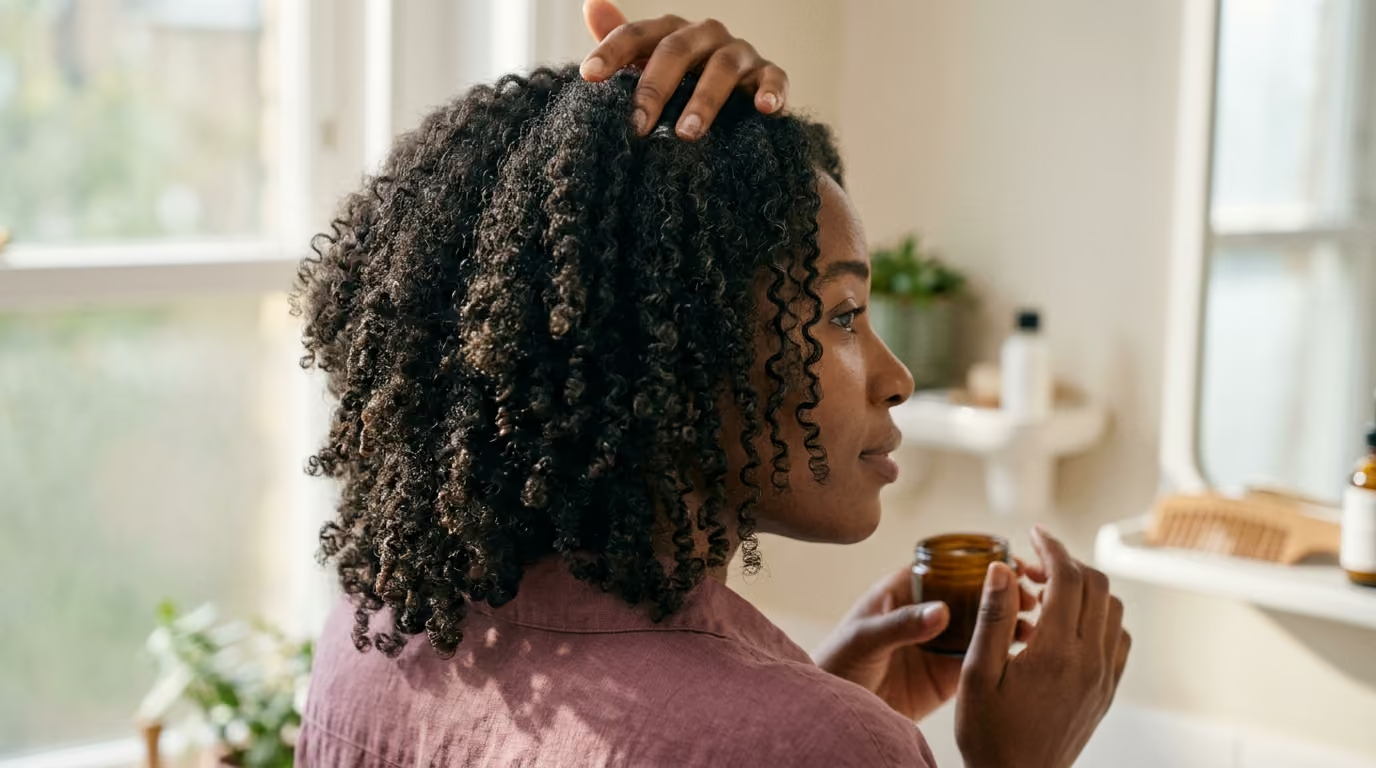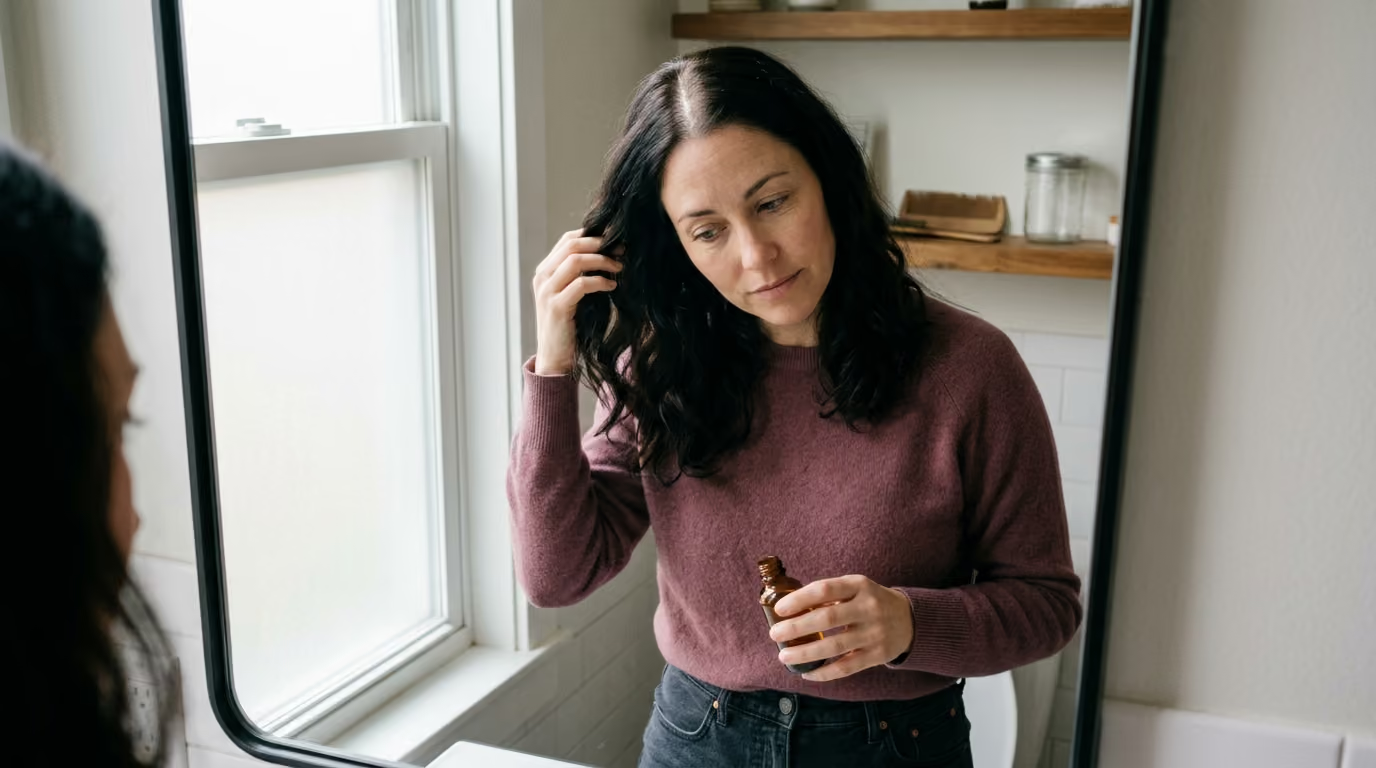

Three distinct structural layers of hair fibers face constant degradation from ultraviolet rays, chlorine, mineral deposits.





Environmental hair damage is the cumulative physical and chemical degradation of the hair fiber caused by external elements. It is not a medical condition of the scalp, nor is it a primary driver of genetic follicle shutdown. Instead, it is the progressive wear and tear of a non-living protein structure exposed to sunlight, water chemistry, atmospheric particles, and friction.
Understanding this distinction is essential for long-term hair longevity. When we examine the science of hair health, we must look at how the environment affects the fiber you see versus the follicle beneath the skin.
Below is an overview of the core scientific findings surrounding environmental hair stress:
This guide provides a comprehensive examination of the environmental exposome. We will review the biological mechanisms of fiber degradation, analyze the peer-reviewed data, address research limitations, and outline practical systems to preserve hair integrity across daily life, travel, and seasonal exposure.
To understand how weather, water, and pollution degrade hair, one must first understand the structural anatomy of the hair shaft. Each hair strand consists of three concentric layers: the cuticle, the cortex, and, in thicker hairs, the medulla. The outermost cuticle is composed of overlapping, shingle-like cells coated with a delicate lipid layer known as 18-methyl eicosanoic acid. This specialized fatty acid layer acts as a natural water-repellent barrier. It lowers surface friction, seals in internal moisture, and imparts natural shine.
Beneath the cuticle lies the cortex. The cortex provides the vast majority of the fiber's mechanical strength, elasticity, and color. It consists of tightly packed keratin protein chains cross-linked by strong disulfide bonds, alongside natural melanin granules.
Because the emerged hair shaft contains no living cells, it possesses no cellular repair mechanism. When skin experiences environmental injury, it initiates an active healing cascade, producing new cells and rebuilding the extracellular matrix. Hair cannot replicate this biological response. Any structural loss, lipid degradation, or protein cleavage experienced along the shaft is permanent until that section of hair is trimmed away.
In our experience at Younell, this biological reality is where consumer anxiety often begins. I remember speaking with a dermatologist who told me her patients were coming in with severe anxiety about normal skin aging. That anxiety was driven entirely by social media filters and aggressive marketing. That conversation became a cornerstone of our philosophy. We decided right then that our publication would never frame natural changes like wrinkles or thinning hair as personal failures.
Understanding that the hair fiber is simply a delicate, keratinized textile frees you from searching for impossible solutions. Rather than expecting a product to rebuild broken disulfide bonds permanently, our focus shifts to minimizing cumulative external trauma.
The environmental exposome refers to the totality of external exposures that interact with your hair over a lifetime. This includes ultraviolet radiation, chlorinated pools, salt water, hard tap water, ambient humidity, wind, and airborne pollution. These factors rarely act in isolation. Instead, they produce a cascading series of physical and chemical stresses:
When environmental agents strip the protective 18-MEA lipid layer, the cuticle shingles lift and delaminate. This increases fiber porosity, allowing moisture to escape and external contaminants to penetrate deep into the cortex. As surface friction rises, individual strands catch and snag against one another. Routine activities like brushing, towel drying, and styling then exert high mechanical tension on an already weakened fiber, leading directly to mid-shaft breakage and split ends.
Sunlight is one of the most pervasive sources of environmental hair damage. Sunlight delivers both Ultraviolet A and Ultraviolet B radiation to the hair shaft, with each wavelength targeting distinct components of the fiber.
UVB radiation carries a shorter wavelength and higher energy level than UVA. Because of this high energy, UVB is primarily responsible for protein degradation within the hair shaft. When UVB photons penetrate the cuticle, they trigger photochemical reactions that cleave the disulfide bonds between cysteine amino acid residues. This process creates cysteic acid and disrupts the structural integrity of the keratin network.
UVA radiation has a longer wavelength and penetrates deeper into the fiber, where it interacts with hair pigments. In pigmented hair, melanin granules act as internal photoprotective filters, absorbing UV energy to shield structural proteins. However, this absorption oxidizes the melanin, leading to noticeable color fading, brassiness, and pigment lightening. In light-colored, bleached, or gray hair, melanin concentrations are naturally low or absent. As a result, structural proteins in lighter hair absorb a higher proportion of UV radiation, making lighter hair significantly more susceptible to mechanical weakening from sun exposure.
A review of hair photodamage documented that artificial sunlight and chemical treatments like bleaching can reduce the tensile failure strength of hair fibers by approximately 20 percent. Furthermore, studies examining ultraviolet exposure demonstrated that UV radiation directly oxidizes hair lipids, altering the shaft lipid profile and increasing surface roughness.
Pre-damaged hair serves as a particularly high-risk substrate for solar degradation. An experimental investigation evaluating ultraviolet radiation and particulate matter showed that chemically bleached hair absorbed significantly more methylene blue dye than untreated hair. This finding confirmed that pre-existing chemical processing increases baseline fiber porosity. The same study revealed that UV-induced porosity became statistically detectable after just three hours of continuous irradiation, with porosity metrics worsening steadily over time.
To protect hair fibers from ultraviolet degradation, physical shielding remains the most reliable strategy. While cosmetic products containing UV filters can provide a light layer of defense, their application is rarely uniform or thick enough to block all radiation.
The American Academy of Dermatology recommends wearing a wide-brimmed hat to shield both the hair and the underlying scalp tissue from direct sunlight. When spending prolonged hours outdoors, readers should combine dense fabric headwear with shade-seeking behavior and protective styling. Tucking the ends of the hair into a loose bun or braid minimizes the total surface area exposed to solar radiation.
Swimming in chlorinated pools introduces a concentrated combination of chemical oxidation, lipid removal, and repeated swelling. Swimming pools rely on chlorine, typically in the form of hypochlorous acid and hypochlorite ions, as an antimicrobial disinfectant. While necessary for sanitation, these oxidizing agents interact aggressively with human hair.
Chlorine dissolves the protective lipid coating on the exterior of the cuticle, leaving the hair shaft dry and stripped. Once this lipid layer is compromised, chlorine penetrates into the cortex. There, it oxidizes the natural melanin pigments, weakens internal keratin proteins, and accelerates cuticle delamination.
Frequent swimmers often notice that their hair becomes stiff, highly porous, and prone to severe tangling. A common issue associated with frequent swimming is green discoloration, particularly visible on blonde or light-colored hair. This green hue is frequently misunderstood as a direct dye effect from chlorine itself.
In reality, the discoloration stems from oxidized copper and other trace metals present in pool water. Copper compounds bind to the negatively charged, damaged protein sites within porous hair fibers. When chlorine oxidizes these bound copper minerals, it produces a characteristic green tint.
Managing pool exposure requires a structured, multi-phase routine. Protection must begin before entering the water, focus on dilution, and conclude with targeted residue removal:
Dry hair behaves much like a dry sponge, rapidly absorbing whatever liquid it first encounters. Saturating your hair thoroughly with clean, fresh tap water prior to entering the pool fills the porous spaces within the fiber. This simple step significantly reduces the total volume of chlorinated water the hair shaft can absorb.
Applying a thin coating of a leave-in conditioner or a compatible hair oil over pre-wetted hair establishes a temporary hydrophobic shield. A classic study published in the Journal of Cosmetic Science demonstrated that coconut oil used as a pre-wash treatment reduced protein loss in both undamaged and chemically damaged hair. Its unique straight-chain molecular structure and low molecular weight allow it to penetrate the shaft, reducing fiber swelling during water immersion.
A properly fitted silicone or latex swim cap provides the most dependable physical barrier against chemical exposure. While swim caps rarely maintain a completely watertight seal around the hairline, combining a swim cap with pre-saturation and a light oil barrier offers optimal defense.
Rinsing hair thoroughly with fresh water immediately after exiting the pool prevents pool chemicals from drying and concentrating on the shaft. For regular swimmers, washing with a specialized swimmer's shampoo formulated with chelating agents helps remove residual chlorine and bound metals. Following this cleanse with a rich conditioning mask restores lubricity, flattens lifted cuticles, and reduces combing resistance.
Ocean water presents a distinct set of environmental stresses that differ significantly from swimming pools. While pool damage is primarily driven by chemical oxidation from chlorine, ocean water damage is driven by hypertonic dehydration, salt crystallization, physical abrasion, and combined sun exposure.
Sea water contains an average dissolved salt concentration of roughly 3.5 percent, dominated by sodium chloride alongside magnesium, calcium, and sulfate ions. Because ocean water has a higher osmotic concentration than the internal environment of the hair fiber, it pulls water out of the hair shaft. This hypertonic environment leads to rapid moisture loss, leaving the fiber stiff, rough, and temporarily inelastic.
As sea water evaporates from the hair surface under the hot sun, microscopic salt crystals precipitate within and between the cuticle scales. These sharp, solid mineral crystals wedge under the edges of cuticle cells, forcing them open. When hair is subjected to coastal winds, blowing sand, and physical towel drying, these salt crystals act as an abrasive grit. Every gust of wind or brush stroke causes elevated friction, scraping the delicate cuticle scales and producing microscopic fractures along the outer perimeter of the fiber.
The combination of salt water and solar radiation creates an amplified damage cycle. Salt residue strips away the hair's natural surface moisture, leaving the keratin matrix dehydrated and vulnerable. Concurrently, unshielded ultraviolet rays penetrate the lifted cuticles, degrading cortical proteins at an accelerated pace.
Managing beach exposure relies on minimizing salt crystallization and friction:
Understanding these combined environmental factors can help you manage hair care effectively, as detailed in our guide on lifestyle and environmental aging factors.
One of the most persistent concerns among travelers and homeowners is whether hard domestic water causes permanent hair loss. The short answer, supported by dermatological research, is no. Hard water does not cause follicle-level hair loss or induce permanent alopecia. However, hard water does cause substantial fiber-level alterations that can easily be mistaken for shedding.
Hard water contains high concentrations of dissolved multivalent mineral cations, predominantly calcium ($Ca^{2+}$) and magnesium ($Mg^{2+}$). When you wash your hair in hard water, these positively charged mineral ions bind chemically to the negatively charged surface of the hair shaft.
Furthermore, calcium and magnesium react directly with fatty acids in soaps and traditional shampoo surfactants. This reaction precipitates an insoluble mineral residue, commonly referred to as soap scum, which coats the exterior of the hair.
This mineral film alters both the physical feel and mechanical behavior of the hair fiber. The hair feels coated, waxy, stiff, and persistently dry, regardless of how much standard conditioner is applied. Lathering becomes difficult during washing, leading individuals to use more shampoo, which further strips natural lipids.
Scientific investigations have measured the direct physical consequences of hard water exposure on hair shafts:
Scanning electron microscopy research published in the International Journal of Dermatology demonstrated that hair fibers washed in hard water exhibited a significantly more ruffled, disorganized surface than hair washed in distilled water. The study observed pronounced mineral deposition across the cuticle edges, accompanied by a measurable decrease in overall fiber thickness and smoothness.
A controlled 2018 study evaluated hair swatches washed in hard water compared to those washed in distilled water over an extended timeframe. The researchers documented a statistically significant reduction in fiber breaking force. Hair washed in hard water experienced a drop in mean tensile strength from 255 grams of force down to 234 grams of force ($P = 0.001$). The mineral deposits made the fibers more rigid and brittle, lowering their capacity to stretch under tension before snapping.
It is vital to distinguish between hair shedding and hair breakage. Hair shedding occurs at the follicle level beneath the scalp, where a hair strand completes its telogen phase and falls out naturally with its white keratin bulb intact. Hard water minerals do not penetrate the dermal papilla to halt new cell division or prematurely terminate the anagen growth phase.
What individuals experience as hair loss after washing in hard water is almost always increased mechanical breakage. Because the mineral coating increases surface friction and brittleness, routine detangling causes weakened fibers to snap along the shaft. These broken fragments fall into the drain, mimicking the appearance of diffuse shedding.
To manage hard water buildup effectively, ordinary clarifying shampoos are often insufficient. Clarifying shampoos are designed to remove organic oils, waxes, and styling polymers, but they frequently lack the specific chemistry needed to dissolve inorganic mineral salts.
Instead, one should periodically use a chelating shampoo. Chelating formulas contain high concentrations of sequestering agents, such as tetrasodium EDTA, disodium EDTA, or citric acid. These molecules bond with calcium and magnesium ions, pulling them off the keratin surface and allowing them to be rinsed down the drain. Incorporating a chelating wash once every one to two weeks restores softness, enhances product penetration, and reduces mechanical snapping.
For more insights into maintaining long-term hair structural health, explore our resources on hair growth and fiber longevity.
Air pollution is an under-recognized contributor to cumulative hair weathering, particularly for urban dwellers. Urban air contains a complex mixture of suspended particulate matter ($PM_{2.5}$ and $PM_{10}$), polycyclic aromatic hydrocarbons (PAHs), heavy metals, nitrogen dioxide, and ground-level ozone.
Particulate matter adheres readily to human hair under real-world conditions. Hair acts as an efficient physical filter, capturing ambient airborne soot and dust. This adhesion is significantly amplified by natural sebum production. Sebum spreads down the proximal hair shaft, creating a tacky surface that traps particles and holds them against the cuticle.
A research study examining particulate deposition on human hair detected significant accumulations of heavy metals, including aluminum, iron, copper, barium, and zinc, on the surface of urban hair swatches. The physical presence of these particulate deposits led to a measurable loss of natural hair shine and a substantial increase in surface friction, making the hair feel dry, gritty, and difficult to comb.
The danger of air pollution intensifies when particulate matter interacts with ambient sunlight. This dynamic is known as a stacked exposure pattern:
Pollution also exerts distinct effects on the living scalp compared to the non-living hair shaft. Experimental research has demonstrated that exposure to fine particulate matter triggers oxidative stress and inflammatory signaling cascades in cultured human follicular cells, reducing cell viability in laboratory settings.
While everyday outdoor urban walking is unlikely to cause acute hair loss, chronic deposition of oxidized pollutants can aggravate scalp conditions like seborrheic dermatitis. Regular, gentle scalp cleansing is therefore essential for urban commuters to remove oxidized sebum and bound heavy metals before they cause irritation.
You can learn more about how oxidative stress impacts biological structures across our beauty science articles.
Physical fitness and exercise provide undeniable systemic health benefits, but the accompanying sweat, salt deposition, and mechanical handling present specific challenges for hair fibers.
Eccrine sweat glands on the scalp secrete a fluid composed primarily of water, sodium chloride, lactic acid, urea, and trace minerals. When sweat evaporates from the scalp and hair during a workout, it leaves behind a concentrated crystalline salt residue. Much like ocean water, this evaporated sweat pulls moisture from the cuticle, increasing stiffness and fiber-on-fiber friction along the roots and mid-lengths.
The primary driver of exercise-induced hair damage, however, is not the sweat itself. Rather, it is the mechanical friction and tension that accompany workout routines:
Securing hair into tight, high ponytails, topknots, or rigid buns using thin elastic bands concentrates mechanical tension on a small band of hair fibers. During repetitive movements like running or jumping, the hair bounces, generating rapid tensile spikes along the anchor points.
Over time, this mechanical strain leads to localized breakage around the crown and hairline. If worn continuously, high-tension styles can contribute to traction alopecia. Switching to wide, silk scrunchies or soft fabric ties, and varying the placement of your ponytail, distributes pressure and protects fragile root areas.
Following a vigorous workout, individuals frequently wash their hair and immediately brush out tangles while the hair is soaking wet. Water molecules easily penetrate a porous cuticle, temporarily breaking weak internal hydrogen bonds within the keratin cortex. This process makes wet hair significantly more elastic, allowing it to stretch up to 30 percent beyond its resting length without returning to its original shape.
When a standard brush meets a tangle in wet hair, the excessive tension can over-stretch the softened keratin chains, snapping the fiber at weak points. The American Academy of Dermatology recommends handling wet hair as little as possible, using a wide-toothed comb or fingers to gently work through knots starting from the tips upward.
An important exception exists for tightly curled, coily, or textured hair types. For individuals with tightly curled patterns, brushing dry hair can cause severe mechanical friction, disrupting the curl grouping and snapping dry strands.
The AAD recognizes that tightly curled hair often benefits from being gently detangled while damp, provided the hair is thoroughly saturated with a high-slip conditioner or detangling cream. Matching your detangling method to your natural hair texture is critical to preventing unnecessary mechanical loss.
For broader insights into systemic wellness, recovery routines, and healthy aging, visit our lifestyle longevity section.
Maintaining healthy, resilient hair across diverse environmental conditions does not require complicated routines or expensive product lines. Instead, it relies on an organized framework: Reduce, Shield, Remove, and Restore.
By applying these four steps, you can tailor your hair care to any travel schedule, workout routine, or outdoor activity.
To see how this framework functions in everyday life, consider these specific real-world routines:
To learn more about our science-backed editorial standards and review methods, read about Younell.
When evaluating beauty science and hair longevity, it is essential to remain transparent about what the scientific literature proves and where its limitations lie. Much of the published research on hair weathering and environmental damage relies on laboratory models that do not perfectly replicate human daily life:
A substantial portion of hair fiber research utilizes standardized hair tresses mounted on laboratory racks. These swatches are subjected to continuous, high-intensity artificial UV radiation, concentrated chemical baths, or mechanical combing machines.
While these studies provide valuable mechanistic data regarding protein degradation and lipid loss, they do not fully reflect real-world exposure patterns. Real humans move in and out of the shade, sweat, produce protective scalp sebum, and adjust their grooming routines, all of which modify actual damage rates.
Laboratory investigations demonstrating that ultraviolet radiation or particulate matter triggers oxidative stress and halts cell division in cultured dermal papilla cells must be interpreted with caution. These experiments expose isolated human cells in a petri dish directly to high concentrations of environmental toxins.
In living humans, the scalp epidermis, stratum corneum, and hair density provide substantial physical shielding for the underlying follicle. Available evidence does not demonstrate that ordinary vacation sun exposure or urban air pollution causes clinical alopecia or patterned baldness in healthy individuals.
Hair condition at baseline is a significant confounding variable across all environmental studies. Hair that has undergone bleaching, permanent waving, oxidative dyeing, or repeated high-heat flat ironing possesses a vastly different porosity and structural baseline than virgin hair.
Studies conducted exclusively on healthy, untreated hair swatches may underestimate damage rates for chemically processed hair. Conversely, studies conducted on heavily bleached hair cannot be directly generalized to virgin strands. Environmental protection strategies should always be viewed as individualized risk-management frameworks rather than absolute guarantees.
To navigate hair care effectively, one must separate proven scientific realities from common beauty marketing claims.
For additional clear analyses of hair fiber biology and care, browse our hair editorial library.
Examine the hair strands that fall out during washing or styling. A shed hair will show the full length of the strand with a tiny, white, bulb-like root attached to one end. This indicates that the hair completed its natural growth cycle and released from the follicle.
A broken hair fragment will typically be shorter than your overall hair length, will lack a root bulb, and may exhibit split, frayed, or jagged ends. If you observe mostly short fragments without bulbs, your hair is experiencing mechanical or environmental breakage rather than follicle shedding.
No cosmetic product can permanently reconnect a split or fractured hair fiber. Because the hair shaft is biologically non-living, it cannot knit itself back together once the structural keratin cortex has split apart.
Conditioning masks, silicone serums, and film-forming oils can temporarily glue the split ends together, smooth down lifted cuticles, and lubricate the shaft to prevent further tearing. However, these cosmetic bonds wash away during your next shampoo. The only permanent method to eliminate split ends is to trim them off with sharp hairdressing shears.
Standard carbon-based shower filters effectively remove chlorine, rust, sediment, and chemical odors from municipal tap water. However, most screw-on shower filters do not soften hard water.
Softening water requires an ion-exchange process that replaces dissolved calcium and magnesium ions with sodium or potassium ions, a process typically performed by a whole-house water softening system. If a whole-house softener is not an option, you do not need an expensive shower filter to protect your hair. Incorporating an affordable chelating shampoo once every one to two weeks will effectively dissolve and rinse away mineral deposits from your strands.
Washing frequency depends on your scalp type, hair texture, and styling habits. Sweat itself is water-soluble and can often be rinsed from the scalp using plain water followed by a light conditioner on the ends.
If you have an oily scalp or notice buildup, washing daily with a gentle, sulfate-free cleanser is perfectly safe, provided you follow with a conditioner to restore surface slip. If you have dry, curly, or color-treated hair, daily shampooing may cause excessive dryness. In that case, alternating between fresh-water rinses, co-washing, and gentle shampoo sessions will keep the scalp fresh without stripping the lengths.
Stay connected for research and practical guidance on skin, hair, collagen, nutrition and beauty longevity. Clear ideas for people who want to understand how appearance changes with age and make better-informed choices over time.


Understand your skin, hair and body better without chasing every new trend, treatment or promise.
explore the Blog