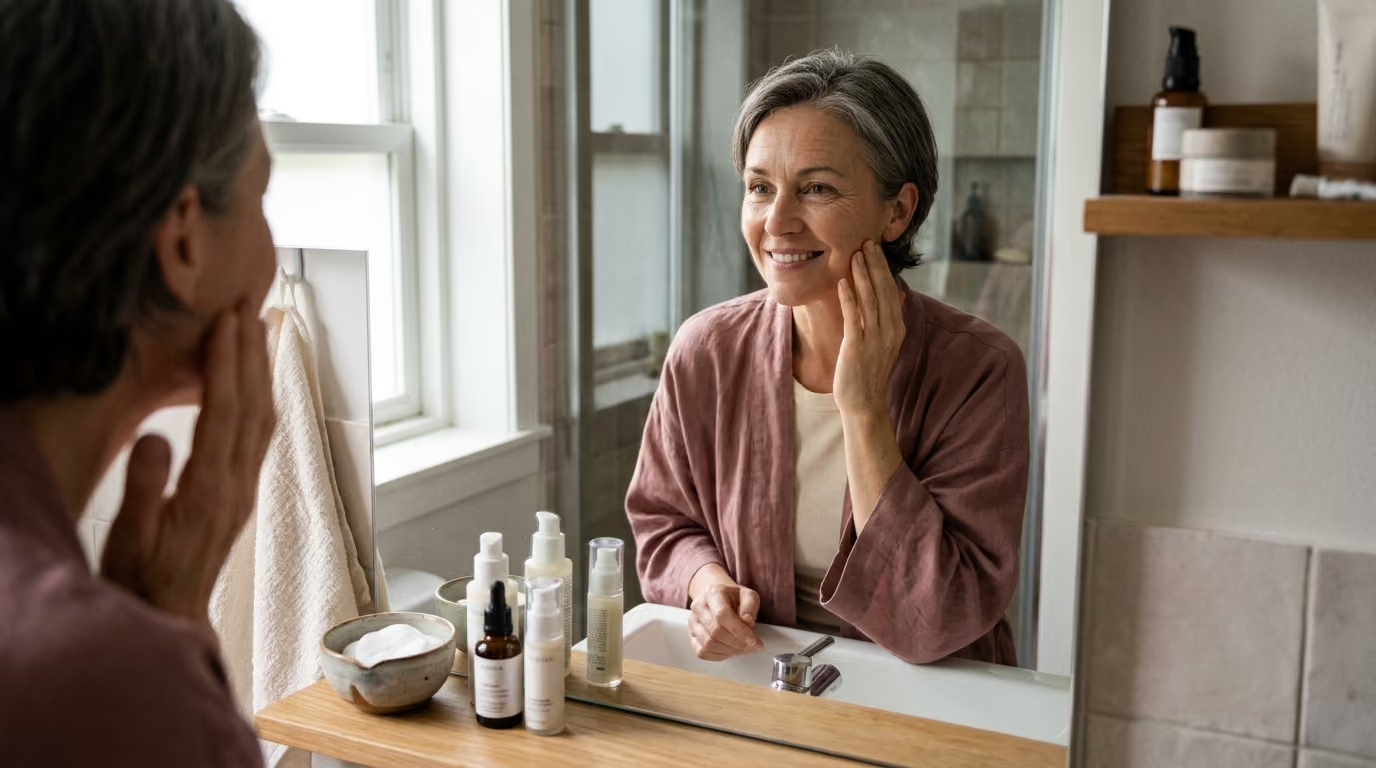

Aging skin requires gentle cleansers and careful washing techniques to remove daily impurities without stripping essential moisture or damaging the delicate lipid barrier.





You stand at the bathroom sink at the end of a long day, wash your face, and immediately feel a familiar tightness across your cheeks. Within minutes, your skin feels parched, faintly itchy, or slightly uncomfortable until you apply a thick layer of moisturizer. Many people accept this post-wash dryness as normal proof that their skin is clean. In reality, that tight sensation is often an early sign of barrier stress caused by an unsuitable product, high water temperature, or excessive washing.
Cleansing is the foundation of any skincare routine, yet it presents a biological paradox. We need to remove environmental pollutants, daily sweat, excess sebum, makeup, and water-resistant sunscreen. However, the exact chemical mechanisms that lift soil from the skin surface can also extract vital intercellular lipids, denature structural proteins, and alter surface pH.
As skin matures, this delicate balance shifts. Sebum production declines, epidermal thickness decreases, and natural lipid replenishment slows down. A washing routine that worked seamlessly in your twenties can easily produce redness, flaking, and irritation in your forties, fifties, and beyond. Understanding skin longevity and healthy aging frameworks starts with a simple rule: remove what needs removing while disturbing as little as possible.
The modern scientific understanding of facial cleansing focuses on balancing soil removal with barrier preservation. Researchers have moved away from viewing cleansing as a purely cosmetic step, evaluating it instead as a direct intervention in skin physiology.
To understand why mature skin reacts differently to cleansing, we must examine the outermost layer of the epidermis, known as the stratum corneum. Dermatologists frequently describe this structure using the classic bricks-and-mortar model. In this framework, flattened, protein-rich cells called corneocytes act as the bricks. A complex, organized mixture of lipids serves as the surrounding mortar.
This lipid mortar is uniquely composed of approximately 40 to 50 percent ceramides, 25 percent cholesterol, and 10 to 15 percent free fatty acids. Together, these components form a highly organized, waterproof barrier. They regulate the movement of water from the deeper cutaneous layers into the surrounding environment. This natural evaporation process is measured scientifically as transepidermal water loss, or TEWL. When the lipid matrix is healthy and dense, TEWL remains low, and the skin stays supple and well-hydrated.
As chronological aging and environmental exposure progress, the biology of this barrier undergoes several predictable changes:
The rate at which the skin produces ceramides, cholesterol, and fatty acids declines steadily over time. This makes the lipid mortar thinner and more porous. It also slows the repair cycle when those lipids are washed away.
Corneocytes contain a blend of amino acids, urea, and lactate known collectively as natural moisturizing factor, or NMF. NMF binds water inside the cells. Mature skin produces less NMF, which impairs internal cellular hydration.
The natural renewal cycle of the epidermis slows down with age. Corneocytes linger longer on the surface, but they shed less uniformly. This often leads to a dull, rough texture that tempts people to use harsh scrubs or drying washes.
Sebum production drops significantly after menopause in women and gradually in aging men. Sebum acts as a natural conditioning fluid that coats the skin surface. Without it, the skin is far more vulnerable to surfactant-induced dryness.
When you wash mature skin, the stakes are substantially higher than they are for younger, oilier skin. A strong cleanser can strip away the limited lipids that your skin worked days to generate. Once these protective lipids are removed, water evaporates rapidly into the air, triggering immediate post-wash tightness, fine flaking, and heightened reactivity to subsequent skincare products.
Water alone cannot remove most daily soils because sebum, makeup components, and many sunscreen filters are water-insoluble. Cleansers resolve this problem through surfactants, which is short for surface-active agents. A surfactant is an amphiphilic molecule, meaning it contains two chemically distinct ends. One end is hydrophilic, which is attracted to water. The opposite end is lipophilic or hydrophobic, which binds to oily substances.
When you apply a cleanser, surfactant molecules surround oil-based dirt, makeup, and excess sebum. They organize themselves into microscopic spherical clusters called micelles, trapping the oily particles in the center. When you splash water over your face, the water-loving outer heads of the micelles bind to the water molecules, allowing the trapped soil to be rinsed away cleanly.
However, surfactants are not selective. They cannot distinguish between unwanted environmental grime and the vital structural lipids that keep your skin barrier intact. Surfactants can interact with skin biology in three distinct ways:
Surfactant molecules can dissolve and wash away the ceramides, cholesterol, and free fatty acids residing in the intercellular spaces. This creates microscopic gaps in the mortar of your skin barrier.
Small surfactant monomers can penetrate directly into the stratum corneum lipid bilayers. Once embedded, they disrupt the neat, orderly alignment of the lipid chains, making the barrier permeable and fragile.
Surfactants can bind to the keratin proteins within your corneocytes. This interaction causes the proteins to swell and unfold, compromising their structural stability and triggering cellular irritation.
Surfactants are classified into four major families based on the electrical charge of their hydrophilic head group. Understanding these categories helps you evaluate product labels intelligently:
These molecules carry a negative electrical charge. They are well known for creating rich, voluminous lather and providing powerful oil removal. Common examples include sodium laureth sulfate, sodium lauroyl sarcosinate, and sodium cocoyl isethionate. While some anionic agents like sodium lauryl sulfate can cause significant lipid chain disorder, others are formulated to be exceptionally gentle.
These surfactants carry no electrical charge. They are generally considered among the mildest cleansing agents available, creating minimal foam while preserving skin lipids. Common examples include alkyl glucosides such as coco glucoside, decyl glucoside, and lauryl glucoside, as well as fatty alcohol ethoxylates. They are ideal components for dry, sensitive, or aging skin.
Also known as zwitterionic surfactants, these molecules carry either a positive or negative charge depending on the pH of the formula. They are notably mild and are frequently blended with anionic surfactants to reduce overall irritation potential. Familiar examples include cocamidopropyl betaine, lauryl betaine, and sodium cocoamphoacetate.
These molecules carry a positive electrical charge. They are rarely used as primary facial cleansers because they can be irritating to skin cells. Instead, they appear primarily in hair conditioners and specialized antimicrobial washes due to their ability to bind strongly to surfaces.
For decades, traditional bar soap was the primary cleansing product found in every household. Modern dermatological science, however, draws a clear and fundamental distinction between traditional saponified soaps and modern synthetic detergents, or syndets.
Traditional soap is created through saponification, a chemical process in which plant oils or animal fats are treated with a strong alkaline base, such as sodium hydroxide. This reaction yields fatty acid salts that have an inherently alkaline pH, typically ranging between 8.5 and 11.0.
In contrast, healthy human skin maintains a naturally acidic surface environment, usually measured between pH 4.0 and 6.0. This natural acidity, often called the acid mantle, is essential for maintaining structural skin health and collagen support. It regulates enzyme activity, supports normal barrier repair, and preserves the delicate balance of the cutaneous microbiome.
When an alkaline soap touches the skin, several physiological disruptions take place:
At a pH above 8.0, the keratin proteins within the corneocytes swell significantly. This cellular swelling places mechanical stress on the stratum corneum and increases cellular permeability.
High pH levels alter the charge of free fatty acids in the lipid matrix, causing the organized lipid layers to lose their tight structure. This makes endogenous lipids substantially easier to wash away.
The normal resident bacterial flora of healthy skin thrives in an acidic environment. Sustained alkaline exposure encourages bacterial dispersion and creates favorable conditions for opportunistic colonization by organisms such as Staphylococcus aureus.
Syndet cleansers represent a major technological advancement in dermatology. Because they rely on synthetic surfactants rather than saponified fats, chemists can formulate them at a mildly acidic or neutral pH, typically between 5.0 and 6.5.
Microscopic evaluations of skin samples washed repeatedly with traditional alkaline soap reveal significant cellular lifting, structural roughness, and protein breakdown. Conversely, samples washed with well-formulated syndets show preserved lipid architecture and minimal cellular disruption. For mature skin, which already suffers from reduced regenerative capacity, avoiding alkaline bar soaps is one of the most effective steps you can take.
Clinical investigations into cleansing provide valuable, objective insights into how different products, water temperatures, and washing frequencies affect barrier integrity. Rather than relying on marketing claims, reviewing the data helps establish realistic expectations.
Sunscreen wear is a non-negotiable step in any healthy aging strategy, but water-resistant formulations are engineered to adhere firmly to the stratum corneum. In a controlled clinical study evaluating residue removal on 20 human participants, researchers measured the percentage of water-resistant sunscreen remaining on the skin after three single-wash techniques:
In this dataset, the cleansing oil demonstrated more than six times greater removal efficiency for water-resistant sunscreen compared to the foaming wash alone. The lipophilic base of the oil dissolved the water-resistant film-forming polymers far more effectively without requiring mechanical scrubbing.
Water temperature plays a measurable role in skin barrier recovery. A 10-day clinical evaluation tracked transepidermal water loss in subjects washing with different water temperatures:
Higher water temperatures increase the fluidity of skin lipids, making them far easier for surfactants to emulsify and rinse away.
More cleansing is not necessarily better. In an extensive observational study examining skincare habits and facial skin conditions across 3,439 participants, researchers observed clear statistical correlations:
These data points reinforce a clear message: excessive washing frequency and hot water exposure place real, quantifiable burdens on epidermal health.
While clinical studies offer crucial guidance, it is equally important to acknowledge what the scientific literature does not prove. Responsible interpretation of evidence-based skincare science requires transparent examination of study design limitations.
Many comparative cleanser studies, such as the sunscreen removal trial cited above, involve relatively small cohorts of 20 to 30 individuals. While these small trials show statistically significant trends, they cannot account for the vast diversity in individual skin biology, sebum production rates, or underlying inflammatory conditions.
The sunscreen removal study evaluated three isolated single-wash methods: water alone, one specific foaming wash, and one specific cleansing oil. It did not directly test a sequential two-step double cleanse, nor did it compare every style of cleansing balm, micellar water, or cream cleanser. We cannot assume that every cleansing balm on the market will perform identically to the specific oil formula used in that trial.
The observational study linking frequent cleansing to rosacea was conducted primarily in adolescent participants. While the biological mechanisms of surfactant-induced barrier disruption apply across all ages, the statistical odds ratios cannot be directly mapped onto post-menopausal women or older adults without caution.
Skincare ingredients never act in complete isolation. An anionic surfactant like sodium cocoyl isethionate can be harsh in an unbuffered, high-concentration solution. However, when combined with soothing amphoteric co-surfactants, moisturizing glycerin, and barrier-supporting fatty acids, it can yield an exceptionally gentle cleanser. Reading an ingredient list cannot tell you the exact concentration, processing quality, or final pH of a product.
Cleansing should never follow an unyielding, rigid dogma. Instead, we recommend using a simple four-part decision framework based on your real-world needs on any given day:
During our extensive evaluation of environmental aging, we tested how various lifestyle factors impact skin barrier recovery. It was fascinating to see the data clearly show that simple habits like sleep and basic hydration often outperform the most expensive topical treatments. This reinforced our commitment to emphasizing foundational health over product hype.
Formulated with plant oils, mineral oils, or synthetic esters alongside gentle emulsifiers. They work on the chemical principle that like dissolves like, melting water-resistant sunscreens and stubborn makeup effortlessly. When you add water, the emulsifiers turn the oil into a milky fluid that rinses away cleanly without leaving a greasy film.
Rich in emollients, fatty alcohols, and mild nonionic surfactants. They cleanse without foaming, depositing light conditioning agents on the surface. These are excellent everyday cleansers for dry, mature, or barrier-compromised skin.
Formulated with gentle anionic and amphoteric surfactants at an acidic pH. They provide a refreshing wash without the harshness of traditional soap. They work best for mature skin that still experiences mild T-zone oiliness.
Composed of purified water and very low concentrations of mild surfactants arranged in tiny micelles. They lift light surface dirt onto a cotton pad without requiring heavy rinsing. However, the mechanical friction of wiping can irritate fragile skin if done aggressively.
Navigating skincare advice can be confusing when marketing slogans contradict biological facts. Let us look at five common cleansing assumptions:
Reality: Foam is primarily an aesthetic feature created by certain surfactant structures. Rich lather often correlates with higher concentrations of anionic surfactants, which can strip barrier lipids. Many non-foaming cream and oil cleansers remove dirt and pollutants with equal efficiency while preserving epidermal hydration.
Reality: The saponification process required to make true bar soap inherently creates an alkaline product with a pH between 8.5 and 11.0. Even if made with organic olive, coconut, or shea oils, high pH disrupts the acid mantle, swells keratin proteins, and leaches protective lipids. A well-designed synthetic detergent bar at pH 5.5 is biologically gentler on the skin barrier.
Reality: The irritancy of a finished skincare product depends on the total formulation, not a single ingredient name. While high concentrations of unbuffered sodium lauryl sulfate can induce barrier stress, related ingredients like sodium laureth sulfate can be blended with soothing co-surfactants to create exceptionally mild formulas.
Reality: Squeaky tightness is not a sign of purity. It is an immediate symptom of acute barrier stress. That sensation occurs when intercellular lipids have been stripped and structural keratin proteins have been denatured, leading to rapid moisture evaporation.
Reality: Double cleansing is a targeted tool, not a mandatory rule. If you spent the day indoors without sunscreen or makeup, a single wash with a mild cream cleanser is entirely sufficient. Performing two cleansing steps when soil load is low adds unnecessary surfactant exposure and friction.
Yes. If you thoroughly cleansed your skin the night before and do not wake up with excessive oiliness, a lukewarm water rinse in the morning is often the best choice for dry or mature skin. Water removes overnight dust and sweat without disturbing the lipid matrix you worked to hydrate overnight.
While many brands market micellar water as a leave-on product, rinsing it off with lukewarm water is generally safer for aging skin. Leaving surfactants on the skin surface can cause mild, low-grade irritation and dryness over time. A quick water rinse removes both the trapped dirt and the residual surfactant molecules.
Key warning signs include a persistent tight sensation that lasts longer than five minutes after washing, sudden stinging when applying basic moisturizers, new dry patches, and increased redness. If you experience these symptoms, switch to a milder, non-foaming cleanser and reduce your washing frequency.
Mechanical cleansing devices should be used with extreme caution. Mature skin is thinner and has reduced elasticity, making it far more vulnerable to micro-tears and chronic friction-induced inflammation. Soft fingertips provide more than enough mechanical action to clean skin effectively without causing physical trauma.
A properly formulated cleansing oil contains emulsifiers that allow the oil to mix with water and rinse away completely. Breakouts typically only occur if the product contains highly comedogenic oils, lacks adequate emulsifiers, or is not rinsed away thoroughly. If you are prone to occasional adult blemishes, choose lightweight cleansing oils based on caprylic triglycerides or sunflower seed oil.
Stinging during cleansing indicates that the stratum corneum has developed micro-fissures and the acid mantle is compromised. Immediately stop using all active acids, scrubs, and foaming cleansers. Switch to a non-foaming, physiological syndet cleanser, use cool water, and focus on basic lipid barrier repair for two to three weeks.
Revisit this resource whenever you change your daily skincare habits, notice seasonal shifts in your skin, or experience sudden dryness and sensitivity.
Cleansing should leave your skin feeling calm, soft, and comfortable rather than tight or stripped. You can read more in our research-backed lifestyle habits section, or consult our wider library of comprehensive skin research guides to support healthy aging over time.
Stay connected for research and practical guidance on skin, hair, collagen, nutrition and beauty longevity. Clear ideas for people who want to understand how appearance changes with age and make better-informed choices over time.


Understand your skin, hair and body better without chasing every new trend, treatment or promise.
explore the Blog