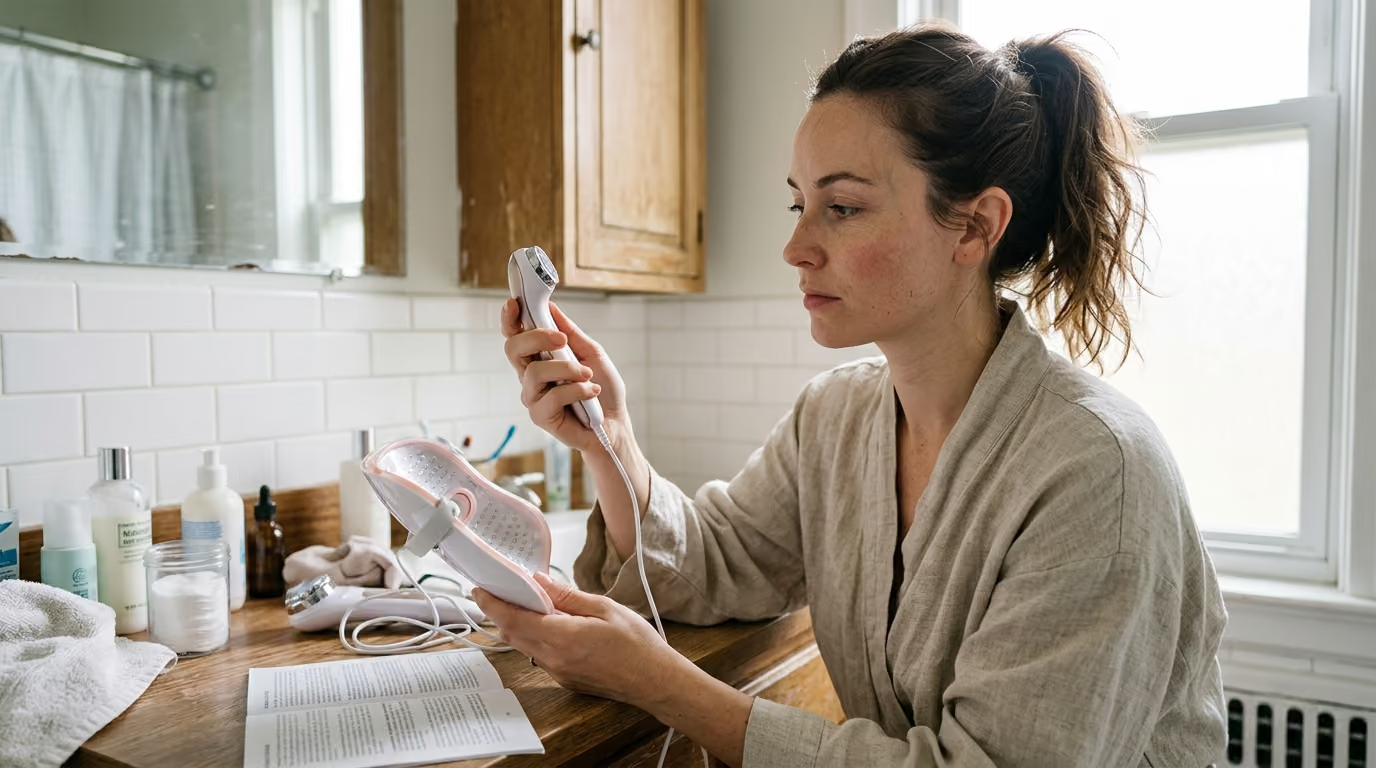

While at-home beauty tools promise clinical results, scientific evidence reveals distinct differences in safety and efficacy across popular skincare.





You stand in front of your bathroom mirror, looking at a vanity cluttered with modern skincare tools. An illuminated red light mask sits beside a microcurrent wand, a radiofrequency device, and a textured roller. Each tool arrived in sleek packaging promising firmer contours, restored collagen, or smoother skin. Yet determining whether these investments actually deliver visible changes, or simply demand daily effort with negligible returns, remains difficult.
The global market for at-home cosmetic devices has expanded rapidly over the past decade. Handheld gadgets now promise to bring professional clinical treatments directly into your morning routine. However, biological plausibility does not automatically translate into real-world cosmetic success. A biological mechanism, such as heat-induced collagen stimulation, may be scientifically sound. That same mechanism does not guarantee that a battery-powered handheld wand will achieve the temperature, depth, or consistency required to alter skin architecture.
Understanding the difference between lab theories, published clinical data, and marketing promises is essential. This comprehensive guide compares six major categories of at-home beauty devices: light-emitting diode therapy, radiofrequency, microcurrent, ultrasound, microneedling, and mechanical exfoliation. By examining the peer-reviewed evidence, parameter thresholds, and safety considerations, you can make informed decisions based on beauty science and advanced optimization rather than commercial enthusiasm.
Evaluating at-home cosmetic tools requires looking past broad category claims and inspecting specific study parameters. The published research reveals clear distinctions between modalities:
To understand what a device can accomplish, you must first understand the specific biological target it acts upon. Every device operates through an energy transfer or mechanical action intended to trigger a cellular response.
LED therapy works through non-thermal photobiomodulation. Photons of specific wavelengths penetrate tissue to interact with targeted cellular photoreceptors.
Blue light, typically delivered between 405 and 420 nanometers, targets porphyrins produced by the bacterium Cutibacterium acnes. When porphyrins absorb these specific wavelengths, they generate reactive singlet oxygen. This process damages bacterial cell walls without thermal injury to surrounding human tissue.
Red light (around 630 to 660 nanometers) and near-infrared light (around 810 to 850 nanometers) penetrate deeper into the dermis. These photons are absorbed by cytochrome c oxidase, an enzyme within mitochondrial membranes.
This absorption stimulates mitochondrial electron transport, increasing adenosine triphosphate (ATP) production and modulating cellular signaling. Consequently, fibroblasts alter their transcription factors, leading to a temporary reduction in inflammatory cytokines and the synthesis of new extracellular matrix proteins.
Radiofrequency devices operate on electromagnetic energy, usually alternating between 1 and 40 megahertz. As this current passes through skin tissue, it encounters electrical resistance, known as impedance.
Water molecules within the dermal layer resist this electrical flow, converting electromagnetic energy into thermal energy. In professional dermatology, heating the deep dermis to approximately 55 to 65 degrees Celsius causes an immediate denaturation and contraction of collagen triple-helix structures. This controlled thermal injury triggers a delayed wound-healing response that stimulates fibroblasts to synthesize new type I and type III collagen fibers over several months.
At-home radiofrequency devices operate under strict safety constraints. They typically heat the skin surface to 40 to 43 degrees Celsius. At these lower temperatures, collagen does not instantly denature. Instead, sustained gentle thermal stress stimulates heat-shock proteins and mild fibroblast activation, yielding gradual, subtle changes rather than immediate structural remodeling.
Microcurrent devices deliver low-amperage electrical currents, typically measured in microamperes (millionths of an ampere). These electrical currents mirror the endogenous electrical fields naturally present in human tissue.
The biological theory suggests that microcurrent enhances cellular membrane transport, increases intracellular calcium ion concentrations, and elevates cellular ATP production. Marketing materials often claim that microcurrent stimulates and tones facial muscles.
However, skeletal facial muscles require much higher electrical currents, measured in milliamperes, to achieve true motor-nerve depolarization and active contraction. Microcurrent primarily acts on superficial cutaneous tissues, yielding transient fluid redistribution, localized vascular dilation, and mild sensory nerve stimulation. This creates a temporary appearance of tightness rather than permanent muscular hypertrophy.
Ultrasound devices emit sound waves at frequencies above the human hearing threshold, typically ranging from 1 to 3 megahertz for cosmetic devices. As these high-frequency acoustic waves travel through tissue, they produce two distinct effects: mechanical vibration and localized thermal dissipation.
The mechanical oscillation creates micro-streaming and localized pressure fluctuations, which can temporarily disrupt the lipid bilayers of the stratum corneum to facilitate topically applied serum penetration. High-intensity focused ultrasound (HIFU) used in clinical offices concentrates this acoustic energy into precise focal points deep within the subcutaneous superficial muscular aponeurotic system (SMAS) layer.
In contrast, consumer at-home ultrasound devices scatter unfocused, low-intensity waves across the superficial skin. This action produces mild surface warmth and physical agitation, but cannot reach the structural depths necessary for surgical-grade tightening.
Microneedling relies on mechanical physical trauma. By piercing the skin with small solid needles, the device breaches the stratum corneum and enters the viable epidermis and upper papillary dermis.
This physical disruption lyses cellular membranes, ruptures microscopic blood vessels, and causes a release of platelets, growth factors, and cytokines. This cascade initiates three classical wound-healing phases: inflammation, cellular proliferation, and tissue remodeling. Platelet-derived growth factor and transforming growth factor stimulate fibroblast migration and extracellular matrix deposition.
In clinical settings, needles penetrate 0.5 to 2.5 millimeters under sterile, single-use conditions. Consumer at-home rollers typically feature shorter needles (0.2 to 0.3 millimeters) intended solely to enhance ingredient absorption. When home users attempt deeper punctures with unregulated rollers, they bypass natural skin defenses. This can introduce environmental pathogens directly into the vascular dermis.
Mechanical exfoliation involves physical friction, bladed dermaplaning, microdermabrasion crystals, or vacuum suction. These tools mechanically shear off mature, cohesive corneocytes from the uppermost stratum corneum.
The human epidermis maintains a delicate balance between corneocyte production in the basal layer and natural desquamation at the surface. By accelerating this removal, mechanical tools expose smoother, more hydrated underlying corneocytes. This reflects light more evenly and gives skin an immediate luminous quality.
However, aggressive mechanical shearing also depletes the intercellular lipid matrix composed of ceramides, cholesterol, and free fatty acids. If physical abrasion exceeds the rate of cellular barrier synthesis, trans-epidermal water loss increases significantly. This triggers epidermal inflammation, compromises antimicrobial defenses, and accelerates sensitivity.
Examining peer-reviewed research helps separate genuine clinical outcomes from marketing exaggerations. The clinical reality for each category reveals modest, parameter-dependent outcomes.
The evidence supporting at-home LED for mild-to-moderate inflammatory acne is the most consistent among all consumer devices. A comprehensive systematic review of home dermatology devices categorized LED for acne as a Grade B recommendation.
In one primary study evaluating 35 participants using a combination blue (415 nm) and red (633 nm) device for 2.5 minutes twice daily over four weeks, inflammatory acne lesions decreased by an average of 77%. Noninflammatory comedones decreased by 54%. Adverse effects were minimal, with two participants reporting mild dryness and one experiencing temporary erythema and flaking.
A 2025 systematic review and meta-analysis of six clinical trials covering 216 participants with mild-to-moderate acne confirmed these findings. Compared to non-active control groups, LED treatment yielded a 45.3% greater reduction in inflammatory lesions, a 47.7% greater reduction in noninflammatory lesions, and a 45.7% greater improvement in Investigator Global Assessment scores.
Benefits were observed across red, blue, and combination devices after four to twelve weeks of consistent use. However, these figures represent aggregate trial averages. Individual results vary widely depending on baseline acne severity and device irradiance.
For skin aging and photoaging, the evidence for red and near-infrared LED is positive but more modest. Clinical studies demonstrate statistically significant improvements in fine periorbital lines, tactile roughness, and subjective elasticity.
However, medical-grade LED arrays used in dermatology clinics typically deliver much higher irradiance (power per unit area) than flexible consumer silicone masks. Many consumer masks deliver low milliwatt-per-square-centimeter output to extend battery life and prevent surface heating. As a result, home users must use these devices consistently for months to approach the cumulative fluence (total energy delivered) seen in professional clinical protocols.
At-home radiofrequency devices also hold a Grade B recommendation for wrinkle reduction and laxity management. A systematic review evaluating multiple home-use RF devices documented measurable improvements in fine lines and tactile skin firmness.
In a randomized controlled trial analyzing a consumer RF device, investigators measured a maximum eyebrow-to-hairline elevation of 1.521 centimeters after an initial treatment session, with no significant adverse events reported. In a separate nonrandomized clinical trial involving 45 participants treated five times weekly for four weeks, followed by twice-weekly maintenance for seven weeks, participants experienced statistically significant improvements in skin elasticity. All participants found the procedure painless, experiencing only mild, transient erythema that resolved within an hour.
Another trial examining home RF used three times weekly for eight weeks documented significant improvements in blinded evaluator wrinkle scores at both week four and week eight. Ultrasound imaging confirmed a measurable increase in dermal thickness by the eighth week.
However, the magnitude of improvement is limited by the safety thresholds of home devices. While these tools can improve collagen and structural aging markers such as superficial dermal density, they cannot duplicate the structural lifting achieved by professional high-energy devices or surgical interventions.
Standalone clinical evidence for consumer microcurrent remains sparse and methodologically weak. High-level systematic reviews of home dermatologic devices have not found sufficient standalone clinical trials to issue an independent recommendation grade for microcurrent wands.
Most available microcurrent studies suffer from small sample sizes, lack of control groups, and substantial industry sponsorship. Furthermore, many modern consumer wands combine microcurrent with simultaneous red LED light, thermal heat, and mechanical vibration. This makes it impossible to isolate the specific biological contribution of the electrical microcurrent.
In a clinical study evaluating a multi-technology device combining radiofrequency, red LED, and microcurrent across 22 participants, researchers noted statistically significant improvements in skin surface texture after several weeks of use.
However, high-resolution objective imaging showed no statistically significant improvements in wrinkle size, wrinkle depth, midface volume, lower-face volume, skin elasticity, or epidermal hydration. The visible tightening reported by participants was largely subjective and temporary, likely driven by localized surface hydration and transient fluid movement rather than muscular or structural remodeling.
High-level systematic reviews on home dermatology devices report a total absence of robust clinical trials, standardized parameter recommendations, and verified efficacy data for consumer home ultrasound tools. While professional micro-focused ultrasound systems have extensive clinical backing for deep tissue lifting, these systems utilize precise transducers that focus intense acoustic energy at depths of 1.5, 3.0, and 4.5 millimeters under real-time ultrasound imaging.
Consumer ultrasound wands emit low-intensity, unfocused waves. Without imaging feedback or high focal energy, these devices cannot reach the deep muscular aponeurotic system.
While low-power ultrasound can gently warm the skin and temporarily improve the absorption of topical skincare, broad marketing claims regarding profound jawline lifting or long-term tightening remain unsupported by peer-reviewed evidence.
The evidence landscape for microneedling shows a stark divide between professional medical settings and at-home consumer use. The United States Food and Drug Administration (FDA) has legally authorized specific professional microneedling devices to improve the appearance of acne scars, surgical scars, and facial wrinkles in adults aged 22 and older.
However, the FDA has not authorized any microneedling medical devices for over-the-counter, direct-to-consumer home sale. Systematic reviews evaluating home-use microneedling characterize the available rejuvenation evidence as low quality and consistently highlight elevated safety risks.
Dermatology clinics utilize motorized, single-use, vertically penetrating cartridges that minimize epidermal tearing. In contrast, at-home rollers enter and exit the skin at an angle, creating microscopic V-shaped tears rather than clean punctures.
Studies show that home rollers are exceptionally difficult to sterilize effectively in a residential environment. Reusing contaminated needle heads repeatedly introduces bacterial and viral pathogens into the dermis, creating substantial risks of infection, scarring, and hyperpigmentation that outweigh potential cosmetic benefits.
Clinical research on mechanical cleansing brushes, diamond-tip home microdermabrasion, and bladed dermaplaning tools demonstrates reliable superficial desquamation. Clinical measurements confirm an immediate reduction in surface roughness, enhanced light reflection, and a temporary increase in the absorption rate of topical antioxidants and moisturizers.
However, clinical trials also highlight how easily these tools are overused. Transepidermal water loss measurements indicate that using mechanical brushes or abrasive scrubbers daily degrades the skin barrier, reduces natural moisture retention, and can trigger inflammatory flare-ups in conditions like rosacea or acne.
Dermaplaning tools effectively remove vellus hair and dead skin cells, but carry mechanical risks of minor lacerations, folliculitis, and post-inflammatory pigmentation when used on active acne lesions or uneven skin surfaces.
Interpreting at-home beauty device research requires a critical look at study methodologies. While published studies often report positive outcomes, several structural limitations across the literature demand cautious interpretation.
The broader systematic review of home dermatologic devices evaluated 37 studies covering 1,871 participants across all device categories. Many individual consumer device trials enroll fewer than 20 to 40 individuals.
Small cohorts increase the risk of statistical anomalies and make it difficult to generalize findings across diverse ages, skin types, and hormonal profiles. Furthermore, the vast majority of consumer device trials run for only four to twelve weeks. Because dermal collagen synthesis and remodeling naturally require several months, twelve-week studies cannot determine whether cosmetic improvements persist, plateau, or regress over longer periods.
Designing a double-blind, sham-controlled trial for an energy-based home device is challenging. Participants usually know whether their device generates heat, emits bright light, or delivers an electrical sensation.
Without an identical, non-active sham device, psychological expectations can introduce substantial bias into subjective questionnaires. When participants invest significant daily time into a treatment routine, their self-reported satisfaction scores are consistently higher than objective, blinded evaluations conducted by independent dermatologists.
A device may produce a statistically significant change on a specialized bioengineering instrument without creating a noticeable cosmetic difference. For example, a multi-frequency tool might produce a 4% increase in dermal acoustic density or a minor shift in skin hydration values.
While these metrics allow researchers to declare a statistically significant result, a 4% instrument change is rarely noticeable to the user in everyday lighting. Readers must distinguish between mathematical significance in a laboratory and practical cosmetic improvements in real life.
The growing commercial trend of marketing 4-in-1 or 5-in-1 beauty wands creates significant confusion in research analysis. When a single handheld tool delivers radiofrequency, red light, microcurrent, and sonic vibration simultaneously, clinical studies on that device cannot determine which mechanism caused a positive change.
In many cases, the hydrating contact gel used during the treatment, combined with gentle surface warmth and mechanical massage, accounts for the immediate plumping and smoothing effect. The proprietary electrical or light technologies may contribute very little to the final outcome.
Clinical device trials monitor participants closely, ensuring treatments occur at the exact specified frequency, power level, and duration. In daily life, at-home device compliance drops significantly after the first four to six weeks.
Most home devices require fifteen to twenty minutes of focused use three to five times per week. When users inevitably shorten sessions, skip days, or apply insufficient conductive medium, real-world effectiveness drops far below the efficacy rates published in controlled clinical literature.
Integrating an at-home beauty device into a skin longevity and healthy aging routine requires a measured approach that balances device energy with barrier protection. Devices should supplement, rather than replace, core topical habits like daily sun protection, gentle cleansing, and proven barrier-supportive ingredients.
Before investing in an at-home device, evaluate the tool against these objective criteria:
Operating home beauty devices safely requires strict adherence to energy-specific guidelines:
A person experiencing recurrent mild-to-moderate inflammatory papules on the cheeks and jawline can integrate a combination blue (415 nm) and red (633 nm) LED mask. Use the device for 10 to 15 minutes daily on clean, dry skin.
Pair this light therapy with a simple, non-stripping cleanser and a light ceramide moisturizer. Avoid combining this routine with abrasive facial cleansing brushes or manual facial scrubs, which can rupture active pustules and spread bacterial pathogens across surrounding tissue.
An individual in their forties with early solar elastosis, fine lateral eye lines, and mild jawline softening can utilize a combination of red/near-infrared LED and home radiofrequency. Use the red LED mask for 15 minutes three to four mornings per week to support cellular metabolism.
Use the home radiofrequency device two to three evenings per week, applying a dedicated water-based conductive gel and gliding the wand over the cheeks and jawline for ten minutes per treatment zone. Follow each radiofrequency session with a basic barrier repair cream containing physiological lipids, avoiding strong retinoids on the nights when radiofrequency is applied.
A person seeking a short-term, refined facial appearance before a public speaking engagement or event can use a microcurrent wand on the morning of the occasion. Cleanse the face thoroughly, apply a generous layer of water-based conducting gel, and perform slow upward gliding motions along the zygomatic arch and jawline for ten minutes.
Wipe away the conductive gel with lukewarm water and follow with a lightweight hydrating serum and broad-spectrum sunscreen. Understand that the subtle lift and enhanced contour are transient cosmetic effects driven by localized fluid movement that will naturally subside over the subsequent twelve to twenty-four hours.
An individual with atrophic boxcar or rolling acne scars may be tempted to purchase a 1.0-millimeter home dermaroller online. The evidence strongly advises against this choice. Home rollers cannot reach the deep reticular dermis with the vertical mechanical force necessary to break up fibrotic scar tissue safely.
Instead, attempting deep home needling risks introducing persistent bacterial contamination, inducing post-inflammatory hyperpigmentation, or worsening surface scar irregularities. The safest, most effective approach is to reserve microneedling, fractional laser resurfacing, and subcision for sterile, professional clinical settings.
A person with sensitive skin or mild facial redness should approach home devices with caution. Thermal energy from radiofrequency wands, aggressive mechanical suction tools, and rotating cleansing brushes easily trigger reactive vasodilation and flare-ups.
For this skin profile, non-thermal, low-intensity red LED light (633 nm) is the safest choice. Red light helps calm cutaneous inflammation without generating friction, heat, or mechanical stress. Always patch-test the red LED mask for five minutes on the side of the neck and wait 24 hours to ensure no light-triggered erythema occurs before beginning full facial sessions.
The marketing surrounding at-home beauty tools is filled with dramatic claims that blur the line between temporary cosmetic effects and true biological changes. Here is what the science actually shows.
Many consumers assume that an "FDA-cleared" badge on a beauty device means the federal government has scientifically verified that the tool restores collagen or restructures the face. In reality, FDA 510(k) clearance merely confirms that a manufacturer has demonstrated their device is substantially equivalent in design, energy output, and safety profile to an existing legally marketed predicate device.
Clearance does not require rigorous, double-blind clinical trials proving long-term aesthetic transformation. It primarily ensures that the product operates within recognized electrical, optical, and thermal safety boundaries when used as directed.
A dangerous misconception in at-home radiofrequency use is that higher temperatures yield better results. Users sometimes press devices firmly into the skin, slow their gliding speed, or override safety sensors to generate intense heat.
However, uncontrolled thermal energy in consumer environments does not accelerate healthy collagen synthesis. Instead, excessive temperatures cause thermal burns, epidermal blistering, prolonged post-inflammatory hyperpigmentation, and potential thermal damage to delicate subcutaneous facial fat pads. Safe collagen stimulation relies on controlled, uniform thermal exposure rather than intense heat.
Sensory nerve stimulation is not a marker of cosmetic efficacy. When a microcurrent or electrical device causes sharp tingling, prickling, or involuntary twitching, it indicates high electrical impedance at the skin surface, often caused by inadequate conductive gel.
A stinging sensation means current is concentrating unevenly in the superficial epidermal layers rather than dispersing safely through tissue. True cellular stimulation at the microcurrent level should be comfortable and largely imperceptible during treatment.
Marketing campaigns often position cosmetic home rollers as an advanced form of exfoliation that anyone can safely perform at home. This ignores basic skin anatomy. Physical exfoliation works exclusively on the non-living stratum corneum.
The moment a needle punctures into the living, vascular epidermis and dermis, it creates an open wound channel. Performing this puncture at home without clinical sterilization, medical-grade skin prep, and sterile single-use equipment introduces significant risks of bacterial cellulitis, viral cross-infection, and lasting dermal scarring.
The immediate, contoured appearance seen directly after using a radiofrequency or microcurrent wand is often marketed as instant collagen synthesis or muscle toning. In reality, collagen remodeling requires weeks to months of cellular activity.
Immediate visible changes stem entirely from transient biological mechanisms: mild localized dermal edema, temporary vascular dilation, and superficial fluid shifting away from puffy areas. While these temporary changes can look pleasing, confusing short-term fluid dynamics with lasting anatomical restructuring leads to unrealistic expectations.
No. At-home devices are engineered with lower power outputs, shallower penetration depths, and built-in thermal and optical safety margins to ensure safe, unsupervised consumer use.
While consistent use of home LED or radiofrequency tools can support skin texture and maintenance, they cannot match the results of professional high-energy lasers, deep chemical peels, medical microneedling, or cosmetic surgery. Home devices are best viewed as supportive maintenance tools rather than clinical replacements.
Using multiple energy devices on the same day can easily overwhelm the skin barrier. While using an LED mask in the morning and a radiofrequency device on alternating evenings is generally well tolerated, stacking thermal radiofrequency, microcurrent, and physical exfoliation within a single session creates cumulative inflammation.
Excessive physical and thermal stress depletes intercellular lipids, increases sensitivity, and can trigger post-inflammatory hyperpigmentation. Limit your routine to one active device per session and monitor your skin for signs of barrier irritation.
Consumer radiofrequency wands pass noninvasive electromagnetic waves across the surface of intact skin using smooth metal electrodes and a conductive gel. In contrast, radiofrequency microneedling is an invasive medical procedure performed by a licensed healthcare professional.
It inserts insulated or non-insulated needle electrodes directly into the dermis before discharging high-energy thermal pulses. In October 2025, the FDA issued a formal safety communication emphasizing that radiofrequency microneedling is strictly a medical procedure that should never be attempted with consumer home devices due to risks of severe burns, scarring, and permanent nerve injury.
Post-LED breakouts are typically caused by device hygiene and occlusion issues rather than the light photons themselves. Flexible silicone masks rest directly against warm, resting facial skin, creating a humid microenvironment that traps sebum, sweat, and surface bacteria.
If the inner surface of the mask is not thoroughly cleaned and sanitized with an appropriate antimicrobial wipe after every session, it transfers accumulated microorganisms back onto the skin during subsequent uses. Additionally, applying heavy, comedogenic creams immediately before wearing a close-fitting LED mask can block follicular openings.
Cosmetic changes from home devices develop slowly. Clinical trials evaluating blue and red LED for acne or home radiofrequency for fine lines consistently track outcomes over an eight to twelve-week period of regular use.
Users must maintain treatment schedules of three to five sessions per week for two to three months before expecting noticeable improvements in skin clarity, texture, or fine wrinkles. Discontinuing use will cause skin to gradually return to its baseline state.
Most device manufacturers state that their products should not be used during pregnancy or while breastfeeding. This is not necessarily because a device has been proven harmful, but because pregnant individuals are universally excluded from clinical cosmetic device trials for ethical reasons.
Without safety data, manufacturers include pregnancy as a contraindication. Furthermore, hormonal shifts during pregnancy increase cutaneous vascularity and melanin activity, significantly elevating the risk of developing patchy hyperpigmentation or melasma from heat-generating or light-emitting tools.
Always use an oil-free, water-based conductive gel formulated specifically for cosmetic energy devices. Water and electrolyte salts within these gels allow electrical currents and radiofrequency waves to pass smoothly into the skin without resistance.
Never use cosmetic oils, rich lipid creams, aloe vera gels preserved with irritating alcohols, or ultrasound gels formulated for non-facial medical imaging. Inadequate or improper conductive mediums cause energy to scatter at the surface, creating localized hot spots, poor current transmission, and skin irritation.
Revisit this guide if you are considering purchasing a new beauty tool, if your current skin goals shift, or if you experience unexpected skin irritation, redness, or barrier disruption.
Understanding the biological limits and clinical evidence behind at-home beauty devices allows you to invest your time and resources into treatments that support long-term skin health with safety, clarity, and realistic expectations.
Stay connected for research and practical guidance on skin, hair, collagen, nutrition and beauty longevity. Clear ideas for people who want to understand how appearance changes with age and make better-informed choices over time.


Understand your skin, hair and body better without chasing every new trend, treatment or promise.
explore the Blog