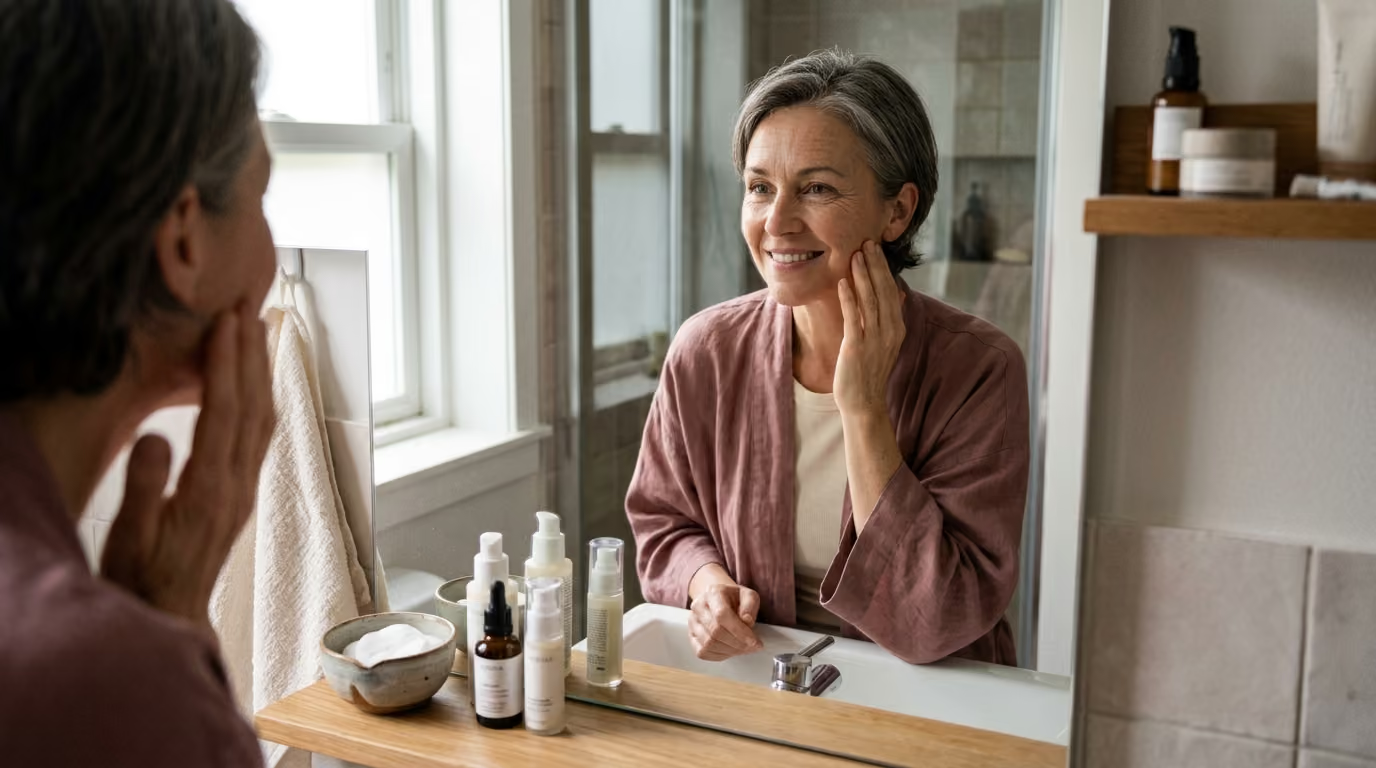

Stronger cellular resilience and healthier aging skin come from choosing evidence-based whole foods over high-dose antioxidant supplements.





The modern beauty conversation often treats antioxidants as an all-purpose shield against time. Popular marketing suggests that swallowing high-dose antioxidant capsules or blending exotic powders into morning drinks can stop cellular breakdown. Biological reality is far more nuanced. Flooding human tissue with isolated antioxidant molecules does not automatically produce resilient skin.
In some contexts, excessive antioxidant supplementation can disrupt vital cellular signaling or even increase health risks. True skin resilience relies on complex biological balance rather than chemical overload. While topical photoprotection remains essential, nutrition supplies the structural and biochemical foundation for long-term tissue maintenance.
Understanding how diet supports skin longevity requires looking past marketing slogans. It demands examining clinical data, human biochemistry, and the profound difference between whole foods and isolated pills. Through our work in skin longevity and healthy aging, we evaluate what science genuinely confirms about dietary compounds.
Clinical research over the past three decades has examined how ingested nutrients interact with cutaneous biology. Rather than focusing on vague promises of youth, rigorous trials assess specific, measurable biological endpoints.
Skin longevity depends on the delicate balance between external environmental damage and internal cellular repair. Solar ultraviolet radiation generates reactive oxygen species within cutaneous tissue. These unstable molecules trigger inflammatory cascades and alter cellular DNA. They also stimulate matrix metalloproteinases, which are enzymes that break down structural collagen and elastin fibers in the dermis.
Over time, cumulative oxidative stress impairs the skin barrier and accelerates structural thinning. When the lipid matrix in the stratum corneum degrades, transepidermal water loss increases. This leads to dryness, irritation, and reduced mechanical resilience.
Reactive oxygen species are not entirely destructive agents that must be eliminated completely. Normal cellular metabolism produces reactive oxygen species to function as vital signaling molecules. The human immune system uses these molecules to fight off pathogenic threats. Tissue adaptation also relies on controlled oxidative signals to trigger endogenous repair pathways.
The goal of nutritional support is never to sterilize the body of oxidation. Instead, the objective is to prevent chronic, excessive oxidative burden while preserving natural biological defense mechanisms.
Dietary phytochemicals support this equilibrium through distinct biological pathways. Carotenoids are fat-soluble pigments that migrate directly into cell membranes and subcutaneous adipose tissue. Within these lipid structures, carotenoids help quench singlet oxygen and absorb specific wavelengths of light. They also suppress transcription factors that drive tissue inflammation after sun exposure.
Polyphenols operate through different cellular mechanisms. Rather than simply neutralizing free radicals through direct chemical reactions, polyphenols act primarily as biological modulators. They influence cell-signaling pathways that regulate the production of endogenous antioxidant enzymes. Research in beauty science and advanced optimization indicates that polyphenols can downregulate inflammatory cytokines and help inhibit enzymes that degrade dermal collagen.
Dietary lipids provide the physical building blocks for cutaneous membranes. Long-chain omega-3 fatty acids incorporate into cellular phospholipid bilayers, enhancing membrane fluidity and regulating lipid mediator production. When the body receives adequate essential fatty acids, it produces anti-inflammatory eicosanoids rather than pro-inflammatory variants. This shift calms inflammatory skin conditions and supports structural barrier integrity from the inside out.
To understand the real-world value of dietary compounds, one must look at human clinical trials rather than test-tube measurements. Laboratory assays that measure raw antioxidant capacity in a vial rarely reflect how a substance behaves inside human tissue. The digestive tract absorbs, alters, and filters dietary compounds before small fractions reach the skin.
Carotenoids provide some of the most compelling food-based clinical evidence in dermatological nutrition. Lycopene, a bright red carotenoid found abundantly in tomatoes, has been evaluated in several controlled human feeding trials.
In a landmark clinical study, volunteers consumed 40 grams of standard tomato paste containing roughly 16 milligrams of lycopene alongside 10 grams of olive oil daily. After 10 weeks of daily intake, researchers exposed the participants to controlled ultraviolet radiation. The group consuming tomato paste exhibited a 40 percent reduction in ultraviolet-induced erythema compared to the control group. Interestingly, no significant difference in erythema was observed at week four, demonstrating that carotenoid accumulation in tissue requires sustained dietary consistency.
A subsequent randomized controlled trial evaluated 20 women consuming 55 grams of tomato paste supplying 16 milligrams of lycopene daily for 12 weeks. The intervention group demonstrated elevated minimal erythema doses, indicating higher resistance to solar redness, along with reduced markers of mitochondrial DNA damage.
Systematic reviews confirm that carotenoid mixtures, such as combinations of beta-carotene, lutein, and lycopene, produce comparable photoprotective adaptations. However, these trials show changes in acute redness thresholds rather than proof of long-term wrinkle prevention.
Green tea contains high concentrations of catechins, most notably epigallocatechin gallate. Researchers have investigated whether drinking green tea or taking catechin extracts can protect against photoaging.
In a rigorous two-year randomized clinical trial, participants received oral green tea polyphenols or a matching placebo. Clinical evaluations showed modest improvements in solar damage scores at six months and reductions in facial redness at 12 months. However, the trial found no statistically significant differences in overall photoaging scores at 24 months, and skin biopsies showed no significant histopathologic changes.
Another controlled trial investigated 40 women with moderate photoaging who used a combination of topical green tea cream and oral green tea supplements for eight weeks. While clinical grading revealed no dramatic visual differences in surface lines, histologic tissue biopsies demonstrated an increase in elastic tissue content. These findings show that green tea catechins exert measurable biological effects in dermal tissue, even when surface visual changes remain subtle.
Cocoa represents another rich source of bioactive polyphenols, specifically epicatechin and catechin flavanols. Clinical trials using standardized high-flavanol cocoa beverages have evaluated cutaneous microcirculation and skin density.
Research indicates that daily consumption of high-flavanol cocoa over 12 to 24 weeks can improve dermal blood flow and enhance structural hydration. The enhanced microcirculation facilitates nutrient and oxygen delivery to the dermal layers while aiding waste removal.
These studies used specially formulated, non-alkalized cocoa extracts with measured flavanol contents. Standard consumer confectionery chocolate contains high levels of added sugar and saturated fat, which carry different metabolic consequences.
Long-chain omega-3 fatty acids, specifically eicosapentaenoic acid (EPA) and docosahexaenoic acid (DHA), have been examined for their effects on UV response and barrier maintenance.
In a clinical intervention evaluating oral EPA supplementation over three months, researchers observed an increase in the mean minimal erythema dose from 36 to 49 mJ/cm². This shift demonstrated an increased physiological threshold before sunburn occurred.
Broader systematic reviews examining nutrition and beauty from within show that dietary fatty acids are consistently associated with improved skin elasticity and reduced dryness. Omega-3s help reinforce the intercellular lipid bilayers in the stratum corneum, reducing water loss and calming underlying inflammatory signaling.
Collagen supplements are frequently grouped alongside antioxidants in beauty marketing, yet their physiological mechanism is entirely different. Collagen peptides do not act as direct free-radical scavengers or cellular modulators in the manner of polyphenols. Instead, they provide specific dipeptides and tripeptides that act as signaling fragments in the digestive tract and bloodstream.
In a double-blind, placebo-controlled clinical trial, women aged 30 to 60 received 1,650 milligrams of specific collagen peptides daily. Researchers documented noticeable improvements in skin hydration and scaling after four weeks. By week 12, the participants demonstrated measurable increases in skin elasticity and reductions in wrinkle depth compared to the placebo cohort.
A comprehensive meta-analysis confirmed that oral collagen peptides reliably enhance hydration and skin barrier function across multiple clinical trials. While valuable for structural maintenance, collagen peptides should not be confused with antioxidants, as they do not provide oral photoprotective properties.
While the biological mechanisms are fascinating, readers must interpret dermatological nutrition research with realistic discernment. Most published clinical trials feature small sample sizes, often ranging from 10 to 50 participants.
Study durations are also relatively short, typically lasting between 4 and 12 weeks. While a 12-week study can easily track changes in acute sunburn thresholds or surface hydration, it cannot track structural photoaging across several decades.
Many headlines claim that specific foods prevent aging based solely on surrogate laboratory markers. A surrogate endpoint is a substitute measurement, such as minimal erythema dose, circulating inflammatory cytokines, or laboratory hydration values.
A higher minimal erythema dose simply means skin requires slightly more ultraviolet radiation before visible redness develops. It does not prove that the food will prevent deep wrinkle formation, facial volume loss, or skin cancers over a lifetime. Conflating an acute laboratory measurement with lifelong cellular preservation creates unrealistic expectations for dietary changes.
The assumption that higher doses of isolated antioxidants yield greater health benefits has been thoroughly disproven by clinical toxicology. High-dose antioxidant supplementation can cause severe biological harm.
The most famous demonstration of this risk occurred in the Alpha-Tocopherol, Beta-Carotene Cancer Prevention (ATBC) Study and the CARET trial. Researchers administered high-dose synthetic beta-carotene supplements to participants with elevated baseline risks for lung cancer, including smokers and asbestos-exposed workers. The trials had to be terminated early because the beta-carotene supplement group showed a statistically significant increase in lung cancer incidence and total mortality.
Health agencies, including the National Institutes of Health and the National Center for Complementary and Integrative Health, clearly warn against high-dose beta-carotene supplements for smokers and individuals with occupational toxicant exposure. Carrots, sweet potatoes, and leafy greens containing natural beta-carotene do not carry this risk. Whole foods package carotenoids in balanced amounts alongside fiber, minerals, and complementary phytochemicals.
High-dose vitamin E supplementation has similarly produced conflicting and sometimes adverse outcomes in cardiovascular and oncology trials. Pharmacologic doses of isolated alpha-tocopherol can disrupt the body's natural balance of other tocopherol forms. Nutrient behavior frequently follows a hormetic curve, where biological adequacy supports health, but megadoses create toxicity.
Certain individuals must exercise distinct caution when considering concentrated dietary extracts or supplements:
The commercial wellness space frequently distorts preliminary nutritional biology into dramatic consumer claims. Separating verified facts from commercial marketing allows you to make informed, safe choices for your personal care.
Creating a dietary routine for skin resilience does not require expensive supplements or restrictive meal plans. A sustainable approach focuses on dietary variety, smart culinary preparation, and consistent daily habits.
To ensure a broad spectrum of protective phytochemicals and structural nutrients, aim to include multiple botanical color categories throughout the week.
How you prepare your meals significantly influences how many skin-supportive compounds your body absorbs. Many critical phytochemicals are locked tightly within tough plant cell walls.
Lycopene provides an ideal example of preparation science. Raw tomatoes contain lycopene in a trans-isomer chemical configuration that human intestinal cells absorb poorly. Applying gentle heat breaks down the plant cell walls and converts lycopene into a cis-isomer structure that is far easier to absorb.
Furthermore, carotenoids and fat-soluble vitamins require dietary lipids for micelle formation in the small intestine. Consuming cooked tomato sauce with extra virgin olive oil dramatically increases lycopene absorption compared to eating raw, plain tomatoes.
Pairing dark leafy greens with healthy fats, such as tossing raw spinach with sliced avocado or walnut oil, similarly boosts the absorption of lutein and fat-soluble vitamin E. Steaming or lightly sautéing cruciferous vegetables helps retain sensitive vitamin C while softening fibrous plant structures for easier digestion.
A balanced day of evidence-based skin nutrition focuses on combining whole foods, structural proteins, and beneficial lipids.
No, dietary carotenoids cannot prevent sunburn under intense or extended ultraviolet exposure. While regular consumption of lycopene-rich foods and carotenoids raises your minimal erythema threshold, this increase is modest.
Think of dietary carotenoids as internal biological support that helps mitigate cellular stress rather than an external barrier. You must continue to use broad-spectrum topical sunscreen, wear protective clothing, and seek shade during peak sunlight hours.
For most healthy individuals consuming a varied diet rich in colorful vegetables, fruits, whole grains, and healthy fats, concentrated antioxidant multi-supplements are unnecessary. Whole foods provide complex matrices of phytochemicals, fiber, and trace minerals that pills cannot duplicate.
Furthermore, excessive intake of isolated antioxidants from high-dose pills can disrupt normal cellular signaling and may cause adverse health effects. Supplementation is best reserved for correcting diagnosed nutrient deficiencies under the guidance of a qualified healthcare provider.
Nutritional changes do not alter skin appearance overnight. Skin cells take roughly 28 to 40 days to complete a full turnover cycle from the basal layer to the stratum corneum, and this process slows with age.
Clinical trials examining carotenoid accumulation and minimal erythema changes typically observe measurable benefits only after 8 to 12 weeks of daily consistency. Structural adaptations involving dermal elasticity and hydration supported by fatty acids or collagen peptides also require 8 to 12 weeks of sustained dietary support.
Neither preparation method is universally superior; a combination of both raw and cooked produce provides the broadest nutritional support. Cooking softens tough plant cell walls and dramatically increases the bioavailability of certain fat-soluble compounds, such as lycopene in tomatoes and beta-carotene in carrots.
Conversely, high-heat cooking can degrade heat-sensitive water-soluble nutrients, particularly vitamin C and certain delicate polyphenols. Eating a diverse mixture of raw salads, fresh fruits, gently steamed greens, and slow-cooked vegetable stews ensures you receive both heat-stable and heat-sensitive nutrients.
Drinking green tea and applying topical green tea extracts support skin biology through different routes. Ingested green tea delivers catechins systemically through the bloodstream to the deeper dermis, supporting microcirculation and whole-body antioxidant pathways.
Topical application delivers polyphenols directly to the stratum corneum and epidermis, where they can neutralize locally generated free radicals on the surface. Combining regular green tea consumption with well-formulated topical skincare provides complementary systemic and local support.
Long-term skin health is not determined by chasing isolated longevity supplements or quick fixes. It is built upon daily physiological habits that support your body's intrinsic cellular resilience.
Nutritional science demonstrates that supporting your skin over decades is about sustained dietary variety, comprehensive sun safety, and realistic expectations rather than searching for magic solutions.
Stay connected for research and practical guidance on skin, hair, collagen, nutrition and beauty longevity. Clear ideas for people who want to understand how appearance changes with age and make better-informed choices over time.


Understand your skin, hair and body better without chasing every new trend, treatment or promise.
explore the Blog