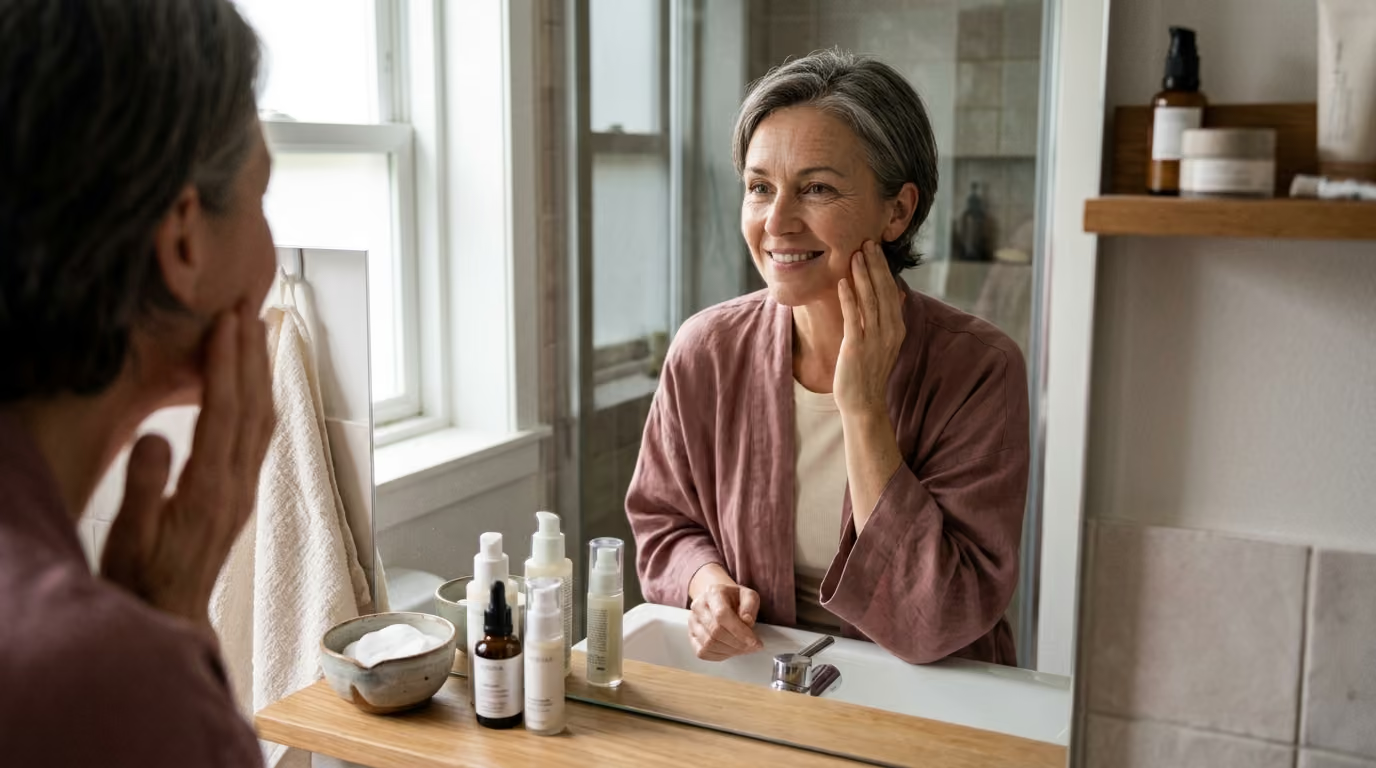

Walking down a busy city street exposes your complexion to airborne particles that trigger dark spots and premature aging.





Many beauty discussions assume that city air acts like a harsh poison that instantly seeps into deep tissue and etches deep lines into your face. Yet when you examine clinical dermatological research, the biological reality looks quite different.
The primary clinical signal linking air pollution to visible aging is not sudden deep wrinkling. It is actually pigmentary change, specifically dark spots on the cheeks and forehead. Furthermore, pollutants rarely pass directly into your circulation through a healthy cutaneous barrier. Instead, airborne compounds settle on the outer surface, trigger oxidative cascades, and strain the epidermal barrier.
Understanding how environmental pollutants interact with cutaneous biology allows you to protect your skin without falling for exaggerated product marketing. This guide examines the scientific evidence regarding airborne particles, cellular mechanisms, clinical studies, and practical protective strategies.
Air pollution is not a single chemical entity. It is a complex, shifting mixture of gases, suspended solids, liquid droplets, and organic compounds. To understand how airborne exposures influence skin longevity and healthy aging, we must first break down the primary components of modern urban air.
Particulate matter, commonly abbreviated as PM, refers to microscopic particles suspended in the atmosphere. Scientists categorize these particles by their aerodynamic diameter. PM10 describes coarse particles with a diameter of 10 micrometers or smaller, such as dust, pollen, and mold spores. PM2.5 describes fine particles measuring 2.5 micrometers or less, primarily originating from vehicle exhaust, power plants, and industrial combustion.
Because PM2.5 particles possess a high surface area relative to their mass, they readily carry other hazardous chemicals on their surfaces. These include polycyclic aromatic hydrocarbons, also known as PAHs, and trace heavy metals. When you walk along a busy roadway, you are exposed to fine soot particles coated in combustion residues.
Gaseous pollutants represent another major category of exposure. Ground-level ozone is a secondary pollutant formed when sunlight triggers chemical reactions between nitrogen oxides and volatile organic compounds. Nitrogen dioxide is a traffic-related gas produced during high-temperature fuel combustion. Both gases interact directly with the outermost layers of exposed skin.
The stratum corneum is your body's primary physical shield. Composed of protein-rich corneocytes surrounded by an organized lipid matrix of ceramides, cholesterol, and free fatty acids, it prevents water loss and blocks external irritants. Intact stratum corneum acts as an effective physical barrier against large particles.
Fine and ultrafine particles do not freely cross intact, healthy stratum corneum into your bloodstream. However, they settle on the surface of your face, neck, and hands throughout the day. These particles mix with surface sebum, sweat, and cosmetic products.
Hair follicle openings provide another localized site of interaction. Follicles create microscopic indentations where particulate matter and lipophilic compounds can accumulate. Once deposited on the surface or within follicular openings, chemical components bound to particles can initiate localized biochemical reactions.
Polycyclic aromatic hydrocarbons attached to airborne particles can cross the outer stratum corneum lipids due to their lipophilic nature. Once inside epidermal keratinocytes and melanocytes, these compounds bind to a specific cellular sensor called the aryl hydrocarbon receptor.
The aryl hydrocarbon receptor acts as an environmental detector within human cells. When a chemical like a PAH binds to this receptor, the receptor translocates to the cell nucleus. This event alters gene expression, initiating several biological responses:
This receptor-mediated pathway explains how pollutants initiate cellular stress without requiring massive physical penetration of whole particles into deeper tissue layers.
Oxidative stress occurs when the generation of reactive oxygen species overwhelms the endogenous antioxidant defenses of your tissue. Healthy skin maintains a balanced reservoir of antioxidants, including alpha-tocopherol, ascorbic acid, glutathione, and superoxide dismutase.
Ozone interacts aggressively with the polyunsaturated fatty acids and squalene present in surface sebum. This reaction generates lipid ozonation products, lipid hydroperoxides, and malondialdehyde. These oxidized lipid fragments irritate surrounding keratinocytes and deplete local stores of vitamins C and E in the upper stratum corneum.
Simultaneously, fine particles containing transition metals catalyze Fenton-type chemical reactions on the skin surface. These reactions produce hydroxyl radicals, one of the most reactive and damaging forms of oxygen radicals. The resulting oxidative burden destabilizes cellular membranes, damages surface proteins, and initiates a persistent inflammatory cascade.
Chronic environmental exposure sets off a biological feedback loop often termed oxinflammation. As pollutants deplete surface antioxidants and oxidize epidermal lipids, the organized lipid bilayers of the stratum corneum become disordered. This disorder increases transepidermal water loss and reduces cutaneous hydration.
Keratinocytes respond to barrier disturbance and oxidative stress by releasing pro-inflammatory messengers. Signaling pathways involving nuclear factor kappa B and activator protein 1 become activated. These pathways stimulate the release of cyclooxygenase-2, prostaglandin E2, and various interleukins.
This low-grade inflammatory signaling stimulates fibroblasts to produce matrix-degrading enzymes. Matrix metalloproteinase-1 breaks down fibrillar type I and type III collagen. Matrix metalloproteinase-3 and matrix metalloproteinase-9 degrade the surrounding basement membrane and elastic fibers.
Over months and years, repeated activation of matrix metalloproteinases compromises the structural integrity of the dermal matrix. This chronic breakdown of supportive proteins provides a clear biological explanation for how long-term pollutant exposure contributes to textural roughness, sagging, and premature tissue aging. For deeper insight into tissue integrity, you can review our guide on collagen and structural aging.
Biological plausibility in a laboratory dish does not always translate into visible changes in human populations. To understand the true real-world impact of air pollution, we must evaluate findings from epidemiological cohort studies and clinical imaging trials.
The most consistent and reproducible finding in environmental dermatology is the link between air pollution and facial pigment spots. Epidemiological studies across diverse geographic populations have repeatedly confirmed this relationship.
One landmark investigation, the SALIA cohort study in Germany, evaluated elderly women exposed to varying levels of traffic-related air pollution. The researchers discovered that an increase of 10 micrograms per cubic meter of nitrogen dioxide was associated with approximately 25% more lentigines on the cheeks. A parallel study conducted in an urban Chinese cohort observed a nearly identical 24% increase in cheek lentigines for the same increase in nitrogen dioxide.
The SALIA study also analyzed soot exposure, measured through PM2.5 absorbance. An interquartile increase in soot was associated with 20% more dark spots on the cheeks and 22% more spots on the forehead. Interestingly, these associations were site-specific. The researchers observed strong correlations on facial skin, but no comparable increases on the backs of the hands or forearms, suggesting that facial lipid composition and localized exposure dynamics play critical roles.
A comprehensive 2025 systematic review and meta-analysis analyzed pigmentary outcomes across multiple global cohorts. The authors reported a pooled relative association of 1.11 for pigmentary aging per 10 micrograms per cubic meter increase in PM2.5. Clinical trials using objective VISIA digital facial imaging have shown an approximate 9.5 percentile worsening in brown-spot severity scores per 10 micrograms per cubic meter increase in fine particulate exposure.
While the link between air pollution and hyperpigmentation is well supported, the clinical evidence connecting particulate matter directly to coarse wrinkling is less uniform.
Several cross-sectional studies have reported associations between coarse PM10 exposure and increased under-eye wrinkles, textural roughness, and enlarged pores in adult women. However, when large-scale systematic reviews aggregate data across multiple cohorts, the statistical link between PM2.5 and coarse facial wrinkles often fails to achieve statistical significance.
A key reason for this discrepancy is the overwhelming influence of ultraviolet radiation. Sunlight is a primary driver of dermal elastosis and deep wrinkle formation. Disentangling the specific contribution of fine particulate matter from decades of cumulative sun exposure requires complex statistical modeling, which introduces significant uncertainty into epidemiologic estimates.
Tropospheric ozone, however, presents a slightly different pattern. In pooled analyses of environmental cohorts, researchers found that every seven days of ozone concentration exceeding regulatory thresholds was associated with a 7.6% increase in coarse wrinkle scores. This association persisted even after controlling for ultraviolet exposure, particulate matter, and nitrogen dioxide.
Unlike particulate matter, ozone did not demonstrate a consistent link to pigment spot development in those same cohorts. This distinct outcome suggests that ozone and particulate combustion products act through distinct biological mechanisms.
Air pollutants do not strike the skin in an environmental vacuum. Throughout the day, airborne particles and oxidizing gases interact directly with ultraviolet A, ultraviolet B, and visible light wavelengths.
Laboratory and ex vivo tissue studies reveal that polycyclic aromatic hydrocarbons and particulate matter act synergistically with UVA radiation. UVA radiation penetrates deeply into the dermis, generating singlet oxygen and hydrogen peroxide. When UVA strikes skin cells already burdened with PAH-induced aryl hydrocarbon receptor activation, cellular reactive oxygen species production increases substantially compared to either exposure alone.
Furthermore, particulate deposits on the skin can alter the reflection and absorption of light. This interaction can amplify localized lipid peroxidation and accelerate the activation of matrix metalloproteinases. This compounding effect means that individuals living in sunny, highly polluted urban environments face a uniquely demanding environmental challenge.
When evaluating environmental health claims, scientific skepticism is essential. Research in environmental dermatology has expanded rapidly, but significant methodological limitations remain. Understanding these caveats prevents overreacting to alarmist headlines.
When we first started reviewing clinical trials on collagen supplementation, I was struck by how often the media misinterpreted the data. A study showing a minor increase in skin elasticity was suddenly headlined as a fountain of youth. It made me realize how desperately consumers need a translator for beauty science, someone who can say exactly what a study proves and what it does not prove.
The same measured scrutiny must be applied to air pollution research. The current body of evidence carries several important caveats that every informed consumer should understand.
Most large-scale human studies rely on ambient air monitoring stations positioned across cities to estimate individual exposure. Researchers match a participant's home address to the nearest monitoring station to calculate their estimated lifetime exposure to PM2.5, NO2, or ozone.
This methodology introduces notable exposure misclassification. Ambient monitoring stations do not capture:
As a result, an individual classified as highly exposed based on their residential zip code may actually experience much lower real-world cutaneous contact than the statistical model assumes.
Human aging is shaped by dozens of interrelated lifestyle factors. People residing in heavily polluted industrial or urban zones often experience different socioeconomic conditions, occupational hazards, dietary patterns, and psychological stress levels compared to those in cleaner rural areas.
Although epidemiologists use multivariable statistical models to control for age, smoking history, sun exposure habits, and socioeconomic status, residual confounding cannot be completely ruled out. It is impossible to isolate air pollution entirely from the rest of an individual's lifetime exposome. For a broader examination of these external factors, see our resource on lifestyle, recovery, and environmental aging.
Much of our mechanistic knowledge comes from cell culture experiments and ex vivo human skin explants. In these laboratory models, researchers often expose isolated keratinocytes or dermal fibroblasts to concentrated suspensions of standard urban dust or high doses of pure ozone gas.
While these experiments are crucial for identifying receptor pathways and enzyme cascades, they do not perfectly replicate daily life. Living human skin possesses a complex, renewable lipid barrier, natural moisturizing factors, active desquamation, and a dynamic cutaneous microbiome. Doses that cause rapid cell death or massive protein degradation in a plastic petri dish may produce much subtler, slower-developing changes in intact human tissue.
Many clinical trials investigating anti-pollution skincare formulations are funded directly by cosmetic manufacturers. These studies frequently evaluate proprietary multi-ingredient complexes combining several antioxidants, film-forming polymers, and botanical extracts.
While these commercial studies often report positive outcomes, such as reduced malondialdehyde levels or improved barrier markers, they rarely isolate which specific ingredient produced the observed benefit. Furthermore, many of these trials are conducted over brief periods ranging from four to twelve weeks. A short trial showing temporary reductions in oxidative markers does not prove that a product will prevent visible wrinkles twenty years later.
The beauty industry frequently capitalizes on environmental anxieties. Marketing campaigns often introduce dramatic claims that distort basic physiological principles. Distinguishing biological facts from marketing exaggerations helps you avoid unnecessary expenditures.
Cosmetic advertisements frequently claim that specialized clay masks, charcoal cleansers, or magnetic scrubs can detoxify the skin by pulling airborne pollution out of deep tissue layers.
The biological reality is that your skin does not store particulate matter within the dermis like a waste bin waiting for a topical cleanser to vacuum it out. Fine particles rest on the surface, settle within follicular infundibula, or mix with sebum.
Cleansing removes these surface residues, which prevents them from continuing to generate oxidative stress on the stratum corneum. However, no cleanser or mask can reach into living dermal tissue to extract oxidized proteins or undo previously degraded collagen. True biological detoxification in the human body is managed internally by your liver, kidneys, and endogenous cellular antioxidant enzymes.
The phrase anti-pollution on a cosmetic label has no standardized regulatory definition. A brand can apply this label to a basic moisturizer, a standard sunscreen, an antioxidant serum, or an ordinary foaming cleanser.
There is no single magic ingredient that neutralizes every pollutant. A product labeled for environmental defense is only as effective as its specific, evidence-based components. These components generally include gentle surfactants, barrier-supporting lipids, broad-spectrum UV filters, or stabilized antioxidants. Paying an inflated premium simply because a package features the phrase anti-pollution is rarely justified.
Some marketing materials suggest that modern urban pollution is now a greater threat to your skin than ultraviolet radiation. This claim is unsupported by dermatological data.
Solar radiation, particularly ultraviolet radiation and high-energy visible light, remains the single most powerful external driver of visible cutaneous aging. Ultraviolet rays penetrate deeply, directly damaging cellular DNA and causing extensive solar elastosis. Air pollution is a significant compounding factor that worsens pigmentary aging and barrier stress, but it does not replace sunlight as the primary target of daily photoprotection.
When people learn about particulate soot and combustion residues settling on their faces, their intuitive reaction is often to wash their skin more aggressively. They reach for harsh clarifying washes, oscillating cleansing brushes, and abrasive physical scrubs.
Aggressive cleansing actually increases your vulnerability to environmental damage. Over-cleansing strips away the essential intercellular lipids, ceramides, and natural moisturizing factors that maintain your physical barrier. Once your barrier is compromised, chemical pollutants penetrate more easily, leading to heightened sensitivity, redness, and accelerated transepidermal water loss.
Protecting your skin from ambient air pollution does not require an elaborate twelve-step routine or specialized detox treatments. Instead, an effective strategy focuses on four evidence-based pillars: reducing physical exposure, supporting barrier resilience, broad-spectrum photoprotection, and neutralizing surface oxidants. You can explore additional foundational strategies in our skin care resource library.
Your morning routine should prepare your cutaneous barrier to withstand environmental stressors throughout the day.
Begin with a gentle rinse or a non-stripping, low-foaming cleanser. If your skin is dry or sensitive, lukewarm water alone may be sufficient to avoid removing natural overnight lipids.
Apply a well-formulated topical antioxidant serum. Ascorbic acid, commonly known as vitamin C, is one of the most thoroughly researched topical antioxidants. Clinical studies show that vitamin C effectively neutralizes free radicals generated by environmental exposure.
Formulations that combine 15% pure L-ascorbic acid with 1% alpha-tocopherol and 0.5% ferulic acid offer superior stability and photoprotective synergy. The combination helps replenish depleted vitamin E reserves in the upper stratum corneum and diminishes environmental oxidative stress.
Follow with a moisturizer suited to your specific barrier needs. Look for ingredients that reinforce your lipid architecture:
Conclude with a generous application of broad-spectrum sunscreen offering at least SPF 30 and high UVA protection. Mineral sunscreens containing zinc oxide and titanium dioxide physically reflect UV rays while providing a physical barrier on the skin surface.
For individuals prone to hyperpigmentation, choosing a tinted sunscreen formulated with iron oxides provides vital defense against high-energy visible light. Visible light has been shown to interact with particulate pollution to worsen dark spots and melasma.
Skincare products represent only half of an effective environmental strategy. Practical behavioral modifications significantly reduce cumulative pollutant deposition:
Your evening routine should focus on removing accumulated surface deposits without disrupting barrier lipids, followed by ingredients that assist overnight cellular repair.
Evening cleansing is critical after spending time in urban environments. A gentle double-cleansing method is often the most effective approach for removing lipophilic pollutants, sebum, sunscreen, and particulate soot without aggressive mechanical friction.
Start with an oil-based cleanser, cleansing balm, or gentle micellar water. Oil-based cleansers dissolve stubborn, water-resistant sunscreen filters and break down particulate-laden surface sebum. Massage the oil gently over dry skin for roughly thirty seconds, then emulsify with lukewarm water and rinse completely.
Follow with a mild, pH-balanced, water-based cleanser to lift away remaining hydrophilic residues. Avoid stiff facial brushes, coarse cleansing sponges, or high-pH bar soaps, all of which disrupt stratum corneum lipid organization.
After patting your skin dry, apply targeted active ingredients that support cutaneous renewal. Topical retinoids, such as retinol, retinaldehyde, or prescription tretinoin, represent the gold standard in cellular repair. Retinoids stimulate collagen production, normalize epidermal cell turnover, and help disperse clustered melanin granules responsible for environmental age spots.
If your skin barrier feels irritated, sensitized, or dry from heavy pollution exposure, pause strong exfoliating acids and retinoids. Instead, apply soothing formulations rich in panthenol, madecassoside, colloidal oatmeal, or ectoin. Ectoin is a natural extremolyte that has demonstrated an ability in clinical settings to protect cell membranes and prevent pollution-induced cellular stress.
Seal your evening routine with a nourishing lipid cream to prevent nocturnal transepidermal water loss and support natural overnight barrier regeneration.
Environmental pollution does not affect every individual uniformly. Genetic factors, underlying skin disorders, occupational demands, and baseline pigmentation levels significantly alter how your skin responds to airborne stressors.
Individuals who spend considerable time commuting along congested highways or sitting in heavy traffic face concentrated exposure to vehicle exhaust, nitrogen dioxide, and diesel soot.
Because research specifically links nitrogen dioxide and soot absorbance to cheek and forehead lentigines, commuters should prioritize high UVA and visible light protection. Applying a tinted sunscreen containing iron oxides provides a protective cosmetic barrier against both light and particulate contact.
Commuters should also keep vehicle windows closed during congested traffic and set climate systems to recirculate air through cabin microfilters. Upon arriving home in the evening, prompt cleansing helps minimize the duration of particulate contact with facial lipids.
Construction workers, landscape professionals, agricultural workers, and postal carriers experience prolonged, simultaneous exposure to ultraviolet radiation, ground-level ozone, industrial dust, wind, and heat.
For outdoor workers, standard cosmetic routines must be paired with physical protective equipment:
Workplace safety measures, including dust-suppression systems and personal protective respirators in high-dust environments, serve as fundamental health defenses that simultaneously protect the facial skin.
Individuals with pre-existing dermatological conditions such as atopic dermatitis or rosacea have an intrinsically defective stratum corneum barrier. In these individuals, the intercellular lipid matrix is already disorganized, and tight junction integrity is reduced.
When particulate matter and chemical oxidants settle on eczema-prone or rosacea-prone skin, they penetrate past the defective outer layers much more easily. This triggers rapid mast cell degranulation, histamine release, and cytokine production, leading to flares of itching, erythema, and burning sensations.
For reactive skin types, the primary directive is barrier preservation rather than complex active treatments:
Melanocytes in deeper skin phototypes are highly reactive to inflammatory signals and oxidative stress. When fine particulate matter activates the aryl hydrocarbon receptor in richer skin tones, melanocytes can increase melanin output rapidly, leading to uneven tone and pronounced post-inflammatory hyperpigmentation.
Similarly, individuals managing melasma often find their condition worsened by urban pollution. Because melasma is triggered by a combination of hormonal signaling, ultraviolet radiation, and visible light, pollutant-induced oxidative stress acts as an additional aggravating trigger.
Those with deeper skin tones and melasma-prone skin should focus heavily on pigment-regulating, anti-inflammatory ingredients:
To explore the wider biological principles underlying these strategies, explore our comprehensive overview of beauty science and advanced optimization.
Navigating environmental skincare requires understanding clear contrasts between popular claims and established dermatological science.
Marketing claim: Charcoal masks and clay wraps detoxify your skin by drawing deep-seated urban pollution directly out of your dermal layers.
Biological reality: Intact particulate matter does not penetrate into the dermis, and topical masks cannot extract substances from living tissue layers. Clay and charcoal adsorb surface oils and loose superficial debris, assisting basic hygiene without altering internal cellular metabolism.
Marketing claim: Anti-pollution skincare is a clinically validated, distinct class of products that creates an invisible, total shield against all airborne damage.
Biological reality: The term is an unregulated marketing phrase. Protection is determined entirely by standard, well-researched ingredients such as physical UV blockers, barrier-supporting ceramides, and stabilized topical antioxidants.
Marketing claim: Using a potent antioxidant serum neutralizes all environmental free radicals, making traditional sunscreen unnecessary on cloudy or urban days.
Biological reality: Antioxidants quench reactive oxygen species but do not absorb or reflect ultraviolet photons. Relying solely on antioxidants leaves your cellular DNA completely unprotected against direct ultraviolet mutagenesis and photoaging.
Marketing claim: The more thoroughly you scrub your face with cleansing tools and foaming washes, the less environmental aging you will experience.
Biological reality: Over-washing degrades essential stratum corneum lipids and damages intercellular junction proteins. A disrupted barrier allows chemical pollutants and allergens to penetrate more easily, accelerating cutaneous inflammation and premature aging.
Current dermatological evidence does not support the claim that air pollution causes more visible aging than solar radiation. Ultraviolet radiation remains the primary external driver of deep wrinkles, loss of structural elasticity, and cutaneous photoaging.
However, air pollution is a significant secondary contributor that specifically accelerates facial hyperpigmentation and compromises barrier health. Furthermore, pollutants and UV rays act synergistically, making the combined damage worse than either factor alone.
In healthy, intact human skin, microscopic particles such as PM2.5 do not routinely cross the stratum corneum to enter the bloodstream. The physical dimensions of the particles and the dense lipid structure of the barrier prevent direct systemic penetration.
Instead, fine particles settle on the skin surface and lodge within follicular openings. The primary damage occurs when chemical compounds bound to the particles, such as polycyclic aromatic hydrocarbons, dissolve into surface lipids and trigger localized oxidative and inflammatory signaling cascades.
There is no single ingredient that counters all aspects of environmental pollution. The most effective approach combines three complementary components:
Indoor air is not inherently free from pollutants that affect skin health. Indoor environments can accumulate particulate matter from cooking, gas stoves, wood-burning fireplaces, candle combustion, and tobacco smoke.
Furthermore, volatile organic compounds released from paints, cleaning agents, and building materials can contribute to indoor oxidative stress. Using effective kitchen ventilation, avoiding indoor combustion sources, and operating HEPA air purifiers help maintain healthier indoor air for overall and cutaneous health.
You do not need to wash your face immediately every time you step indoors. Following a standard evening cleansing routine is generally sufficient to remove the particles, sebum, and residues accumulated during the day.
If you have spent several hours engaged in vigorous outdoor exercise near heavy traffic or in a visibly dusty industrial environment, cleansing your face promptly with a gentle, non-stripping cleanser followed by a moisturizer is a reasonable protective measure.
By focusing on verified biological mechanisms rather than exaggerated commercial trends, you can protect your skin barrier effectively and maintain long-term skin health in any environment.
Stay connected for research and practical guidance on skin, hair, collagen, nutrition and beauty longevity. Clear ideas for people who want to understand how appearance changes with age and make better-informed choices over time.


Understand your skin, hair and body better without chasing every new trend, treatment or promise.
explore the Blog